
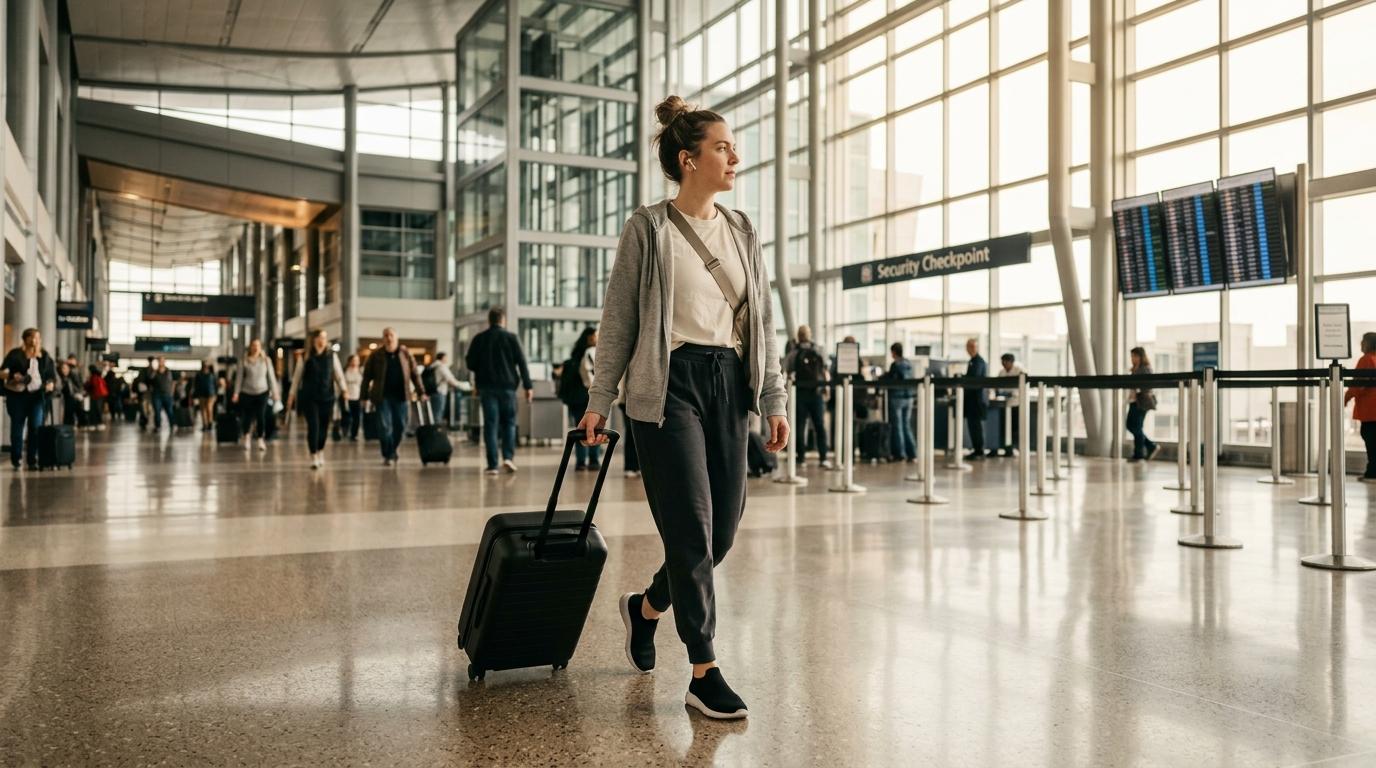
Most delays at the checkpoint have nothing to do with bags. They come from a belt buckle that sets off the alarm, a chunky necklace that sends someone back through the scanner, or a heavy coat with six zippered pockets full of keys and coins. Knowing what to wear to airport security won't make the line shorter, but it can make your own trip through it quicker, calmer, and far less likely to end in a pat-down.
The good news is that you don't need a special "airport outfit." You need clothes that are comfortable, simple to take off and put back on, and light on metal. Below, you'll find practical airport security clothing tips, the items most likely to cause trouble, and a few planning habits that make the whole process smoother from the moment you leave home.
How TSA Screening Actually Works
Understanding the process makes it easier to dress for it. At a standard TSA checkpoint, two things happen at once: your belongings go through an X-ray machine, and you walk through either a walk-through metal detector or an advanced imaging body scanner.
The metal detector reacts to metal, so buckles, coins, underwire, and heavy jewelry can trigger it. The body scanner works differently. It looks for anything on your body that stands out from your normal shape, which means bulky, layered, or very loose clothing can create an "anomaly" that needs to be checked by hand, even if there's no metal involved.
That's why the best clothes for TSA screening share two qualities: little metal and a clean, fairly close fit. Once you see it that way, most of the advice below makes sense on its own.
Standard Lanes vs. TSA PreCheck
In standard lanes, you'll typically be asked to take off your belt, jacket, and other outerwear and place them in a bin. TSA PreCheck travelers can usually keep belts and light jackets on. Since July 2025, travelers in standard lanes at US airports have also been allowed to keep their shoes on, though officers can still ask you to remove them if additional screening is needed.
What to Wear to Airport Security for a Faster Screening
If you want a simple formula, think comfortable layers that come off easily, minimal metal, and nothing you'd struggle to put back on while holding a carry-on and a boarding pass.
Tops and Layers
A soft T-shirt, a fitted long-sleeve, or a light sweater works well. If you like to layer for a cold cabin, choose one outer piece you can slip off in a few seconds, such as a zip-up fleece or a cardigan.
One useful rule: always wear something you're happy to be seen in under your outer layer. In standard screening, hoodies, sweatshirts, and vests are often treated as outerwear, so an officer may ask you to remove them. A basic T-shirt underneath saves you from an awkward moment.
Pants and Bottoms
Leggings, joggers, stretch jeans, and pants with an elastic or drawstring waist are ideal. They don't need a belt, they're comfortable for a long flight, and they won't slide down while your belt is sitting in a bin. Dresses and skirts are perfectly fine too, as long as they aren't layered with heavy, bulky fabric.
Shoes
Even though shoes now generally stay on, footwear still matters. Pick shoes without metal shanks, large metal eyelets, or decorative hardware, since these can set off the metal detector and lead to extra screening. Slip-on sneakers, loafers, and simple flats remain a smart choice because they're easy to remove if an officer asks and comfortable for long walks to distant gates.
Wear socks if your shoes need to come off for any reason. Checkpoint floors see thousands of feet a day.
Accessories
Keep jewelry to small, simple pieces, or pack it in your carry-on until you're through. A plain watch or wedding band rarely causes trouble, but stacked bracelets, large chains, and heavy earrings are common culprits. Hair accessories with metal clips can also draw attention on the body scanner.
Clothes to Avoid at Airport Security
If you're wondering what not to wear to airport security, start with anything that adds metal, bulk, or extra steps.
Heavy Metal Details
Belts with large buckles, jeans covered in studs, jackets with metal snaps, and shoes with decorative hardware all raise the odds of an alarm. One item alone may be fine, but combine several and a second pass through the scanner becomes likely.
Bulky or Very Loose Clothing
Oversized sweaters, layered skirts, and puffy coats can hide the outline of your body on the scanner, which may prompt a pat-down. Baggy clothing isn't banned, but if officers can't clear an area visually, they'll check it by hand.
Clothes With Lots of Pockets
Cargo pants and utility jackets are practical for travel, but every pocket is a place to forget a coin, a lip balm, or a set of keys. Empty all of them before you get to the checkpoint, or skip pocket-heavy pieces altogether.
Heated Clothing
Heated vests, jackets, and socks are increasingly popular for winter travel. They run on lithium batteries, so remove the battery pack before screening and keep it in your carry-on, since spare lithium batteries aren't allowed in checked bags.
Offensive or Provocative Graphics
There's no formal TSA dress code for slogans or images, but clothing with threatening or offensive messages can lead to problems with security or with your airline. If you wouldn't wear it to a family restaurant, leave it for another day.
Special Situations and How to Prepare
Not every item can be swapped out for convenience, and you shouldn't have to. TSA has procedures for many of these situations.
Religious and Cultural Head Coverings
You can wear head coverings, turbans, hijabs, and other religious garments through security. If an alarm occurs or the scanner can't clear the area, you may need additional screening, which can include a pat-down of the head covering. You can ask for this to take place in a private area and with an officer of the same gender.
Medical Devices and Body Piercings
If you have an insulin pump, a joint replacement, or another medical device, tell the officer before screening begins. The same applies to piercings you can't easily remove. You can request a private screening if a pat-down becomes necessary.
Traveling With Kids
Dress children in clothes they can manage on their own, without a lot of buttons or belts. Easy-on shoes and a simple outfit help keep small travelers calm, and it means you have fewer things to handle while juggling bags, strollers, and boarding passes.
Small Habits That Make Screening Easier
Clothing is only half the picture. A few simple habits make a noticeable difference:
Move everything from your pockets into your carry-on before you reach the bins. Phones, wallets, keys, and coins are the most common reasons people get sent back through the scanner.
Keep your ID and boarding pass in one easy-to-reach spot, separate from the items you'll be placing in bins.
Take off your belt, watch, and jacket while you're still waiting in line, rather than at the conveyor belt. This keeps you from holding up the people behind you and from feeling rushed.
Pack your liquids and electronics where you can reach them in seconds, in case your airport or lane asks for them to be removed.
If you're nervous about the process or flying for the first time, our guide on your first time at the airport walks through every step from check-in to boarding.
Why Your Ride to the Airport Matters Too
Here's something most packing advice skips: how you get to the airport shapes how you go through security. When you arrive flustered, after circling for parking, dragging bags from a remote lot, or squeezing into a crowded shuttle, it's easy to forget the coins in your pocket or the belt you meant to take off. That's when small mistakes turn into extra screening.
A private airport transfer gives you a calmer start. With a booked car and a driver waiting at your door, you can use the ride to get ready: slip your jewelry into your bag, move your phone and keys out of your jacket, and make sure your ID is where it should be. You arrive at the terminal on time, with your hands free and your head clear, instead of sprinting from a parking garage.
This makes an even bigger difference for families traveling with car seats and strollers, travelers with mobility needs, and anyone catching an early-morning flight. Through Transpovia, you can compare and book private airport transfers in advance, with a set pickup time and a vehicle sized for your group and luggage, so the trip to the airport doesn't add stress before you even reach the checkpoint.
Before you leave home, it also helps to run through an airport travel checklist so your documents, bags, and ride are all sorted ahead of time.
Frequently Asked Questions
Do I still have to take my shoes off at TSA?
In most cases, no. Since July 2025, travelers in standard security lanes at US airports have generally been allowed to keep their shoes on. TSA officers can still ask you to remove them if your footwear sets off an alarm or needs a closer look, so shoes with little metal remain the safest choice.
Can I wear a hoodie through airport security?
Yes, but in a standard lane you may be asked to take it off and send it through the X-ray, since hoodies and sweatshirts are often treated as outerwear. Wear a T-shirt or another top underneath so you're comfortable if that happens.
What is the best outfit to wear through TSA?
A soft top with a light layer you can remove quickly, elastic-waist pants or leggings, comfortable shoes without metal details, and minimal jewelry. This combination keeps you comfortable on the plane and reduces the chances of an alarm or a pat-down at the checkpoint.
Conclusion
Dressing for airport security isn't about following a strict dress code. It's about removing the small things that slow you down: metal buckles, heavy jewelry, bulky layers, and overloaded pockets. Choose comfortable clothes that fit cleanly, keep accessories simple, and prepare your items before you reach the bins.
Pair those habits with a relaxed trip to the terminal, ideally a pre-booked private transfer that drops you right at departures, and you'll find that security becomes just another quick step in your journey rather than the most stressful part of it.
"We used to arrive at the airport rushed and frazzled, and security always felt like chaos. Now we book our ride ahead, get everything sorted in the car, and walk through the checkpoint without a second thought." — a family traveler said after switching to a private airport transfer


