
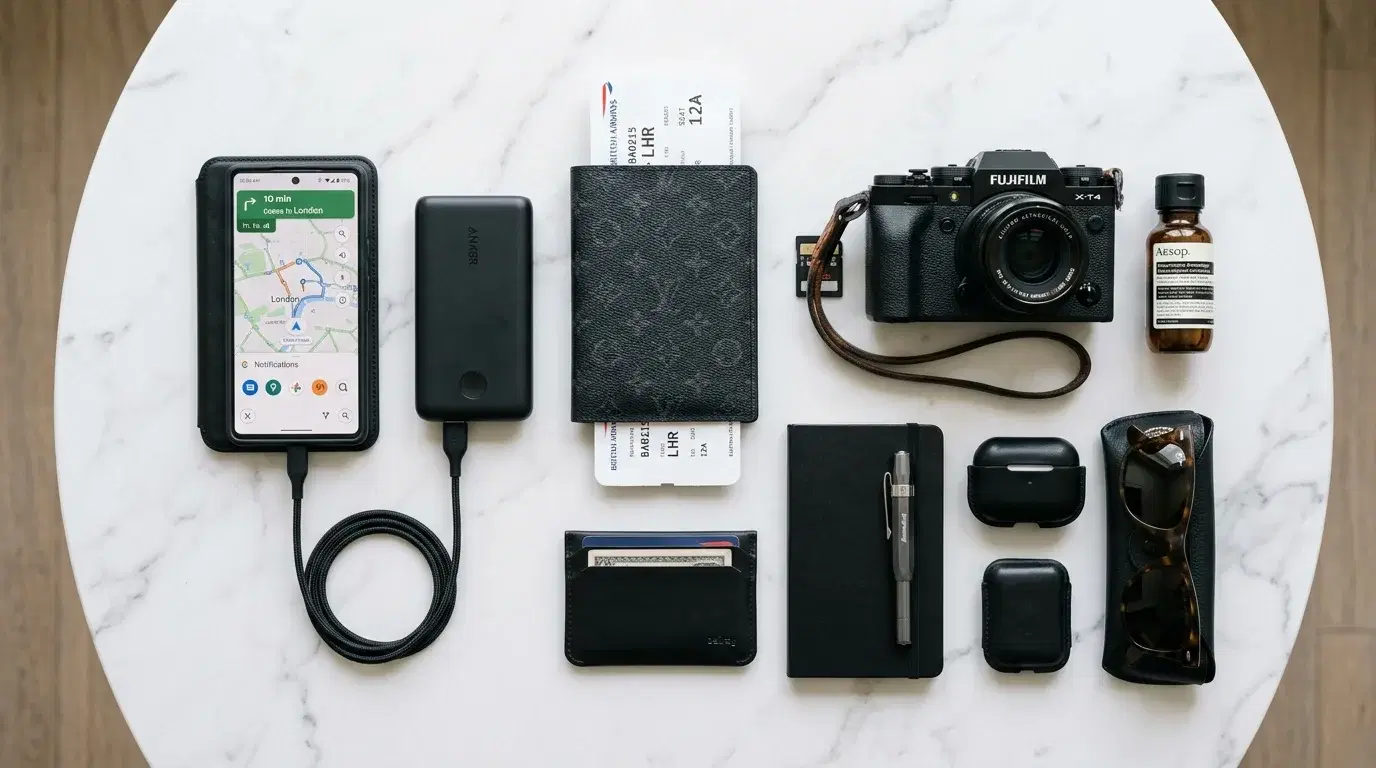
The most stressful airport problems start at home, not at the gate. A driver's license that isn't REAL ID compliant, a full-size bottle buried in your carry-on, a boarding pass you never downloaded, each one turns a smooth departure into a scramble at the checkpoint. A solid airport travel checklist catches these while you still have time to fix them. Running through the same checks on flight day, in a sensible order, is what separates a calm trip to the airport from a frantic one. Here's what to confirm before you lock the front door.
Start with your ID and travel documents
Check the ID you'll show at security first, because it's the one problem you can't fix at the airport. For domestic flights within the United States, you now need a REAL ID-compliant license, a valid passport, or another TSA-accepted document. For international trips, your passport is the essential item, so confirm it's valid and meets your destination's rules before anything else.
REAL ID has been enforced at U.S. airport checkpoints since May 7, 2025. A compliant license carries a star marking in the upper portion of the card; a standard license without it is no longer accepted on its own. If you don't have one, a valid U.S. passport or passport card works in its place, along with a few other accepted IDs listed on the TSA's official site. Travelers under 18 generally don't need ID for domestic flights when flying with an adult. Arriving without an accepted ID doesn't guarantee you'll be turned away, but it can mean extra identity verification, an added fee, and delays of 30 minutes or more, exactly the situation a pre-departure check prevents.
Gather the rest of your documents the night before: boarding pass, any required visas or entry approvals, hotel and transport confirmations, and travel insurance details. Keeping the same reusable Airport Travel Checklist for every trip turns these document checks into routine rather than a last-minute hunt.
Check in online and secure your boarding pass
Most airlines open online check-in 24 hours before departure. Doing it before you leave home lets you pick a seat, download a mobile boarding pass, and confirm your terminal and gate, so you can head straight for security if you aren't checking a bag.
Download the boarding pass to your phone, then take a screenshot as a backup in case the app won't load or your signal drops at the airport. While you're checking in, confirm your baggage allowance so you're not repacking at the counter, and note your terminal. At airports with several terminals, going to the wrong one can cost you the time buffer you carefully built. A quick look at your flight status before leaving also flags any delay or gate change early.
Pack your carry-on to the security rules
Pack your carry-on to the TSA 3-1-1 liquids rule: liquids, gels, aerosols, creams, and pastes must be in containers of 3.4 ounces (100 ml) or less, all fitting inside one quart-size bag, with one bag per passenger. Anything larger goes in checked luggage. This rule remains unchanged in 2026, despite recurring rumors otherwise.
TSA screens anything spreadable, pourable, or squeezable as a liquid, which is why items like peanut butter and sunscreen get pulled. Two categories are exempt: medications and baby formula, breast milk, and baby food can exceed the 3.4-ounce limit if you declare them for inspection. Some checkpoints now use newer CT scanners that let you leave liquids inside your bag, but the size limits still apply, so pack to them every time.
Batteries are the detail many travelers miss. Spare lithium batteries and power banks must travel in your carry-on, not checked baggage, and as of 2026 several airlines cap how many power banks you can bring, with some allowing two per passenger and others one. Check your specific airline's current policy, keep power banks accessible, and don't count on charging one in flight. Keep medications, valuables, electronics, and travel documents in your carry-on too, since checked bags can be delayed or lost.
Lock in your timing and your ride to the airport
Plan to arrive at least two hours before a domestic flight and three hours before an international one, following TSA guidance, then count backward to set your departure time and add for traffic. Confirm how you're getting to the airport and that it actually runs at your travel time.
Treat those arrival windows as a floor, not a ceiling. Large hub airports during morning and late-afternoon peaks, holiday periods, and evenings full of long-haul departures can all warrant more buffer, and some airports ask for two and a half to three hours even domestically. Check your airport's or airline's current advice before you go. For the ride itself, confirm your booking, or if you're relying on public transit, verify the timetable for your exact departure, especially before dawn or late at night when service thins out. Booking an airport transfer in advance through Transpovia removes the timing guesswork from an early departure, since the pickup time is fixed before flight day rather than left to chance.
Extra steps for international departures
International trips add a layer of document checks worth doing days ahead, not at the door. Confirm your passport is valid well beyond your travel dates, since many countries require at least six months of validity remaining on entry, and check whether your destination requires a visa or advance entry approval.
Some countries also ask for proof of onward or return travel, so keep those bookings handy. Verify entry requirements through official government or embassy sources rather than a travel forum, because these rules change and vary by nationality. It helps to notify your bank of travel dates so your cards work abroad, carry a small amount of local currency for arrival, and review your destination's customs limits on items like food and cash. Build in extra time as well, since international check-in desks and immigration lines often move slower than domestic ones.
A final sweep before you leave home
The last few minutes are for the practical items that aren't about security but still derail a trip. Charge your phone fully and pack a charger and power bank in your carry-on. Confirm you have your wallet, cards, and a little cash. Set your home for your absence: adjust the thermostat, take out the trash, lock up, and sort any pet, plant, or mail arrangements.
Pack enough of any prescription medication for the whole trip plus a few extra days in case of delays, and keep it in your carry-on. Downloading offline maps, your boarding pass, and some entertainment before you leave means a weak airport signal won't leave you stuck. A final glance at your documents, phone, wallet, and keys at the door catches the small things people most often forget.
FAQs
What should you do the night before a flight?
Check in online and download your boarding pass, gather your ID and travel documents in one place, pack your carry-on to the 3-1-1 and battery rules, and confirm both your transport to the airport and the time you'll leave. Handling these the night before leaves your morning for the trip itself rather than last-minute fixes.
Can you pack a power bank in checked luggage?
No. Spare lithium batteries and power banks must travel in your carry-on, not in checked bags, and some airlines limit how many you can bring as of 2026. Keep them accessible for screening and check your airline's current policy before you pack.
Does your passport need six months of validity?
Many countries require at least six months of passport validity beyond your entry date, though the exact rule varies by destination. Check the official entry requirements for the country you're visiting well before departure, since renewing a passport takes time you won't have on flight day.
How early does online check-in open?
Most airlines open online check-in 24 hours before scheduled departure, though this varies by carrier. Checking in as soon as it opens gives you the best seat availability, your mobile boarding pass, and early notice of any schedule or gate change.
Before You Go
Run your checks in order: ID and documents first, then online check-in, then pack to the 3-1-1 and battery rules, and finally confirm your ride and timing. Fixing a problem at home costs minutes; finding it at security can cost your flight. If an early or late departure worries you, arranging your transfer ahead through Transpovia settles the ride before flight day.


