
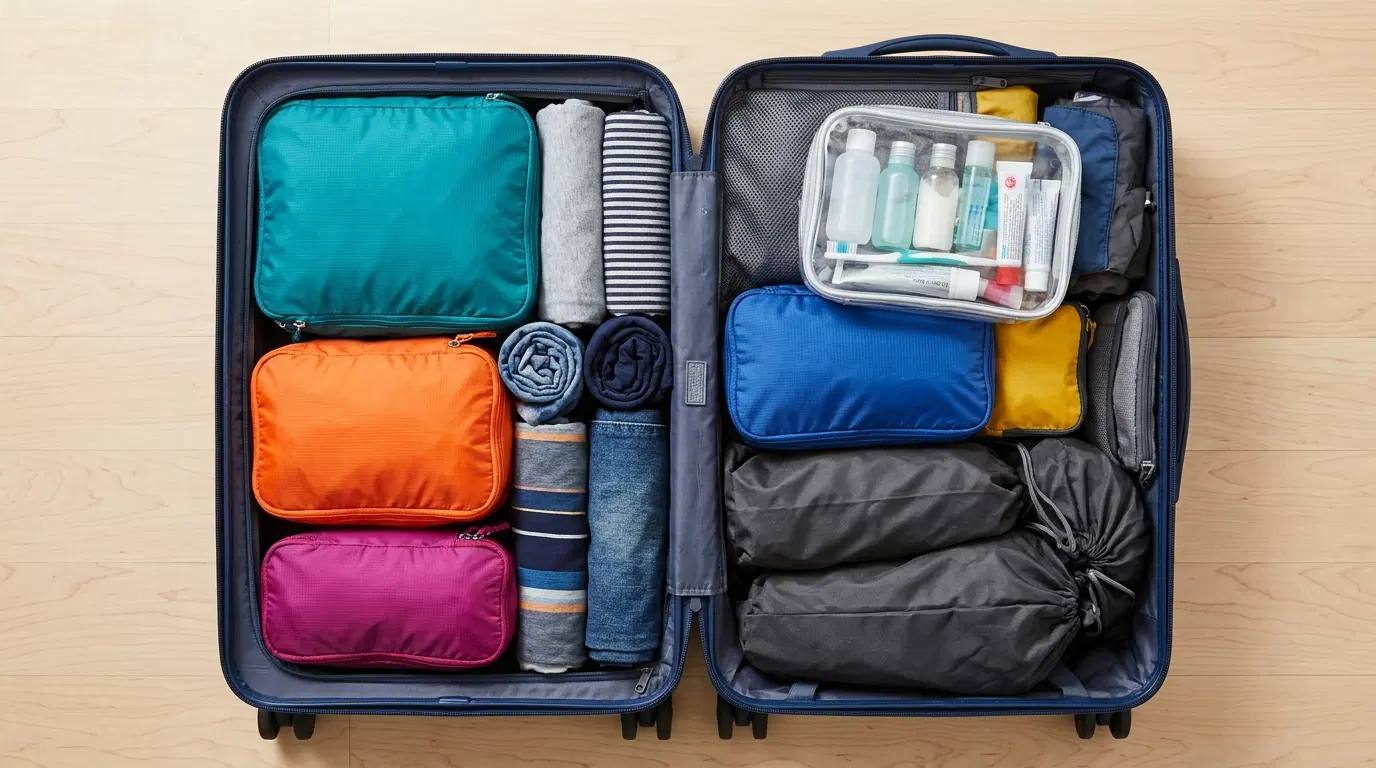
There's a particular kind of freedom in walking off a plane, skipping the baggage carousel entirely, and heading straight for the exit. No waiting, no wondering whether your suitcase made the connection, no lost-bag forms. Learning how to pack a carry on well is what makes that possible. It isn't about cramming everything you own into a small bag. It's about choosing the right items, knowing the rules before you reach security, and organizing your bag so it works for you at every stage of the trip, from your front door to the airport curb and on to your hotel.
This guide walks through the rules you need to know, a realistic carry-on packing list, a step-by-step packing method, and the small habits that make travel days noticeably smoother.
Start With Your Airline's Carry-On Rules
Before you fold a single shirt, look up the baggage policy for the airline actually operating your flight. That last part matters. If you booked a codeshare or a connecting itinerary, the carrier flying the plane sets the rules at the gate, not necessarily the one printed most prominently on your ticket.
Size and Weight Limits
Many major US airlines allow a carry-on of roughly 22 x 14 x 9 inches, including wheels and handles. That's a common standard, not a universal one. Budget carriers and some basic economy fares charge for a full-size carry-on or don't include one at all, so a fare that looks cheap can become expensive at the gate.
Weight is the other variable. Most large US carriers rarely weigh carry-ons on domestic routes, but many international and low-cost airlines do, and limits around 7 to 10 kilograms are common. If you're flying abroad or connecting onto a regional carrier, weigh your packed bag at home with a luggage scale or a bathroom scale.
Carry-On vs. Personal Item
Most fares give you two pieces: a carry-on that goes in the overhead bin and a personal item that fits under the seat in front of you. Think of them as a team. The carry-on holds the bulk of your clothing, while the personal item, usually a backpack, tote, or laptop bag, holds everything you'll want during the flight. Splitting things this way means you won't be standing in the aisle digging through the overhead bin for your headphones.
What to Pack in a Carry On
A good carry-on packing list depends on trip length, climate, and what you're doing at your destination, but the categories stay the same. Build your list around these four groups.
Clothing
Plan outfits, not individual pieces. Pick a simple color palette, two or three neutrals plus one accent color, so every top works with every bottom. For a trip of about a week, a realistic mix looks something like this:
-
Two pairs of pants or skirts, one of which you wear on the plane
-
Four or five tops that layer well
-
One layer for warmth, such as a sweater, fleece, or light jacket
-
Underwear and socks for each day, or fewer if you're willing to do a quick sink wash
-
Sleepwear and one versatile "nicer" outfit if your plans call for it
-
Two pairs of shoes at most, including the pair on your feet
Fabrics matter more than most people expect. Merino wool, technical blends, and knits resist wrinkles and odor, dry quickly, and take up less space than heavy cotton or denim.
Toiletries and the 3-1-1 Rule
The TSA's 3-1-1 rule is still in effect for carry-on bags at US checkpoints. Each liquid, gel, cream, paste, or aerosol must be in a container of 3.4 ounces (100 milliliters) or less, and all of those containers must fit in one quart-size, clear, resealable bag. You get one bag per passenger.
A few details catch people off guard. The rule counts the size of the container, not how much is left inside it, so a nearly empty full-size bottle of shampoo still gets pulled. Peanut butter, hummus, toothpaste, mascara, and lip gloss all count as liquids. If it pours, squeezes, sprays, or spreads, treat it as a liquid.
There are exceptions. Medically necessary liquids, baby formula, and breast milk can exceed 3.4 ounces in reasonable quantities, but you should tell the officer at the start of screening. To save space and skip the liquids question entirely, consider solid alternatives such as shampoo bars, solid deodorant, toothpaste tablets, and stick sunscreen.
Electronics and Power Banks
Phones, laptops, tablets, cameras, and chargers all belong in your carry-on or personal item. Spare lithium batteries and power banks are required to travel in the cabin, never in checked luggage. Power banks up to 100 watt-hours are generally allowed without airline approval, and a typical 10,000 or 20,000 mAh bank falls well under that.
Power bank rules tightened across the industry in 2026. Many airlines now cap passengers at two power banks, and several restrict using or recharging them during the flight. Policies vary by carrier, so check your airline's page before you go. One practical tip: keep your power bank in your personal item rather than your rolling bag. If your carry-on gets gate-checked because the bins are full, you won't have to scramble to pull it out.
Carry-On Essentials You Should Never Check
Some items should stay with you no matter how you're traveling:
-
Passport, ID, and printed or offline copies of booking confirmations
-
Prescription medications in their original containers, with a few extra days' supply
-
Wallet, cards, house keys, and car keys
-
Jewelry and other valuables
-
Glasses or contact lenses
-
A change of underwear and a basic toiletry kit, in case you're delayed overnight
How to Pack a Carry On, Step by Step
Once you know what's going in, the order of packing makes a real difference. Here's a method that keeps a carry-on organized and easy to access.
Lay Everything Out First
Put every item on the bed before anything goes in the bag. This is where you catch duplicates, like a third sweater or two pairs of similar shoes. If the pile looks too big, it is. Remove a few things now rather than forcing the zipper later.
Put Heavy Items Near the Wheels
Shoes, toiletry kits, and other dense items go at the bottom of the bag, near the wheel end. This keeps a rolling suitcase stable and stops it from tipping over when you let go of the handle. Stuff socks or chargers inside your shoes to use that dead space.
Roll Soft Items, Fold Structured Ones
Rolling works well for T-shirts, knits, leggings, and casual clothes. It compresses them and makes everything easy to see. Structured pieces like blazers, dress shirts, and pressed pants travel better folded flat on top, where they won't get crushed.
Use Packing Cubes or Compression Bags
Packing cubes turn a jumble of clothing into neat blocks you can lift out at the hotel without unpacking the whole bag. Group them by category (tops, bottoms, underwear) or by day. Compression cubes squeeze out extra air, which helps with bulky layers, though they can also tempt you into overpacking and pushing your bag past the weight limit.
Keep Your Liquids Bag and Laptop Easy to Reach
Your quart bag should sit at the very top of your carry-on or in an outer pocket. The same goes for your laptop in your personal item. Even at checkpoints where you can leave them in your bag, an officer may still ask you to pull them out, and you don't want to empty half your suitcase in front of a line of travelers.
Wear Your Bulkiest Items
Your heaviest shoes, your thickest jacket, and your jeans should go on your body, not in the bag. Layering for the flight frees up a surprising amount of space, and cabins often run cold anyway.
Do a Final Check the Night Before
Zip the bag, lift it, and roll it across the room. Then confirm your documents, chargers, and medications are where you expect them to be. If you like a structured way to handle this, run through an airport travel checklist so nothing slips through on the morning of your flight.
How to Pack Light Without Running Short
Knowing how to pack light comes down to one shift in thinking: pack for the trip you're taking, not for every situation you can imagine. A few habits make this easier.
Plan to rewear. Pants, sweaters, and jackets can easily go several days between washes. Base layers and underwear are the only things you truly need fresh every day.
Lean on your destination. Most places you'll visit sell sunscreen, toothpaste, and umbrellas. Hotels usually provide shampoo and a hair dryer. You don't need to carry a backup of everything.
Plan one laundry stop on trips longer than a week. A sink wash with a small packet of detergent, or a single trip to a laundromat, can effectively double your wardrobe.
Go digital. Downloaded books, offline maps, and boarding passes on your phone replace paperbacks, printed guides, and paper itineraries.
Leave a little empty space. A bag packed to the very limit leaves no room for anything you pick up on the trip and becomes harder to close each time you repack.
Packing With Airport Security in Mind
The way you pack shapes how long you spend at the checkpoint. Many busy US airports now use computed tomography (CT) scanners, and in those lanes travelers are often allowed to leave liquids and laptops inside their bags. That's not guaranteed everywhere, though, so follow the signs and instructions at your specific lane. TSA also no longer requires most travelers to remove their shoes.
A few prohibited items still trip up careful packers. Full-size pocketknives, multitools with blades, loose razor blades, and most sporting goods like bats and clubs aren't allowed in the cabin. Solid foods are generally fine. If you're unsure about a specific item, TSA's "What Can I Bring?" tool will tell you before you pack it.
If you haven't flown in a while or this is your first trip, it helps to understand the whole process from check-in to boarding, not just the security belt. This guide to your first time at the airport explains what to expect at each step.
Why Carry-On Travel Pairs Well With a Private Airport Transfer
A well-packed carry-on saves you the most time at two moments: when you leave the house and when you land. That's also where ground transportation can make or break your day.
On departure, a pre-booked private car means no circling for parking, no shuttle from the economy lot, and no wrestling your bag onto a crowded train. You load your suitcase at your front door and unload it at the terminal curb.
On arrival, the advantage is even clearer. Carry-on travelers are often among the first people out of the terminal, but that head start disappears if you then wait in a long taxi line or wander between pickup zones trying to find a rideshare. With a private airport transfer booked ahead of time, your ride is arranged before you land, and you can walk off the plane and head straight to your car.
It's especially useful for families, travelers arriving late at night, or anyone landing in an unfamiliar city where the transit system and local taxi rules are a mystery. Booking a private airport transfer through Transpovia lets you choose a vehicle that suits your group and your luggage before you travel, so the end of your journey feels as organized as your bag.
Common Carry-On Mistakes to Avoid
Even experienced travelers fall into a few traps:
-
Overstuffing the bag so it no longer fits the airline's sizer. A bag that looks fine at home can bulge past the limits once the expansion zipper is open.
-
Packing for "just in case." Most of those items never leave the suitcase.
-
Forgetting that a gate-checked bag goes in the hold. Keep medications, valuables, and lithium batteries in your personal item so they stay with you.
-
Bringing a new suitcase or new shoes without testing them. Squeaky wheels and blisters are both easier to discover at home.
-
Boarding late on a full flight. Overhead space fills up fast, and later boarding groups are the most likely to have bags gate-checked.
Frequently Asked Questions
Can I bring a full-size toiletry bottle in my carry-on if it's almost empty?
No. TSA screens the container size, not the amount left inside. Any bottle larger than 3.4 ounces (100 milliliters) will be flagged, even if it holds only a small amount. Transfer what you need into travel-size containers or buy toiletries at your destination.
How many days of clothing can fit in a carry-on?
With a mix-and-match wardrobe, wrinkle-resistant fabrics, and a plan to rewear outer layers, many travelers comfortably pack for a week or more in a standard carry-on. For longer trips, the usual approach is to pack for about a week and do laundry along the way rather than adding more clothes.
Do I need to take my laptop and liquids out at security?
It depends on the checkpoint. Lanes with CT scanners often let you keep them in your bag, while standard lanes may still require you to remove them. Pack both where you can reach them quickly, and follow the instructions posted at your lane.
Conclusion
Packing a carry-on well is mostly about making decisions early. Check your airline's size and weight rules, build a small wardrobe that mixes and matches, keep your liquids within the 3-1-1 limit, and store your electronics, medications, and documents where you can reach them. Pack heavy items low, roll soft clothes, and leave a little breathing room for the trip home.
The payoff shows up throughout your travel day: a faster checkpoint, no waiting at baggage claim, and an easy walk out of the terminal. Pair that light bag with a private transfer waiting at arrivals, and the whole journey, door to door, feels like it's working with you instead of against you.
"We flew carry-on only for the first time on our trip to Chicago and had our driver waiting when we walked out. Twenty minutes after landing, we were already checking into our hotel." — Megan, traveling with her husband and two kids


