
How far is Fort Lauderdale from Miami? The honest answer is about 25 to 30 miles by road, depending on where you start and where you finish. On a quiet Sunday morning that distance takes roughly 30 to 45 minutes behind the wheel. On a Friday afternoon in winter, the same trip can stretch past an hour and a half. A Brightline train covers the corridor in about 30 to 40 minutes between the main downtown stations, and that time barely changes when the highway jams.
Those numbers make the two cities easy neighbors. The best way to travel between them still changes with your luggage, your budget, your arrival airport and the hour you leave. This guide walks through every realistic option, shows what each one costs you in time and effort, and explains the small local details that rarely appear on a map.
The Short Answer in Miles, Kilometers and Minutes
Fort Lauderdale sits in Broward County, and Miami sits in Miami-Dade County, directly to the south. A straight line between the two city centers measures about 24 miles. Roads never run straight, which pushes the driving distance to between 25 and 30 miles, or roughly 40 to 48 kilometers. The exact figure depends on your start and end points.
Here is how common trips compare in everyday terms.
-
Downtown Fort Lauderdale to Downtown Miami runs about 28 miles on I-95.
-
Fort Lauderdale Beach to Miami Beach is a little longer, closer to 30 miles, because both beaches sit east of the main highway.
-
Fort Lauderdale airport, known by the code FLL, to Miami airport, known by the code MIA, lands near 25 to 30 miles. Most drivers allow 35 to 50 minutes.
-
Aventura to Hollywood, the two towns that sit in the middle, takes only about 15 minutes when traffic behaves.
Time matters more than distance in South Florida. The same 28 miles can take 35 minutes at 10 a.m. on a Tuesday and 85 minutes at 5 p.m. that same day. Plan around the clock, not the odometer.
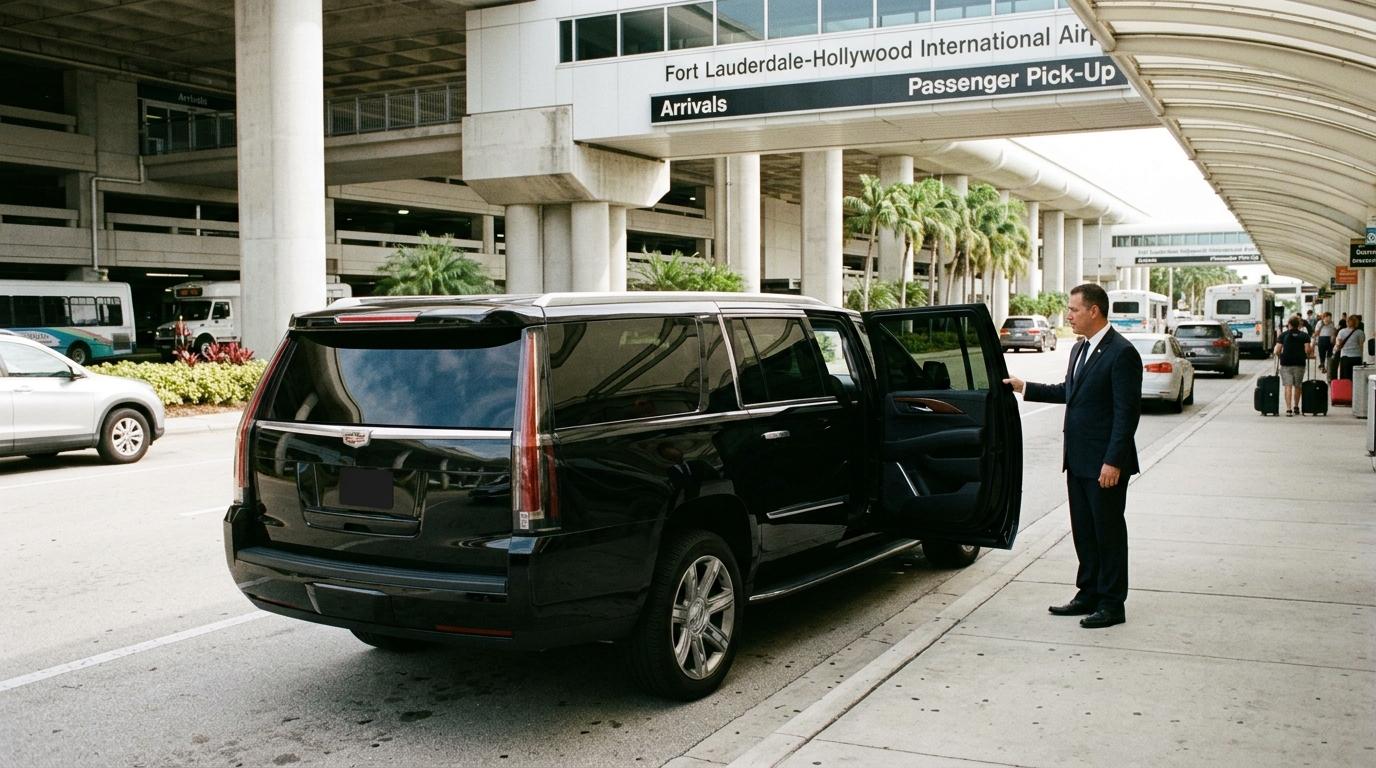
Suppose you land in Miami and your hotel sits in Fort Lauderdale. A private car service from Miami Airport removes the guesswork. A driver tracks your flight, meets you at arrivals and takes the fastest road for that hour, and you never have to pick a route yourself.
Driving Between the Two Cities
Most people drive, and the route is simple. I-95 is the main artery. It runs north and south through both downtowns and joins them in one stretch of highway. The express lanes on I-95 charge variable tolls that rise when traffic builds, and they can save real time during heavy periods. Drivers need a SunPass or a compatible transponder to use them. Rental car travelers should ask the counter how tolls are billed before leaving the lot.
Florida's Turnpike offers a second north and south option a few miles west. It is a toll road, usually calmer than I-95, and it suits travelers who start in Miami Gardens, Miramar, Pembroke Pines or other western neighborhoods. Surface roads give a third choice. US-1 runs close to the coast and passes through Hallandale Beach, Hollywood and Dania Beach. It is slow, with plenty of traffic lights, though it works well when the interstate shuts down after a crash.
The Scenic Route on A1A
State Road A1A hugs the shoreline in many places and adds about 10 to 15 miles to the trip. Expect traffic lights, bridges that open for boats and slow stretches through Hollywood Beach and Sunny Isles. Nobody picks A1A to save time. People pick it for ocean views and a long lunch stop. With a free afternoon and a rental car, it makes a pleasant detour, and the Hollywood Beach Broadwalk is a good place to pause.
When Traffic Hits Hardest
Weekday rush hour on I-95 runs between about 6.30 and 9.30 in the morning and again between about 4 and 7 in the evening. The northbound lanes jam in the afternoon when commuters head home to Broward County. Southbound lanes fill up in the morning. Friday evenings and holiday weekends add their own layers of delay, and a single stalled car near the Golden Glades Interchange can ripple for miles.
Rain matters too. South Florida gets short, heavy summer storms, usually in the afternoon. They slow everyone for 20 to 30 minutes and then clear out. With a flight to catch, build in an extra half hour between June and October.
Parking at the Other End
Parking can cost more effort than the drive itself. Downtown Miami garages charge by the hour, Miami Beach uses a mix of city lots and metered spots, and Wynwood parking fills quickly on weekend evenings. Fort Lauderdale Beach has metered spaces along A1A and a few large garages a block or two inland. If your plans include an evening meal, a train or a hired driver spares you the circling.
Taking the Train from Fort Lauderdale to Miami
The train from Fort Lauderdale to Miami is the option most visitors ask about, and the answer is good news. Two rail services link the cities, and each fits a different traveler.
Brightline
Brightline is the fast one. Its stations sit downtown in Fort Lauderdale, in Aventura and at MiamiCentral in the heart of Downtown Miami. Trains cover the Fort Lauderdale and Miami stretch in about 30 to 40 minutes, depending on stops, and they run through the day on a regular schedule. The cars have wide seats, free Wi-Fi and a snack bar, and the stations feel closer to small airports than to bus depots.
Brightline sells two main fare types. SMART is the standard seat. Premium offers a larger seat and additional onboard amenities. Check the current fare details before booking.
SMART fares often land somewhere between the low teens and the low twenties for a one-way ticket, and Premium costs more. Prices move with demand, which means a Saturday evening can cost more than a Tuesday morning. Buy in the Brightline app or on the website, and arrive at the station about 15 to 20 minutes before departure.
The MiamiCentral station connects directly to Metromover and Metrorail. That makes the last mile simple for anyone staying in Brickell, Downtown Miami or near the Arts and Entertainment District. Travelers heading to Miami Beach still need a rideshare, a taxi or a bus after the train.
Tri-Rail
Tri-Rail is the budget option. This commuter line runs 18 stations along a 72 mile corridor out of Mangonia Park to Miami, and it stops at both Fort Lauderdale and Miami airports. Weekday fares depend on how many of the six zones you cross. Weekend and holiday travel uses a lower flat fare. Children under 5 ride free with a paying adult. You can load an EASY Card with cash value or buy a ticket at the station machines.
The trade-off is time. Tri-Rail makes more stops and runs less often, and a Fort Lauderdale to Miami Airport trip takes close to an hour. It also serves a different set of stations than Brightline, which means your choice often depends on your hotel and your airport. Check the current timetable before you go, because weekend service runs less often than weekday service.
Searching for the Miami to Fort Lauderdale Train
Many people search for the Miami to Fort Lauderdale train in the morning and hope to travel an hour later. That plan works on Brightline because trains leave often during daytime hours. Late evening is the weak spot. Check the final train departure before making late travel plans, and keep a taxi or pre-booked transfer as a backup. Check the final train of the evening before you book dinner reservations, and keep a rideshare or private transfer in mind to cover the gap.
Intercity Buses and Local Transit
Buses cost less than trains and can feel slower. FlixBus, RedCoach and Greyhound all run between Fort Lauderdale and Miami. Some trips leave the Broward Boulevard Park and Ride area and others head for the Miami airport area. On a clear road, an express coach takes about 45 minutes. In heavy traffic it takes much longer, because buses share the same highway with cars.
Broward County Transit and Miami-Dade Transit add local routes. They are the cheapest way to cross the county line, though the trip involves transfers and can take more than 90 minutes. They suit travelers with plenty of time and little luggage. Families with suitcases and strollers usually find the train or a car easier.
Taxis, Rideshare and Private Transfers
A taxi or rideshare between the two city centers can cost noticeably more than a train ticket, especially when demand is high or traffic crawls. For a solo traveler that price feels steep. For three or four people sharing one car, the math looks much better, and door to door convenience matters when you carry luggage.
Private transfers work differently than a street taxi. You book ahead, the price is agreed before the trip, and a driver waits for you with your name or flight number. That structure fits airport arrivals, late flights, early cruise departures, large groups and travelers who dislike surprises. Transpovia is a ground transportation marketplace. It connects you with vetted local providers and does not run tours or sightseeing programs. You choose the vehicle that fits your party and your bags.
Arriving at Fort Lauderdale Airport
Many travelers choose FLL for its lower fares and then head south to Miami. That choice makes sense, and it pays to plan the ground leg before you land. Fort Lauderdale airport transportation includes taxis, rideshare pickups, a free shuttle to the Dania Beach Tri-Rail station, rental cars and prebooked private cars. Each has a place. A prebooked car shines when you land late, arrive with children, or need a vehicle large enough for golf clubs or a cruise load of suitcases.
Booking a Transfer Between the Cities
Say your trip starts at a hotel in Fort Lauderdale and ends in Miami. A Miami to Fort Lauderdale transfer gives you a fixed pickup time, a driver who knows the shortcuts and no parking worries at either end. It costs more than public transport, and for many groups it costs less than two rideshares with surge pricing. Reverse trips work the same way. Tell the provider about extra stops, for example a quick visit to a grocery store, and they can plan the pickup around them.
Which Option Fits Which Traveler
No single choice wins every time. These patterns help narrow the field.
Couples and Solo Visitors
Brightline suits couples who want a relaxed ride and a central arrival. You skip the driving stress, you pay a modest fare and you reach MiamiCentral in the middle of the action. Solo travelers on a tight budget can compare Tri-Rail and the intercity buses.
Families with Young Children
Strollers, car seats and snack bags change the equation. A private car with the correct child seat usually wins on comfort. Brightline is a solid second choice if the children enjoy trains and you stay near a station. Ask your provider about child seats when you book, because Florida has rules for young passengers and not every standard vehicle carries the right seats.
Business Travelers
Time is the main currency here. Brightline gives you a predictable ride and a place to work with Wi-Fi. A private car lets you take calls and handle email without worrying about parking or tolls. Rental cars make sense only when you plan several stops in different parts of the metro area.
Cruise Passengers
Many travelers fly into one airport and sail out of another port. Fort Lauderdale handles departures through Port Everglades, and Miami handles them through PortMiami. If you land at FLL and your ship sails out of PortMiami, expect a drive of roughly 25 to 30 miles, which usually takes 35 to 50 minutes. Leave generous time on embarkation day, because luggage handling and security lines at the terminal add delays.
Budget Travelers
Tri-Rail on a weekend, a SMART fare off peak or an intercity bus on a weekday will keep costs low. Travel in a group of four or more and the private car option can beat the sum of four individual tickets. Always compare before you decide.
Best Times to Travel Between the Cities
Both the calendar and the clock shape South Florida traffic.
-
Early mornings before 6.30 are the quietest window on weekdays.
-
Midday between 10 a.m. and 2 p.m. is usually reasonable.
-
Late afternoon between 4 and 7 p.m. is the slowest period in both directions.
-
Weekends bring beach traffic, and Saturday late morning and Sunday late afternoon can be heavy.
-
Holiday weekends and big sports events at Hard Rock Stadium add delays that no app can predict.
Winter is high season, which means more visitors, more rental cars and slower roads. Summer has lighter traffic on average, though afternoon storms can still cause sudden slowdowns. Hurricane season runs between June and November. Watch the forecast if you travel in late summer or early fall.
Useful Details Most Guides Skip
A few small facts can save you an hour.
Check which side of the city you are visiting. Miami is large, and a hotel in Coconut Grove sits much farther away than a hotel in Aventura or Sunny Isles. Aventura sits near the county border, and a trip there takes far less time than a trip to Coral Gables.
Keep your phone charged. Rideshare and rail apps both rely on a connected phone, and mobile tickets are the norm.
Pack light when you take the train. Brightline has luggage racks, though a cart full of oversized bags on a busy day can be awkward. With more than two large suitcases per person, a car is easier.
Ask about airport rules. Rideshare pickup zones at MIA and FLL sit in specific garages or curbs, and walking to them can take several minutes. A prebooked driver avoids that search and meets you in the arrivals hall.
Confirm the luggage policy for your cruise or flight. Some cruise lines let you check bags at the terminal, and others do not. Airlines have their own rules for early bag drop. Knowing the answer before you leave your hotel lets you pick the right vehicle size.
"We almost rented a car, and I am glad we did not. The ride was easy, the kids stayed calm, and we walked straight into our hotel without hunting for a parking space."
FAQs
How far is Fort Lauderdale to Miami by car?
The driving distance is about 25 to 30 miles, which equals roughly 40 to 48 kilometers. Downtown to downtown on I-95 is close to 28 miles. Your exact distance changes with your starting point, your destination and the road you take.
How long does it take to drive between Fort Lauderdale and Miami?
Expect 30 to 45 minutes when traffic is light. During weekday rush hours, on Friday afternoons or after a crash, the same trip can take 75 to 90 minutes or more. Check a live traffic app before you leave and consider the I-95 express lanes during heavy periods.
Is there a train between Fort Lauderdale and Miami?
Yes. Brightline runs a fast train between downtown Fort Lauderdale and MiamiCentral in about 30 to 40 minutes. Tri-Rail also connects the two areas with more stops, a lower fare and a longer travel time. Both services run on set timetables, and the latest schedule is worth a check before you travel.
How much does the train cost?
Brightline prices change with demand, travel date and seat type. SMART fares often start in the low teens for a one-way trip, and Premium costs more. Tri-Rail fares depend on the number of zones you cross on weekdays and use a flat discounted fare on weekends and holidays. Confirm the price in the official app or on the website.
Can I take a bus between Miami and Fort Lauderdale?
Yes. FlixBus, RedCoach and Greyhound run intercity routes, and local Broward County Transit and Miami-Dade Transit buses connect many neighborhoods. Express coaches move faster than local buses, though both depend on highway traffic.
Which airport is better for visiting both cities, MIA or FLL?
Both work. MIA sits closer to Downtown Miami, Brickell and Miami Beach. FLL sits closer to Fort Lauderdale Beach, Las Olas and Port Everglades. Many travelers pick whichever airport offers the better fare and then plan the ground leg in advance.
Is a private transfer worth it for a short trip?
It can be, especially for families, groups, late arrivals and anyone with heavy luggage. You get a fixed pickup, a driver who tracks your flight and a door to door ride. For a solo traveler with a small bag, the train is often the better value.
Do I need a car to visit both cities?
No. Brightline, Tri-Rail, buses, rideshare and private transfers cover the main routes. A rental car helps if you want to explore the Everglades, the Keys or smaller neighborhoods that sit far away of any station.
Conclusion
The distance between the two cities is short, and the right choice depends on your day. Drive when you want freedom and can handle parking. Take Brightline for a quick, calm ride between downtown stations. Use Tri-Rail or an intercity bus when budget comes first. Book a private car when you carry luggage, travel with children, land late or simply want a smooth trip door to door.
Whatever route you pick, check the time of day before you set out, leave a cushion before any flight or cruise, and confirm your pickup details in advance. If you want a driver waiting at the airport or the hotel, Transpovia can help you compare private ride options for your next South Florida trip.


