
Miami and Fort Lauderdale sit only about 25 to 30 miles apart, yet the trip between them can take anywhere from half an hour to well over ninety minutes depending on how and when you go. Maybe you're heading north for a cruise departure at Port Everglades, moving between hotels with a family and a pile of suitcases, or trying to reach a morning meeting without b on I-95 traffic. Choosing the right Miami to Fort Lauderdale transfer comes down to what matters most to you: speed, cost, comfort, or predictability. This guide breaks down every option so you can decide with confidence.
How Far Is Fort Lauderdale From Miami?
The two downtowns are roughly 28 miles apart by road, with I-95 serving as the main artery between them. Under light traffic, the drive takes 30 to 40 minutes. During weekday rush hours, typically 7–9 AM heading north and 4–7 PM in both directions, the same trip can stretch past an hour.
If you're starting from Miami International Airport or Miami Beach, add another 15 to 25 minutes. Fort Lauderdale-Hollywood International Airport and Port Everglades actually sit south of downtown Fort Lauderdale, so trips ending there are slightly shorter than trips into the city center. Knowing your exact start and end points matters more on this route than the city names suggest.
Comparing Your Travel Options
Each way of making this trip suits a different kind of traveler. Here's how they compare.
Private Transfer
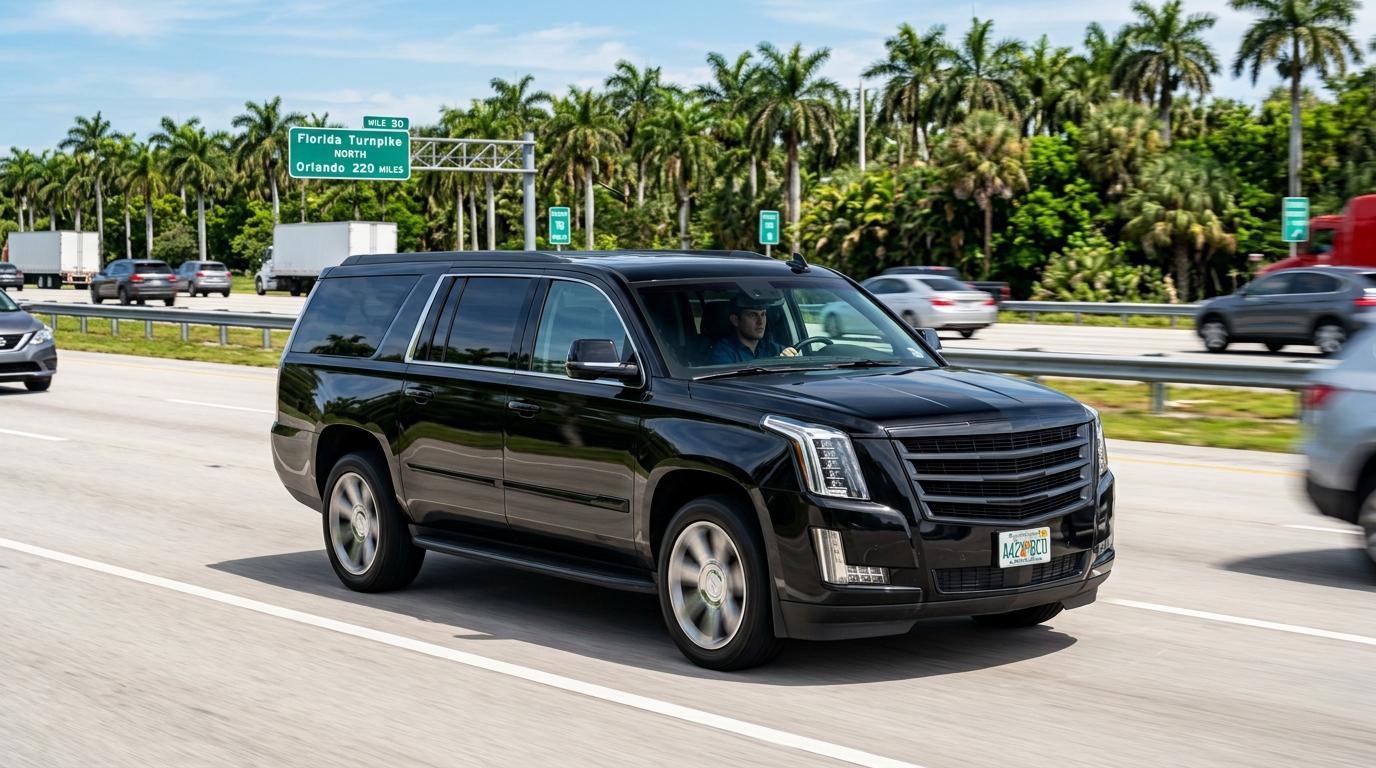
A private car service Miami to Fort Lauderdale is the door-to-door option. A driver picks you up at your hotel, home, or airport terminal and drops you exactly where you need to be, whether that's a cruise terminal, a beachfront resort, or an office. There are no stations, no connections, and no waiting in a rideshare pickup zone.
Travel time matches driving, usually 35 to 50 minutes, but pricing is fixed in advance, so heavy traffic doesn't inflate your fare the way surge pricing can. Luggage space depends on the vehicle you book, which makes this the most reliable choice for families and cruise passengers. The trade-off is cost: a private transfer costs more than the train or a standard rideshare for solo travelers.
Brightline Train
Brightline runs hourly between MiamiCentral in downtown Miami and its Fort Lauderdale station, and the ride takes about 33 minutes. Trains are modern, with leather seats, free Wi-Fi, and space for luggage. Fares within South Florida typically start around $15–$30 one way, with premium seating available for more.
The catch is the stations themselves. If you're not starting near downtown Miami or ending near downtown Fort Lauderdale, you'll need a rideshare or taxi on both ends, which adds time and cost. For travelers going city center to city center, though, it's hard to beat.
Tri-Rail
Tri-Rail is South Florida's commuter train, and it's the cheapest rail option by a wide margin, with fares of just a few dollars. The trip takes around 40 to 50 minutes, but the stations sit away from both downtowns, so nearly everyone needs a connecting bus or ride at each end. It works well for budget travelers with light luggage and flexible schedules, less well for anyone on a deadline.
Rideshare or Taxi
Uber and Lyft are easy to summon and typically cost somewhere between $40 and $80 for this route, though surge pricing during rush hour, cruise turnaround days, or big events can push fares well beyond that. A taxi Miami to Fort Lauderdale generally costs more than a standard rideshare and is metered, so traffic directly raises the price. Both work fine for solo travelers with a bag or two, but neither guarantees a specific vehicle size, which can be a problem for groups.
Driving Yourself
If you already have a car, driving is straightforward: I-95 is the fastest route, with US-1 as a slower coastal alternative and Florida's Turnpike useful for trips starting west of the city. Rental cars only make sense if you'll need one at your destination; otherwise, one-way rental fees and hotel parking rates, which often run $30–$50 per night in both cities, erase any savings.
Quick Comparison
|
Option |
Typical Time |
Approximate Cost (One Way) |
Best For |
|
Private transfer |
35–50 min |
Fixed rate, varies by vehicle |
Families, groups, cruise travelers |
|
Brightline |
~33 min + station transfers |
$15–$30+ |
Downtown-to-downtown trips |
|
Tri-Rail |
40–50 min + connections |
A few dollars |
Budget travelers |
|
Rideshare |
35–60 min |
$40–$80, surge applies |
Solo travelers, light luggage |
|
Driving |
30–60+ min |
Fuel, tolls, parking |
Those who need a car later |
Route Planning Tips
A few habits make this short trip noticeably smoother:
-
Avoid weekday rush hours if you can. Leaving before 7 AM or between 10 AM and 3 PM usually means a clear run up I-95.
-
Build in a buffer for cruises and flights. For a Port Everglades departure or a flight from FLL, allow at least 90 minutes of total travel time from Miami, more on Saturdays and Sundays when cruise traffic peaks.
-
Watch the weather in summer. Afternoon thunderstorms from June through September can slow highway traffic suddenly. Morning departures are more reliable in these months.
-
Traveling with children? Trains don't require car seats, but rideshares and private cars do under Florida law, so confirm one is provided or bring your own.
-
Heavy luggage changes the math. Two people with four suitcases will find station transfers frustrating; door-to-door service saves real effort here.
The same planning logic applies to longer routes out of the city. If Fort Lauderdale is just one stop on a bigger Florida itinerary, a Miami to Orlando transfer follows similar principles, just with higher stakes on timing since the distance is far greater.
When a Private Transfer Makes Sense
For plenty of trips on this route, the train or a rideshare is perfectly fine. But certain situations tip the balance clearly toward a private transfer.
Cruise passengers are the obvious case. Ships at Port Everglades board within fixed windows, and arriving late isn't an option, so a pre-booked car with a set pickup time removes the biggest source of stress. Families benefit for a different reason: wrangling children, strollers, and luggage through two station transfers often costs more energy than the train fare saves.
Business travelers heading to meetings value the predictability of a fixed price and a driver who tracks traffic, while groups of four or more often find that a single van costs about the same per person as multiple rideshares. Elderly travelers and anyone with mobility concerns also tend to prefer a single door-to-door ride over any option involving stairs, platforms, and connections.
This is where a service like Transpovia fits naturally. Its chauffeur service Miami to Fort Lauderdale handles exactly these situations: fixed pickup times, help with luggage, and vehicles sized to the group, so the trip becomes one simple step instead of three.
Booking Your Transfer
However you travel, a little advance planning pays off on this route. If you're booking a private transfer, reserve at least a few days ahead during winter high season, spring break, and major event weekends like Art Basel or the Miami Grand Prix, when demand for transportation from Miami to Fort Lauderdale spikes sharply.
When you book, confirm three things: the exact pickup address (hotels with multiple entrances cause confusion), the exact drop-off point (Port Everglades has multiple terminals), and your luggage count, so the right vehicle is assigned. If you're arriving on a flight first, choose a service that tracks flight delays rather than one that charges waiting fees the moment your scheduled pickup passes. Train travelers should simply book Brightline a day or two ahead for the best fares, since popular departure times can sell out.
Book With Transpovia
Transpovia offers private transfer Miami to Fort Lauderdale with a straightforward online booking process: choose your pickup point, drop-off point, and vehicle, and you'll see a fixed price before you confirm. Professional drivers monitor traffic and flight arrivals, and vehicles range from sedans for solo travelers to vans for families and groups with cruise luggage.
Because the price is set at booking, there's no surge pricing and no meter running in traffic. For travelers who want the trip handled from door to door, Transpovia keeps it simple. The same applies if you're continuing south afterward; a Miami to Key West transfer can be arranged the same way, with one driver for the full route.
Frequently Asked Questions
How much is an Uber from Miami to Fort Lauderdale?
A standard rideshare typically costs $40 to $80 one way, depending on your exact pickup and drop-off points. Surge pricing during rush hour, weekends, and cruise embarkation days can raise that significantly, which is why many travelers with fixed schedules prefer a flat-rate private car Miami to Fort Lauderdale instead.
Is there a train from Miami to Fort Lauderdale?
Yes, two. Brightline runs hourly between the two downtowns in about 33 minutes, with fares generally starting around $15–$30. Tri-Rail is the cheaper commuter alternative, though its stations sit outside both city centers, so you'll need a connecting ride on each end.
How long does it take to get from Miami to Port Everglades?
By road, plan on 40 to 60 minutes from downtown Miami, and more from Miami Beach. On busy cruise days, especially weekend mornings, port traffic adds time at the entrance, so most cruise lines suggest arriving with a comfortable buffer before boarding closes.
Before You Go
This is a short trip, but the difference between a smooth one and a stressful one comes down to matching the option to your situation: Brightline for downtown-to-downtown speed, Tri-Rail for the tightest budget, and a private transfer when luggage, schedules, or group size raise the stakes. Decide what matters most, book ahead during busy periods, and the ride north becomes the easiest part of your day.
"We had four suitcases and a cruise to catch, and the driver had us at Port Everglades with time to spare. After years of guessing with rideshares, we won't do this trip any other way." — A family traveling from Miami Beach


