
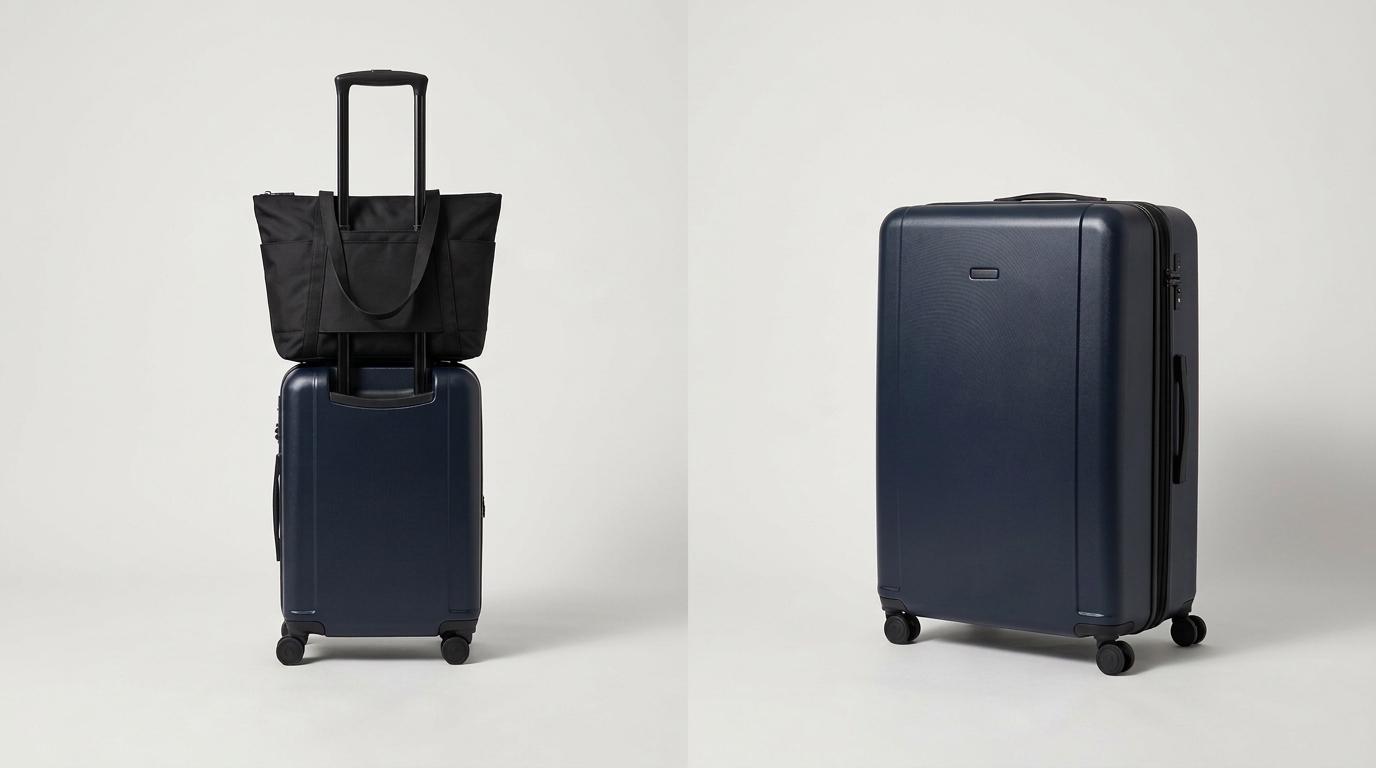
You're standing over an open suitcase the night before a flight, trying to decide whether it all fits in the small bag or whether you're paying to check the big one. That choice affects more than packing. It decides how long you'll spend at the airport, what you can bring, what it costs, and how easily you get from the terminal to your hotel. This guide breaks down carry on vs checked baggage in plain terms: the size limits, the security rules, the items that must stay in one or the other, and a simple way to choose the right setup for your trip.
Carry On vs Checked Baggage at a Glance
The basic difference is where the bag travels. A carry-on stays with you in the cabin, stowed in the overhead bin. A checked bag is handed over at the check-in counter, travels in the aircraft's hold, and gets picked up at baggage claim after you land.
That one difference creates a chain of others:
|
Carry-on bag |
Checked bag |
|
|
Where it travels |
Cabin, overhead bin |
Aircraft hold |
|
Typical US size limit |
About 22 x 14 x 9 inches, including wheels and handles |
About 62 linear inches (length + width + height) |
|
Typical weight limit |
Often none on major US airlines; many international carriers set 7–10 kg (about 15–22 lb) |
Usually 50 lb (23 kg) in economy |
|
Liquids |
3-1-1 rule applies |
No 3-1-1 limit (some hazardous items still banned) |
|
Cost |
Often included, but not on every fare |
Often a fee on US domestic flights; frequently included on long-haul international fares |
|
Access during the trip |
Anytime |
Only after baggage claim |
|
Risk of delay or loss |
Very low |
Small but real |
Exact numbers vary by airline, route, and fare type, so always check your airline's baggage page before you pack.
What Counts as Carry-On Baggage
Carry-on bag vs personal item
Most airlines allow two items in the cabin: one carry-on bag for the overhead bin and one personal item that fits under the seat in front of you. A personal item is usually a backpack, laptop bag, purse, or small tote.
The personal item is easy to overlook, but it's often the smartest place for things you need during the flight, such as headphones, medication, snacks, and travel documents. Once the overhead bins fill up, your carry-on can end up rows behind you.
Size and weight limits
The major US airlines generally cap carry-ons around 22 x 14 x 9 inches, measured with wheels and handles included. That's why so many "carry-on size" suitcases land right at that height. Many domestic carriers don't weigh carry-ons at all, but plenty of international and budget airlines do, and those limits can be strict.
When a carry-on isn't included
A carry-on isn't always free. Ultra-low-cost carriers such as Spirit and Frontier charge for a full-size carry-on and include only a personal item in the base fare. Some basic economy tickets on larger airlines work the same way. United's basic economy, for example, doesn't include a full-size carry-on on most routes. Read the fare details before you book, not at the gate.
What Counts as Checked Baggage
Standard checked baggage rules
A standard checked bag in economy is usually limited to 50 pounds (23 kg) and 62 linear inches. Go over the weight and you'll typically pay an overweight fee, and most airlines refuse bags above a certain maximum entirely. Oversized items like golf bags, skis, and strollers often have their own rules.
Premium cabins and elite frequent flyers usually get more weight and more bags, and many co-branded airline credit cards include a free first checked bag.
What checked bags cost
On most US domestic flights, checking a bag costs extra, and the fee often climbs for the second bag. Southwest, long known for free checked bags, began charging for them in 2025 on most fares. Some airlines also charge less if you pay online ahead of time than at the airport counter. Long-haul international tickets more often include at least one checked bag, but that's no longer something to assume.
Carry On Luggage Rules at Security
The biggest difference you'll feel at the checkpoint is the liquids rule. In the US, the TSA's 3-1-1 rule still applies to carry-on bags:
-
Each container holds 3.4 ounces (100 ml) or less
-
All containers fit in one quart-size, resealable bag
-
One bag per passenger
The rule covers more than drinks. Gels, creams, pastes, and aerosols count too, which catches people out with toothpaste, peanut butter, hair gel, and sunscreen. The container size is what matters, not how much is left inside. A half-empty 8-ounce bottle of lotion will still get pulled.
There are exceptions. Medically necessary liquids, baby formula, breast milk, and baby food are allowed in larger amounts, though you should tell the officer about them so they can be screened separately. Newer CT scanners at many airports mean you may not need to take liquids or laptops out of your bag, but they haven't changed the 3.4-ounce limit.
Other common carry-on restrictions include knives of any blade length, most tools longer than 7 inches, and sporting equipment like bats and golf clubs. If you're unsure about a specific item, the TSA's "What Can I Bring?" search tool on its website gives a quick answer.
Checked Baggage Rules: What Should Never Go in the Hold
Checking a bag removes the liquid limit, but some items should stay with you, and a few are actually required to.
Lithium batteries are the big one. Power banks and spare lithium batteries are not allowed in checked bags at all. They must ride in the cabin. Rules on power banks have also tightened recently. Many airlines now limit passengers to two (some allow only one) and restrict recharging them during the flight. If your carry-on gets gate-checked, take any power banks out before handing it over.
Beyond what's banned, think about what you'd hate to lose. Checked bags occasionally get delayed or misrouted, especially on itineraries with tight connections. Keep these in your carry-on or personal item:
-
Prescription medication
-
Passports, IDs, and travel documents
-
Laptops, cameras, and other electronics
-
Jewelry, cash, and valuables
-
House and car keys
-
A change of clothes, if your checked bag holds everything else
A few things work the other way. Full-size toiletries, larger knives (sheathed or securely wrapped), and certain tools can go in a checked bag even though they're banned from the cabin. Firearms may only travel in checked baggage, unloaded, in a locked hard-sided case, and declared at check-in.
Carry On or Checked Bag: How to Decide
There's no universal answer, but a few questions settle it for most trips.
How long is the trip? For a weekend or a short business trip, a carry-on is usually enough. For a week or more, or anything involving formal clothes, bulky gear, or cold-weather layers, checking a bag tends to make sense.
What are you bringing? Full-size toiletries, sports equipment, gifts, or souvenirs often push you toward checking a bag.
How tight is your schedule? Traveling with only a carry-on lets you skip the bag drop and walk straight out after landing. That's valuable on short business trips or when you have a meeting soon after arrival.
Are you connecting? Each connection adds a small chance that a checked bag won't make the transfer. On a multi-leg itinerary with short layovers, carry-on only reduces that risk.
Who are you traveling with? Families with young children often find that checking bags is less stressful than hauling multiple carry-ons, car seats, and strollers through the terminal. Strollers and car seats can usually be checked free at the counter or the gate.
What does your fare include? Sometimes the math decides for you. If a carry-on costs nearly as much as a checked bag on a budget airline, the bigger bag might be the better deal.
If you're new to all of this, our guide for your first time at the airport walks through check-in, security, and boarding step by step.
How Your Luggage Choice Affects the Ride To and From the Airport
Most baggage advice ends at the gate, but your luggage decision follows you to the curb.
If you check a bag, the trip doesn't end when the plane parks. You'll wait at baggage claim, sometimes 20 minutes, sometimes much longer on busy days or international arrivals. That timing matters if you're catching a scheduled shuttle or trying to line up a rideshare. A private airport transfer with a driver who tracks your flight and meets you in arrivals takes the guesswork out of that wait.
Bag count also changes what kind of car you need. A couple with two carry-ons fits almost anywhere. A family of five with checked suitcases, a stroller, and a car seat won't fit in a standard sedan, and that's not something you want to discover at the curb after a long flight. Pre-booking a private car means you can choose a vehicle sized for your group and your luggage before you leave home. When you book a private airport transfer with Transpovia, including your passenger count and number of bags helps make sure the vehicle that shows up actually fits everyone and everything.
The same applies on the way out. Heavy checked bags are much easier to manage with door-to-door pickup than with a train, a shuttle transfer, and a long walk to the terminal. Before any trip, it helps to run through an airport travel checklist that covers your bags, documents, and how you're getting to the airport.
Packing Tips That Work for Both Bags
Whichever way you go, a few habits make the trip smoother:
-
Weigh your checked bag at home. A cheap handheld luggage scale saves you from repacking on the airport floor.
-
Measure your carry-on with wheels and handles. Many bags sold as "carry-on size" run slightly over once you include them.
-
Pack your quart bag last so it's easy to reach at security.
-
Put a tracker in your checked bag if you have one, and attach a name tag with a phone number on both bags.
-
Photograph your checked bag before you hand it over. It helps if you need to file a delayed or damaged baggage claim.
-
Split essentials between bags when traveling with a partner or family, so one lost suitcase doesn't leave anyone without clothes.
Frequently Asked Questions
Is it better to carry on or check a bag?
It depends on the trip. A carry-on is faster, usually cheaper, and nearly eliminates the risk of lost luggage, which makes it ideal for short trips and tight connections. Checking a bag makes more sense for longer trips, family travel, or when you need full-size liquids, bulky clothing, or sports gear.
Can I bring a full-size shampoo bottle in my carry-on?
Not in the US. Under the TSA's 3-1-1 rule, liquids, gels, and creams in carry-on bags must be in containers of 3.4 ounces (100 ml) or less, all fitting in one quart-size bag. Full-size toiletries need to go in a checked bag, or you can buy them at your destination.
What happens if my carry-on is too big at the gate?
The airline will usually require you to check it at the gate. On many airlines, gate-checking a bag that's simply too big for the bin comes with the standard checked bag fee, and budget carriers often charge more at the gate than online. If the bag is gate-checked only because the bins are full, it's typically free. Either way, take out power banks, spare batteries, medication, and valuables before handing it over.
Conclusion
The difference between carry-on and checked baggage comes down to where your bag travels, and that shapes everything else: what you can pack, what you pay, how long you spend at the airport, and how easily you get on your way after landing. Carry-ons give you speed and control. Checked bags give you space and fewer restrictions.
Before your next trip, check your airline's size limits, look at what your fare includes, and keep anything essential or valuable in the cabin with you. Then think one step past the gate. Knowing how many bags you're bringing makes it much easier to plan a smooth ride from the terminal to wherever you're headed.
"We checked two big suitcases and the kids' car seats, and I was dreading the ride from the airport. The driver was already waiting when we came out of baggage claim, the van had room for everything, and we were at the hotel before the kids even got cranky."
— Rachel, mother of three, after a family vacation in Orlando


