
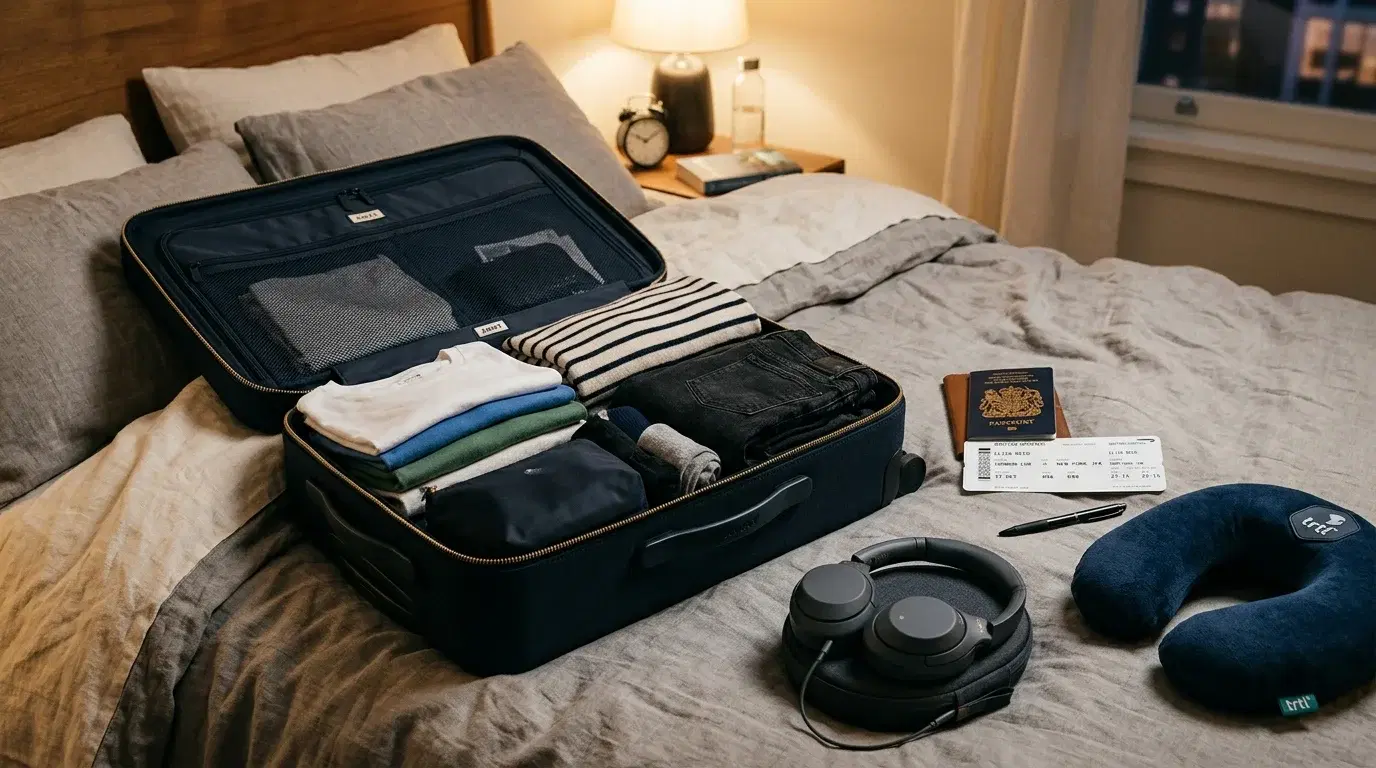
What to do the night before a flight comes down to moving as many decisions as possible out of the morning. Checking in, confirming documents, and packing a security-compliant carry-on the night before leaves less room for a missed step when time is tight. A short, deliberate checklist the evening before departure catches the details that cause the most delays at check-in and security, from an expired form of ID to a bottle of liquid that never made it into a clear bag.
Confirm Flight Status and Check In Online
Checking flight status the night before catches schedule changes before they become a morning surprise. Airline apps update gate assignments and departure times as conditions shift, and a quick check before bed confirms nothing has changed since booking.
Checking in online, typically available starting 24 hours before departure on most airlines, secures a boarding pass and seat assignment ahead of time. Downloading a mobile boarding pass removes one more step from the counter the next morning, particularly useful when the check-in desk is not staffed as early as the flight requires. Reviewing the Airport Travel Checklist alongside this step covers what else is worth confirming before locking in a departure time.
Pack a Carry-On That Clears Security the First Time
Packing liquids incorrectly is one of the most common reasons travelers get pulled aside at security. The TSA's 3-1-1 rule allows liquids, aerosols, gels, creams, and pastes in containers of 3.4 ounces or less, all fitting inside a single quart-sized, resealable bag, with one bag allowed per passenger. The size limit applies to the container itself, not how much liquid remains inside it, so a half-empty six-ounce bottle is still turned away at the checkpoint.
Packing that quart-sized bag the night before, rather than digging through a suitcase at the checkpoint, keeps the line moving and avoids leaving a favorite product behind. Solid alternatives sidestep the rule entirely, since solid personal care items such as shampoo bars or solid perfume are not subject to the 3-1-1 liquid restriction and can be packed separately.
Double-Check Travel Documents
A valid ID or passport is the one item that can end a trip before it starts, which makes the night before the right time to check it, not the morning of. Domestic travelers need identification that complies with REAL ID requirements or another TSA-accepted form of ID at the checkpoint.
International travelers face an additional wrinkle. The U.S. State Department advises keeping at least six months of passport validity remaining when traveling abroad, since many countries in Asia, the Middle East, and Africa enforce a six-month rule, while Schengen Area countries generally require three months of validity beyond the planned departure date. Some airlines will not board passengers whose passport falls short of the destination's minimum validity requirement, regardless of whether the U.S. considers the passport still valid. Confirming any visa requirements and passport expiration date the night before avoids a discovery that cannot be fixed at the gate.
Weigh and Measure Checked and Carry-On Bags
Airlines enforce their own size and weight limits for checked and carry-on bags, and those limits vary by carrier, route, and fare class. Weighing bags at home the night before, rather than finding out at the counter, avoids repacking in the airport or paying an overweight fee at check-in.
Checking the specific airline's current baggage policy before packing is worth the extra step, since limits can differ even between two flights on the same airline depending on the fare purchased. Leaving a small amount of extra room in a checked bag accommodates any last-minute items moved out of a carry-on to meet the 3-1-1 rule.
Plan Transportation and Set a Departure Time
Deciding how to get to the airport the night before, rather than the morning of, removes one more variable from a rushed departure. Confirming a rideshare's typical availability at the planned pickup time, checking public transit's early-morning schedule, or finalizing a pre-booked transfer all take a few minutes the night before and prevent scrambling later.
Setting an alarm based on the airport's TSA checkpoint hours and the recommended arrival window, rather than an arbitrary time, keeps the morning schedule realistic. Building in extra time for traffic, parking, or an unfamiliar terminal costs little the night before and saves considerably more the next morning.
Charge Devices and Prepare for the Morning
A dead phone the morning of a flight complicates everything from a mobile boarding pass to a rideshare pickup. Charging phones, tablets, and any portable battery packs overnight avoids starting the day already behind.
Laying out clothes, medication, and anything needed before leaving the house removes decisions from a groggy morning. Setting out chargers, headphones, and travel documents by the door the night before means nothing gets left behind in the rush to leave.
Common Mistakes the Night Before a Flight
Waiting until the morning to check bag weight is one of the most frequent errors, since it leaves no time to redistribute items if a bag comes in over the limit. Packing liquids loosely instead of in a compliant quart-sized bag is a close second, since it slows down the traveler and everyone behind them at the checkpoint.
Assuming a passport that has not technically expired will be accepted everywhere is another common mistake, particularly for destinations enforcing the six-month rule. Finally, skipping a final flight status check before bed can mean waking up to a schedule that changed overnight without any notice reaching a phone left on silent.
Frequently Asked Questions
How early can you check in for a flight the night before?
Most airlines open online check-in 24 hours before scheduled departure, which typically falls the evening before a flight and is worth doing as soon as it becomes available.
What liquids are not allowed in a carry-on the night before packing?
Any liquid, gel, aerosol, cream, or paste in a container larger than 3.4 ounces needs to go in checked luggage; containers at or under that size must fit inside a single quart-sized, resealable bag.
Should you print a boarding pass or use a mobile one?
Either works at most airports, but downloading a mobile boarding pass the night before avoids relying on an airport kiosk or check-in counter that may not be staffed as early as needed.
Do you need to check passport validity even for a passport that hasn't expired?
Yes. Some countries and airlines require months of remaining validity beyond the actual expiration date, so a technically valid passport can still result in denied boarding if it falls short of a destination's requirement.
Before You Go
A short checklist the night before, covering check-in, documents, packed liquids, and confirmed transportation, prevents most of what turns a travel day stressful. Confirm a ride is arranged, whether that's a rideshare, transit, or a booked Transpovia transfer, before setting an alarm for the morning.


