
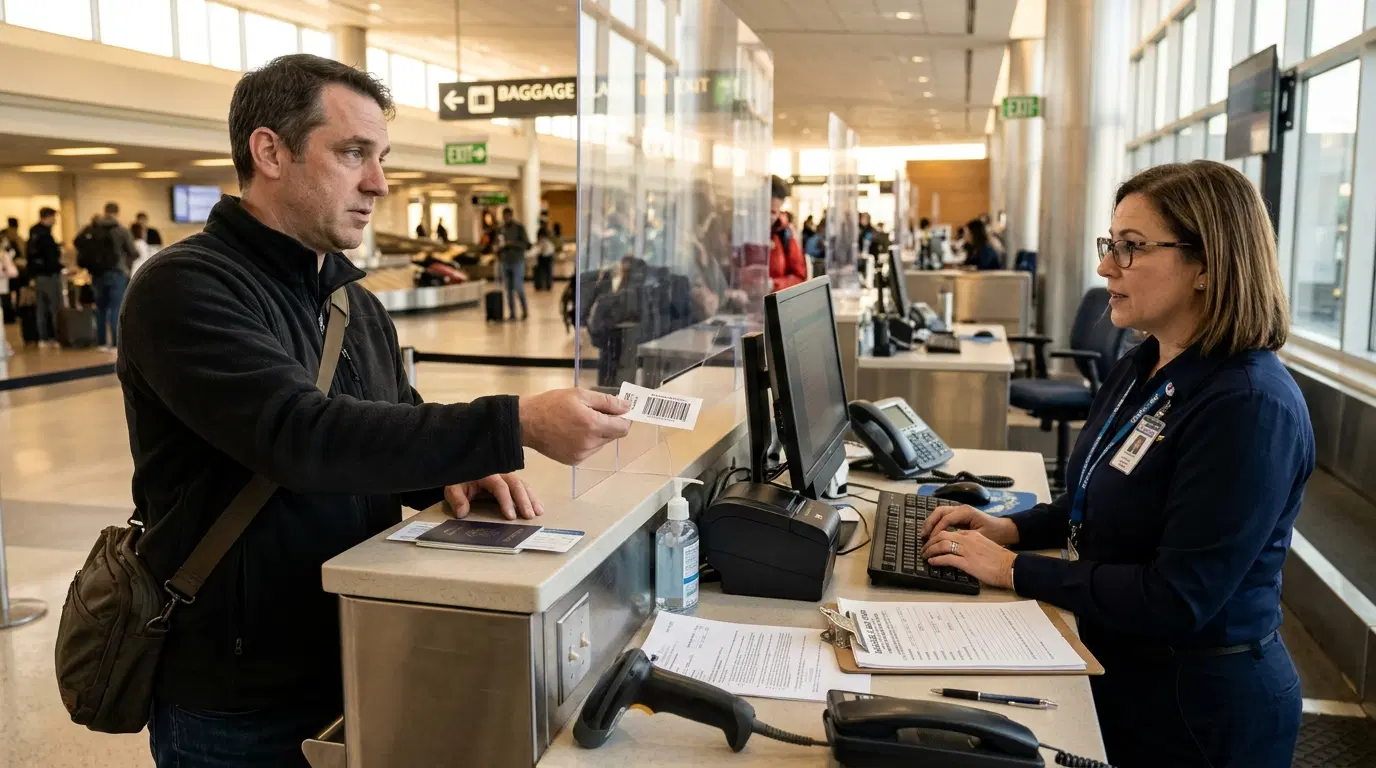
The carousel slows down, the last few bags circle past, and then the belt stops. Yours isn't there. It's one of the most deflating moments in travel, especially after a long flight. Knowing what to do if luggage doesn't arrive can make the difference between a quick fix and days of back-and-forth with an airline. The good news is that most bags that miss a flight aren't gone for good. They're usually delayed, sitting at a connecting airport or loaded onto the next flight. What happens next depends largely on the steps you take before you leave the terminal, so it pays to act calmly and in the right order.
What to Do If Luggage Doesn't Arrive: Your First Steps at the Airport
The first half hour after you realize your bag is missing matters most. Here's how to handle it.
Confirm the Bag Is Really Missing
Before heading to the service desk, take a quick look around. Check whether your flight's bags were split between two carousels, and look near the oversized baggage area if you checked a stroller, golf clubs, skis, or an unusually shaped case. Airline staff sometimes pull bags off the belt and line them up nearby when they've gone around too many times. It's also worth confirming that someone from your flight didn't grab your bag by mistake, which happens more often with plain black suitcases than people expect.
Go to the Airline's Baggage Service Office Before You Leave
Don't walk out of the arrivals hall planning to call later. Head to your airline's baggage service office, which is usually located inside the baggage claim area. If you flew on more than one airline, report it to the carrier that operated your final flight, even if the bag likely went missing earlier in the trip.
Reporting in person while you're still at the airport is important. Some airlines make claims harder to pursue if the bag isn't reported before you leave, and staff can often check the system on the spot to see where your bag was last scanned.
File a Property Irregularity Report
The agent will create a Property Irregularity Report, often called a PIR. This is the official record that your baggage did not arrive, and nearly everything that follows depends on it. Be ready to share:
-
Your boarding pass and the baggage claim tag stub (usually stuck to the back of your boarding pass or ticket jacket)
-
A description of the bag, including brand, color, size, and any distinguishing features like ribbons, stickers, or a damaged wheel
-
A rough list of what's inside
-
A phone number and email address where you can be reached
Before you walk away, get a copy of the report and write down your file reference number. Ask for the name of the agent and the direct phone number for the baggage desk, since general customer service lines are often far less helpful.
Give a Precise Delivery Address
Airlines usually deliver delayed bags to wherever you're staying. Give the full address of your hotel, rental, or home, plus the dates you'll be there. If you're moving between cities during your trip, say so now. A bag chasing you across three hotels is a bag that takes much longer to catch up.
Delayed, Lost, or Damaged: Understanding What Happened
Airlines treat missing bags differently depending on the situation, and the category affects your rights and your timeline.
Delayed baggage is the most common outcome. The bag simply didn't make your flight and is expected to arrive later, often within a day or two. Missed connections, late transfers, and tag-reading errors cause most of these cases.
Lost luggage is the term airlines use once a bag can't be located after an extended search. Under the Montreal Convention, which governs most international flights, a passenger can treat a bag as lost if it hasn't arrived within 21 days of when it should have. Many airlines also have their own internal cutoff for declaring a bag lost.
Damaged baggage means the bag arrived, but it's broken or its contents are harmed. This needs to be reported quickly, ideally before you leave the airport, with photos of the damage.
If your bag is listed as delayed, your claim focuses on reasonable expenses while you wait. If it's ultimately declared lost, you move into a full lost baggage claim for the value of the bag and its contents.
What Airlines Owe You When Your Baggage Has Not Arrived
Your rights depend on where you flew and which rules apply, but a few protections are worth knowing.
Reasonable Interim Expenses
When baggage is delayed, airlines are generally expected to cover reasonable costs for essentials you need while you wait. Think toiletries, a change of clothes, underwear, a phone charger, or basic items for a child. Some airlines offer a small daily allowance or an overnight kit at the desk, while others reimburse you later based on receipts.
"Reasonable" is the key word. Replacing a lost suit for a business meeting is usually acceptable. Buying a designer wardrobe usually isn't. Ask the agent what your airline typically covers and whether there's a daily limit, then keep every receipt.
Baggage Fee Refunds in the US
Under US Department of Transportation rules, if you filed a mishandled baggage report and your checked bag isn't delivered within 12 hours of a domestic flight's arrival at the gate, you're entitled to a refund of the checked bag fee. For international flights, that window is 15 to 30 hours, depending on the length of the flight. These refunds are meant to happen without you having to chase them, but if one doesn't appear, follow up with the airline and reference your report number.
Compensation Limits
For most international journeys, the Montreal Convention caps airline liability for lost, delayed, or damaged baggage at 1,519 Special Drawing Rights per passenger. That's an international currency unit, and the limit works out to roughly $2,000, depending on exchange rates. Purely domestic US flights fall under a separate limit set by the Department of Transportation. In both cases, the cap is a maximum rather than a guaranteed payout, and you'll need to show what your belongings were actually worth.
Claim Deadlines
Deadlines catch a lot of travelers off guard. Under the Montreal Convention, written complaints are generally due within 7 days of receiving a damaged bag and within 21 days of receiving a delayed one. Airlines may set their own time limits for domestic travel, so check your airline's contract of carriage and file as early as you can rather than waiting until the bag shows up.
Tracking Your Missing Luggage
Once your report is filed, most airlines let you track progress online using your file reference number. Many carriers use WorldTracer, a global system that matches unclaimed bags with passenger reports across airlines and airports, so your bag can still be found even if it ended up at an airport you never visited.
A few tips help keep things moving:
-
Check the airline's app or tracking page once or twice a day rather than calling constantly.
-
If you packed a Bluetooth tracker like an AirTag or Tile, share its last known location with the baggage team. It can speed things up when the system shows nothing.
-
Keep your phone on and charged. Couriers often call shortly before delivery, and a missed call can push delivery back another day.
-
If several days pass without an update, send a short written follow-up by email or through the airline's online form. A written trail helps if you need to escalate.
Getting From the Airport Without Your Bags
Missing luggage tends to happen at the worst times: after a red-eye, late at night, or when you're traveling with kids. Spending 30 to 45 minutes filing a report can throw off your plans for getting into the city, too.
If you've arranged a private transfer, message your driver as soon as you realize there's a problem so they know you're still inside the terminal. Most drivers are used to delays at baggage claim, and a quick heads-up keeps everyone on the same page. Our airport pickup guide explains how meeting points and driver communication usually work, which is especially useful when your arrival doesn't go to plan.
This is one situation where a pre-booked private car earns its value. Instead of dragging yourself to a taxi line or trying to figure out late-night public transit while stressed and missing your things, you walk out to a driver who's already waiting and heads straight to your hotel. Booking an airport transfer through Transpovia means your ride is sorted before you land, so a baggage problem doesn't turn into a transportation problem.
It also helps later. Some airlines deliver bags to your hotel, but if the airline asks you to collect the bag yourself, or you need it urgently for a wedding, conference, or cruise departure, a private car booking makes the extra trip back to the airport far simpler than juggling rideshare availability twice in one day.
How to File a Lost Baggage Claim That Gets Paid
If your bag is declared lost, or if you're claiming expenses for a delay, a well-documented missing luggage claim makes a real difference.
List everything in detail. Write down each item, its approximate age, and what it cost. Airlines usually pay depreciated value rather than replacement cost, so older items may be valued lower than what it would cost to buy them today.
Gather proof. Original receipts are ideal, but bank or credit card statements, order confirmation emails, and photos of you wearing or using items can all help support your claim.
Keep copies of everything. Save your PIR, boarding passes, bag tags, receipts for interim purchases, and all correspondence with the airline.
Check your other coverage. Travel insurance policies often include baggage delay and loss benefits, and some credit cards offer protection when you pay for the flight with that card. These benefits may cover costs the airline won't, or pay out faster. Most require proof that you filed with the airline first.
Escalate if needed. If the airline denies a fair claim or stops responding, you can file a complaint with the Department of Transportation for flights to, from, or within the US. For flights elsewhere, the national aviation or consumer protection authority is usually the next step.
How to Reduce the Risk Next Time
You can't control baggage handling, but a few habits make a missing bag far less painful.
Pack a carry-on with what you'd need for the first 24 hours: medication, a change of clothes, toiletries in travel sizes, chargers, and any important documents. Never check passports, prescription drugs, jewelry, laptops, or car keys.
Take a quick photo of your bag and its contents before you check it. That photo makes filing a report easier and helps support your claim later. Put a name tag on the outside and a sheet with your contact details and itinerary inside, in case the outer tag gets torn off.
When booking, give yourself enough connection time, especially on international itineraries or when changing terminals. Tight connections are one of the most common reasons bags fall behind their owners. If you're new to flying, our guide for your first time at the airport walks through check-in, bag drop, and arrivals so you know what to expect at each step.
Frequently Asked Questions
How long does it usually take for delayed baggage to arrive?
Most delayed bags are located and delivered within a day or two, often on the next available flight. Bags that miss international connections can take longer. If your bag still hasn't been found after 21 days on an international trip, you can generally treat it as lost and pursue a full claim.
Can I leave the airport before reporting my baggage not arrived?
You can, but it's not a good idea. Reporting at the airline's baggage service office before leaving creates an official record right away and makes your claim far easier to support. If you've already left, contact the airline immediately and file a report online or by phone.
Will the airline deliver my bag to my hotel?
In most cases, yes. Airlines typically deliver delayed bags to the address you give in your report at no charge. Make sure the address, room details if needed, and your dates of stay are accurate, and let the airline know right away if your plans change.
Conclusion
A missing suitcase can derail the start of a trip, but it rarely has to ruin it. Report the problem before you leave the airport, get your file reference number, keep receipts for essentials, and stay on top of deadlines. Most bags turn up within a day or two, and when they don't, solid documentation is what gets your claim paid.
The rest is about keeping the stress manageable. A well-packed carry-on covers your first night, and a pre-booked private transfer means you're not hunting for a ride after a long wait at the baggage desk. Handle the paperwork, get to your hotel comfortably, and let the airline do the work of bringing your bag back to you.
"We spent forty minutes at the baggage desk after our flight from Rome, and our driver was still there when we came out. Our bags showed up at the hotel the next morning, and by then we'd already stopped worrying about them." — Laura M., traveling with her husband and two kids


