
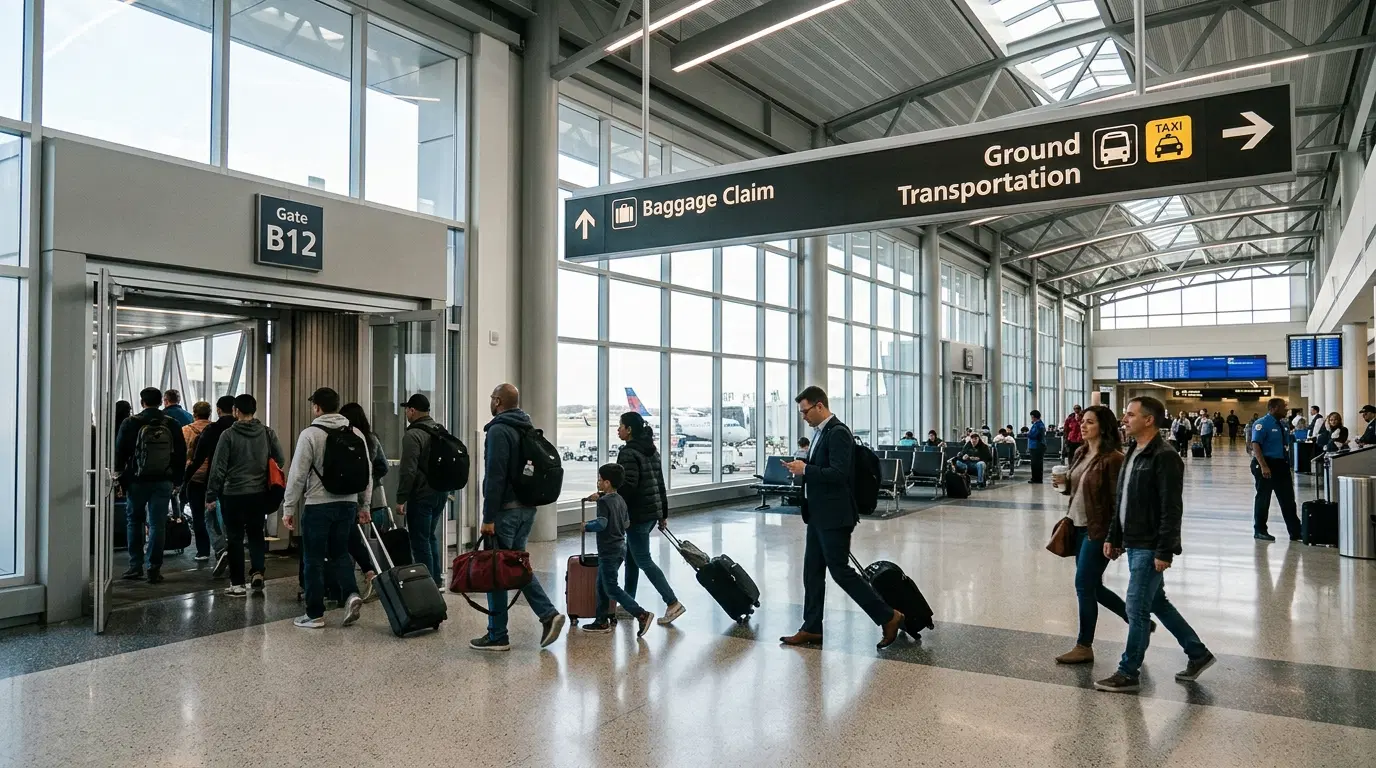
The plane touches down, the seatbelt chime pings, and suddenly everyone is standing in the aisle. If you're wondering what happens after landing at airport terminals, especially in a country you don't know well, the next hour or two follows a fairly predictable sequence. Knowing that sequence takes most of the stress out of it.
This guide covers each stage in the order you'll experience it, from the taxi to the gate through immigration, baggage claim, customs, and the ride to your destination. It also covers where small decisions, like arranging your transportation ahead of time, can save you a lot of hassle.
What Happens After Landing at Airport: The Quick Overview
Most arrivals follow the same basic path:
-
The aircraft taxis to the gate.
-
Passengers deplane.
-
International travelers go through passport control.
-
Everyone collects checked bags.
-
International travelers clear customs.
-
You walk out into the arrivals hall and find your ride.
Domestic flights skip steps three and five, so you go from the gate straight to baggage claim. How long the whole thing takes depends on the airport, the time of day, and how many flights landed around the same time as yours. A small regional airport can have you curbside in 20 minutes, while a large international hub at peak hours can take well over an hour.
Taxiing and Getting Off the Plane
Landing isn't the end of the flight. After touchdown, the aircraft usually taxis for several minutes to reach its gate or stand, and it can take longer at large airports. Stay seated with your seatbelt fastened until the captain turns off the seatbelt sign. Standing early won't get you off the plane any faster, and crew members will ask you to sit back down.
Once the doors open, passengers deplane roughly from the front of the cabin to the back, with exceptions for people who need assistance or tight connections. If you have a connecting flight, check the airport screens or your airline app as soon as you have a signal, because gates change more often than you'd expect.
Before you leave your seat, check the seat pocket, the overhead bin, and the floor. Phones, chargers, and jackets are the most commonly forgotten items.
Walking Through the Terminal
After the jet bridge, signs will split passengers into groups: connections, baggage claim, ground transportation, and, on international flights, immigration or passport control. Follow the signs for your situation rather than following the crowd. Plenty of people end up in the wrong line because they trailed the passengers ahead of them.
If you're flying in for the first time, the layout can feel confusing, and it helps to read through a beginner's overview like this first time at the airport guide before your trip so the signs and terminology already make sense.
Immigration and Passport Control
On international arrivals, this is usually the first official checkpoint. Officers check your passport, and your visa or travel authorization if one is required. They may ask about the purpose of your visit, how long you're staying, and where you'll be staying. Answer directly and keep your documents within reach.
Have these ready:
-
Your passport
-
Any visa or electronic travel authorization
-
The address of your first night's accommodation
-
Return or onward ticket details, if you have them
Procedures vary by country. Some airports use automated kiosks or e-gates for eligible travelers, and some countries require arrival forms or digital declarations completed before or on arrival. Check the entry requirements for your destination before you fly, since they change.
Immigration lines are often the longest wait of the arrival process. If you've booked a driver, this is one place where having someone tracking your flight helps, because they'll know when you landed and won't leave you stranded if the line runs long.
Baggage Claim
After passport control, or straight from the gate on a domestic flight, you'll head to baggage claim. Find your flight number on the carousel display. Bags usually start arriving 10 to 20 minutes after landing, though it can take longer on busy flights.
Stand back from the carousel's edge so you can see bags coming and have room to pull yours off. Check the tag before you leave with it, because many suitcases look alike. A bright strap or luggage tag makes yours easier to spot.
If Your Bag Doesn't Arrive
If your luggage doesn't show up, don't leave the baggage area. Go to your airline's baggage service desk and file a report before you exit. You'll need your baggage claim tag, usually attached to your boarding pass or ticket jacket. Give them an address where the bag can be delivered. Airlines can usually trace a delayed bag and send it on to you, but the report has to be filed first.
Customs and Border Checks
On international flights, customs comes after you've collected your bags in many countries, including the United States. You'll walk through a checkpoint where officers may ask what you're bringing in. Many countries require you to declare certain goods, such as large amounts of cash, agricultural products, restricted food items, plants, and goods above a specified value. In the U.S., for example, travelers must report currency or monetary instruments worth more than $10,000.
Many airports have a red channel for declaring items and a green channel for nothing to declare, though the setup varies. Pick the right one honestly. Undeclared items can lead to fines or confiscation, and it's not worth the risk to save a few minutes.
Arrivals Hall and Finding Your Ride
Once you're through customs, you step into the arrivals hall. This is where many travelers lose time and money, because the options are overwhelming: taxi lines, rideshare pickup zones that can be a long walk from the terminal, shuttles, public transit, and drivers holding signs.
Here's how the common options compare for someone arriving tired, possibly with luggage or kids:
-
Taxis: Convenient, but fares can vary with traffic and route, and queues can be long at busy times.
-
Rideshare: Often requires finding a designated pickup zone, and prices can surge when many flights land together.
-
Public transit or shuttles: Cheaper, but they involve fixed schedules, transfers, and carrying your own bags.
-
Private airport transfer: Pre-booked, with a driver who knows your flight details and is expecting you.
For most travelers, especially families, first-timers, people landing late at night, and anyone heading to a hotel in an unfamiliar city, a pre-booked private transfer removes the guesswork. You know who's picking you up, where to meet them, and what you're paying before you leave home. Transpovia, for example, connects travelers with private drivers for airport transfers, so the ride is settled long before you land.
If you'd like to know how pickups typically work, this airport pickup guide explains what to expect when your driver is meeting you.
Why Booking a Private Car Ahead Makes Arrival Easier
Everything up to this point is the airport's process, and you can't speed it up. What you can control is what happens once you walk out of the terminal.
A private car changes a few things:
-
Flight tracking: Many private transfer services monitor your flight status, so a delay doesn't leave your driver waiting at the wrong time or you stuck without a ride.
-
A fixed, agreed price: You see the cost at booking rather than watching a meter run or an app surge.
-
No hunting for a pickup spot: Your driver is given instructions for where to meet you, whether that's inside the arrivals hall or at a set curbside location.
-
Room for luggage and people: You can choose a vehicle that fits your group and bags, which matters with strollers, golf clubs, or multiple suitcases.
-
Less decision-making when you're tired: After a long flight, not having to compare ride options is a real relief.
None of this is essential for every trip. If you're a confident traveler with one carry-on, a train or rideshare may do fine. But for family trips, business arrivals where you need to be on time, late landings, or unfamiliar destinations, a private transfer is the more predictable choice.
Practical Tips for a Smoother Arrival
A few habits make the process easier no matter where you land:
-
Keep documents together. Passport, boarding pass, and accommodation details should be in one easy-to-reach spot, not buried in a checked bag.
-
Charge your phone before landing. You may need it for maps, your driver's contact details, and airline notifications.
-
Save your driver's or hotel's details offline. Airport Wi-Fi and roaming can be unreliable.
-
Know your first destination's address. Immigration officers often ask, and drivers need it too.
-
Allow extra time for onward plans. If you have a meeting, a check-in time, or a dinner reservation, build in buffer time for immigration and baggage delays.
Frequently Asked Questions
How long does it take to get out of the airport after landing?
It depends heavily on the airport and flight type. On a domestic flight with carry-on only, you can be out in 15 to 30 minutes. On an international flight with checked bags, plan for roughly one to two hours, and more at large hubs during peak periods. Immigration queues and bag delivery speed are the biggest variables.
Do I go through customs before or after baggage claim?
It varies by country, but in many places, including the United States, you pick up checked bags first and then go through customs. Follow the posted signs after passport control, since airports are laid out differently.
Is it better to book a private airport transfer or take a taxi or rideshare?
It depends on what you value. Taxis and rideshares work if you're comfortable navigating the pickup area and accepting a price that may change with demand. A private airport transfer is typically better when you want a confirmed price, a driver who is expecting you, and a vehicle sized for your group and luggage. That's especially useful after a long flight or when arriving late at night.
Conclusion
Landing is just the start of the arrival process. You taxi to the gate, deplane, clear immigration if you're arriving internationally, collect your bags, pass through customs, and then find a way to your destination. Each step is manageable once you know what's coming and have your documents ready.
The last step is the one you can plan best. Booking a private car before you travel, whether through Transpovia or another trusted private transfer provider, means you walk out of the terminal knowing who's waiting and where you're going. After hours of travel, that certainty makes a noticeable difference.
"After a 14-hour trip, seeing my driver's name on a sign right where he said he'd be was the best moment of the whole journey." — Business traveler, arriving late at night


