
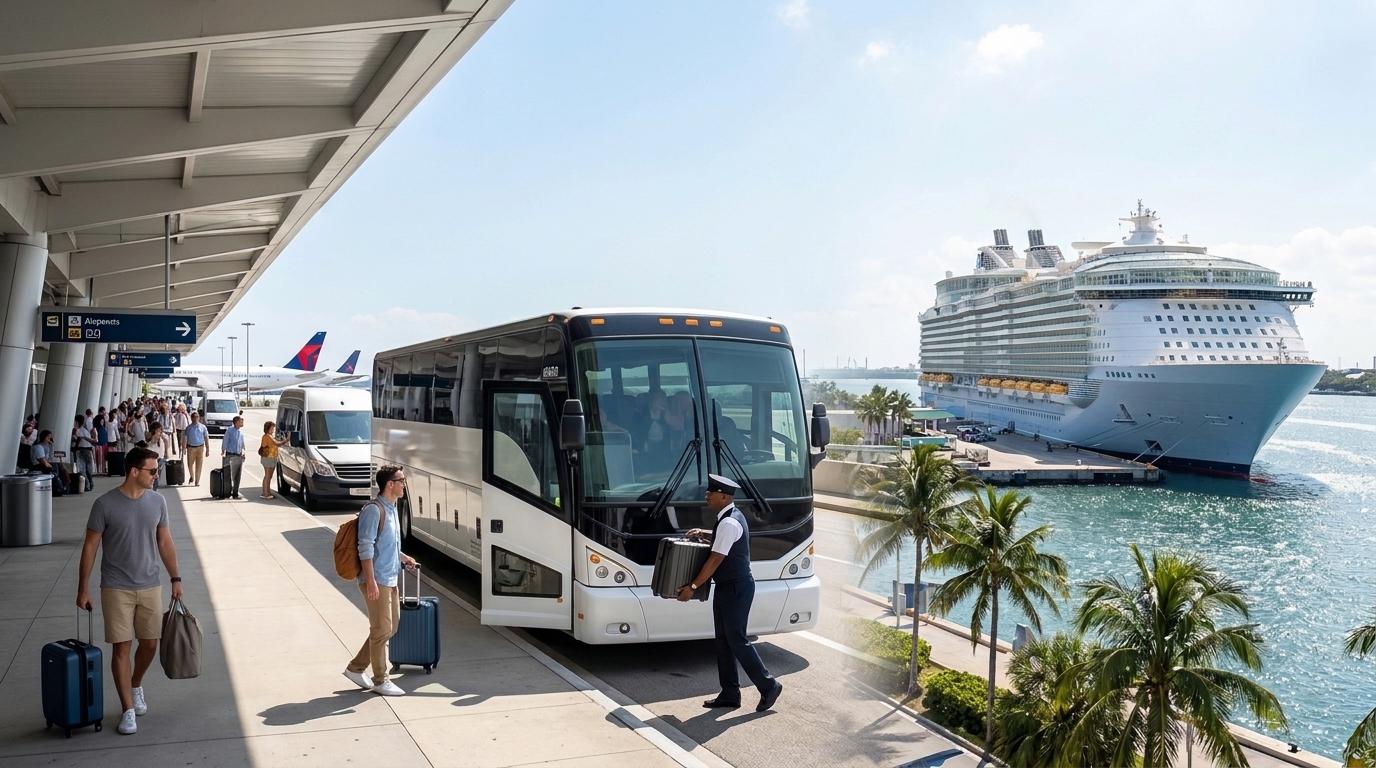
The ship is booked, the outfits are packed, and the countdown has started. Then a quieter question shows up: how are you actually getting from the airport to the pier? It sounds like a small detail, but it's the one that decides whether embarkation day feels relaxed or rushed. If you plan to book airport to cruise transfer service, a little preparation goes a long way. This guide walks through your transportation options, how to time your flight around boarding, what information your driver needs, and why a private, pre-arranged ride is often the smoothest way to start a cruise.
Why You Should Book Airport to Cruise Transfer Service Before You Travel
Cruise ships don't wait. If you reach the terminal after the check-in cutoff, the ship can leave without you, and catching up at the next port of call is expensive and stressful. That's the core reason to settle your ground transportation before you fly.
Waiting until you land creates a few avoidable problems. Taxi lines at big cruise airports can stretch long on Saturday and Sunday mornings, when several ships turn around at once. Rideshare prices tend to climb when hundreds of passengers request cars at the same time. And a standard sedan that shows up for a family of five with two large suitcases each simply won't work.
A pre-booked cruise transfer takes those variables off the table. You know the pickup point, the vehicle size, and the price before you leave home. The driver knows your flight number and destination terminal. When you walk out of baggage claim, the only job left is to find your ride.
Comparing Airport to Cruise Transportation Options
Most travelers choose between three approaches. Each has a place, but they work very differently on a busy embarkation morning.
Cruise Line Shuttles
Many cruise lines sell airport transfers that you add to your reservation. They're convenient in the sense that the cruise line coordinates everything, and they often run motorcoaches that carry a large group at once.
The tradeoffs are worth knowing. Pricing is usually per person, so costs add up quickly for families and groups. Shuttles typically run only on embarkation and disembarkation days, which doesn't help if you're flying in early to stay at a hotel. Coaches may also wait to fill up before leaving the airport, and you'll be sharing the ride, and the luggage drop, with dozens of other passengers.
Taxis and Rideshare Apps
Where the airport sits close to the port, a taxi or app-based ride can be a reasonable choice. Still, you're relying on availability at the moment you land. Surge pricing, long pickup queues, and cars too small for cruise luggage are common complaints. Some ports also sit far from the nearest major airport. Travelers flying into Rome for a Civitavecchia departure or into a London airport for a Southampton sailing face a much longer drive, and an unplanned ride over that distance gets costly and uncertain.
Pre-Booked Private Transfers
A private airport cruise transfer service gives you a dedicated vehicle and driver for just your group. You choose the vehicle size, the driver tracks your flight, and the ride goes straight to your terminal without stops for other passengers. For couples, families, and small groups, the total price often compares well with paying per-person shuttle fares, and the experience is noticeably calmer.
This is the option most worth considering when you're traveling with kids, older relatives, a lot of luggage, or a tight window between landing and boarding.
Timing Your Flight Around Embarkation Day
Your transfer is only as reliable as your flight schedule. A few timing habits protect you from the most common problems.
Fly In the Day Before When You Can
Experienced cruisers almost always recommend arriving the day before sailing. A delayed or canceled flight is an inconvenience when you have a night's buffer; on sailing day, it can cost you the trip. If you do stay overnight, you'll want two rides: one from the airport to your hotel, and one from the hotel to the port the next morning. A private transfer handles both easily, since you're not limited to the cruise line's embarkation-day schedule.
Know Your Check-In Window, Not Just Your Sailing Time
Your ship's departure time and its boarding window are two different things. Most cruise lines assign each guest a terminal arrival time, and the final check-in cutoff falls well before the ship actually pulls away. Plan your pickup around the check-in window printed in your cruise documents, then add room for traffic. Arriving far earlier than your assigned slot usually just means waiting in the terminal.
Same-Day Arrivals Need Extra Margin
If flying in on embarkation day is unavoidable, choose the earliest flight you reasonably can. Build in time for deplaning, baggage claim, customs if you're arriving internationally, and the drive itself at its worst traffic. This is the scenario where a pre-arranged ride matters most, because you can't afford to lose time searching for transportation.
Details to Share When Making a Cruise Transfer Reservation
A smooth pickup depends on accurate information. When you make your cruise transfer reservation, have these ready:
-
Flight number and arrival time. This lets the driver adjust if your flight runs early or late.
-
Exact cruise terminal. Busy ports such as Miami and Port Everglades have multiple terminals, and the ship's name alone isn't always enough. Check your cruise documents for the terminal number.
-
Passenger count, including children. Mention any need for child or booster seats.
-
Luggage count and size. Note oversized items like strollers, golf bags, or mobility equipment.
-
Contact number that works abroad. If you're flying internationally, confirm your phone will receive calls or messages on arrival.
If it's your first time arranging a ride this way, a step-by-step guide to booking airport transportation can help you understand how pickup points, confirmations, and driver contact usually work before you complete your reservation.
Choosing the Right Vehicle for Your Group and Luggage
Cruise luggage is different from a weekend trip. Extra clothing, swimwear, sightseeing equipment, and souvenirs on the way home mean bags are bigger and more numerous than usual. A common mistake is booking a vehicle by seat count alone.
As a rough guide, a sedan suits a solo traveler or a couple with moderate bags. Families and groups of four or more usually do better with an SUV or minivan, and larger parties traveling together can share a passenger van rather than splitting into several cars. Splitting up may seem cheaper, but coordinating multiple rides to the same terminal adds stress you don't need.
Accessibility matters too. If anyone in your group uses a wheelchair or walker, say so at booking so the right vehicle is assigned. Private transfers make this kind of request much easier to accommodate than a shared coach.
What to Expect When You Reach the Cruise Terminal
Most drivers drop off at the terminal curb, where porters collect checked bags. Your cruise line will send luggage tags ahead of time; attach them before you leave the airport or hotel so the handoff takes seconds. Once bags go with the porter, you may not see them again until they're delivered to your cabin later in the day.
That's why it helps to keep a small carry-on with you: passports, boarding documents, medications, a phone charger, and anything you'll want in the first few hours on board. Many travelers also pack a change of comfortable clothing and essential personal items in their carry-on so they have everything they need while waiting for their cabin to be ready.
Ports vary in layout, traffic patterns, and drop-off rules. Before your trip, it's worth reading up on the specific terminal you're sailing from. Transpovia's guides to cruise port transportation cover major embarkation ports and help you see what the drive and drop-off look like ahead of time.
Planning the Return Ride From the Port
Disembarkation morning feels like the opposite of embarkation day. Thousands of passengers leave the ship within a few hours, and the curb outside the terminal fills fast. Taxi and rideshare lines can be long, and shared shuttles may hold until they're full.
Arranging your return transfer at the same time as your arrival ride solves this. Give the driver your ship's scheduled arrival, and book flights later in the day rather than early morning. Ships occasionally dock late, and clearing customs and collecting bags takes longer than most people expect. Leaving a generous gap between disembarkation and your departure flight keeps the last day of vacation from turning into a sprint.
Frequently Asked Questions
How far in advance should I book an airport to cruise port transfer?
As soon as your flights and sailing date are confirmed is ideal. Popular ports see heavy demand on embarkation weekends and during peak seasons, so booking early gives you the best choice of vehicle size and pickup time. Last-minute bookings are sometimes possible but leave less room for larger vehicles.
Is a private transfer more expensive than the cruise line shuttle?
Not always. Cruise line shuttles are usually priced per person, while private transfers are typically priced per vehicle. For a solo traveler, a shuttle may cost less. For couples, families, or small groups, a private vehicle can come out similar or even cheaper once you add up individual fares, and you skip the waiting and shared stops.
What happens if my flight is delayed?
With a pre-booked private transfer, providing your flight number allows the driver to monitor your arrival and adjust pickup time. Check your provider's policy on waiting time and delays before you book. If you're flying in on embarkation day, a significant delay is exactly why arriving the day before is recommended.
Conclusion
Getting from the airport to the ship is the first real step of your cruise, and it deserves the same planning as the cabin and the excursions. When you book airport to cruise transfer service in advance, you lock in the right vehicle, a known price, and a driver who's already expecting you, instead of gambling on taxi lines and crowded shuttles.
Private transfers make the most sense for families, groups, travelers with heavy luggage, and anyone working with a tight schedule. Pair that ride with smart flight timing, accurate terminal details, and a return trip booked ahead, and embarkation day becomes the easy start it should be. Through Transpovia, you can compare and reserve private rides to and from major cruise ports before you ever leave home.
"We landed, saw our driver holding a sign with our name, and were at the terminal before most of the shuttle crowd had even loaded their bags. With two kids and six suitcases, that alone made the trip feel like it started on vacation mode." — Melissa R., traveling with her family to Port Canaveral


