
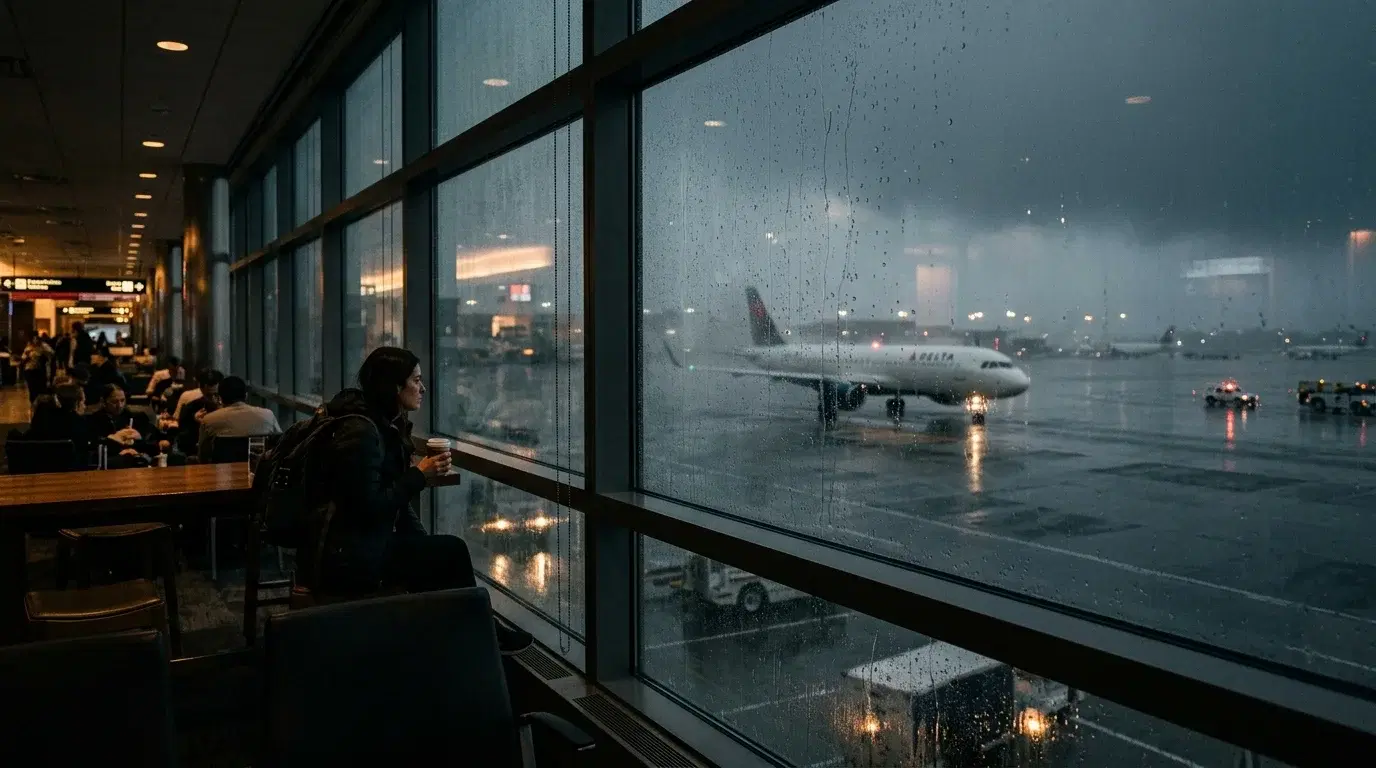
Airport travel during bad weather rarely fails all at once. A storm two states away can cancel an incoming aircraft before local skies show a single cloud, and a flight that looks fine at breakfast can be grounded by afternoon. Knowing what to check, what airlines are actually required to do, and how to get to the airport safely when roads or transit slow down turns a weather day from a guessing game into a plan.
How Weather Delays Actually Start
Weather rarely delays a flight because of conditions at the departure airport alone. An incoming aircraft, its crew, or the airport it is arriving from can all be affected by weather hundreds of miles away, which is why a flight can show a delay before local conditions change at all.
Checking the aircraft's inbound status, not just the departure airport's forecast, gives a more accurate read on whether a flight will actually leave on time. The Federal Aviation Administration's Airport Status page reports live ground stops and delay programs by airport, which is often the fastest way to see a weather-driven slowdown building before an individual airline updates a specific flight.
Checking Flight Status Before You Leave for the Airport
Checking flight status becomes more important, not less, once weather is in the forecast. Airline apps update departure times as conditions change, and confirming status within an hour of leaving home avoids arriving to a flight that has already shifted or been cancelled.
Cross-checking an airline's app against the FAA's airport status data catches gaps between the two. Reviewing the Airport Travel Checklist before a weather-affected trip covers the basics worth confirming, from parking to security wait times, before conditions change again.
What Airlines Actually Owe You When Weather Causes a Delay
Weather-related delays fall outside airline control, which limits what travelers are entitled to. If a flight is significantly delayed or cancelled, travelers are legally entitled to a refund from the airline regardless of the cause, provided they decline the rebooking offered. That refund right applies to weather the same way it applies to any other cause.
Beyond a refund, though, when weather cancels a flight, the airline's legal obligation consists of rebooking the passenger on its next available flight at no additional cost, with nothing further required by law. Several major airlines voluntarily extend meal vouchers, free rebooking, and overnight accommodations even for weather-related disruptions, but these commitments vary by airline and are not guaranteed by regulation. Checking the specific airline's customer service plan before a weather-heavy travel day sets realistic expectations for what help, if any, is available beyond a rebooked seat.
Tarmac Delay Rules During Weather Holds
Weather sometimes means sitting on the tarmac rather than waiting in the terminal, and federal rules cap how long that can last. The Department of Transportation's tarmac delay rule requires passengers have the opportunity to deplane before three hours pass on a domestic flight, or four hours on an international one, counted from when the aircraft door closes.
That deadline has exceptions. The three- or four-hour deplaning rule does not apply when passenger safety and security are at risk, or when returning to the gate would significantly disrupt airport operations, both of which can come into play during active severe weather. Airlines are also required to provide food and water within the first two hours of a tarmac delay, regardless of what caused it.
Getting to the Airport Safely When Roads or Transit Are Affected
Bad weather changes drive times and transit reliability well before it affects a flight. Roads that normally take 30 minutes to the airport can take considerably longer during snow, heavy rain, or high wind, and rideshare and taxi demand tends to spike at the same time availability drops.
Checking a state transportation department's road condition page, or a local transit authority's service alert page, before leaving home catches closures or delays that a standard map app might not reflect yet. Building in extra travel time, rather than assuming the usual commute will hold, matters more on a weather day than any other single piece of planning.
Packing and Preparing for Weather-Related Delays
A weather delay is more manageable with a few basics on hand. Chargers, medication, a change of clothes, and any documents needed for rebooking are worth keeping in a carry-on rather than checked baggage, since a cancelled connection can mean an unplanned overnight without access to checked items.
Downloading the airline's app and enabling notifications catches rebooking options as soon as they appear, which matters when thousands of other passengers are trying to rebook the same disrupted flights at once. Confirming a hotel or transportation cancellation policy before departure also avoids losing a deposit if the trip changes at the last minute.
Common Mistakes During Bad-Weather Airport Travel
Assuming clear local skies mean an on-time flight is one of the most common errors, since the aircraft, crew, or connecting airport may be affected by weather elsewhere. Waiting until arrival at the airport to start rebooking is another, since app-based rebooking during a mass cancellation event is often faster than joining a line of other affected passengers.
Underestimating drive time is a third mistake specific to weather days. A trip that normally takes 30 minutes can run considerably longer once roads slow down, and leaving on the original day's schedule instead of a weather-adjusted one increases the odds of missing a flight that is otherwise on time.
Frequently Asked Questions
Do airlines have to compensate passengers for weather-related delays?
No. Weather, along with air traffic delays and mechanical issues, is generally considered outside an airline's control, and airlines are not required to compensate passengers for cancellations or delays caused by these issues. A refund is available if the delay is significant and the rebooking is declined, but additional compensation is not guaranteed.
How can travelers tell if a flight will be affected by weather before arriving at the airport?
Checking the airline's app alongside the FAA's Airport Status page gives the clearest early picture, since ground stops and delay programs often appear there before an individual flight's status updates.
What happens if a flight sits on the tarmac too long during a storm?
Federal rules require an opportunity to deplane after three hours on a domestic flight or four hours on an international one, with exceptions for safety, security, and air traffic control disruptions that can apply during severe weather.
Should travelers rebook immediately when a flight is cancelled for weather?
Rebooking through the airline's app as soon as a cancellation appears is typically faster than waiting in an airport line, since large weather events often affect many flights and passengers at once.
Before You Go
Weather adds uncertainty that no amount of planning removes entirely, but checking flight status early, knowing the refund and tarmac delay rules, and building in extra travel time cover most of what is within a traveler's control. Confirm ground transportation, including any pre-booked Transpovia transfer, accounts for weather-adjusted travel time before heading out.


