
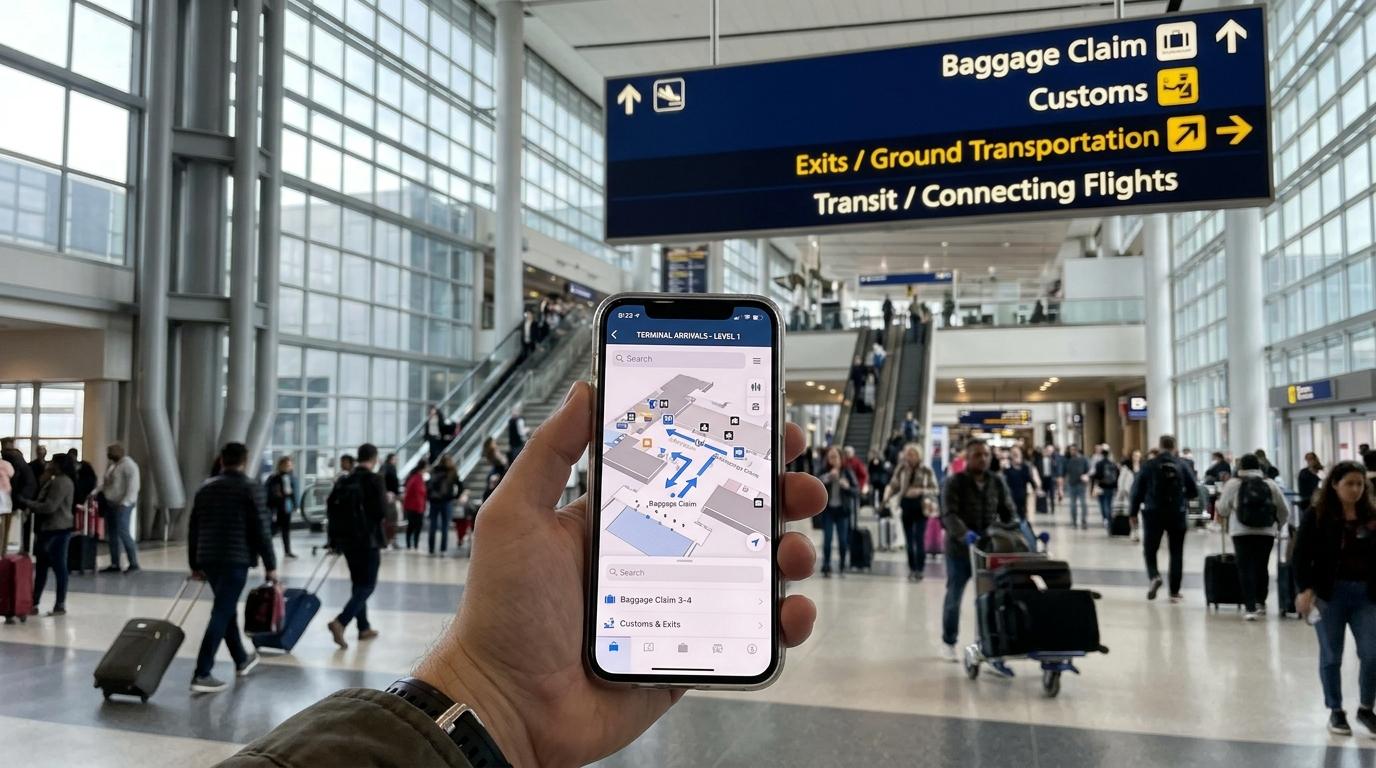
The wheels touch down, the cabin lights come up, and suddenly everyone is standing in the aisle. What happens next depends on where you landed and where you came from, but the airport arrival guide follows a fairly predictable path. You leave the plane, clear any border checks, collect your bags, and find your way out of the terminal. Knowing the order ahead of time takes much of the stress out of those first 60 to 90 minutes.
This guide walks through each stage, flags the spots where travelers most often lose time, and explains how to plan the final leg so you don't end up standing at a curb wondering what to do.
What Happens When You Arrive at the Airport
Before you step off the plane, there are a few small things worth doing. Turn off airplane mode once the crew says it's fine, and check your phone for a gate change, a text from your driver, or a hotel message. If you filled out a customs or health form on the plane, keep it with your passport.
Once you leave the aircraft, follow the signs. Airports use clear overhead signage, and most arrival halls funnel passengers in the same direction. Domestic arrivals typically head straight toward baggage claim and the exit. International arrivals are routed to passport control first. If you're unsure which path applies to you, ask a gate agent or airport staff before you start walking. Terminals can be huge, and a wrong turn costs real minutes.
Passport Control and Immigration
If you've arrived from another country, border inspection comes first. In the United States, a Customs and Border Protection officer will check your passport and visa or travel authorization, look at your travel details, and may ask a few short questions about your trip. Common ones include how long you're staying, where you're staying, and the purpose of your visit.
Answer plainly and keep your documents within reach. Have your return or onward ticket details and your first night's address saved on your phone or printed. Some travelers can skip part of the line with programs like Global Entry or the Mobile Passport Control app, but both need to be set up before you travel.
Lines at immigration are the least predictable part of the airport arrival process. A few flights landing together can double the wait. That's one reason it helps to avoid scheduling anything tight right after you land.
Baggage Claim: Finding and Collecting Your Luggage
After immigration, or directly after deplaning on a domestic flight, you'll reach baggage claim. Check the arrival screens for your flight number and the assigned carousel, since the belt can change after landing.
When your bag appears, confirm the tag before leaving. Many black suitcases look alike. If your luggage doesn't show up, don't leave the area. Go to your airline's baggage service desk, which is usually near the carousels, and file a report before you exit. You'll need your baggage claim tag, which is typically attached to your boarding pass or stuck to your ticket jacket. Most airlines can deliver delayed bags to your hotel or address.
Oversized items like strollers, golf bags, and skis often come out at a separate counter instead of the main belt. If something you checked doesn't turn up on the carousel, ask staff where special items are returned.
Customs: What to Declare
International travelers pass through customs after collecting bags. The point is to declare certain goods and confirm you aren't bringing in anything restricted. In the U.S., you must declare currency or monetary instruments totaling $10,000 or more, and certain food, plant, and animal products are restricted or prohibited. Fresh fruit, meat, and some dairy are common items that cause trouble.
If you aren't sure whether something needs to be declared, declare it. Officers are much more understanding of an honest question than of an undeclared item discovered in a bag. Rules vary by country, so check the destination's official customs guidance before you pack, especially for gifts, medications, and food.
Getting Out of the Terminal: Your Ground Transportation Options
Once you're through the doors, you're in the arrivals hall, and this is where many people suddenly feel tired and unsure. You need to decide how you're getting to your hotel, home, or meeting, ideally before you land.
The usual choices are taxis, rideshares, public transit, rental cars, shuttles, and pre-booked private transfers. Each has trade-offs. Taxi and rideshare lines can be long at peak times, and pickup zones are sometimes a walk from the terminal. Public transit can be economical but tough with heavy bags, small children, or a late arrival. Rental cars mean paperwork, an unfamiliar city, and possibly a long day behind you.
Why a Private Airport Transfer Makes Sense After a Long Flight
A private transfer takes most of those decisions off the table. You book a car in advance, the driver knows your flight, and the vehicle is waiting instead of being something you chase. For families with kids and car seats, business travelers heading straight to a meeting, or anyone arriving late at night, that predictability is worth a lot.
Booking through a marketplace like Transpovia lets you compare private transfer options for your route and arrange the pickup before you travel. If you want more detail on how the pickup itself works, the airport pickup guide explains what to expect from the moment you land to the moment you're in the car.
Questions to Settle Before You Book
Before you confirm a private transfer, make sure you have the basics covered. Give the provider your exact flight number so they can adjust for delays. Check whether the driver will meet you inside the terminal or at a designated curb area. Confirm the vehicle size matches your passengers and luggage, and note any extras you need, like a child seat. Save the driver's or provider's contact details somewhere you can reach them without Wi-Fi.
Tips for a Smoother Arrival
A few habits make a noticeable difference, whether you're an experienced flyer or not.
Keep your passport, boarding pass, and any forms in an easy pocket rather than the bottom of a bag. Charge your phone before landing, because you may need it for digital documents, maps, and messages. Carry a small amount of local currency or make sure a card works abroad. Keep medication, chargers, and a change of clothes in your carry-on in case your checked bag is delayed.
Build a buffer into your plans. After an international flight, allow extra time between landing and any appointment, since immigration and baggage claim can run long even when everything goes right. And if this is your first trip through a large airport, the first time at the airport beginner's guide covers the experience from start to finish.
Frequently Asked Questions
How long does the airport arrival process usually take?
It varies widely. A domestic arrival with carry-on only can be over in 20 to 30 minutes, while an international arrival with checked bags can take well over an hour once you add immigration, baggage claim, and customs. Busy travel periods and several flights arriving at once can stretch that further, so avoid booking anything tight right after you land.
What should I do if my flight lands early or late?
Early arrivals sometimes have to wait for a gate to open, and delayed arrivals can shift everything downstream. If you've booked a private transfer, share your flight number with the provider so they can track changes. If you're relying on a rideshare or taxi, you'll simply deal with whatever demand looks like when you walk out.
Is a private airport transfer worth it compared to a taxi or rideshare?
For many travelers, yes, especially with kids, lots of luggage, a late arrival, or an unfamiliar city. A private transfer is arranged before you travel, so you don't have to hunt for a pickup point or wait in a queue. Taxis and rideshares can be perfectly fine for light travelers with flexible schedules, but a pre-booked car removes the guesswork when you're tired.
Conclusion
The airport arrival guide is easier than it looks once you know the sequence: deplane, clear immigration if you've crossed a border, collect your bags, pass through customs, and head out to your ride. Most of the stress comes from the unknowns, like which line you're in, whether your bag made it, or how you're getting from the curb to your destination.
You can't control a long immigration line, but you can control the last step. Deciding on your transportation before you leave home, and arranging a private transfer through a service like Transpovia, means one less thing to figure out when you're worn out and just want to arrive.
"After a 14-hour flight, seeing my driver already waiting was the best part of the whole trip. I didn't have to think about anything." — Daniel, returning visitor


