
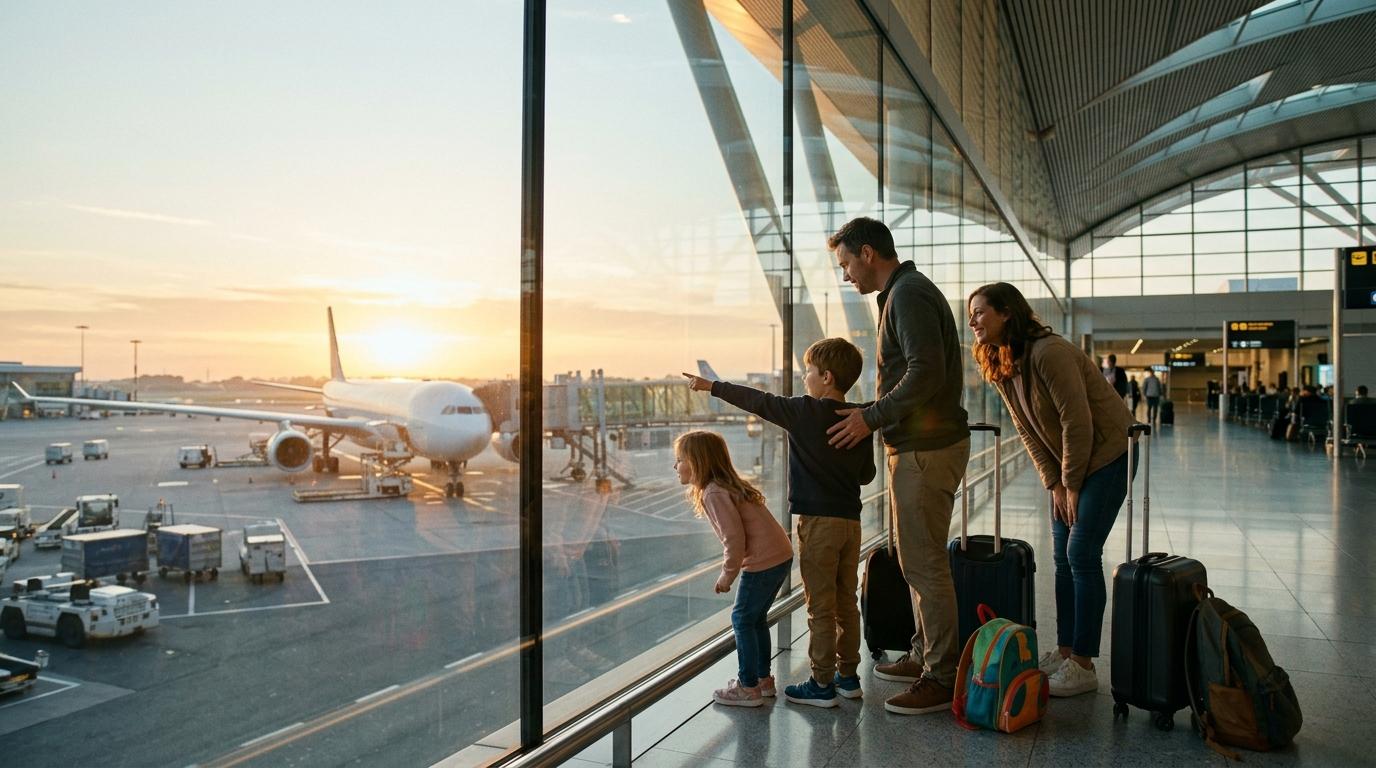
Every family trip starts with the same conversation. One kid wants a pool, another wants to see a volcano, and the adults would quietly settle for a shady chair and a few hours without a schedule. Deciding where to travel with family means finding a place that keeps everyone interested without wearing everyone out, and that balance looks different for a toddler than it does for a teenager.
This guide skips the endless list of everywhere on earth and focuses on destinations that genuinely work for families: places with calm beaches, wildlife kids remember for years, walkable old towns, and airports that make the first and last day of the trip manageable. Along the way, you'll find practical advice on timing, pacing, and getting from the plane to your hotel without a meltdown in the arrivals hall.
How to Decide Where to Travel With Family
Before you fall for a destination's photos, run it through a few simple filters. They'll save you from booking a trip that looks wonderful on paper and feels exhausting in real life.
Match the Trip to Your Kids' Ages
Babies and toddlers do best with short travel days, a home base you don't have to leave every morning, and easy access to supplies. School-age kids (roughly 6 to 12) are the sweet spot for active trips: they can hike, snorkel in shallow water, and handle a museum if there's something hands-on at the end. Teenagers want some independence and a bit of adrenaline, so ziplines, surf lessons, and cities with real energy tend to land better than another quiet resort.
Count the Total Travel Time, Not Just the Flight
A four-hour flight followed by a three-hour drive on winding roads is a seven-hour travel day. Look at how far your hotel sits from the nearest airport and what that road looks like. A destination with a beach 20 minutes from arrivals will feel very different from one that requires a second leg after you land.
Think About Season and Weather
Rainy seasons, extreme heat, and school holiday crowds can change a trip completely. Shoulder seasons often bring lower prices and gentler weather, which matters more when you're managing small kids in the midday sun.
Choose a Pace Everyone Can Handle
The most common family vacation mistake is trying to see too much. One or two bases with day trips usually beat a new hotel every other night. Kids settle in faster, and you spend more time doing things than packing.
Best Family Vacation Destinations for Every Kind of Family
The places below all combine strong family appeal with reliable international airports, which makes them easier to reach and easier to enjoy. Each suits a slightly different travel style.
Cancun and the Riviera Maya, Mexico
Few family friendly vacation spots are as easy to pull off as Mexico's Caribbean coast. Cancun's hotel zone has calm, shallow stretches of beach on its northern side, and the wider Riviera Maya mixes all-inclusive resorts with genuinely memorable day trips. Kids love swimming in cenotes, the freshwater sinkholes scattered across the Yucatán Peninsula, and older children often get more out of the cliffside ruins at Tulum than parents expect.
Chichén Itzá is a bigger excursion, roughly two and a half hours from Cancun by road, so it works best for school-age kids who can handle a long day. If your plans center on Tulum, the newer Tulum International Airport can cut the drive considerably compared with flying into Cancun.
One seasonal note: sargassum seaweed can wash up along this coast, usually more heavily in late spring and summer. Conditions vary by beach and by year, so it's worth checking recent reports before you book.
Los Cabos and Puerto Vallarta, Mexico
On the Pacific side, Los Cabos and Puerto Vallarta offer a different flavor. Winter is whale season along both coasts, and seeing a humpback breach from a boat is the kind of moment kids talk about long after the trip. Puerto Vallarta adds a walkable seaside promenade, the Malecón, lined with sculptures and street snacks, while Los Cabos leans toward resort stays with dramatic desert-meets-ocean scenery.
Because Mexico's major beach regions each have their own airport, you can choose the coast that fits your family rather than forcing a long transfer. If you're comparing options, this overview of family travel in Mexico shows the main arrival points from Mexico City to Cancun, Guadalajara, and Los Cabos.
Costa Rica
Costa Rica is one of the best places for family vacations if your kids are curious about animals. Sloths, howler monkeys, toucans, and brightly colored frogs aren't rare sightings here; they're part of an ordinary walk in a national park. The Arenal area offers hanging bridges, hot springs, and views of a classic cone-shaped volcano, while Monteverde's cloud forest feels like stepping into a nature documentary.
The country has two main gateways. Juan Santamaría International Airport near San José is the better choice for Arenal, Monteverde, and the central Pacific, though most of those destinations involve a drive of several hours. Guanacaste Airport in Liberia sits much closer to northwest beaches such as Tamarindo and the Papagayo Peninsula, many of them within about an hour. Families with young children often split the trip: a few days of rainforest, then a few days of beach near Liberia.
The dry season, roughly December through April, is the most popular time to visit. The green season brings afternoon rain but fewer crowds and lush scenery.
Rio de Janeiro and Iguaçu Falls, Brazil
Brazil rewards families who like big, unforgettable sights. In Rio de Janeiro, a cog train climbs through the forest to Christ the Redeemer, and a two-stage cable car carries you to the top of Sugarloaf Mountain. Both are exciting for kids and don't require serious hiking. Copacabana and Ipanema bring the beach culture, with plenty of food stalls and people-watching.
Iguaçu Falls, on the border with Argentina, is one of the most impressive natural sights in South America. The Brazilian side gives sweeping panoramic views from a manageable walking trail, and the nearby bird park is a hit with younger children. For a gentler beach stop, Florianópolis in the south has dozens of beaches with very different personalities, from calm bays to surf breaks.
Distances in Brazil are large, so plan domestic flights between regions rather than long drives. For a closer look at arrival airports and cruise ports, see this page on family travel in Brazil. Also check current entry requirements well ahead of time, since Brazil reintroduced visa requirements for travelers from the United States and a few other countries in 2025.
Croatia's Dalmatian Coast
For families drawn to Europe, Croatia blends beaches, history, and nature in a compact area. Split's old town grew up inside a Roman emperor's palace, which turns a simple stroll into a history lesson kids actually enjoy. Dubrovnik's city walls make for a spectacular walk, though the many steps mean you'll want a baby carrier rather than a stroller.
Plitvice Lakes National Park is the standout for families. Wooden boardwalks wind over turquoise lakes and waterfalls, and the trails are easy enough for younger kids. It's an inland day trip from Zadar or Split, so starting early helps you beat both heat and crowds. Summer is busy and hot along the coast; June and September often hit the right balance of warm water and calmer streets.
Malaysia
Malaysia is an underrated choice for families looking for something different. Kuala Lumpur combines modern sights like the Petronas Twin Towers and the aquarium beside them with the colorful Batu Caves, reached by a famous staircase of 272 steps. Penang's George Town is known for street art and some of the best street food in Asia, and Penang Hill's funicular railway is a fun ride for kids. Langkawi offers island beaches and a cable car with dramatic views over the rainforest.
One practical detail: Kuala Lumpur International Airport sits well outside the city, roughly 50 kilometers away, so plan for a proper transfer rather than a quick hop when you land after a long-haul flight.
Aruba
When the goal is pure, easy beach time, Aruba is hard to beat. Its west coast beaches, including Eagle Beach and Palm Beach, have soft sand and generally gentle water. Baby Beach, on the island's southern tip, is a shallow lagoon that's ideal for small swimmers. Aruba also sits south of the main Caribbean hurricane path and rarely sees major storms, which makes it a more predictable option for families traveling in late summer or fall.
Family Vacation Ideas by Travel Style
If you're still weighing places to travel with family, it can help to start with the kind of trip you want rather than the destination.
Low-stress beach break: Aruba, Cancun's northern beaches, or Guanacaste in Costa Rica. Pick a hotel close to the airport and plan little beyond pool, beach, and one or two excursions.
Wildlife and outdoor adventure: Costa Rica's rainforests, whale watching in Los Cabos or Puerto Vallarta, or Iguaçu Falls. These trips work best for kids old enough to enjoy walks and early mornings.
City and culture with downtime: Rio de Janeiro, Kuala Lumpur, or Split. Pair each busy sightseeing day with a slower beach or pool day so nobody burns out.
Multi-generational trips: Resort areas in Mexico and the Dalmatian Coast work well because grandparents can relax while parents and kids explore, and everyone meets back up for dinner.
Cruise add-ons: Several of these destinations, including Rio, Split, Dubrovnik, and Penang, are major cruise ports. Adding a few days before or after a cruise is an easy way to see more without planning a second trip.
Why Private Airport Transfers Make Family Trips Easier
The hour after landing is often the hardest part of a family vacation. Everyone is tired, the luggage pile is bigger than you remember packing, and you're standing in an unfamiliar airport deciding between taxi lines, rideshare pickup zones, and shared shuttles that stop at a dozen hotels before yours.
A pre-booked private transfer removes most of that friction. Your driver meets you in arrivals, helps with bags, and takes your family straight to the hotel without extra stops. For families, a few advantages stand out:
A vehicle that fits your group. Strollers, car seats, and suitcases add up quickly. Booking ahead lets you choose a van or larger vehicle instead of squeezing into whatever cab is next in line.
A fixed price agreed in advance. You know the cost before you travel, so there's no negotiating with a driver or watching a meter while the kids get restless.
Flight tracking. If your flight lands early or late, the pickup adjusts, which matters when you're traveling with little ones and connecting through busy hubs.
Fewer decisions on arrival. Long transfers, like San José to Arenal or Kuala Lumpur International Airport to the city, are much easier when the route and the driver are already sorted.
If your kids need car seats, request them when you book and confirm before you travel, since availability varies by destination and provider. Platforms such as Transpovia let you book private airport and cruise port transfers ahead of time with fixed pricing, flight tracking, and licensed local drivers, so the first leg of your trip is settled before you leave home. The same applies at the end of the trip, when catching an early flight with sleepy kids is far easier with a confirmed pickup at your hotel door.
Private car booking is also worth considering for day trips. A hired driver for an outing to Plitvice Lakes, Chichén Itzá, or Arenal means you can stop when someone needs a break, rather than sticking to a group tour schedule.
Practical Tips for Planning Your Family Trip
A little preparation goes a long way when you're traveling with kids.
Check passports early. Children's passports usually have shorter validity than adult passports, and many countries require at least six months of validity remaining on entry. Renewals can take weeks, so check every family member's expiration date before you book.
Carry a consent letter when one parent travels alone. If a child is traveling with only one parent or with grandparents, a signed consent letter from the absent parent can prevent delays at immigration. Some countries have specific requirements, so confirm the rules for your destination.
Book flights around nap times and meals. A midday flight that lands in the afternoon is often easier than a red-eye that leaves everyone exhausted on day one.
Keep a day bag that covers the first 24 hours. Snacks, a change of clothes, medications, chargers, and something to keep the kids busy can rescue the day if checked luggage is delayed.
Plan stay-in days. Building a free day into every few days of sightseeing gives everyone time to recharge and makes the busy days more enjoyable.
Sort mobile data before you land. Having data on arrival makes it easier to contact your driver, check maps, and message family without hunting for airport Wi-Fi.
Frequently Asked Questions
What is the best age to start traveling internationally with kids?
There's no single right age. Many families travel internationally with babies, who are often easier to fly with before they start walking. Ages 5 to 12 tend to be the easiest overall, because kids can manage longer days and remember the experience. The best approach is to match the destination to your child's stage: shorter travel days and a single base for little ones, more active itineraries as they grow.
How far in advance should we book a family vacation?
For popular school holiday periods, booking flights and family-sized hotel rooms three to six months ahead gives you the best choice, and even earlier for peak dates such as summer and the winter holidays. Airport transfers can be booked later, but reserving them once your flights are confirmed means you can request the right vehicle size and any child seats in good time.
Are private airport transfers worth it for families?
For most families, yes, especially after long flights or when the hotel is more than a short drive from the airport. A private transfer gives you a vehicle sized for your group and luggage, a price you know in advance, and a driver waiting when you land. When you compare it with the cost of several taxis or the time spent on a multi-stop shuttle, it often makes both practical and financial sense.
Conclusion
The best family vacation destinations aren't the ones with the longest list of attractions. They're the places where your kids can explore, the adults can rest, and the travel days don't overshadow the trip itself. Mexico's beaches, Costa Rica's rainforests, Brazil's natural wonders, Croatia's coastline, Malaysia's mix of cities and islands, and Aruba's calm water all offer that balance in different ways.
Start with your children's ages and the kind of trip you want, then look closely at how you'll get from the airport to your first night's bed. Sort the logistics early, keep the pace realistic, and you'll leave room for the moments that make family travel worth it.
"We used to dread the first hour after landing. This time, our driver was waiting with a van big enough for all of us and the stroller, and the kids were in the pool before they had time to get cranky."


