
You've checked in — maybe on your phone the night before, maybe at a kiosk an hour ago — and now you're standing in a busy terminal wondering what you're actually supposed to do next. That gap between check-in and boarding trips up a lot of travelers, especially first-time flyers, anyone flying internationally, or people racing a tight schedule. Knowing what happens after airport check-in helps you budget your time, avoid missing your flight, and move through each step without second-guessing yourself. Here's the full sequence, from dropping your bags to stepping onto the plane.
What "Checked In" Actually Means — and What Comes Next
Checking in confirms you for your flight and gets you a boarding pass. It does not, on its own, deal with your luggage or get you past security. That's the piece many travelers miss, and it's the source of most "airport check in what next" confusion.
After check-in, the order is fairly consistent worldwide:
-
Drop any checked bags at the bag-drop counter
-
Clear the identity check and security screening
-
Pass through passport control if you're flying internationally
-
Wait in the departures area until your gate is called
-
Board your flight
How long this takes depends on the airport, the time of day, and whether you're flying domestic or international. That's why airlines still tell you to arrive two hours before a domestic flight and three before an international one — those buffers exist for exactly these steps. If you've arranged a ride to the terminal, aim to reach check-in with that full cushion intact; a pre-booked transfer with a company like Transpovia helps you land at the curb early rather than sprinting to bag drop. For a fuller breakdown of the whole Airport Departure Process, the steps below cover what matters most once you're inside.
Dropping Your Checked Bags
If you're only carrying a cabin bag, skip ahead — you go straight to security. If you have luggage to check, your first stop after check-in is bag drop.
At the counter or self-service bag-drop machine, you'll confirm your booking, and your bags get weighed and tagged with a barcode that routes them to your flight. Keep the small tag receipt you're handed; it's your proof if a bag goes missing. Weight and size limits vary by airline and fare, so a bag that flew free last trip might cost you this time — check your airline's allowance before you travel.
Timing matters here more than people expect. Bag drop closes well before departure, often 45 minutes to an hour ahead for domestic flights and longer for international ones. Miss that cutoff and you may not be able to check your bag at all, even if the plane hasn't boarded. Give yourself margin, particularly during early-morning banks of flights when counters back up.
Getting Through Security Screening
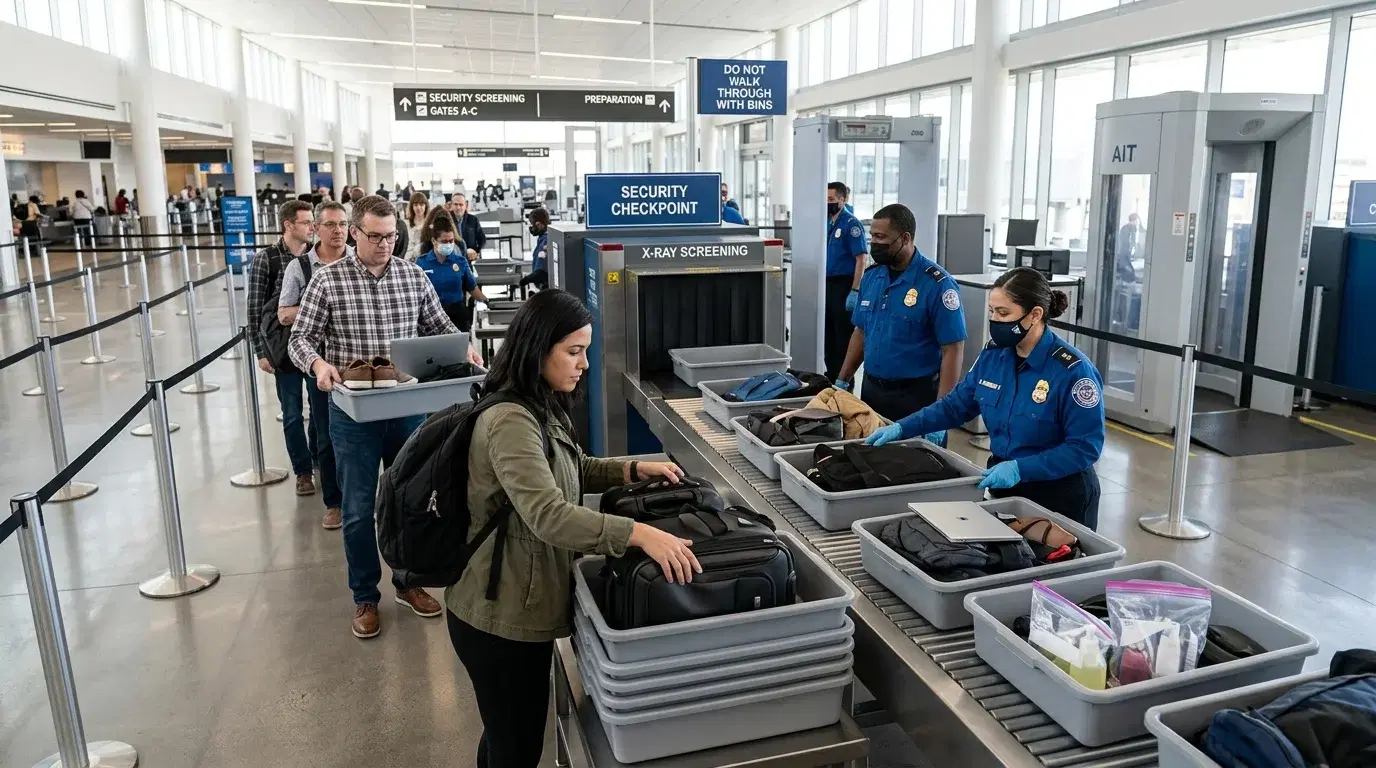
Security is the step most travelers ask about, and it has two parts: an identity check, then screening of you and your carry-on items. Handling airport security after check-in smoothly comes down to knowing what to have ready and what to take out of your bag.
At the identity podium, you'll show your boarding pass and an accepted ID. In the United States, domestic travelers now need a REAL ID-compliant license — the one with a star in the top corner — or another accepted document such as a passport. According to the Transportation Security Administration (TSA), travelers who arrive without one can be sent to a separate verification process that carries a $45 fee and can take up to 30 minutes, so confirm your ID well before travel day. For international flights, your passport is your ID at this stage.
Then comes screening. A few current points worth knowing at U.S. checkpoints in 2026:
-
Shoes generally stay on. The TSA ended its long-standing shoe-removal requirement in 2025, though officers may still ask you to take them off if an alarm sounds or you're selected for extra screening.
-
The 3-1-1 liquids rule still applies. Carry-on liquids, gels, and aerosols must be in containers of 3.4 ounces (100 ml) or less, all fitting in one quart-size bag.
-
Newer scanners change what you unpack. Some airports use CT scanners that create a 3D image of your bag, letting you leave liquids and laptops inside. Older lanes still make you pull them out. Watch the signage in your lane rather than guessing.
Rules differ outside the United States, so check the security requirements at your departure airport when flying from abroad. If you have TSA PreCheck or an equivalent trusted-traveler program, you'll usually use a faster lane with lighter requirements.
Passport Control and International Departures
If you're flying internationally, there's an extra step between security and your gate: passport control. Many countries check your passport at emigration before you leave, verifying your identity and travel documents and sometimes stamping you out.
The process varies widely. Some countries run staffed booths, while others use automated eGates that scan your passport and face. The United States is unusual in having no routine exit immigration, but you'll still show your passport at check-in and again at the gate. Because this step adds time and lines can be long, the three-hour international arrival guideline isn't padding — it accounts for bag drop, security, and passport control stacking up together.
Travelers heading abroad should also keep any required visas, onward-ticket proof, or entry paperwork easy to reach. You may need them here or at the boarding gate, not just on arrival.
After Security — Finding Your Gate and Using Your Time
Once you're through screening (and passport control, if it applied), you're in the departures area — the secure zone with shops, food, restrooms, and lounges. Your job now is to know where your gate is and when to be there.
Check the departure boards or your airline app for your gate number and boarding time. Gates aren't always assigned when you land airside, and they can change, so glance at the screens periodically rather than settling in somewhere far away and assuming nothing will move. If your flight shows a delay or a gate change, the boards update before most people notice.
Give yourself time to reach the gate, especially at large airports where gates can be a long walk or a shuttle ride from security. As a rule, plan to be at your gate area around 30 to 45 minutes before departure. That leaves room for a bathroom stop or a coffee without cutting it close. If you're traveling with children, have mobility needs, or are carrying a lot, build in more — some airlines offer pre-boarding for exactly these situations, and it's worth asking at the gate desk.
Boarding Your Flight
Boarding usually begins about 30 to 45 minutes before departure and follows an order — by group, zone, or row, depending on the airline. Listen for announcements and watch the screens at the gate, which show which groups are boarding.
When your group is called, have your boarding pass and, for international flights, your passport ready to scan. From there you'll walk down a jet bridge to the aircraft door, or occasionally board a bus to a plane parked away from the terminal.
One detail catches travelers out more than any other: the gate closes before the plane does. Many airlines shut the door and stop accepting passengers 15 to 20 minutes before departure, even if the aircraft is still there. Being "at the airport" isn't the same as being at your gate — once you're through security, treat the gate's boarding time as a hard deadline, not a suggestion.
Frequently Asked Questions
Can you leave the airport after you've checked in?
If you've only checked in and haven't dropped bags or cleared security, you can usually step out and come back, though it's risky with limited time. Once you've checked luggage, leaving is generally not allowed, since your bags are loaded for the flight and airlines don't want checked bags traveling without their passenger.
How long does it take to get from check-in to the gate?
Plan on the full airline-recommended window: two hours before a domestic flight, three before an international one. Bag drop, security, and — for international trips — passport control can each add unpredictable time, and a quiet airport one day can have long lines the next.
Do you need your passport after check-in for a domestic U.S. flight?
Not necessarily. A REAL ID-compliant license with the star works for domestic flights. Without one, you'll need a passport or another accepted document, or you'll face an extra verification step and fee at the checkpoint.
What happens if the gate changes after you've passed security?
Gate changes are common and show up on the departure boards and your airline app before boarding. Check the screens regularly, and if a change means a long walk to a new terminal, head there right away rather than waiting for a final call.
One Last Check Before You Fly
Handle the essentials before travel day and the steps after check-in fall into place: confirm your ID meets current requirements, know your bag-drop cutoff, and keep an eye on the boards for your gate. Leave enough buffer to move through each stage without rushing, and arrange your onward transportation — including a pickup at your destination with Transpovia — before you fly, so the ground is covered the moment you land.


