
You've booked the international trip, and health is the easiest thing to leave for later, right up until you learn that some vaccines take weeks to work, or that a single bad meal can cost you three days of your vacation. A few travel health tips handled before you leave protect the whole trip, and most take little time or money. This guide covers the doctor visit, vaccines, what to pack, safe eating and drinking, and the insurance details that matter, so you spend your trip exploring instead of recovering.
Start With a Pre-Trip Doctor Visit
The most important travel health step happens before you pack: a visit to your doctor or a travel health clinic. The CDC recommends scheduling it at least 4 to 6 weeks before you leave, because many vaccines need time to take effect and some require more than one dose. Leave it too late and you may not be fully protected in time.
At that visit, your provider can review your routine vaccines, recommend destination-specific ones, and prescribe any medicines you'll need, such as malaria pills for certain regions. Timing matters for a few in particular: the yellow fever vaccine must be given at least 10 days before travel and is only available at authorized clinics, and some countries require proof of it to enter. If you're pregnant, managing a chronic condition, or traveling with young children, raise that specifically, since the right advice depends on your personal health rather than a general checklist.
Know What Your Destination Actually Requires
What you need depends entirely on where you're going, so check before you assume. The CDC keeps destination pages for individual countries that list recommended and required vaccines, medicines, and current health notices, and they're the first place to look once your trip is set. Requirements and disease outbreaks change, so check again closer to departure.
Start with routine vaccines, since these matter everywhere. Being up to date on measles-mumps-rubella, tetanus, flu, and polio protects you against diseases that still circulate in many popular destinations, measles outbreaks among them. From there, your destination may call for additional protection like hepatitis A, typhoid, yellow fever, or malaria prevention, depending on the region and what you'll be doing. Rural travel, long stays, and certain activities can change the recommendations, which is why the destination page and your doctor work together.
Build a Travel Health Kit
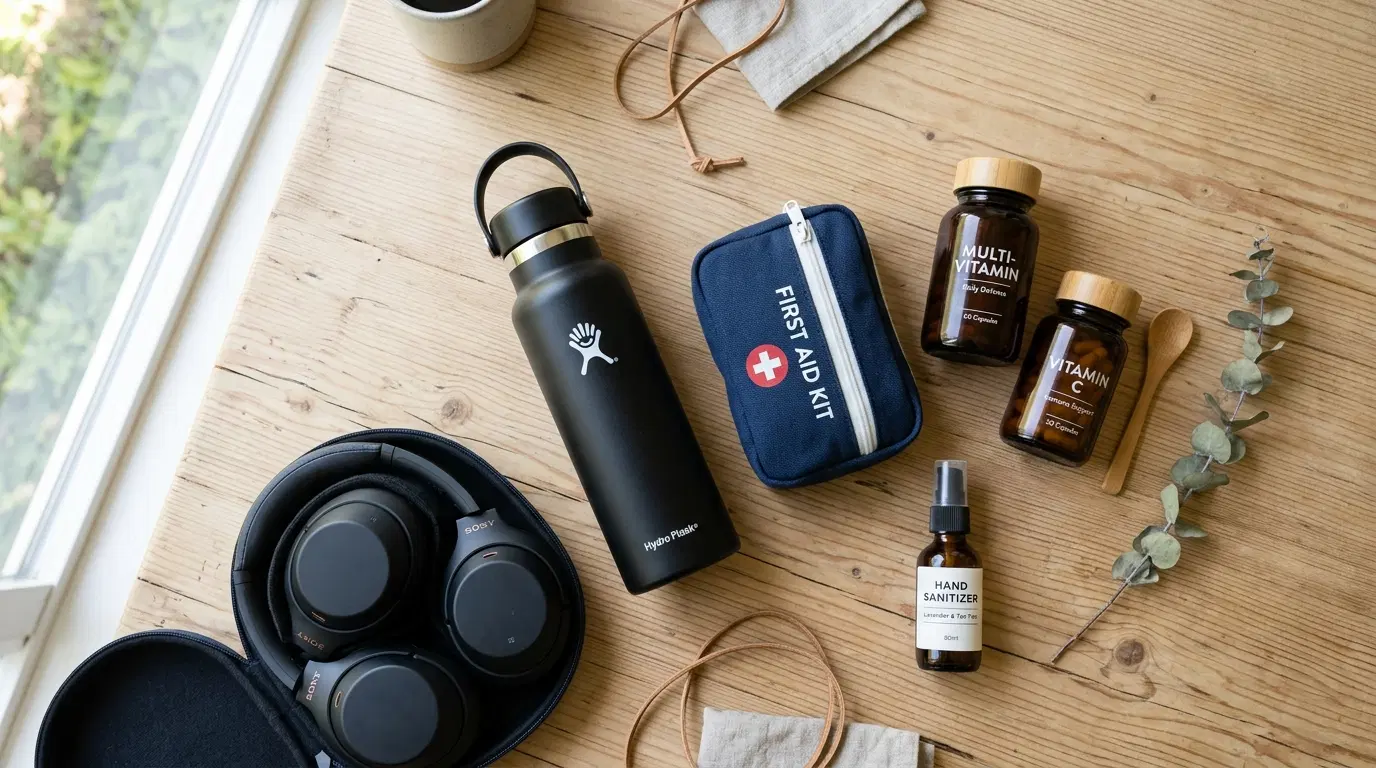
A small health kit spares you from hunting through an unfamiliar pharmacy when you're already unwell. The CDC suggests packing your prescription and over-the-counter medicines, enough for the entire trip plus extra in case of delays, in their original labeled containers, along with insect repellent, sunscreen of SPF 15 or higher, hand sanitizer, a basic first-aid kit, water disinfection tablets, and your health insurance card.
A few details make the kit work harder. Keep medications in your carry-on rather than a checked bag that could go missing, carry a copy of your prescriptions, and check whether any of your medicines are restricted at your destination, since some common drugs are controlled elsewhere. Fold all of this into your broader list so nothing gets left behind, and [What to Pack for a Stress-Free International Trip] covers how to organize it alongside everything else you're bringing.
Eat and Drink Safely
The illness travelers catch most often is travelers' diarrhea, and it comes from contaminated food and water rather than bad luck. The CDC's rule of thumb is easy to remember: "boil it, cook it, peel it, or forget it." Following it removes most of the risk without turning every meal into a worry.
In places where tap water isn't safe to drink, stick to bottled, boiled, or canned beverages in their original containers, and skip ice, which is often made from tap water. Avoid raw or undercooked meat, fish, and shellfish, along with raw fruits and vegetables you didn't peel yourself, since salads and fruit platters are common culprits. Steaming-hot, freshly cooked food that hasn't been sitting out is usually the safest choice. Wash your hands or use sanitizer before eating, which does more to keep you well than most travelers expect.
Protect Against Bugs, Sun, and the Flight Itself
Three everyday risks are simple to prepare for once you know to. Where mosquito-borne diseases like malaria, dengue, or Zika are a concern, an effective insect repellent is a frontline defense, since preventing bites is often as important as any vaccine or pill. Protect against sunburn with sunscreen and cover up in strong sun, which is easy to underestimate near the equator or at altitude.
The flight itself deserves attention on long routes. Get up to move and stretch periodically and drink water steadily, both of which lower the risk of blood clots and dehydration in a dry cabin. Jet lag responds to preparation: shift your schedule toward your destination's time zone before you fly, get sunlight at the right times once you land, and keep the first day easy. Arranging your airport transfer in advance helps here too, since a driver waiting to take you straight to rest beats working out transit while you're jet-lagged and worn down.
Sort Out Insurance and Medical Access
Find out before you go whether your health insurance covers you abroad, because the answer is often no. At most destinations, travelers pay hospital and medical bills out of pocket, and many U.S. plans, including Medicare, don't cover care overseas at all. That gap is easy to miss until you're facing a bill in a foreign hospital.
Two types of coverage are worth weighing. Travel health insurance handles medical costs during the trip, while medical evacuation coverage pays to transport you to adequate care, which can otherwise run into tens of thousands of dollars for remote or backcountry destinations. Also know how you'd find care where you're going, and remember that the nearest embassy or consulate can help in a serious emergency. Coverage varies a lot between policies, and [What Travelers Should Know Before Buying Travel Insurance] breaks down what to look for before you buy.
Watch Your Health After You Get Home
Travel health doesn't end at the airport, because some illnesses appear only after you return. The CDC advises monitoring yourself for about 21 days after international travel, and if you feel sick, especially with a fever, seeing a doctor promptly.
Tell that provider where you traveled, what you did, and what you ate or were exposed to, since conditions that are rare at home may not be the first thing a local doctor considers. That single piece of context can speed up an accurate diagnosis and treatment, which matters most for infections that take days or weeks to show symptoms.
FAQs
How far in advance should you prepare for travel health?
Aim to see a doctor or travel clinic at least 4 to 6 weeks before departure, as the CDC recommends, so vaccines have time to work and multi-dose series can be completed. Some, like the yellow fever vaccine, must be given at least 10 days ahead. Starting early also leaves room to track down a specialized clinic if your destination needs one.
How do you avoid getting sick while traveling?
Combine a few habits: get recommended vaccines, follow safe food and water practices, wash your hands often, and use insect repellent where bite-borne diseases occur. The "boil it, cook it, peel it, or forget it" guideline handles most stomach illness, the most common travel complaint. On flights, hydrate and move to reduce clot risk and jet lag.
Do you need vaccines for international travel?
It depends on your destination. You should be up to date on routine vaccines everywhere, and specific trips may call for hepatitis A, typhoid, yellow fever, or malaria medication, among others. Check the CDC's destination page for your country and confirm with your doctor, since recommendations shift with outbreaks, your itinerary, and your personal health.
Getting Health-Ready for Your Trip
Book the doctor visit first, since timing drives everything else, then check your destination's requirements, assemble a small health kit, and confirm your insurance covers you abroad. Practice safe eating and drinking once you arrive, and keep an eye on how you feel for a few weeks after you're home. Handle these early, and health becomes one less thing to think about mid-trip.


