
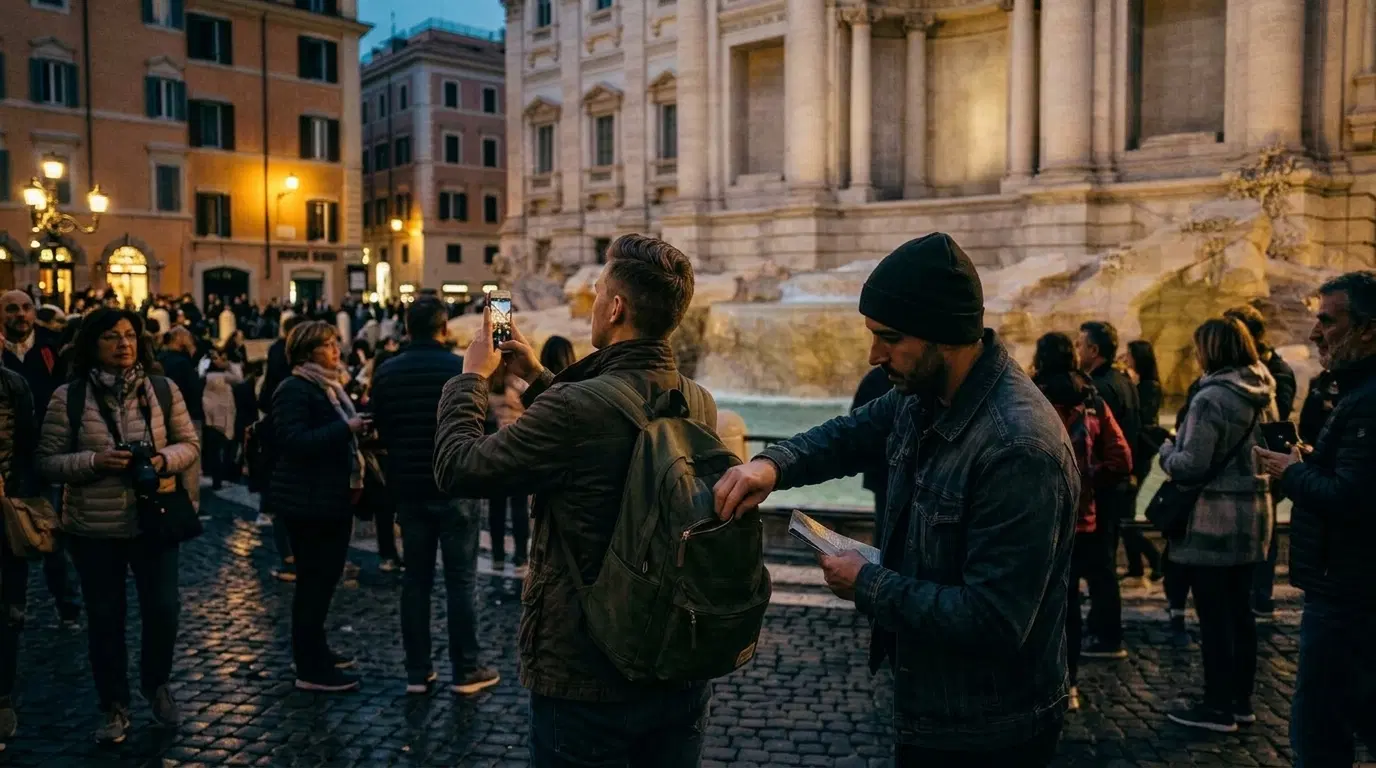
You're standing outside a train station in a new city, map open and bags at your feet, when a friendly stranger offers to help, or a taxi driver waves you over with a price that sounds great. Tourist scams work precisely because you're tired, unfamiliar with the area, and trying to be polite. Travelers make easy targets, and even seasoned ones get caught when the con is smooth enough. Knowing the common tricks ahead of time is the strongest protection you have. Here are the scams that show up most often and how to sidestep them.
How Tourist Scams Actually Work
Most tourist scams rely on three things: distraction, unfamiliarity, and your instinct to be polite. They cluster where travelers are most off-balance, including transport hubs, ATMs, crowded landmarks, and online booking pages. You don't need to memorize every trick in the world. Once you recognize the pattern, an unfamiliar version still trips the same alarm.
Scammers read body language and pick the people who look lost, jet-lagged, or overwhelmed. That's why arrival points and first-time visitors draw so much attention. Learning the basics before you fly, including the [Airport Security Rules for First-Time Travelers], helps you move through airports and arrivals looking settled rather than flustered, which removes the exact cue many con artists wait for. The rest comes down to knowing which situations carry the most risk and having a plan for each.
Transportation and Taxi Scams
Transportation scams are among the most common tourist scams, because nearly every traveler needs a ride the moment they land, often while jet-lagged and carrying cash. The classics include drivers who claim the meter is broken, take a long route to inflate the fare, or quote one price and demand more at the destination. Unlicensed cabs and rideshare impersonators work airports and hotels hardest, sometimes charging double the going rate or picking up passengers in unmarked cars.
A few habits shut most of these down. Confirm the meter is running or agree on the fare before you get in, and use official taxi stands or prepaid counters where they exist. For rideshare, check the license plate, car, and driver name against the app, and never get into an unmarked vehicle that "happens" to be available. Booking a ride before you land avoids the airport taxi rank altogether, which is where inflated fares concentrate. Pre-arranged services such as Transpovia set a confirmed price and a named, verified driver in advance, so there's no meter to argue over and no stranger to vet on arrival.
Pickpockets and Distraction Theft
Pickpocketing is the most universal travel risk, and it almost always uses a distraction. Thieves frequently work in teams: one bumps into you, spills something, drops a wallet, or asks for directions while another lifts your phone or wallet. Crowded metros, train platforms, markets, and plazas are prime spots, and cities like Barcelona, Milan, and Prague are repeatedly named as hotspots. A common move on trains is to grab a bag just as the doors close and step off, leaving you stuck as the train pulls away.
Protect yourself by keeping valuables hard to reach. A zippered cross-body bag worn in front beats a backpack in a crowd, and a money belt or hidden pocket is safer than a wallet in your back pocket. Don't store everything in one place, so a single theft doesn't take your cash, cards, and documents at once. Most importantly, treat any sudden commotion, a staged argument, a spilled drink, a crowd surge, as your signal to put a hand on your bag and step back rather than lean in.
Street Scams That Play on Your Politeness
Some scams weaponize good manners, counting on you not wanting to seem rude. The "friendship bracelet" trick, common in France near airports and tourist entry points, involves someone tying a band on your wrist as a "gift," then demanding payment. Petition and charity scams use a clipboard to crowd you while an accomplice picks your pocket. Others include the "found ring" you're pressured to buy, a spilled drink followed by an offer to help clean up, and fake tour guides who latch onto lost-looking visitors and steer them to commission-paying shops.
The defense is the same across all of them. Keep your hands on your belongings, decline firmly, and keep walking. Don't accept unsolicited items, bracelets, or "help" from strangers who approach you first, no matter how warm the pitch. A polite but flat "no thank you" without slowing down ends nearly every version before it starts.
Money, ATM, and Online Booking Scams
Money scams range from the physical to the digital. At ATMs, thieves fit skimming devices or set up fake machines to capture your card and PIN, so use ATMs inside banks or well-lit, secure areas, cover the keypad, and check the slot for anything loose. Watch for short-changing at currency exchanges, count your change, and be alert to restaurant tricks like menu substitutions, surprise fees, and manipulated QR-code menus that route you to a fake payment page.
The fastest-growing scams happen before you leave home. The Federal Trade Commission, which reports U.S. consumers lost about $12.5 billion to fraud of all kinds in 2024, warns that scammers set up fake travel sites and buy paid ads beside real airline and hotel names to catch bookings. A few FTC-backed rules cut the risk sharply:
-
Type a company's web address yourself instead of clicking links in emails or texts, and scroll past paid ads to the real site.
-
Research any company with its name plus "scam," "review," or "complaint" before paying.
-
Ignore fake "unpaid toll" texts demanding immediate payment, and verify with the toll agency directly.
-
Treat any request to pay by wire transfer, gift card, payment app, or cryptocurrency as a scam, since legitimate sellers accept traceable payment.
Fake vacation rental listings are common too, often built from stolen photos of real properties, so book through reputable platforms and confirm details directly with the host or hotel.
Simple Habits That Lower Your Risk
A handful of routines protect you across every destination, no memorization required. Photograph your passport and cards and store the images somewhere you can reach if the originals are stolen. Tell someone at home your itinerary, and share ride details when you take a taxi or rideshare. Carry only the cash and cards you need for the day, and keep expensive jewelry, cash, and gadgets out of sight in crowded areas.
Learn the local emergency number for your destination, and trust your instincts, if a person or situation feels off, leave. Solo travelers face extra exposure, since there's no companion to notice a setup forming, so the caution pays off double when you're on your own, and there's more worth reading in these [Travel Safety Tips for Solo Travelers]. None of this requires suspicion of everyone you meet, just enough awareness that a practiced con doesn't catch you flat-footed.
FAQs
What is the most common tourist scam?
Taxi overcharging and pickpocketing top the list almost everywhere. Taxi scams use broken meters, long routes, or unlicensed cars, especially near airports and hotels. Pickpocketing relies on distraction in crowded transport hubs and tourist sites. Both are common because they target travelers at their most tired and unfamiliar, which is exactly when awareness matters most.
How do you avoid taxi scams as a tourist?
Agree on the fare or confirm the meter is running before the car moves, and use official taxi stands, prepaid counters, or verified ride-hailing apps rather than drivers who approach you. Check the plate and driver against the app for rideshares. Booking your airport ride in advance avoids the taxi rank, where unlicensed cabs and inflated fares concentrate.
Are tourist scams dangerous or just about money?
Most are financial rather than violent, aimed at your wallet through overcharging, theft, or fraud. That said, staying calm matters. If you sense a scam, don't argue or chase a thief into a crowd. Walk to a busy, well-lit area or a staffed desk, and report the incident to local police afterward if money or documents were taken.
What should you do if you get scammed while traveling?
Report the incident to local police and get a written report, which you may need for insurance or replacing documents. Contact your bank or card issuer immediately to freeze compromised cards, and reach your country's embassy or consulate if your passport is stolen. Keep records of everything, since they help with claims and recovery later.
Staying a Step Ahead of Scammers
Read up on the specific scams reported in your destination before you go, since the exact tricks vary by city and season. Keep your documents backed up, your valuables secured, and your bookings made through sources you've verified. Arrange key rides, like your airport pickup, in advance, so the tired arrival moment isn't the one where you're improvising and easiest to catch.


