
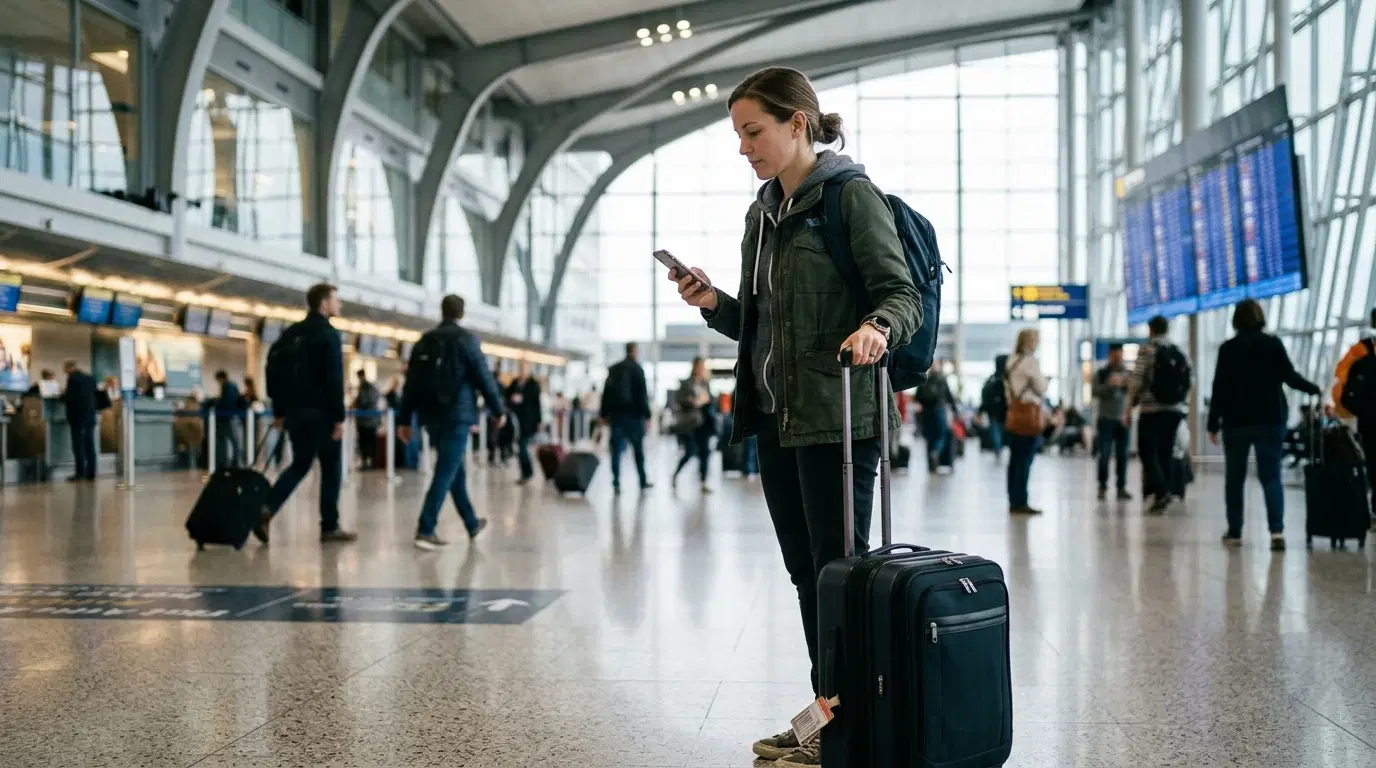
Traveling alone changes the math of a trip. Every decision is yours, which is the whole appeal, but so is every problem: the missed connection, the dead phone, the driver who swears the meter is broken. The most useful solo travel tips aren't about avoiding risk altogether. They're about making a handful of smart choices before you leave so the rest of the trip has room to be spontaneous.
This guide walks through how to plan a solo trip from booking to departure day, with extra attention on the moments when travelers on their own are most exposed, like landing late at an unfamiliar airport. Whether this is your first trip alone or your tenth, the goal is the same: arrive confident, stay comfortable, and spend your energy on the place instead of the logistics.
Solo Trip Planning Tips Before You Book
Most trouble on a solo trip traces back to a planning gap. Nobody is there to double-check the hotel address or notice that your flight lands at 1 a.m., so those checks fall to you.
Pick a Destination That Fits Your Experience
For a first trip alone, choose somewhere with good tourist infrastructure, easy transportation, and plenty of other independent travelers. You don't need to stay in your comfort zone, but you also don't need to make your first solo trip the hardest one possible.
Latin America is a popular choice for travelers from the US because of the short flights, small or no time difference, and strong value. If you're considering solo travel in Mexico, cities like Mexico City, Oaxaca, and Mérida are common starting points thanks to their walkable historic centers, wide range of hotels and guesthouses, and steady stream of visitors. Wherever you go, read your government's travel advisory before booking. The US State Department, for example, issues advisories by country, and for Mexico it breaks guidance down state by state, so the right answer often depends on the specific region rather than the country as a whole.
Schedule Flights to Land in Daylight
This is one of the simplest tips for solo travelers, and one of the most overlooked. Arriving in the afternoon gives you time to find your accommodation, pick up a SIM card, grab food, and get your bearings before dark. A cheaper red-eye that drops you into a new city at midnight can cost you more in stress and transportation than it saves on the fare.
Lock In the First Two Nights and the Ride to Them
You can leave the rest of the trip open, but book your first couple of nights and know exactly how you're getting there from the airport. Read recent reviews with solo travelers in mind: Is the neighborhood well lit? Is there a 24-hour front desk? Can you walk to a few restaurants?
Keep the Itinerary Loose
Plan your anchor points, such as flights, the first hotel, and any tours that sell out, and leave everything else flexible. Traveling alone means you can stay an extra day somewhere you love or leave early if a place doesn't feel right. A rigid schedule takes away one of the best parts of going solo.
Solo Travel Safety Tips That Make a Real Difference
Good safety habits for solo travelers are less about fear and more about reducing the number of situations where you're stuck, distracted, or out of options.
Let Someone Know Where You Are
Share your itinerary, hotel names, and flight numbers with someone at home, and agree on a simple check-in routine. Live location sharing on your phone works well for the first few days. US citizens can also enroll in the State Department's Smart Traveler Enrollment Program (STEP), which sends safety updates for your destination and helps the nearest embassy reach you in an emergency.
Separate Your Money and Documents
Carry one card and a small amount of cash for the day, and keep a backup card and some emergency cash in your accommodation or a different bag. Save digital copies of your passport and insurance details somewhere you can reach from any device. If your wallet disappears, you'll be inconvenienced instead of stranded.
Keep Your Phone Working
Your phone is your map, translator, bank, and lifeline, so treat connectivity as essential. Set up an eSIM or international plan before you fly, download offline maps of each city, and carry a charged power bank. It also helps to save your hotel's address in the local language so you can show it to a driver even if your battery dies.
Be Selective After Dark
After dark, prioritize your safety. Use reliable transportation, avoid walking long distances through unfamiliar areas, and plan your return to your accommodation in advance.
This matters most in places with specific, well-known risks. Anyone researching solo travel in Colombia should consult official travel advisories, which include warnings about robberies and other crimes targeting visitors, particularly in larger cities. Staying in public areas, keeping personal belongings secure and arranging reliable transportation independently are sensible precautions.
Solo Travel Tips for Arrival Day
The hour after you land is often the most vulnerable part of the entire trip. You're tired, you're managing luggage on your own, you may not have local currency or a working phone yet, and you're walking out into an arrivals hall full of people offering rides.
Why Airports Are Tricky When You're Alone
At many busy airports, unofficial drivers wait near the exits looking for travelers who seem unsure. Rideshare pickup zones can be confusing, change often, and require a data connection you may not have yet. Even official taxi lines can involve long waits and price confusion when you don't know the local rates. None of this is dangerous on its own, but it's exactly the kind of friction a solo traveler has to absorb with no one to watch the bags or help sort it out.
Book a Private Airport Transfer Before You Fly
A pre-booked private transfer takes the guesswork out of arrival. You know the price before you travel, a driver is waiting for you, and you go straight to your accommodation without negotiating, searching for a pickup zone, or sharing a vehicle with strangers. For travelers arriving late, landing in a city for the first time, or carrying more luggage than they'd like to drag onto public transit, that certainty is worth a lot.
Platforms like Transpovia let you compare and book private airport transfers ahead of time, so the ride from the terminal is settled before you leave home. Save the booking confirmation offline along with your driver's details and your hotel address, and you'll have everything you need even without signal.
When a Private Car Makes Sense Beyond the Airport
The same logic applies to other parts of a solo trip. A private car booking can be a smart choice for an early-morning departure, a late return from a day trip, or a transfer between cities where public options are slow or awkward with luggage. You don't need one for every ride, but it's worth having for the legs where getting lost or stranded would be most unpleasant.
How to Travel Alone and Actually Enjoy It
Safety is only half of a good solo trip. The other half is getting comfortable with your own company.
Eating Alone Without the Awkwardness
Choose a comfortable restaurant where solo diners are welcome and you can enjoy your meal at your own pace. Make lunch your main meal at popular restaurants, since it's usually more relaxed than dinner and often cheaper. Food markets and cooking classes are also easy ways to explore local cuisine.
Meeting People on Your Terms
Group walking tours, day trips, and classes give you built-in company for a few hours without committing to anything. Many hostels host social events that are open to guests in private rooms, so you can get some company without giving up your privacy. And if you'd rather be alone, that's fine too. Solo travel doesn't have to be social to be good.
Plan for Low Moments
Almost everyone who travels alone hits a day when they feel tired, homesick, or a little flat. Build in some downtime instead of filling every hour, and have a few easy comforts ready, like a favorite café, a show to stream, or a call home. These moments usually pass quickly once you've rested.
Budgeting When There's No One to Split the Bill
Traveling alone means some costs that couples or groups share land entirely on you. A hotel room usually costs the same for one person as for two, and some tours and cruises charge a single supplement. Plan for these upfront so they don't surprise you halfway through the trip.
This is also where transportation choices deserve an honest comparison. A shared shuttle may cost less per seat, but it can make several stops and add a lot of time to an already long travel day. A private transfer costs more than a bus ticket, yet it buys you time, privacy, and a door-to-door ride when you're most worn out. Many solo travelers find it worth it for arrival and departure and then rely on public transit or walking once they know their way around.
Finally, don't skip travel insurance with medical coverage. Many US health plans offer limited coverage abroad, and Medicare generally doesn't cover care outside the US, so check your policy before you go. Keep an emergency fund you can reach quickly in case you need to change plans or fly home early.
A Quick Pre-Departure Checklist
Before you head to the airport, run through these first time solo travel tips:
-
Your itinerary, hotel details, and flight numbers are shared with someone at home.
-
Your phone has an eSIM or roaming plan ready, offline maps downloaded, and a charged power bank packed.
-
Digital copies of your passport, insurance, and bookings are saved where you can reach them offline.
-
Cards are split between two locations, and your bank knows your travel dates if it requires notice.
-
Your airport transfer is booked, and you know where to meet your driver.
-
You've read the current travel advisory for each region you're visiting.
Frequently Asked Questions
What's a good first destination for solo travel?
Look for a place with reliable transportation, plenty of other travelers, a range of accommodation, and a manageable language barrier. For travelers from the US, parts of Mexico are a common first choice because of short flight times and well-established tourist areas, but the best destination is one where you feel curious rather than anxious. Check the current travel advisory for the specific region before you book.
How can I meet people when traveling alone?
Group activities are the easiest route. Walking tours, cooking classes, day trips, and daytime activities at hostels all give you opportunities to meet other travelers. Joining a guided tour on your first full day can also help you settle in quickly.
Is a private airport transfer worth it for one person?
It often is, especially on arrival. You'll pay more than you would for a bus or shared shuttle, but you get a fixed price, a driver waiting for you, and a direct ride to your accommodation at the point in the trip when you're most tired and least familiar with your surroundings. Many solo travelers book private transfers for arrival and departure days and use cheaper options in between.
Conclusion
Solo travel rewards a little preparation. Choose a destination that matches your experience, land in daylight when you can, keep someone at home in the loop, and plan your nights out with the ride home already in mind. Those small decisions remove most of the stress that makes traveling alone feel harder than it needs to be.
The arrival is the one part of the trip worth over-planning. Book your first nights, save your details offline, and arrange your airport transfer before you fly, whether you use Transpovia or another trusted option. Once you're settled in, the rest of the trip is yours to shape however you like.
"The first time I traveled alone, I worried most about getting out of the airport. Seeing a driver holding a sign with my name on it made the whole trip feel easier from the very first minute." — first-time solo traveler described


