
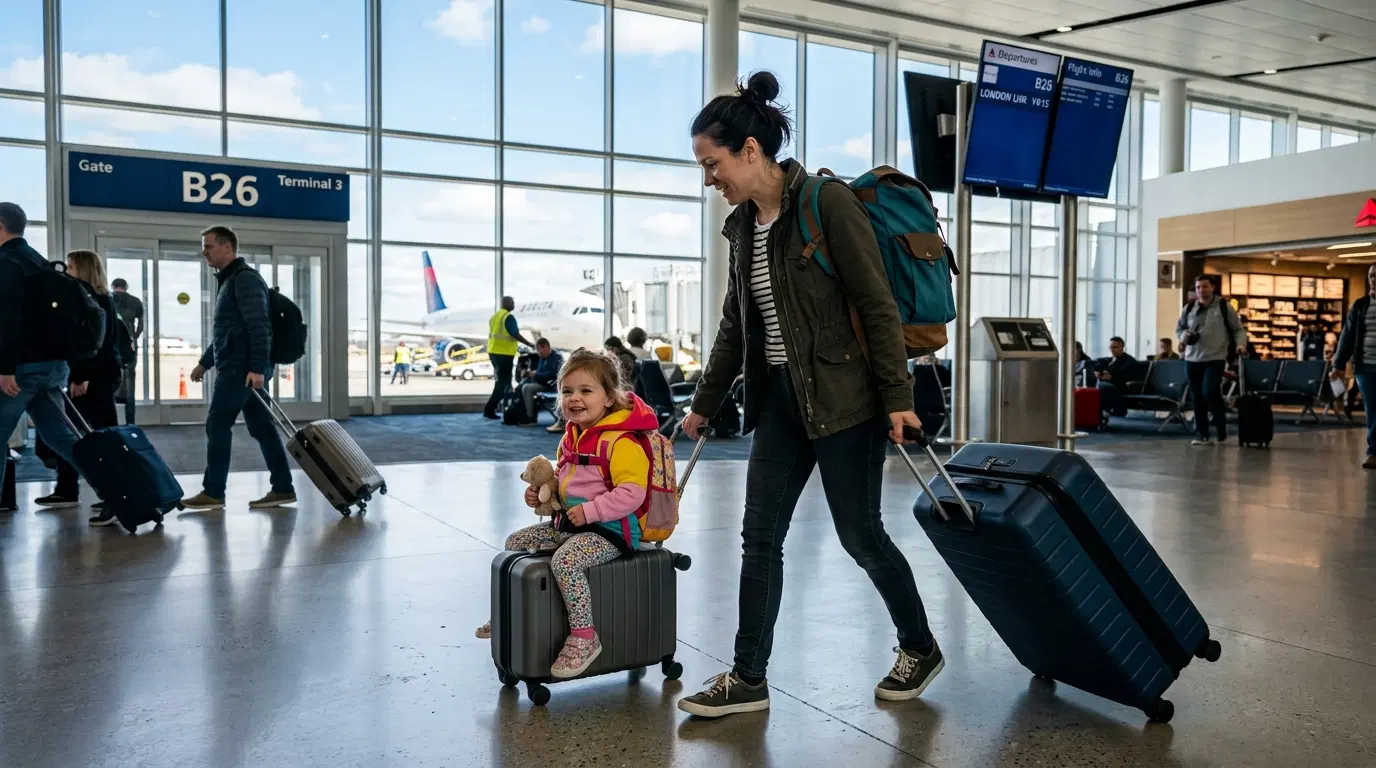
Flying alone with your kids means you're the one holding the boarding passes, the snacks, the car seat, and a toddler who decided the gate was the perfect place to melt down. There's no second adult to mind the stroller while you dig for passports. Single mom travel takes more planning than a two-parent trip, but the right preparation is the difference between a rough day and a manageable one. This guide covers booking, documents, packing, security, and the arrival, so you know exactly what to handle before you reach the airport.
Book Smart: Flights, Seats, and Timing
The choices you make at booking shape the whole trip. Direct flights beat connections when you're solo with kids, since a tight layover with a stroller, carry-ons, and small legs to move is where single parents get overwhelmed. Book seats together in advance rather than hoping a gate agent can rearrange the cabin later, and check your airline's policy on seating young children next to a parent, which many carriers handle at no extra cost when you ask ahead.
Timing matters just as much. Match flights to your kids' rhythms where you can, and give yourself far more buffer than you'd need alone, since security and boarding take longer with children in tow. Many of the basics overlap with any family trip, and the [Best Travel Tips for Families Flying With Children] cover those fundamentals, but flying solo adds pressures a two-parent trip doesn't, which is where the rest of this guide stays focused.
The Documents a Single Parent Can't Skip
Paperwork is where traveling alone with children catches parents off guard, especially crossing borders. For domestic U.S. flights, children under 18 don't need to show ID when traveling with an adult, according to the TSA. International trips are stricter, and this is the part single moms most often overlook.
Every child needs their own passport for international travel. Beyond that, U.S. government guidance is clear that a child traveling with only one parent may need a consent letter from the other parent. USAGov advises that the letter be in English and notarized, using wording as simple as "I acknowledge that my child is traveling outside the country with [name] with my permission." Customs and Border Protection also recommends that a sole-custody parent carry a copy of the custody document, and that single parents bring proof there's no other parent when that applies, such as a birth certificate listing one parent or a death certificate. Requirements vary by destination, so contact the embassy or consulate of the country you're visiting before you go. Sorting this weeks ahead, not at check-in, saves you from a border delay with tired kids.
Pack a Carry-On That Works as Hard as You Do
Your carry-on is your command center when there's no one to hand things to, so pack it for reach, not just capacity. Keep snacks, an empty water bottle to fill after security, entertainment like a loaded tablet and kid headphones, a full change of clothes for each child, a spare shirt for you, wipes, any medications, and one comfort item per kid within easy grabbing distance.
Baby feeding supplies get special treatment at security. The TSA allows formula, breast milk, toddler drinks, and baby or toddler food in quantities over the usual 3.4-ounce limit, and these don't need to fit inside a quart-sized bag because they count as medically necessary liquids. Tell the officer you have them and remove them for separate screening, and use clear, translucent bottles, which scan faster than opaque pouches. Ice packs and gel packs to keep milk cold are allowed too. Pack light on anything you'd have to haul yourself, and plan to gate-check the stroller so you keep it right up to boarding.
Getting Through Security on Your Own
Airport security is the pinch point when you're the only adult, but the TSA runs modified screening for families that removes some of the hardest parts. Children 12 and under can keep their shoes, light jackets, and headwear on, and kids are never separated from their parent or guardian during the process, which spares you the worst-case worry at the checkpoint.
A few specifics keep the line moving. Take infants and toddlers out of strollers and car seats and carry them through the walk-through metal detector, while the stroller, carrier, and car seat go through the X-ray, or get a physical inspection if they're too big for the belt. Collapse the stroller and have the car seat ready before you reach the scanner, since fumbling at the belt is where things back up. If your child has a medical device or you'd like help at the checkpoint, TSA Cares (855-787-2227) can arrange assistance when you call at least 72 hours ahead. If this is your first time managing a checkpoint without a second adult, reviewing the [Airport Security Rules for First-Time Travelers] beforehand takes the guesswork out of what to remove and where to stand. One caution for the trip home: foreign airports set their own liquid rules, so don't assume the formula exemption applies on your return.
Keeping Kids Calm From Gate to Landing
Once you're through security, the goal shifts to keeping small humans content. Decide your boarding strategy ahead of time: some parents board early to set up seats and stow bags, while others let kids burn off energy at the gate and board last to shorten the time strapped in. Both work, so pick the one that fits your child's temperament.
Cabin pressure changes bother little ears most on takeoff and descent, so plan for your child to nurse, take a bottle, or chew a snack during those windows. Bring more entertainment than you think you'll need and space it out rather than opening everything at once. Don't hesitate to ask flight attendants for help, since they can often warm a bottle or hold a fussy baby for a moment while you sort out the seat. Keeping your own expectations realistic helps more than any single trick, because a calm parent settles a child faster than a stressed one.
Landing and the Ride to Where You're Staying
The arrival is the last hurdle, and it hits when everyone is most tired. Standing at the curb with luggage, a stroller, and kids who've had enough is not the moment to be figuring out transportation. Taxis and rideshares work, but check car-seat rules for your destination, since many rideshare cars don't supply one and local law may require it for young children. Public transit is cheapest but hard to manage with bags, a stroller, and children at once.
A pre-booked private transfer removes most of that friction, because a driver is waiting for you with room for the luggage and takes you straight to your hotel or address. Transpovia coordinates private airport transfers with hotel drop-off across its markets in North America, the Caribbean, and Latin America, and booking ahead lets you confirm your child-seat needs and passenger count in advance rather than negotiating them at the curb. However you travel that last stretch, arranging it before you fly means one less decision when your hands are full.
FAQs
Can a single mom travel internationally with her child without the other parent?
Yes, but prepare the paperwork. Each child needs their own passport, and U.S. guidance recommends carrying a consent letter from the other parent, preferably notarized and in English. A sole-custody parent should bring a copy of the custody order. Rules differ by country, so check the destination's embassy or consulate well before departure to avoid a delay at the border.
Do children need ID to fly?
For domestic flights within the U.S., children under 18 don't need to show ID when traveling with an adult, per the TSA, though the accompanying adult does. For any international flight, every child needs a valid passport regardless of age. Airlines can set their own rules too, so confirm with your carrier if you're unsure about a specific route.
How do you get through airport security alone with kids?
Arrive early and use the TSA's family screening. Kids 12 and under keep shoes and light jackets on and aren't separated from you. Remove children from strollers and car seats to carry them through the metal detector, and send the equipment through the X-ray. Call TSA Cares 72 hours ahead if you need checkpoint help.
What should you pack in a carry-on when flying with kids?
Keep snacks, drinks, entertainment, a change of clothes per child, medications, and comfort items within reach. For babies, formula and breast milk are allowed over the usual liquid limit as medically necessary items. Pack the bag so you can grab essentials one-handed, since you won't have a second adult to dig through it for you.
Getting Ready to Fly Solo
Start with the documents, since those take the longest to sort, then book direct flights, seats together, and extra airport time. Pack a carry-on you can work one-handed, and confirm your ride from the airport before you leave home. Handle the big decisions in advance, and the day itself becomes a series of small, manageable steps rather than one long scramble.


