
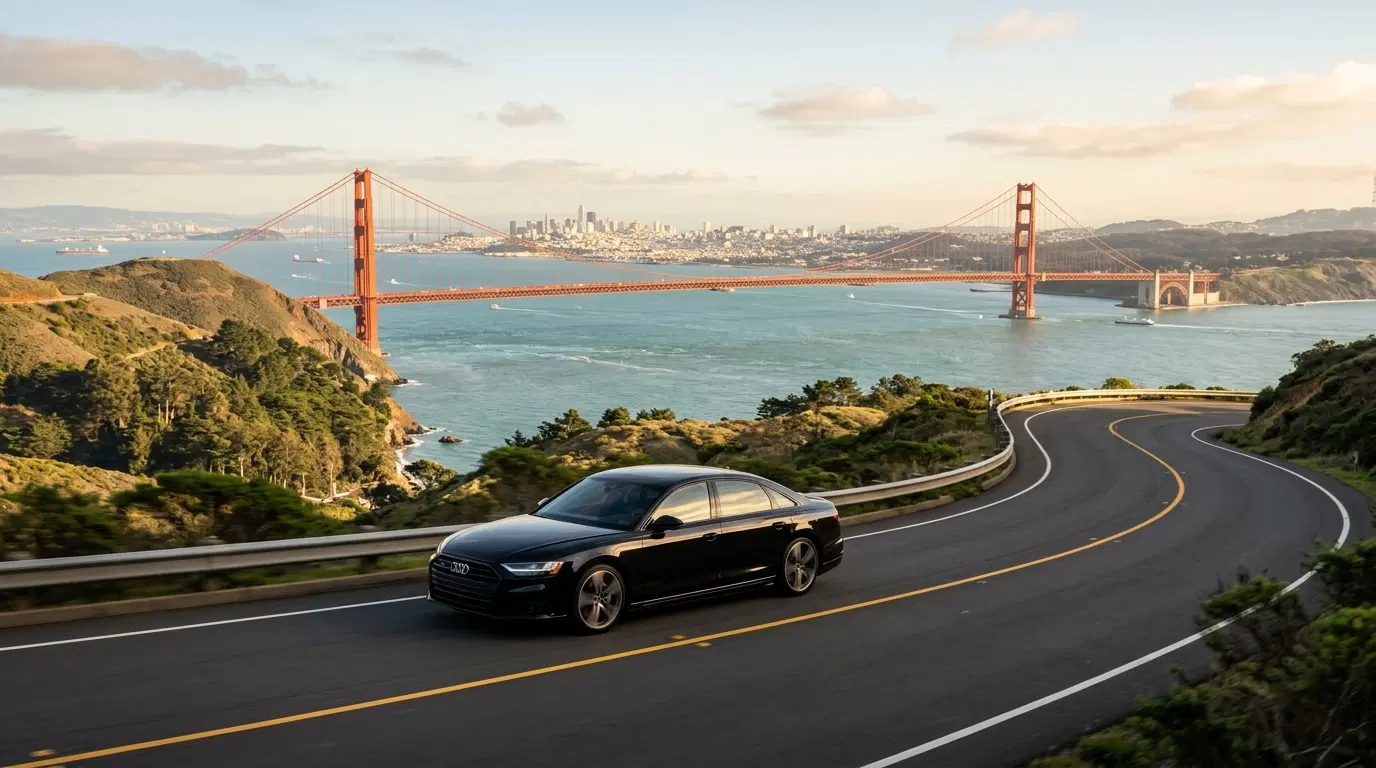
Most people arrive in San Francisco with a packing list built for California and a plan built for a flat city. Both are wrong. The san francisco travel tips that save a trip are the unglamorous ones: bring a jacket in July, reserve Alcatraz and Muir Woods months ahead, don't leave anything in a parked car, and check which hill you're about to walk up. The city rewards planning more than most, because the weather, the terrain, and the booking windows all work against improvisation.
Getting In From SFO
BART is the simplest option from San Francisco International. Trains run directly from the airport station into downtown in roughly 30 minutes, with a one-way adult fare of about $11.15. It runs on the same Clipper system as the rest of Bay Area transit, and you can tap a contactless card or phone at the gates rather than buying a paper ticket.
|
Option |
Approximate cost |
Time to downtown |
Best for |
|
BART |
About $11 one-way |
30 minutes |
Solo travelers, light luggage, downtown or Mission hotels |
|
Rideshare |
Varies with demand |
25–50 minutes |
Groups, hotels away from BART stations |
|
Shared van shuttle |
Around $17 one-way |
45–75 minutes |
Budget travelers who don't mind multiple stops |
|
Taxi |
Metered |
25–50 minutes |
No app, no account needed |
|
Pre-booked private transfer |
Quoted in advance |
25–50 minutes |
Late arrivals, families, early-morning departures |
One practical detail: rideshare pickups at SFO happen on Level 5 of the Domestic Garage, not curbside. Allow extra walking time with bags. Current fares and pickup points are published by San Francisco Travel, the city's official visitor bureau.
BART also serves Oakland International, which is often cheaper to fly into. The connection takes longer but works fine if your hotel is near a station.
If you're landing after a long-haul flight or heading out on an early departure, a pre-booked pickup with Transpovia gives you a fixed price and a driver already waiting rather than a surge fare at the end of the trip. Plenty of visitors combine the city with the drive south, and if that's your plan, a set of Los Angeles Travel Tips covers the other end of the coast.
Pack for Fog, Not for California
San Francisco's summer is its coldest, greyest season. June through August bring persistent coastal fog and daytime highs often in the low 60s, while September and October deliver the warmest, clearest weather of the year — locals treat early fall as the real summer.
That single fact should shape both your packing and your dates:
-
Best months for weather: September and October, with clear skies for Golden Gate Bridge photos and Alcatraz crossings.
-
Best value: January and February, when hotel rates drop. Expect rain and cool days, but the museums and restaurants are at their best.
-
Hardest month to enjoy: July, which combines fog, peak crowds and peak prices.
Microclimates matter as much as season. The Mission District can be sunny and 15 degrees warmer than the Sunset District at the same moment. If your morning at Ocean Beach is grey and freezing, an afternoon in the Mission or Dolores Park may be genuinely warm.
Pack layers and a windproof jacket regardless of month. The wind on the Golden Gate Bridge and at Lands End is stronger than the temperature suggests.
San Francisco Travel Tips for Muni, BART, and the Cable Cars
The Bay Area runs several separate transit systems, but one payment method covers nearly all of them. Tap a contactless card, phone, or Clipper card and you're set — Muni buses and Metro, BART, ferries, and cable cars all accept it.
Muni charges a flat adult fare of around $2.85, which includes about two hours of transfers across buses and Metro. Paying cash on board costs more and requires exact change. Anyone 18 and under rides Muni free, with cable cars the exception.
Cable cars are priced as an attraction, not as transport. A single ride is around $9, there are no transfers, and you pay again every time you board. If you plan more than a couple of rides, a 1-, 3-, or 7-day Visitor Passport covering all Muni services including cable cars usually works out cheaper.
Two things worth knowing about riding them: the queue at the Powell and Market turnaround regularly runs an hour in summer, and boarding at a stop further along the line — or taking the quieter California Street line — usually means walking straight on. Check current fares on the SFMTA site, since the agency is phasing out several MuniMobile ticket types during 2026.
BART is the regional system and charges by distance. Inside the city it's useful along the Market Street corridor and out to the Mission, but Muni covers far more ground.
What To Book Before You Fly
Two things sell out badly enough to reshape an itinerary, and both are frequently missed.
Alcatraz. Tickets are released 90 days in advance and regularly sell out weeks ahead in summer. Alcatraz City Cruises is the only operator the National Park Service authorizes to land passengers on the island — street vendors and third-party resellers offering "Alcatraz tickets" cannot get you there. Adult day tours run about $47.95 including the ferry and the cellhouse audio tour, with limited same-day tickets at the Pier 33 window. Details are on the official NPS page.
Muir Woods. This one catches almost everyone. Parking and shuttle reservations are required seven days a week, year-round, and are booked through GoMuirWoods.com. Standard parking costs around $10 with a 30-minute arrival window; miss it and your space isn't guaranteed. There's no cell service in the canyon, so if you arrive by rideshare, agree a pickup time with the driver before they leave.
Restaurant reservations in the Mission, Hayes Valley and North Beach fill up two to three weeks ahead for weekends. Museums rarely need advance booking outside major exhibitions.
Where To Base Yourself
Neighborhood choice affects how much time you spend on a bus and how the city feels after dark.
|
Area |
Suits |
Trade-off |
|
Union Square |
First-timers, cable car access, shopping |
Blocks near the Tenderloin feel rough at night |
|
Nob Hill |
Quieter evenings, classic hotels, great views |
Steep walks in every direction |
|
Fisherman's Wharf |
Families, Alcatraz ferries, sea lions at Pier 39 |
The most touristed food and shopping in the city |
|
SoMa |
Museums, ballpark, conference travel |
Empty streets on weekends |
|
Hayes Valley |
Walkable dining, independent shops, calm |
Limited hotel supply |
|
The Mission |
Best food, sunniest weather, nightlife |
Longer trips to the waterfront sights |
|
Marina / Cow Hollow |
Bridge access, low-key, safe-feeling |
Poor transit links to downtown |
Hills, Cars, and Things Locals Do Automatically
San Francisco's hills aren't decorative. Grades on parts of Filbert, Jones and Taylor Streets are steep enough that sidewalks turn into stairs. Wear shoes with grip, check the elevation profile before committing to a walking route, and remember that Muni buses climb the hills you'd rather not.
If you drive, three local rules matter:
-
Curb your wheels on any hill. California law requires it, and San Francisco actively tickets for it. Point wheels toward the curb facing downhill, away from it facing uphill.
-
Leave nothing visible in a parked car. Vehicle break-ins are the city's most common crime against visitors. Bags, chargers and even empty cases attract attention. Pack valuables before you park, not at the curb.
-
Parking is expensive and scarce. Garages downtown often beat street parking once you factor in the hunting time.
For most visits, skipping the rental car entirely is the better call. Transit, rideshares, and the driverless Waymo cars now operating across much of the city cover almost everything, and you only really need a vehicle for wine country. Sausalito is reachable by ferry from the Ferry Building — a far better trip than driving. Travelers extending north up the coast will find the same layering logic applies, and Seattle Travel Tips covers a city with a similar relationship to grey mornings and steep streets.
Safety, Etiquette, and Free Things Worth Your Time
San Francisco is safe for visitors in the areas most people spend time, with property crime the realistic concern rather than violence. The Tenderloin, roughly bounded by Union Square, Civic Center and Nob Hill, has visible street homelessness and drug use, and it's easy to walk into by accident from Union Square. Check your route rather than following a map blindly, especially after dark.
Some habits that make you fit in: locals never say "Frisco" or "San Fran," tipping runs 18–20% at restaurants, and standing on the right of escalators is expected in BART stations.
The best free experiences are outdoors. Golden Gate Park covers more ground than Central Park and includes the Botanical Garden, windmills and Ocean Beach at its western end. Lands End offers the best coastal walk in the city, with ruins and bridge views. The Presidio has free shuttle service, and the sea lions at Pier 39 cost nothing to watch. In early October, Fleet Week brings the Blue Angels over the bay — spectacular, and worth knowing about whether you want to see it or avoid the crowds it draws.
Frequently Asked Questions
How many days do you need in San Francisco?
Three full days covers Alcatraz, the Golden Gate Bridge, a couple of neighborhoods and one museum. Four or five lets you add Muir Woods, Sausalito or a wine country day without rushing.
Do you need a car in San Francisco?
No. Transit, walking and rideshares cover the city well, and parking costs and break-in risk make a car a liability. Rent one only for trips beyond the Bay Area.
Is San Francisco safe for tourists?
Generally yes, with normal city awareness. Property crime — particularly vehicle break-ins — is the main risk. Avoid walking through the Tenderloin at night and keep valuables out of sight.
What's the best month to visit San Francisco?
September and October, when the fog clears and temperatures are at their warmest. Summer is the coldest and foggiest season despite being the busiest.
Before You Go
Book Alcatraz and Muir Woods as soon as your dates are fixed, pack a jacket whatever the month, and check fares on official sites shortly before you travel — Bay Area transit is mid-change during 2026. Booking your airport transfer with Transpovia settles the first hour so you can start with the view instead of a queue.
"We booked the transfer after reading that the rideshare pickup was up in the garage. Landing at 11 p.m. with a toddler asleep on my shoulder, having someone meet us made the whole difference." — Family visiting from Melbourne


