
You've just stepped off a long flight. Your phone battery is low, you haven't figured out the local currency yet, and a friendly stranger near baggage claim is already asking where you're headed. That moment is where most airport taxi scams begin. The safest way to avoid taxi scams at airport arrivals is to settle your ride before you're tired, distracted, and standing in an unfamiliar terminal with your bags.
This guide walks through the scams travelers run into most often, the warning signs that give them away, and the habits that keep you in control of your trip from the gate to your front door. Whether you're flying into a major hub or a small regional airport, the same principles apply.
Why Airports Are Prime Territory for Taxi Scams
Airports put scammers and their ideal targets in the same place at the same time. Arriving passengers are often jet-lagged, carrying luggage, unsure of local prices, and eager to get somewhere comfortable. Many don't speak the language or know how far the city center actually is.
That combination creates an information gap, and dishonest drivers profit from it. A traveler who doesn't know the normal fare can't tell when they're being overcharged. Someone who doesn't know the route can't tell when the driver takes a long detour. Most airport transportation scams aren't elaborate. They work because the passenger has no reference point.
The good news is that closing that gap doesn't take much effort. A few minutes of planning before your trip removes most of the leverage a scammer has.
Common Airport Taxi Scams to Watch For
Tactics vary from country to country, but the same handful of tricks show up at airports around the world. Knowing them by name makes them much easier to recognize in the moment.
Touts and Unlicensed Drivers in the Arrivals Hall
The most familiar scam starts before you even reach the exit. Someone approaches you inside the terminal offering a taxi, often in a confident, helpful tone. They may wear a lanyard or carry an official-looking card. Legitimate taxis rarely solicit passengers inside the building. They wait at a marked rank or are dispatched through an official desk. A driver who comes looking for you is a driver to walk away from.
The Broken Meter and the Invented Flat Rate
Once you're in the car with the doors closed, the driver mentions that the meter isn't working, or simply never turns it on. At the end of the ride, you're quoted a number far above the normal fare. A variation involves a laminated rate card that looks official but lists inflated prices the driver made up.
The Long Way Around
Some drivers stretch a 25-minute trip into an hour by taking highways, loops, or side streets the passenger doesn't recognize. On a metered ride, every extra mile goes on your bill. This scam is hard to prove after the fact, which is exactly why it persists.
Surprise Fees and Luggage Charges
You agree on a price, then the extras appear: a charge per suitcase, a night surcharge, an airport exit fee, a toll that may or may not exist. Some surcharges are legitimate in certain cities, but a driver who adds them only after you arrive is usually counting on you not wanting to argue at the curb.
Payment and Change Tricks
Cash creates opportunities. A driver might claim you handed over a smaller bill than you did, give change in counterfeit or out-of-circulation notes, or say their card machine is broken right when you reach your destination. Card skimming is another risk with unfamiliar handheld terminals.
Fake Rideshare Pickups and Name Signs
Scammers have adapted to apps. Some pose as rideshare drivers and ask passengers to cancel the in-app booking and pay cash instead. Others stand in the arrivals area holding a sign with a name they overheard or spotted on a luggage tag, then intercept a traveler who was expecting a different driver.
The Hotel That Suddenly Closed
In some destinations, a driver tells you your hotel is fully booked, under renovation, or out of business, then offers to take you somewhere better. That alternative usually pays the driver a commission, and you end up somewhere you never chose.
How to Identify Taxi Scams Before You Get In
You can spot most problems before the car moves. These red flags deserve your attention:
-
The driver approached you rather than you approaching an official rank or desk.
-
The car has no visible license, company name, phone number, or taxi ID displayed inside.
-
The driver won't tell you the fare or says, "Don't worry, we'll figure it out later."
-
The meter isn't running, is covered, or the driver refuses to start it in a city where meters are required.
-
You're asked to load your bags quickly before any discussion of price or destination.
-
Someone tries to pull you toward a car parked away from the official pickup area.
-
The driver pressures you to cancel an app booking or a pre-arranged ride.
One red flag on its own isn't proof of a scam, but two or more together should make you step back and choose another option. You're never obligated to get into a car just because someone already touched your luggage.
The Safest Way to Avoid Taxi Scams at Airport Arrivals: Book Before You Land
If you want to remove guesswork entirely, arrange your ride ahead of time. A pre-booked private transfer addresses nearly every scam described above, because the key details are settled before you travel.
With a reputable booking, you know the total price in advance, so there's no meter to manipulate and no room for invented surcharges at the end. Your driver's details and meeting point are confirmed in writing, which makes impostors far easier to spot. The route to a fixed destination doesn't change what you pay. Many services also track your flight, so a delay doesn't leave you stranded or tempted to grab the first car offered.
When comparing options, look for a few things that signal safe airport transportation:
-
An all-inclusive price that clearly states what's covered, such as luggage, tolls, and waiting time.
-
A written confirmation with a booking reference and pickup instructions.
-
Clear information about where and how you'll meet your driver.
-
A way to reach customer support if something goes wrong on arrival.
-
A clear cancellation policy.
This is the gap Transpovia was built to fill. It connects travelers with pre-booked airport transportation from vetted local operators at a fixed, all-inclusive rate, so the price you see when you book is the price you pay. Families with car seats to think about, business travelers on tight schedules, and anyone landing late at night tend to find that settling the ride in advance takes a surprising amount of stress out of arrival.
Taxi Safety Tips If You Take a Cab at the Airport
Pre-booking isn't always possible. Plans change, flights get diverted, and sometimes a regular taxi is the practical choice. Here's how to avoid taxi scams when you're hailing on the spot.
Use the Official Taxi Rank or Desk Only
Follow the airport's own signs to the taxi rank or dispatch counter, and ignore anyone offering rides along the way. Many airports have staff who log your trip or hand you a slip with the taxi number on it. At Bangkok's Suvarnabhumi Airport, for example, travelers are directed to official kiosks that issue a printed ticket before assigning a cab. Keep that slip until the trip is over, because it's your record if you need to file a complaint.
Know the Expected Fare Before You Go
Check the airport's website or the local taxi authority before your trip. Some airports post fixed fares to the city center, and others publish typical metered ranges. New York's JFK, for instance, has a flat fare to Manhattan. Knowing the number in advance makes an inflated quote obvious immediately.
Confirm the Price or Meter Before the Car Moves
Ask for the fare or confirm the meter is on before you leave the curb, not when you arrive. If the driver hesitates, get out while you're still at the airport, where there are staff and other taxis nearby.
Follow the Route on Your Phone
Open a map app and watch your progress. You don't need to challenge every turn, but drivers are less likely to take a detour when they can see you tracking the trip. Downloading offline maps before you fly helps if you won't have data right away.
Document the Ride
Snap a quick photo of the license plate and the driver ID card displayed inside the car. Share your trip details with someone you trust if you're traveling alone. It takes seconds and gives you something concrete if a dispute comes up.
Pay Carefully
Carry small bills in the local currency so you aren't relying on the driver for change. Count your money out loud as you hand it over. If you pay by card, keep it in sight. And don't pay until your bags are out of the trunk and on the sidewalk next to you.
Meeting Your Driver Without Getting Fooled
Even pre-booked rides can be targeted by impostors, usually through the name-sign trick. A few simple habits shut that down.
Read your confirmation before you land so you know exactly where the meeting point is, whether that's a specific door, a pillar number, or the arrivals hall exit. Our airport pickup guide explains how the meeting process works step by step, which is worth a look before your first transfer.
When you find your driver, let them confirm the details rather than offering them yourself. Ask who they're picking up and where they're going. A genuine driver will know your name, destination, and booking details. An impostor is hoping you'll fill in the blanks. If anything doesn't match, contact your transfer provider through the phone number or app in your confirmation, not a number the driver gives you.
Avoid saying your full name or hotel loudly in the arrivals area, and keep luggage tags facing inward if they show personal details.
What to Do If You Think You've Been Scammed
If a fare feels wrong, stay calm and avoid escalating at the roadside, especially at night or in an isolated area. Pay what's needed to get yourself and your belongings out safely, then deal with it afterward from a secure place like your hotel lobby.
Write down everything while it's fresh: the time, the taxi number, the license plate, the amount charged, and the route if you tracked it. Get a receipt if possible. Then report it to the airport authority, the local taxi regulator, or the police, depending on the destination. If you paid by card, contact your bank about disputing the charge. If you booked through a transfer service, its support team should be your first call.
Reporting matters even if you don't get your money back. Airports and taxi authorities often rely on passenger complaints to identify drivers who repeatedly cheat visitors.
Frequently Asked Questions
Is it safer to pre-book an airport transfer or take a taxi from the rank?
Both can be safe if you use official channels. A taxi from a supervised airport rank is generally reliable, especially in cities with regulated fares. A pre-booked transfer goes a step further by locking in the price, driver details, and meeting point before you travel, which removes most opportunities for overcharging or impostors.
What should I do if a taxi driver says the meter is broken?
Treat it as a reason to choose a different taxi. If you're still at the airport, step out and return to the rank or dispatch desk. If you're already on the road and feel safe doing so, agree on a total price before going any farther, and note the taxi number in case you need to report the driver.
Are rideshare apps safer than taxis at the airport?
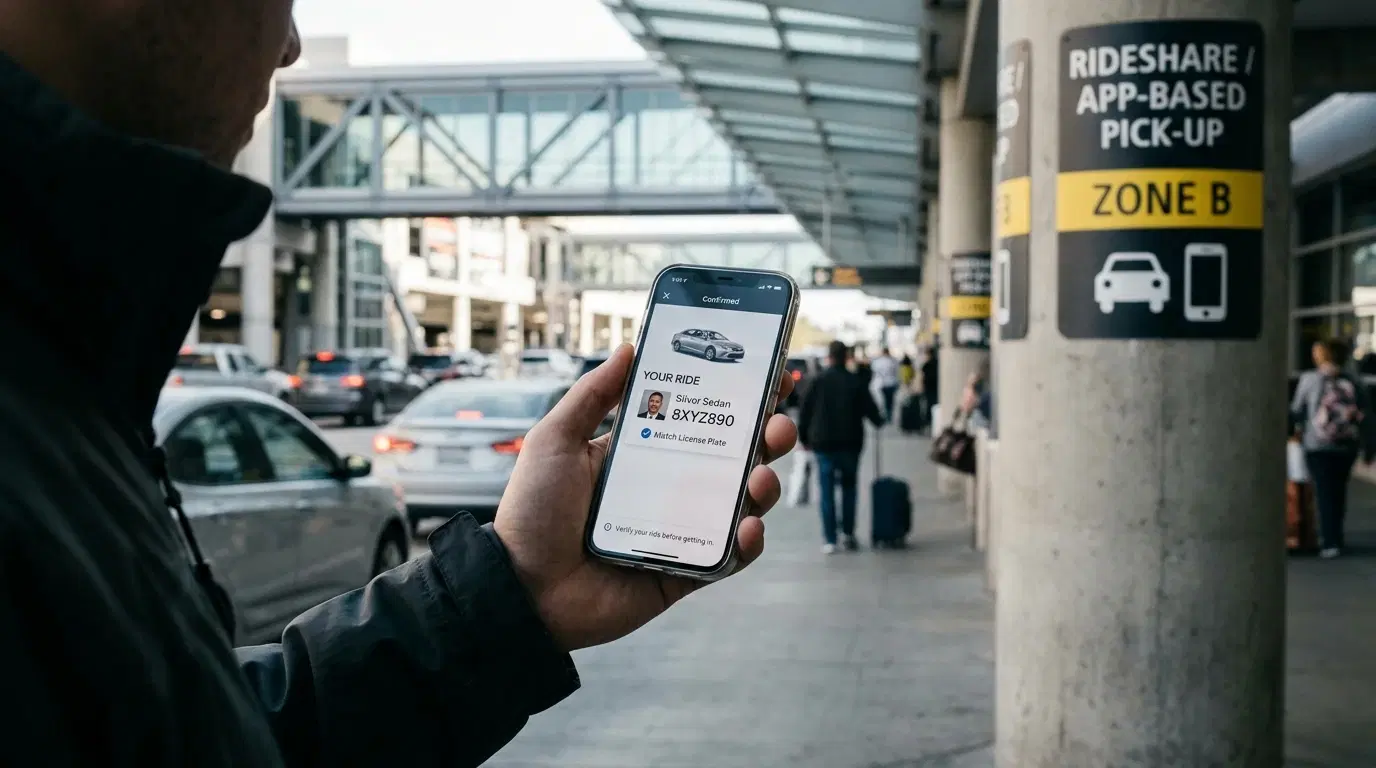
Rideshare apps can reduce some risks because the fare estimate, driver identity, and route are recorded in the app. The key is to stay inside the app. Check the license plate and driver photo before getting in, use the airport's designated rideshare pickup zone, and never agree to cancel the booking and pay a driver in cash.
Conclusion
Airport taxi scams depend on timing. They catch travelers at their most tired and least informed, then rely on the awkwardness of arguing over money at the curb. Take away that advantage and most scams fall apart.
The most reliable approach is to make your transportation decision before you land, ideally with a pre-booked ride at a fixed price and a confirmed meeting point. When that isn't possible, use official ranks, know the expected fare, confirm the price before the car moves, and document the trip. Those few habits let you skip the uncertainty and start your trip the way you meant to.
"After our last trip, we stopped figuring out rides at the curb. Now the car is booked before we pack, and the kids are buckled in before anyone has time to get cranky." — a family said once they switched to pre-booked transfers


