
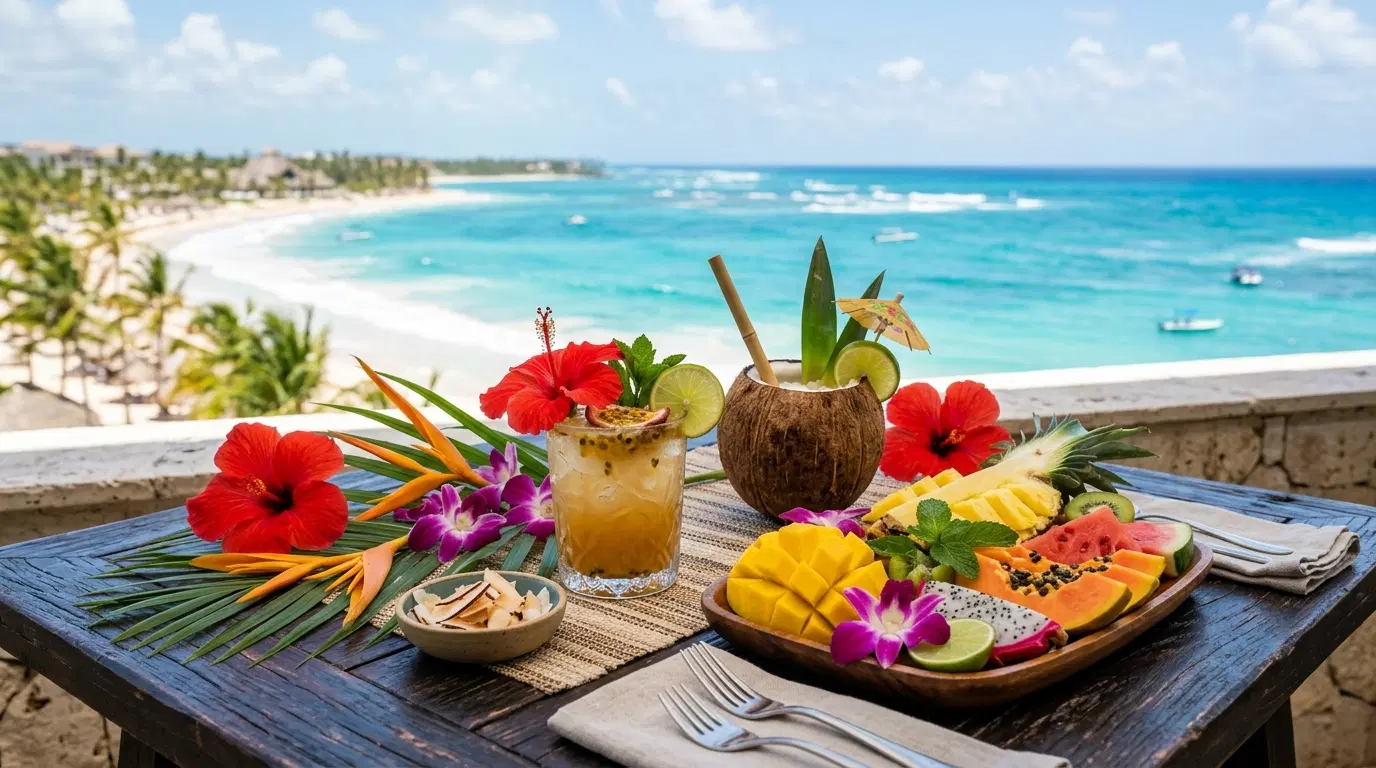
Punta Cana works differently from most destinations: it's a collection of resort areas along the Dominican Republic's east coast rather than a traditional city, so many of your biggest decisions happen before you arrive. You'll choose where to stay, arrange an airport transfer since public transport is limited, and decide how much of the surrounding region you want to explore. The beaches are the main attraction, but the best ones are not always where first-time visitors expect. These Punta Cana travel tips cover the practical details that help make a first trip smoother.
Punta Cana Travel Tips for Getting Around
Punta Cana International Airport (PUJ) has no public transit directly serving the main resort areas, and airport ride-hailing options are limited. Your main choices are a resort shuttle, a pre-booked private transfer, or an official cooperative taxi. Bávaro sits about 20 to 30 minutes away, while the Uvero Alto resort zone can take 45 to 70 minutes, so match your transport to where you're staying.
Uber and similar apps generally cannot pick up directly at PUJ because of taxi-cooperative rules, and walking outside the airport boundary with luggage is not practical. An official taxi or pre-booked transfer is therefore the simplest option. First, check whether your accommodation package already includes an airport transfer, since many properties provide one.
Official cooperative taxis charge fixed rates, roughly $40 to $55 to Bávaro per vehicle for up to four people. Confirm the price before leaving and use the official taxi rank rather than accepting rides from unlicensed drivers.
A pre-booked private transfer through Transpovia gives you a fixed price, a driver waiting at arrivals, and no shared-shuttle stops. This can be especially useful for Uvero Alto's longer journey or a late-night arrival.
Once you reach your accommodation, many travelers need little transport, though taxis and licensed tour operators can help with trips to beaches and attractions outside the resort area.
Where to Stay: Bávaro, Cap Cana, and Uvero Alto
Your chosen area shapes the trip more than the individual hotel. Bávaro is the main resort area with the widest range of accommodation and easy access to restaurants; Cap Cana is an upscale, gated area close to the airport; and Uvero Alto is the quieter, more remote northern section.
Bávaro, including Playa Bávaro, Los Corales, and El Cortecito, is the most convenient area for travelers who want access to beaches, restaurants, and services outside their accommodation. Its long coastline and central location make it a practical choice for first-time visitors.
Cap Cana is more secluded and polished, with a marina area, Playa Juanillo, and several family-oriented attractions. It is also one of the closest major resort zones to the airport, though accommodation costs can be higher.
Uvero Alto is newer and quieter, with large resorts spread along long stretches of coastline. It suits travelers looking for a peaceful stay but requires longer drives to the airport and other parts of Punta Cana.
Decide how much you value convenience, accessibility, and seclusion before booking.
The Beaches and Where to Find the Best Ones
The beaches are one of the main reasons travelers visit Punta Cana. A useful detail for first-time visitors is that Dominican beaches are generally public, including many stretches located in front of large resorts. This means you can visit beaches such as Playa Juanillo and Playa Macao without staying at the nearest hotel.
Playa Bávaro is the classic long white-sand beach, generally calm and suitable for swimming. Playa Juanillo in Cap Cana is known for its clear water and scenic coastline. Playa Macao is more natural and less developed, making it popular with visitors looking for a quieter beach experience.
Playa Cortecito has a more local atmosphere, with fishing boats and nearby food options.
One thing to consider is sargassum seaweed, which can wash ashore along Punta Cana's coastline, particularly from spring through summer. Larger resorts often clear their beachfront areas regularly, while conditions can vary between different beaches. Check recent beach conditions before traveling.
Getting Beyond Your Accommodation: Things to Do
While many visitors spend much of their trip near their accommodation, Punta Cana has several natural and family-friendly attractions beyond the main resort areas.
A popular day trip is Isla Saona, known for its palm-lined beaches and shallow natural pools. Visitors can also explore the Hoyo Azul cenote or enjoy outdoor activities at Scape Park in Cap Cana.
Macao Beach is another popular destination, particularly for travelers who want to explore a less developed stretch of coastline. Guided buggy tours are available in the surrounding area, though they can be dusty, so wear suitable clothing and protect cameras and other electronics.
Other activities include snorkeling, swimming, nature excursions, and visiting scenic viewpoints such as Montaña Redonda. Book through properly licensed operators and confirm exactly what is included before paying.
For a full day of history and sightseeing, Santo Domingo's Colonial Zone lies about two to two and a half hours west. It offers historic architecture, museums, and important landmarks from the early colonial period. The Best Ways to Travel From Punta Cana to Santo Domingo covers the routes and travel times.
Best Time to Visit Punta Cana
The best time to visit Punta Cana is generally December through April, when conditions are usually drier, humidity is lower, and the weather is sunny. This is also the busiest and often most expensive period.
Punta Cana remains warm throughout the year, so choosing travel dates is more about rainfall, storms, and beach conditions than temperature.
Hurricane season runs from June through November and peaks between August and October. While direct storms are uncommon, travelers visiting during this period should monitor weather forecasts and consider suitable travel insurance.
Sargassum tends to be more common from spring into summer along the east coast. May and November can offer fewer crowds and lower prices while still providing pleasant weather.
Check current weather and beach conditions close to your travel dates.
Money, Safety, and Smart Practicalities
Punta Cana's main tourist areas are generally comfortable for visitors, and most travel planning is focused on transport, weather, and choosing suitable activities.
The local currency is the Dominican peso, though U.S. dollars are widely accepted at many hotels and tourist services. Small bills can be useful for tipping housekeeping staff, drivers, and service workers. Paying in pesos can sometimes provide a better exchange rate.
Drink bottled or properly filtered water rather than tap water, and use sunscreen and mosquito repellent because of the strong sun and tropical climate.
Book excursions through licensed operators and follow safety instructions for all water activities, vehicles, and outdoor tours. Check your government's current travel advisory before traveling.
Frequently Asked Questions
Can you use Uber in Punta Cana?
Ride-hailing options are limited, particularly at the airport and major resort areas. Use a resort shuttle, pre-booked private transfer, or official cooperative taxi when arriving at Punta Cana International Airport.
Is Punta Cana safe for tourists?
The main tourist and resort areas are generally comfortable for visitors. Take normal precautions, drink bottled water, book activities through licensed operators, and check your country's travel advisory before traveling.
What is the best time to visit Punta Cana?
December through April is generally the driest and busiest period. Punta Cana stays warm year-round, while June through November is hurricane season, and seaweed can be more common from spring into summer.
Do you need to leave your accommodation in Punta Cana?
No, but exploring beyond your accommodation can add variety to your trip. Isla Saona, Playa Macao, Hoyo Azul, Montaña Redonda, and public beaches are among the places visitors may consider.
Before You Go
Confirm whether your accommodation package already includes an airport transfer before booking another, and match your transport to the distance from your chosen resort area, especially if staying in Uvero Alto.
Pack suitable clothing for hot weather, carry small bills for tips, drink bottled water, and consider planning at least one excursion beyond your accommodation. A pre-booked transfer through Transpovia can make arrival and longer resort drives simpler after a flight.
"On our second visit, we spent more time exploring beyond our accommodation and visited Saona Island and Macao Beach. Those experiences gave us a much broader view of Punta Cana's natural beauty." — travelers returning to Punta Cana


