
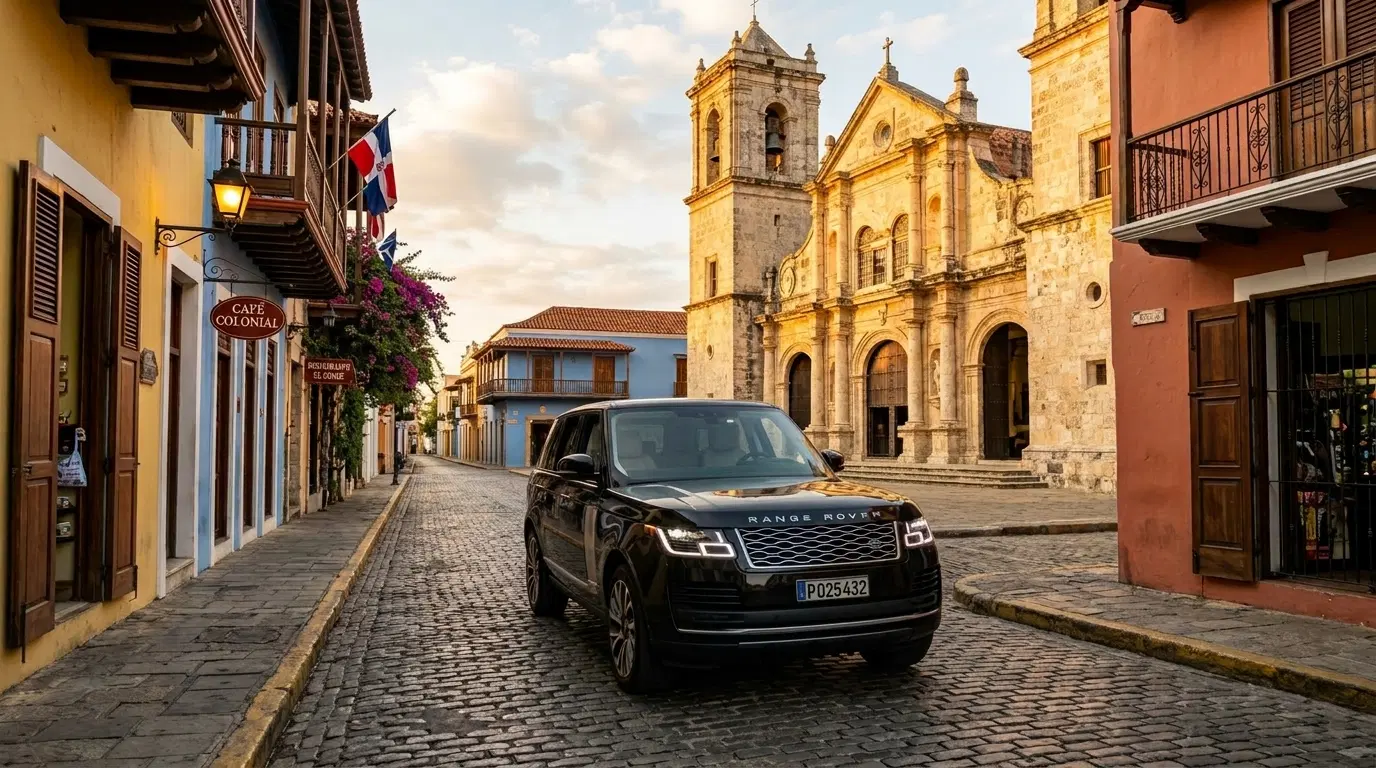
Your resort in Bávaro is beautiful, but you've set aside a day for the capital — the cobbled streets of the Colonial Zone, the oldest cathedral in the Americas, and dinner somewhere with real city energy. The catch is the two-hour-plus ride west, and how you cover it sets the tone for the day. Some travelers want the cheapest seat on the express bus. Others are catching a flight out of Las Américas, traveling with kids, or hauling luggage for a longer stay. The right Punta Cana to Santo Domingo transfer comes down to your schedule, your budget, and how much comfort matters. A little planning keeps it simple.
The Punta Cana to Santo Domingo Route at a Glance
Santo Domingo sits roughly 195 km (about 120 miles) west of Punta Cana. Most drivers cover it in 2 to 2.5 hours, though traffic near the capital can stretch that.
Nearly every option follows the same road: the Autopista del Coral, a modern four-lane toll highway, which connects to the Autovía del Este (Highway 3) heading into the city. The route passes La Romana, San Pedro de Macorís, Juan Dolio, and Boca Chica, with sugarcane fields and coastal stretches along the way. There's no practical flight between the two — they're too close, and a short hop costs far more than it saves.
Most visitors start from a hotel in Bávaro or Punta Cana. If you've only just landed and are heading to your resort first, a Punta Cana Airport to Bávaro Transfer handles that short first leg, and you can plan the Santo Domingo trip separately once you're settled.
Comparing Your Punta Cana to Santo Domingo Transfer Options
Four options realistically connect the two cities. Each suits a different traveler.
Private Transfer
A private transfer is a pre-booked car or van with a driver who picks you up at your hotel or the airport and takes you straight to your Santo Domingo address. Door-to-door time runs about 2 to 2.5 hours with no stops.
Prices generally fall in the $150–$200 range for the vehicle, sometimes higher for airport pickups or larger vans, and you pay for the whole vehicle rather than a seat. That makes it good value for couples, families, and small groups splitting the fare. Luggage fits easily, child seats can be added on request, and the fixed price avoids roadside haggling. The main trade-off is cost if you're traveling solo.
Public Bus (Expreso Bávaro)
The bus is the budget choice. Expreso Bávaro is the main operator, with APTPRA also running the route. Buses leave from the Bávaro station near Friusa and the Verón stop, and tickets cost around RD$400 (roughly $8–$10), cash only.
Buses are air-conditioned with a restroom, and the ride takes about 2.5 to 3.5 hours. Two catches matter. First, departures are limited — often around 7am to mid-afternoon — and the last bus leaves Verón in the early afternoon, so a flight landing after about 2pm may leave you stranded for the day. Second, the Santo Domingo terminal is in the city center, not at the airport, so you'll need onward transport once you arrive. You can confirm current routes and fares on the official Dominican Republic tourism site.
Taxi
A negotiated taxi can take you the whole way, usually for $120–$200 depending on your bargaining and the vehicle. Agree on the total price before you leave, confirm whether it's quoted in dollars or pesos, and carry cash — many drivers don't take cards. A word of caution on ride-hailing apps: Uber works fine inside the cities, but for a long intercity run, drivers frequently cancel on arrival or ask for cash outside the app, so it's an unreliable plan for this distance.
Rental Car or Self-Driving
Renting gives you freedom to stop in Juan Dolio or Boca Chica along the way. The Coral Highway is well-maintained and considered one of the safer roads in the country, but Dominican traffic can be assertive, and you'll deal with tolls and city driving at the end. This suits confident drivers comfortable with Caribbean roads — less so anyone hoping to relax.
|
Option |
Travel time |
Approx. cost (one way) |
Best for |
|
Private transfer |
2–2.5 hours |
~$150–$200 per vehicle |
Families, groups, luggage, flight connections |
|
Public bus |
2.5–3.5 hours |
~$8–$10 per person |
Solo and budget travelers, flexible schedules |
|
Taxi |
2–2.5 hours |
~$120–$200 per trip |
Small groups wanting door-to-door |
|
Rental car |
2–2.5 hours + stops |
Rental + tolls & fuel |
Confident drivers exploring en route |
Prices shift with season, demand, and how far ahead you book.
How Long the Trip Really Takes
The 2-hour estimate holds on a clear morning. Real conditions can add time, mostly at the Santo Domingo end.
The capital's rush hours — roughly 7–9am and 4–7pm on weekdays — bring heavy traffic, especially on Avenida Las Américas heading into the city. Weekends and holidays add their own crowds as locals travel. Heavy rain also slows this route, since parts run along the coast. If you're catching a flight or have a set reservation, plan your departure to miss the peak windows and build in a buffer.
Road Conditions, Tolls, and Safety
This is where a bit of preparation saves hassle. The Autopista del Coral and Autovía del Este are good highways, but they're toll roads with several booths between Punta Cana and Santo Domingo.
Each booth charges around RD$60–RD$100, and the total usually lands between RD$150 and RD$300 (about $2.50–$5). Keep small change in Dominican pesos handy, since large bills and cards aren't always welcome. A few more practical notes for the road:
-
Watch for speed bumps (policías acostados) on approach roads to towns and resorts — they appear suddenly.
-
Avoid driving rural sections after dark if you don't know the road, as lighting varies.
-
Drive defensively. The main risk here is other motorists' habits, not the road surface itself.
With a private transfer or bus, none of this falls on you — the driver handles tolls, timing, and the traffic.
When a Private Transfer Makes the Most Sense
Every option works. Certain situations, though, point clearly toward a pre-arranged private ride.
-
Catching a flight out of Las Américas Airport (SDQ), where a fixed pickup and a driver tracking the clock beat a bus schedule that might not line up.
-
Traveling with kids or older relatives, when a door-to-door ride with a child seat beats a terminal and a transfer.
-
Carrying luggage for a longer stay that the bus can't easily hold.
-
Groups of four or more, where splitting one vehicle often costs less per person than separate seats.
-
A day trip to the Colonial Zone, when you want a driver who waits and brings you back rather than gambling on the last bus.
This is where booking a Punta Cana private transfer ahead pays off. A service like Transpovia picks you up at your hotel or the airport, sets the price in advance, and takes you straight in — useful when your schedule leaves no room for missed connections.
The same ease applies at the capital end. If you're arriving into Santo Domingo and heading for the historic center, a Santo Domingo Airport to Colonial Zone Transfer covers that leg the same way, so it's worth planning your full route before you set out rather than sorting each stage on arrival. Booking the whole plan with Transpovia means one confirmed ride instead of several improvised ones.
Frequently Asked Questions
How much does a transfer from Punta Cana to Santo Domingo cost?
The public bus is cheapest at around $8–$10 per person. A negotiated taxi runs about $120–$200, and a pre-booked private transfer typically falls in the $150–$200 range for the vehicle. For groups, splitting a private transfer often costs less per person than separate taxi fares while adding comfort.
Is it safe to drive from Punta Cana to Santo Domingo?
The Autopista del Coral is modern, well-maintained, and generally considered one of the safer highways in the country. The bigger concern is assertive local driving rather than the road itself. Drive defensively, watch for sudden speed bumps, and avoid unfamiliar rural stretches after dark.
Can you take a bus from Punta Cana to Santo Domingo?
Yes. Expreso Bávaro and APTPRA run air-conditioned buses for around RD$400 (cash only), taking 2.5 to 3.5 hours. Departures are limited and the last one leaves in the early afternoon, so a late-arriving flight may miss it. The Santo Domingo terminal is downtown, not at the airport.
How long does it take to get from Punta Cana to Santo Domingo?
Plan on 2 to 2.5 hours by private transfer or taxi in normal traffic. The bus takes longer with stops. Add time for weekday rush hours in Santo Domingo (7–9am and 4–7pm) and for weekends or heavy rain.
Before You Go
Match the ride to your day: the Expreso Bávaro bus if you're counting pesos and have a flexible schedule, a private transfer if comfort, luggage, or a flight connection come first. Carry small change for tolls, watch the bus timing, and leave early to dodge the capital's rush hour. A Transpovia transfer keeps the trip simple, so more of your day belongs to Santo Domingo.
"We had a flight out of Las Américas and didn't want to risk the bus timing. Having a driver pick us up at the resort and take us straight to the terminal made the whole thing stress-free." — a couple heading home from Punta Cana


