
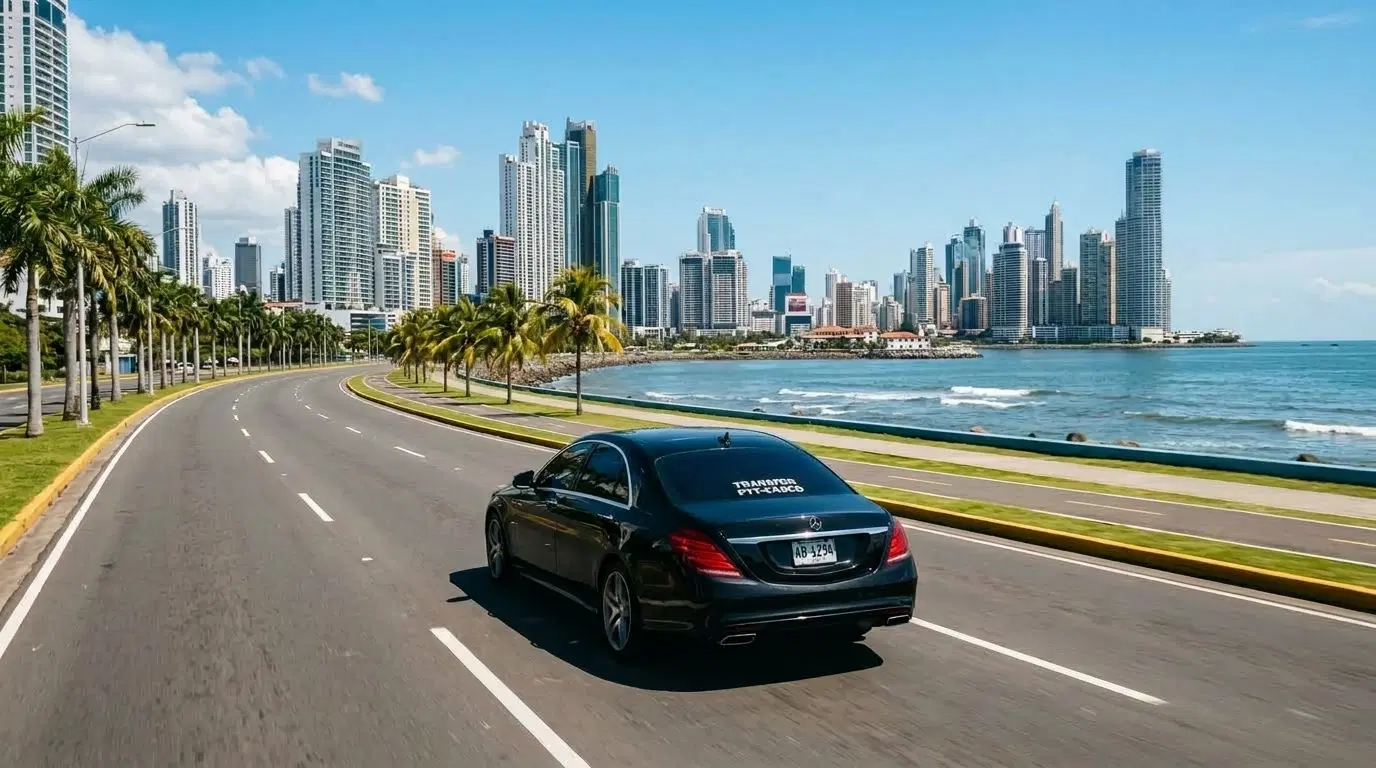
You land at Tocumen after a long flight, and the historic streets of Casco Viejo are still about 30 kilometers west across the city. Planning your airport transfer ahead helps you reach your accommodation smoothly. The old town's colonial charm is exactly why you came, but its narrow one-way lanes and a stretch of highway between you and them make that last leg the part worth thinking through. Tired travelers, families with kids, and budget backpackers all face the same call at the arrivals door. Sorting out your Panama City Airport to Casco Viejo transfer before you fly keeps that first hour calm.
Getting From Panama City Airport to Casco Viejo: Your Options at a Glance
Tocumen International Airport (PTY) sits about 24 km east of the city, and the drive to Casco Viejo takes roughly 25 to 45 minutes outside rush hour. You have four realistic ways to get there: an official airport taxi, a rideshare app, the Metro, or a pre-booked private transfer. Each suits a different traveler.
|
Option |
Typical cost to Casco Viejo |
Time |
Door-to-door? |
Best for |
|
Official airport taxi |
~$30–40 per car |
25–45 min |
Near — edge of the district |
Arriving without a booking or app |
|
Uber / DiDi / Cabify |
~$22–30 |
25–45 min |
Pickup in the parking zone |
App users okay with a short walk |
|
Metro (Line 2 branch + transfers) |
~$0.85 per person |
~1 hour |
No — walk or short taxi at the end |
Budget travelers beating traffic |
|
Private transfer |
Fixed, from ~$35 per vehicle |
25–45 min |
Yes |
Families, groups, late arrivals |
Panama uses the US dollar, so there's no currency to change before you ride.
How Long the Ride Takes — Traffic, Tolls, and Timing
Off-peak, plan on 25 to 45 minutes. Drivers use the Corredor Sur, a toll expressway that hugs the coast and skips much of the city traffic. During rush hour — roughly 7:00 to 9:30 in the morning and 5:00 to 7:30 in the evening — the same trip can stretch to 60 to 75 minutes.
Your arrival time matters more than the distance here. A midday landing clears quickly; an evening arrival can sit in traffic on the slower free roads if the toll route is busy. Toll charges are small and usually built into a taxi or transfer's fixed fare, so you won't be asked for extra cash at the booth.
If your plans reach beyond the city — say, across the isthmus to the Caribbean side — that's a longer, separate trip. A Panama City to Colón Transfer runs about an hour and a half each way and is worth arranging ahead rather than sorting out on the day.
Official Airport Taxis: Where to Find Them and What to Pay
Head to the licensed taxi desk just past Customs in the arrivals hall. You pay or confirm the fare at the desk, and a dispatcher assigns you a car — look for the white vehicles with red license plates, Panama's official taxi colors. A fixed-zone fare to Casco Viejo usually runs about $30 to $40 for the car.
Two things save travelers real trouble here:
-
Confirm the price and your exact drop-off before setting off. Fares are set by zone, not by meter, so clarity up front avoids any dispute at the other end.
-
Ignore anyone who approaches you inside the hall or the parking area offering a "special price." Those touts are unlicensed and often charge two to three times the going rate. The official desk is the only place to arrange a taxi.
Carry some US dollars in small bills. A number of official taxis now accept cards, but not all do, and cash removes any doubt.
Using Uber, DiDi, or Cabify
Rideshare works well in Panama City and often costs a little less than the official taxi — roughly $22 to $30 to Casco Viejo — but the airport has one firm rule: app cars can't collect you at the arrivals curb. You'll need to exit the terminal, cross toward the parking area, and meet your driver at the designated pickup zone in the garage. Uber, DiDi, and Cabify all operate this way.
A couple of practical points make this smoother:
-
Sort out data before you leave the building. The airport's free Wi-Fi drops the moment you step outside to reach the pickup zone. An eSIM or a local SIM bought on arrival keeps you connected to message your driver.
-
Send the driver your parking-row or column number. Pickups happen among the parking rows near Terminal 2, and a row number helps you find each other faster.
Rideshare prices climb with demand, so during a busy arrival bank the fare can rise to match or beat a taxi. When that happens, the instant taxi at the door may be the easier call.
Taking the Metro to Casco Viejo
Yes, the Metro now reaches Tocumen — a detail many older guides get wrong. The Line 2 branch (known as El Ramal) has an Aeropuerto station, connected to the terminals by a free shuttle or a short walk. The catch is that it's not a single ride to the old town.
To reach Casco Viejo, you'll travel from Aeropuerto to Corredor Sur on the branch, transfer to the main Line 2 heading west to San Miguelito, then change to Line 1 toward the center and ride to 5 de Mayo, the closest station to the district. From there it's a short walk or quick taxi into Casco Viejo. The whole trip costs about $0.85 and takes around an hour with the transfers.
You can tap a contactless debit or credit card straight at the gates — no need to buy a card — or pick up a rechargeable Metro card for $2. Trains run roughly 5:00 a.m. to 11:00 p.m. The Metro is a smart way to skip rush-hour gridlock on a tight budget, but the transfers and final walk make it awkward with large suitcases or after a late-night landing. Note that the local MiBus buses need a prepaid transit card and don't take cash, which makes them impractical the moment you arrive with luggage.
When a Private Transfer Makes the Most Sense
A private transfer is a pre-booked car that meets you inside arrivals with your name on a sign and drives you straight toward your hotel for a fixed price. On this route, that removes several specific headaches at once: no walking to the parking garage for a rideshare, no negotiating at a taxi desk, no hunting for Wi-Fi, and no cash math after a long flight.
It's the strongest choice when:
-
You're arriving late, when Copa's evening banks land together and immigration lines run long — a driver waiting through the wait beats sorting out a ride at midnight.
-
You're traveling with kids, older relatives, or several suitcases, and want one loaded-up, direct ride.
-
You're a group that needs a van rather than splitting across cars.
-
Your flight is delayed — a good operator tracks it and adjusts the pickup, so the car is still there.
This is the kind of arrival a service like Transpovia is built for, with the price and the toll fixed before you fly and a driver who monitors your landing. Booking the return the same way is worth doing while you're at it — arranging the round trip with Transpovia in advance means your departure pickup is set, with time built in for morning traffic back to Tocumen. If your trip continues into Colombia's Caribbean coast afterward, a Cartagena to Barranquilla Transfer follows the same book-ahead logic for a leg that's easy to overlook.
Arriving Smart: Casco Viejo Drop-offs and Common Mistakes
Casco Viejo, officially San Felipe, is a UNESCO-listed historic quarter known for narrow one-way lanes, cobblestone streets, and colonial architecture. That character shapes your arrival: a driver often can't reach your exact door and will drop you at the nearest corner or plaza, leaving a short walk over uneven stone. Knowing that ahead of time — and packing bags you can roll or carry a block — saves frustration.
A few more things worth getting right:
-
Build in time for immigration. As a major Copa hub, Tocumen sees big arrival waves, and passport lines can be slow when several flights land at once. Factor this into any tight onward plan.
-
Have your hotel's address and cross street written down. Casco Viejo's streets are small and easy to mix up, and it helps any driver drop you in the right spot.
-
Check current terminal and service details on the official Tocumen International Airport site before you travel, since the airport is expanding and gates shift between Terminals 1 and 2.
Frequently Asked Questions
How much is a taxi from Panama City Airport to Casco Viejo?
An official airport taxi to Casco Viejo usually costs about $30 to $40 for the car, set by zone at the taxi desk past Customs. Rideshare apps like Uber often run a little less, around $22 to $30, though prices rise during busy periods. Confirm any taxi fare before you set off.
Is Uber allowed at Tocumen Airport?
Yes, Uber, DiDi, and Cabify all operate, but they can't pick up at the arrivals curb. You must walk out to the designated pickup zone in the parking area, usually among the rows near Terminal 2. Sort out mobile data before leaving the terminal, since the airport Wi-Fi cuts off outside.
Can you take the Metro from the airport to Casco Viejo?
You can. The Line 2 branch has an Aeropuerto station linked to the terminals by a free shuttle. Reaching Casco Viejo takes about an hour and two transfers, ending at 5 de Mayo station near the district. It costs roughly $0.85 and you can pay by tapping a contactless card.
How long does the transfer take?
Plan on 25 to 45 minutes by car outside rush hour, using the Corredor Sur toll road. Morning and evening traffic can push it to 60 to 75 minutes. The Metro takes around an hour including transfers, regardless of road traffic.
Before You Go
The choice here comes down to timing and how much you're carrying. The Metro is unbeatable value and dodges traffic, a taxi or app is quick when you'd rather not think, and a booked car makes the most sense after a late flight or with a family in tow. Planning ahead — Transpovia included — means the old town welcomes you without a stressful start.
"We landed close to midnight with two kids and a stack of bags, and having a driver right there with our name on a sign meant we were checking in at our Casco Viejo hotel before the little ones fully woke up." — Family traveling from Tocumen to Casco Viejo


