
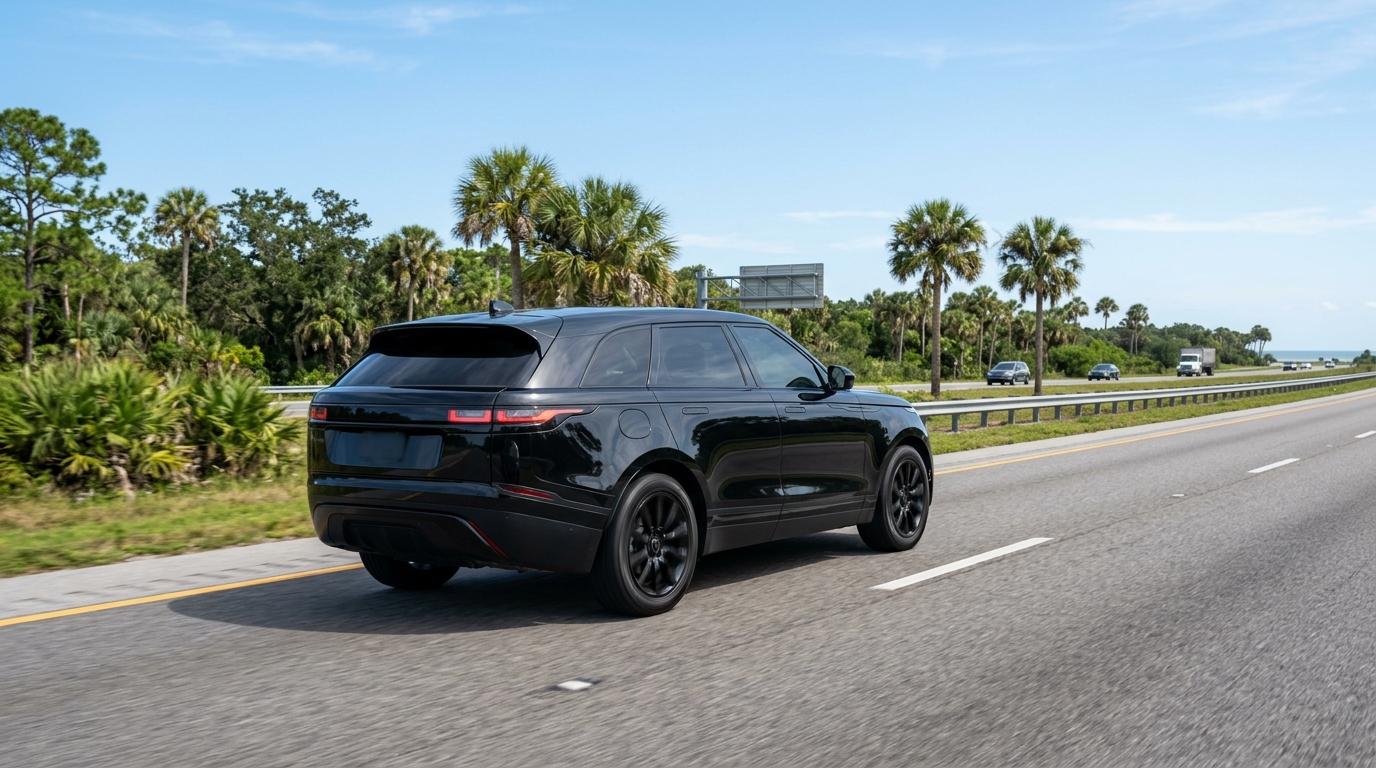
Sailing day starts with a fixed number: the boarding window printed on your cruise documents. Between your Orlando hotel or the arrivals hall at MCO and the gangway sits roughly an hour of Florida highway, a toll road that backs up on cruise mornings, and a port with seven terminals spread across two sides of a shipping channel. Sorting out your Orlando to Port Canaveral transfer before you travel is what turns that hour into the easy part of the day.
About Port Canaveral: What Cruisers Should Know
Port Canaveral is the world's busiest cruise port, handling close to nine million passenger movements a year. Seven major cruise lines homeport here: Royal Caribbean, Carnival, Disney Cruise Line, Norwegian, MSC Cruises, Celebrity, and Princess.
The port's layout matters more than most first-time cruisers expect. Terminals 5, 6, 8, and 10 sit on the north side of the shipping channel; Terminals 1 and 3 are on the south side. Disney sails from Terminal 8 and Terminal 3 was purpose-built for Carnival's Mardi Gras, but assignments aren't fixed — the same ship can use a different terminal on a different sailing, so check your cruise documents again a few days out. Each terminal has its own passenger drop-off zone, curbside porters, parking, and accessible spaces. Weekends are the busiest sailing days, when five or six ships can be working at once. The official Port Canaveral site publishes terminal maps, directions, and the master ship schedule.
Getting to the Port: Distance, Time, and Traffic
"Orlando" covers a lot of ground, and your starting point changes the math. From Orlando International Airport (MCO), the port is about 45 miles east — usually 45 to 60 minutes via SR-528, the Beachline Expressway. From downtown Orlando, plan on roughly 50 miles. From the Disney resort corridor in Lake Buena Vista, it's closer to 65–70 miles, because you first take I-4 or SR-417 to reach the Beachline; that trip runs 70–85 minutes on a clear road.
SR-528 is a largely cashless toll road, so drivers need a SunPass or accept plate billing. Two things stretch the drive beyond the map estimate. The first is sailing-day congestion: on peak weekend mornings, port-bound traffic thickens on the Beachline and again at the port entrance. The second is one most travelers never think to check — rocket launches. Kennedy Space Center sits just north of the port, and a launch can flood SR-528 with spectators; if one is scheduled near your travel window, add 30–45 minutes.
Traffic, weather, and season all move these numbers, so treat every estimate as a floor, not a promise. The same logic applies to longer Florida routes — travelers comparing departure ports sometimes weigh this trip against an Orlando to Jacksonville transfer, which covers roughly three times the distance.
Your Transport Options, Compared
More than one method works for this route. The right one depends on your group size, luggage, and how much timing risk you can accept.
Private Transfer
A private transfer Orlando to Port Canaveral means a pre-booked vehicle, a driver who tracks your flight or meets you at your hotel, and a direct, door-to-port run to your exact terminal at a fixed price, with room for full-size cruise luggage. It costs more than a shuttle seat, but for families, groups, and same-day arrivals it removes the two biggest variables: waiting for a ride and sharing someone else's schedule. A chauffeur service Orlando to Port Canaveral is the same idea with a higher vehicle class — an SUV or van for larger parties or special occasions.
Taxi and Rideshare
A taxi Orlando to Port Canaveral, or an Uber/Lyft, works on demand. Expect roughly $60–90 from MCO for a standard car, more under surge pricing on busy cruise mornings. The luggage limit is real: a sedan comfortably fits two cruisers with bags. The bigger weakness shows on the return leg — Cape Canaveral is a small town, drivers are scarce when a full ship empties out, and surge pricing spikes.
Shuttle
A shared shuttle Orlando to Port Canaveral is the budget option, typically $30–40 per person from MCO. Shuttles run on set late-morning windows timed to boarding, stop at multiple terminals, and depart when full. Good for solo travelers and couples with flexible timing; less good if your flight lands outside the shuttle window.
Drive and Park
Rental cars are plentiful at MCO, and every terminal has a garage or lot at $17 per day plus tax. Driving suits travelers spending a few days in the area first. For a same-day, one-way run it's usually a false economy once you count the rental, tolls, fuel, and returning the car near the port.
|
Option |
Time from MCO |
Cost basis |
Luggage |
Best for |
|
Private transfer / car service |
45–60 min direct |
Fixed, per vehicle |
Full cruise luggage |
Families, groups, same-day arrivals |
|
Taxi / rideshare |
45–60 min |
Metered / dynamic |
Limited in sedans |
Light packers, off-peak trips |
|
Shared shuttle |
60–90 min with stops |
Per person |
Standard bags |
Budget travelers, flexible timing |
|
Drive & park |
45–60 min + parking |
Rental + tolls + $17/day |
Unlimited |
Pre-cruise stays in Florida |
How Early Should You Arrive at the Port?
Arrive inside your assigned boarding window, not hours before it. Most cruise lines assign windows during online check-in, and check-in typically closes 60–90 minutes before departure — the exact cutoff varies by line, so confirm yours. Working backward, most travelers should leave Orlando 2.5 to 3 hours before their window opens, more on peak weekends.
Showing up at terminal opening rarely helps: you'll meet the longest lines of the day and may simply wait until your group is called. The traffic buffer belongs on the road, not in the check-in hall — leave early, then time your terminal arrival to the slot your cruise line gave you.
Luggage, Porters, and Terminal Drop-Off
Attach your cruise luggage tags before you leave Orlando. At the passenger drop-off zone, curbside porters take your large bags and send them to the ship; keep a day bag with passports, boarding documents, and medications, since checked luggage arrives at your cabin hours later. Tipping porters a couple of dollars per bag is the norm. From the curb it's a short walk into security screening and check-in — another reason confirming your exact terminal matters, since drop-off zones for Terminals 8 and 3 sit on opposite sides of the channel.
Why a Pre-Booked Cruise Transfer Makes Sense
The risks on this route are timing risks: a flight that lands late, a surge-priced app with no cars, a missed shuttle window, a launch-day backup on the Beachline. A pre-booked transfer absorbs most of them — the fare is fixed before you travel, the driver monitors your flight and adjusts the pickup, and the vehicle goes straight to your terminal's drop-off zone. That's the gap Transpovia fills here: reserved transportation from Orlando to Port Canaveral with flight tracking, terminal-direct drop-off, and a price you know before sailing day. When the boarding cutoff can't move, your ride shouldn't be the variable.
Getting Back: Your Post-Cruise Transfer
The return leg is where planning pays off most, and it's the part most travelers skip. Disembarkation is staggered by luggage group, customs and the terminal exit add time, and when several thousand passengers hit the curb across a single morning — heaviest from about 8:30 to 10:30 — the taxi queue and rideshare zone are overwhelmed at once.
A pre-arranged pickup waits for you instead of the reverse, with a fixed fare and no surge. If you're flying home from MCO the same day, book a flight no earlier than early afternoon; a late-morning departure leaves no margin for a slow debark. Booking your return through Transpovia alongside the outbound ride settles both legs before you pack. And if your trip continues in Orlando — a few park days after the cruise, say — the same logic applies to an Orlando airport to Disney World transfer: reserve it before demand does the pricing for you.
Before You Sail
-
Confirm your terminal number for your specific sailing a few days out.
-
Save your boarding window and check-in cutoff where you can find them.
-
Build a traffic buffer — and check the Kennedy Space Center launch schedule.
-
Keep passports, boarding documents, and luggage tags in your day bag.
-
Arrange both your port drop-off and your post-cruise pickup in advance.
FAQ
How long is the drive from Orlando to Port Canaveral?
From Orlando International Airport, about 45 miles and 45–60 minutes via SR-528. From the Disney area, closer to 65–70 miles and 70–85 minutes. Peak sailing mornings, storms, and rocket-launch traffic can add significantly to both.
Is there a train or public bus from Orlando to Port Canaveral?
No direct public option exists. Public transit requires multiple bus connections and roughly three hours, which is impractical with cruise luggage. Realistic choices are private transfer, car service, taxi or rideshare, shared shuttle, or driving.
How much does transportation from Orlando to Port Canaveral cost?
Shared shuttles run about $30–40 per person from MCO. Rideshare starts around $60–90 for a standard car before surge. Private transfers are priced per vehicle at a fixed rate, which often works out cheaper per person for groups of three or more.
Can I fly in the morning of my cruise?
You can, but it's risky. A flight delay plus baggage claim plus the drive can consume your entire margin. Most experienced cruisers fly in the day before; if you must fly same-day, land by early morning and have a pre-booked ride waiting.
Arriving Ready
The Orlando-to-Port-Canaveral run is short, well signed, and easy on a quiet Tuesday. On a sailing-day weekend, it rewards the travelers who locked in their timing early. Confirm your terminal, respect your boarding window, and have both rides booked before you fly — with a reserved Transpovia pickup on each end, the ship handles the rest.
"We watched people at the rideshare zone refreshing their phones while our driver loaded the bags. Ten minutes later we were on the Beachline. That was the whole difference."


