
Montego Bay rewards travelers who sort out a few practical details before arriving. Most visitors land at Sangster International Airport with accommodation booked but little sense of how the area fits together, when to visit, or how far attractions sit from one another. These Montego Bay travel tips focus on the decisions that shape your trip: timing your visit around weather and crowds, getting around without overpaying, choosing suitable beaches and attractions, and staying safe.
When to Visit Montego Bay
The best time to visit Montego Bay generally runs from December through April, when rainfall is lower and sunshine is more reliable. This dry period also brings higher prices and busier beaches. For a balance between pleasant weather and smaller crowds, consider November to mid-December or the second half of April.
Hurricane season officially runs from June 1 through November 30, with the highest storm risk generally occurring from August to October. Passing weather systems can bring heavy rainfall and occasional flight disruptions, so travel insurance may be worth considering during these months. July can sometimes experience less rainfall than other summer months.
Temperatures remain warm throughout the year, generally reaching the mid-80s Fahrenheit during the day. Weather conditions can change, so check the forecast shortly before your trip rather than relying only on seasonal averages.
Getting Around Montego Bay and Onward Travel
Sangster International Airport (MBJ) sits only a short distance from the main tourist areas, making airport transfers relatively quick. Taxis are often unmetered, so agree on the fare before starting your journey and use licensed operators rather than unmarked vehicles.
Route taxis, which are shared vehicles commonly used by local residents, are inexpensive but can be crowded and may not be convenient for travelers carrying large amounts of luggage.
If you plan to rent a car, remember that Jamaica drives on the left side of the road. A valid foreign driving license can generally be used for a limited period, subject to local requirements.
The central Gloucester Avenue area is relatively walkable, while accommodation around Rose Hall and Ironshore often requires a taxi, rental car, or arranged transport to reach other attractions.
Many visitors continue directly to destinations outside Montego Bay. If Negril is your final destination, planning your transport before arrival can save time and avoid negotiating prices at the airport.
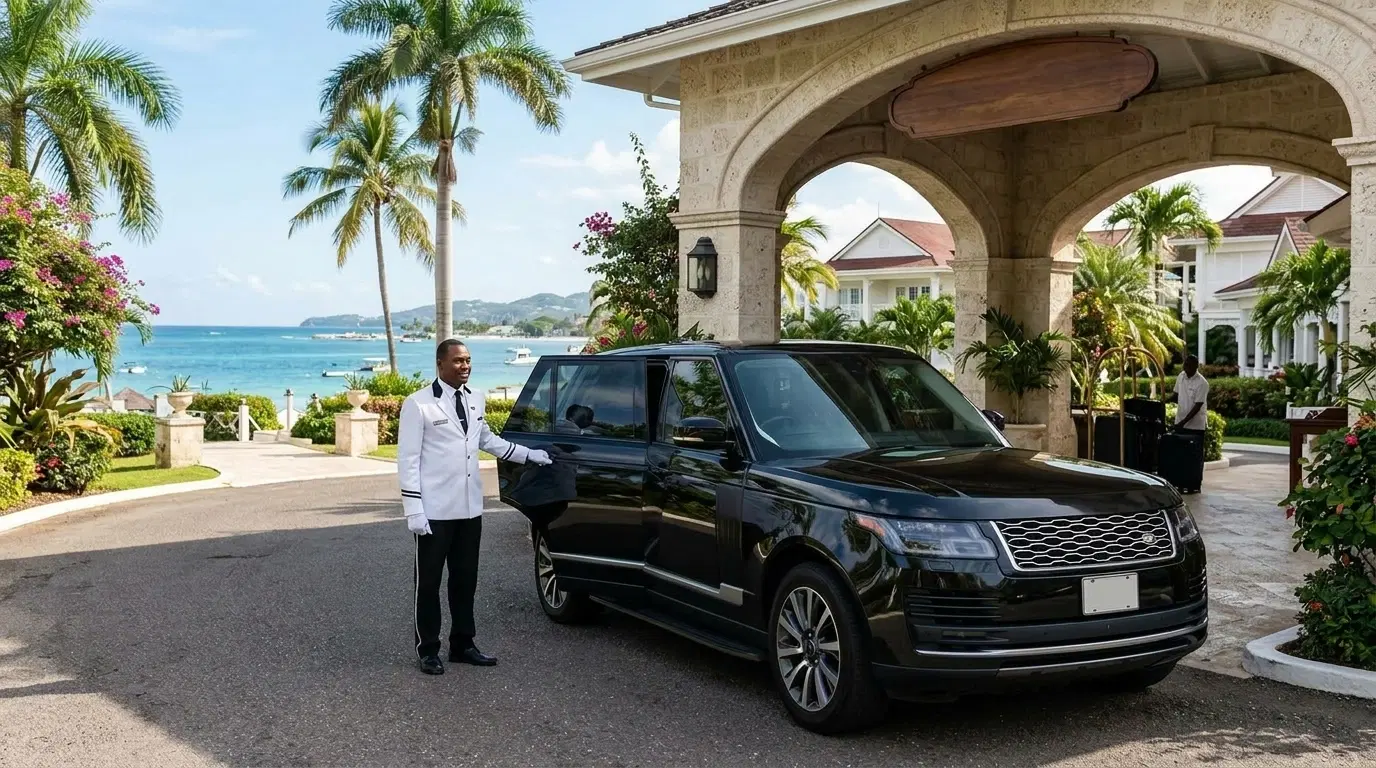
Pre-arranging a transfer through Transpovia can provide a fixed price and make onward travel easier after a long flight.
Montego Bay's Beaches
Doctor's Cave Beach is one of Montego Bay's best-known beaches, with clear water suitable for swimming and snorkeling. It charges an entry fee and can become busy during the day, so arriving early may provide a quieter experience.
Cornwall Beach nearby offers another convenient swimming option. Dead End Beach, also known as Buccaneer Beach, is a simpler public option close to the airport.
Entry fees and opening hours can change, so confirm current details before planning your visit. Weekday mornings are often quieter than busy weekend afternoons.
Things to Do Beyond the Beach
Montego Bay offers natural and historical attractions beyond its beaches. The surrounding region provides opportunities to explore Jamaica's landscapes, local history, and outdoor environments.
Rafting on the Martha Brae River using a traditional bamboo raft is a peaceful outdoor activity suitable for families and travelers who prefer scenic experiences. Cockpit Country attracts visitors interested in caves, wildlife, natural landscapes, and Maroon history.
Visitors can also explore local markets, historical areas, and natural attractions around the region. Check current opening hours and availability before booking guided activities, particularly during busy travel periods.
Book reputable and licensed operators when arranging excursions, and confirm exactly what is included before making a payment.
Choosing the Right Area to Stay
Where you stay can significantly affect your experience in Montego Bay.
The Gloucester Avenue area provides convenient access to beaches, restaurants, and everyday services. It can suit travelers who prefer to stay within walking distance of several facilities.
Rose Hall and Ironshore are located east of the central tourist area and contain many larger hotels and resorts. These areas can provide a quieter environment but may require arranged transport for visiting attractions outside the accommodation area.
Downtown Montego Bay is a working city center with shops, markets, and local businesses. It may be useful for daytime visits and shopping, although travelers should choose accommodation based on their individual needs and preferred level of convenience.
Day Trips Worth Planning
Several well-known attractions are located outside Montego Bay, and travel times can be longer than they appear on a map.
Ocho Rios is approximately a 90-minute to two-hour drive east along the northern coast. The area is known for natural attractions, including Dunn's River Falls. Negril lies to the west and is another popular destination for travelers exploring Jamaica's coastline.
Both destinations can be visited as day trips with proper planning. Arrange transport in advance rather than waiting until the day of travel.
Comparing private transfers, shared transport, and rental vehicles before traveling can help you choose the most suitable option.
Leave early when visiting popular attractions, as visitor numbers often increase later in the morning.
Essential Montego Bay Travel Tips for Money, Safety, and Etiquette
The Jamaican dollar is the local currency, although U.S. dollars are widely accepted in many tourist areas. Paying in local currency can sometimes provide better value, particularly at smaller markets and local transport services.
Cards are accepted at many hotels, restaurants, and larger businesses, while smaller vendors may prefer cash. Check your bill before paying to see whether a service charge has already been included.
Montego Bay's main tourist areas are regularly visited by travelers, but visitors should still take normal safety precautions. Avoid unfamiliar areas after dark, use licensed taxis or pre-arranged transport, and keep expensive belongings and large amounts of cash out of sight.
Politely decline unsolicited offers from unofficial guides or transport providers. When interacting with local residents, greeting people respectfully and asking permission before taking photographs is good etiquette.
One of the most common visitor mistakes is underestimating travel times. Attractions and accommodation areas can be farther apart than expected, so allow enough time for each journey.
Frequently Asked Questions
Is Montego Bay safe to visit?
Montego Bay can be visited safely by following normal travel precautions. Stay in well-known areas, use reliable transport, avoid unfamiliar places after dark, and keep valuables secure. Check your government's current travel advisory before traveling.
How many days should you spend in Montego Bay?
Three to four days can provide enough time to visit beaches, explore natural attractions, and take a day trip to destinations such as Ocho Rios or Negril. Travelers continuing elsewhere in Jamaica may find two full days sufficient for Montego Bay itself.
Do you need a car to get around Montego Bay?
Not necessarily. Travelers staying in central tourist areas may be able to walk to nearby services and use taxis or arranged transport for longer journeys. A rental car or private transfer may be more convenient for travelers staying farther from the center or planning multiple day trips.
Is the tap water safe to drink in Montego Bay?
Tap water in many main tourist and resort areas is treated, although some travelers prefer bottled or properly filtered water. If you are uncertain about water quality at a particular location, ask your accommodation for local guidance.
Before You Go
Montego Bay is easier to explore when the main logistics are arranged before arrival. Confirm beach entry fees and attraction hours, agree on taxi fares before starting a journey, and arrange longer transfers in advance.
If you plan to continue to Negril or Ocho Rios, organizing transport before reaching the airport can save time and reduce uncertainty. A pre-booked transfer through Transpovia can provide a straightforward arrival and onward journey after a long flight.
Plan enough time between attractions, carry some local currency for smaller purchases, and keep your travel documents and valuables secure throughout your trip.


