
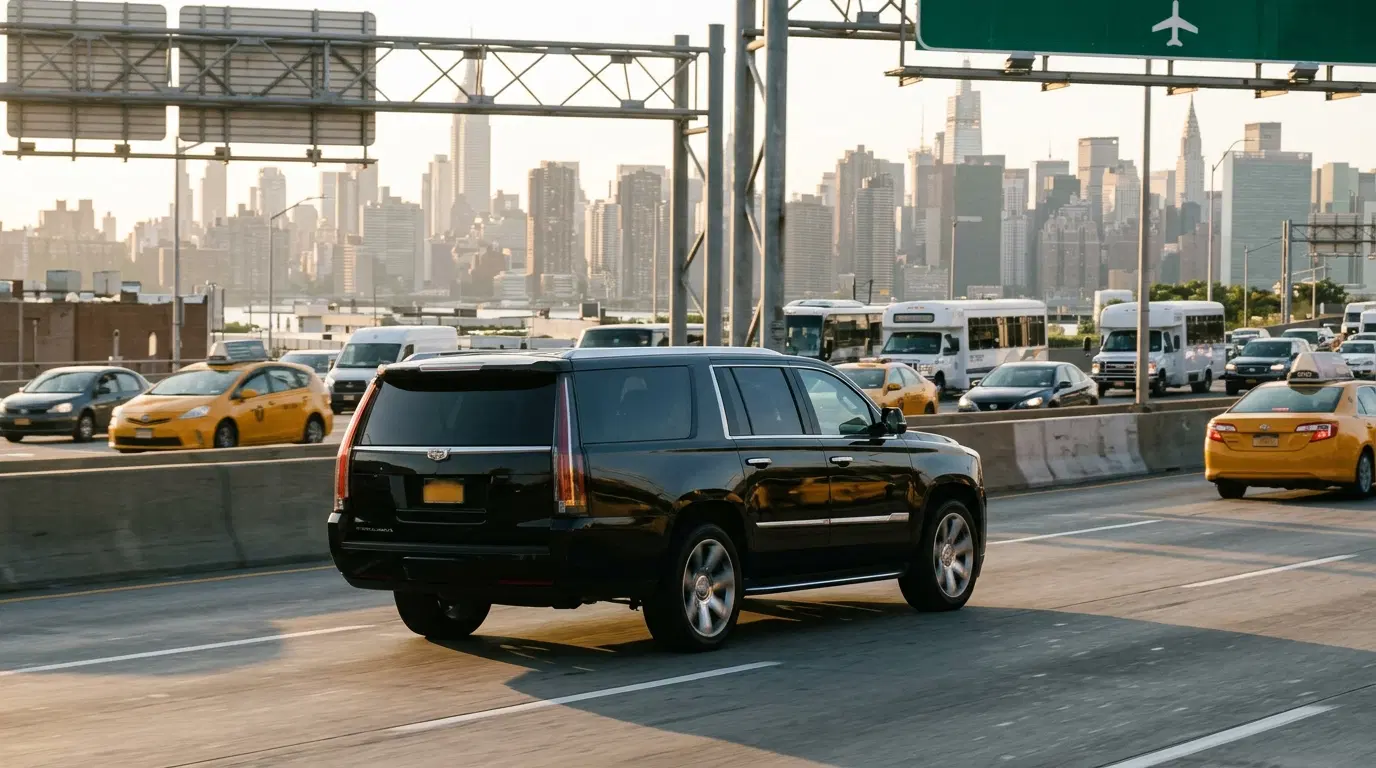
JFK sits in Queens, roughly 15 to 17 miles from most of Manhattan, and that number tells you almost nothing about how long the trip takes. A Sunday morning ride can feel easy. A Thursday at 4:30 p.m. can turn the same route into an hour and a half of brake lights. Getting from Manhattan to JFK on time is less about picking the "best" option and more about matching the option to your hour, your luggage, and your flight.
How Long Does Manhattan to JFK Really Take?
Traffic is the only variable that matters for road trips, and it swings widely. Expect a taxi or car to take anywhere from about 45 minutes in light traffic to well over 90 minutes on a weekday afternoon. Transit is slower on paper but steadier, because trains don't sit on the Van Wyck Expressway.
Roughly, from Midtown:
-
Subway plus AirTrain: 60 to 90 minutes
-
LIRR plus AirTrain: about 45 to 60 minutes door to door
-
Taxi, rideshare or private car: 45 to 90+ minutes depending on traffic
-
Shared shuttle: 60 to 90 minutes, longer if the van makes several pickups
If you'd rather lock in a ride before you leave the hotel, a pre-booked JFK airport transfer removes the guesswork about surge pricing and driver availability, though you'll still need to leave enough time for traffic.
Subway and AirTrain: Cheapest, Slowest
No subway line goes into the airport. You ride the subway to one of two connection points, then switch to the AirTrain, which is a short elevated train that loops through the terminals.
From Lower Manhattan, the A train to Howard Beach–JFK Airport usually makes the most sense. From Midtown or the Upper West Side, the E train toward Jamaica Center connects to the AirTrain at Sutphin Blvd–Archer Av. Check the sign on the front of the train before boarding, since not every A train goes to Howard Beach.
Cost is the subway fare (about $3) plus the AirTrain fare (currently in the $8.50 to $8.75 range, so confirm on the day). The AirTrain is free between terminals, and it runs every few minutes.
The catch is luggage. Many stations have stairs and no working elevator, so one suitcase is manageable, but two big bags and a stroller is a real workout. It's a good fit for solo travelers with light bags and a flight that isn't tight.
LIRR and AirTrain: The Fastest Public Route
The Long Island Rail Road runs from Penn Station and Grand Central Madison to Jamaica Station, a ride of roughly 20 minutes. At Jamaica, you connect to the AirTrain for the final stretch to your terminal.
Total cost depends on when you travel. LIRR fares are lower off-peak and on weekends (the CityTicket option applies there), and higher at rush hour, so expect roughly $13 to $19 including the AirTrain. For many Midtown visitors, this is the best balance of speed, price, and predictability.
Two practical points. First, buy your LIRR ticket before boarding, because onboard purchases can cost more. Second, the walk at Jamaica between the LIRR platforms and the AirTrain involves escalators and elevators, so allow ten extra minutes if you're carrying heavy bags.
Shared Shuttles and Express Buses
Shared vans are door-to-door in theory but stop-to-stop in practice. They collect several passengers, which makes timing hard to predict. Most shared services don't pick up above 125th Street, and some require reservations in advance. They suit travelers who want to avoid transfers but aren't in a hurry.
Express buses and local bus connections cost less and are usable if you're already near a stop. They can be slow, though, and they aren't designed for large suitcases.
When Should You Leave?
Airlines and airports generally recommend arriving about two hours before a domestic flight and about three hours before an international one. Those hours include security, bag drop, and a cushion for the unexpected, not just the ride.
Work backward from there. If you're flying internationally at 6 p.m., you want to be at JFK by 3 p.m. That means leaving Manhattan by 1:30 p.m. if you're taking a car on a weekday, since that window sits right before the evening rush. Early flights are easier on the road but harder on transit, because service is less frequent late at night and early in the morning.
If you're also planning your return, the options reverse. Our guide on going from JFK to Manhattan covers that direction in more detail.
Taxi, Rideshare, and Private Cars
A yellow cab from Manhattan to JFK charges a flat fare set by the city, currently $70, plus tolls, a state surcharge, and a weekday rush-hour surcharge during the late afternoon. Add a tip and the total typically lands noticeably above the flat figure. Flat means you won't pay more if traffic is awful, which is the main advantage, but it also means you won't pay less if the road is empty.
Rideshare prices move with demand. A midday ride can cost less than a taxi, while a rainy rush hour can cost far more. Prices also vary by vehicle size, so a family needing an SUV should compare before assuming it's cheaper.
We had two suitcases and a car seat, so we didn't want to think about stairs or transfers. Knowing the driver was already booked made the whole morning calmer.
Pre-booked private transfers sit in the middle. You agree on the fare in advance, a driver tracks your flight or pickup time, and there's no hunting for a cab. Transpovia is a marketplace that connects travelers with ground transportation providers, so you can compare vehicle types and book ahead. For a view of how the fixed-fare model works in the opposite direction, our breakdown of a taxi from JFK to Manhattan explains fares, tolls, and travel time.
Luggage, Terminals, and Last-Minute Tips
Know your terminal before you travel. JFK's active terminals are 1, 4, 5, 7, and 8, and airlines are spread across them. Tell your driver the terminal, not just "JFK," so you aren't dropped at the wrong curb. If you're on public transit, the AirTrain announces each terminal and is free to ride between them.
Choose transit when you're traveling light, your schedule is flexible, and the weather is decent. Choose a car when you have more than two bags, small children, mobility needs, or a flight in the next few hours. And whichever option you choose, check your route on the day. Construction, weather, and events can shift both road and rail.
FAQs
Is there a direct subway from Manhattan to JFK?
No. Every subway route requires a transfer to the AirTrain at Howard Beach or Jamaica.
What's the cheapest way to get from Manhattan to JFK?
Subway plus AirTrain is generally the lowest-cost option, though it also takes the longest and has the most stairs.
What's the fastest way from Manhattan to JFK?
In light traffic a car is quickest. At rush hour, the LIRR plus AirTrain is often faster and more reliable.
Is the taxi fare from Manhattan to JFK fixed?
Yellow taxis charge a flat fare for trips between Manhattan and JFK, with tolls, surcharges, and tip on top.
How early should I leave for JFK?
Aim to arrive about two hours before a domestic flight and three hours before an international one, then work backward from there.
Can I pre-book a ride to JFK?
Yes. Private transfers can be booked in advance with a confirmed pickup time and price.
Final Thoughts
The right way to get from Manhattan to JFK comes down to three questions: how much luggage you have, how tight your schedule is, and what time you're leaving. Transit is cheap and predictable if you're traveling light, and a car is easier when you aren't. If you'd like a ride arranged before you're standing on the curb, you can compare options and book an airport transfer with Transpovia.


