
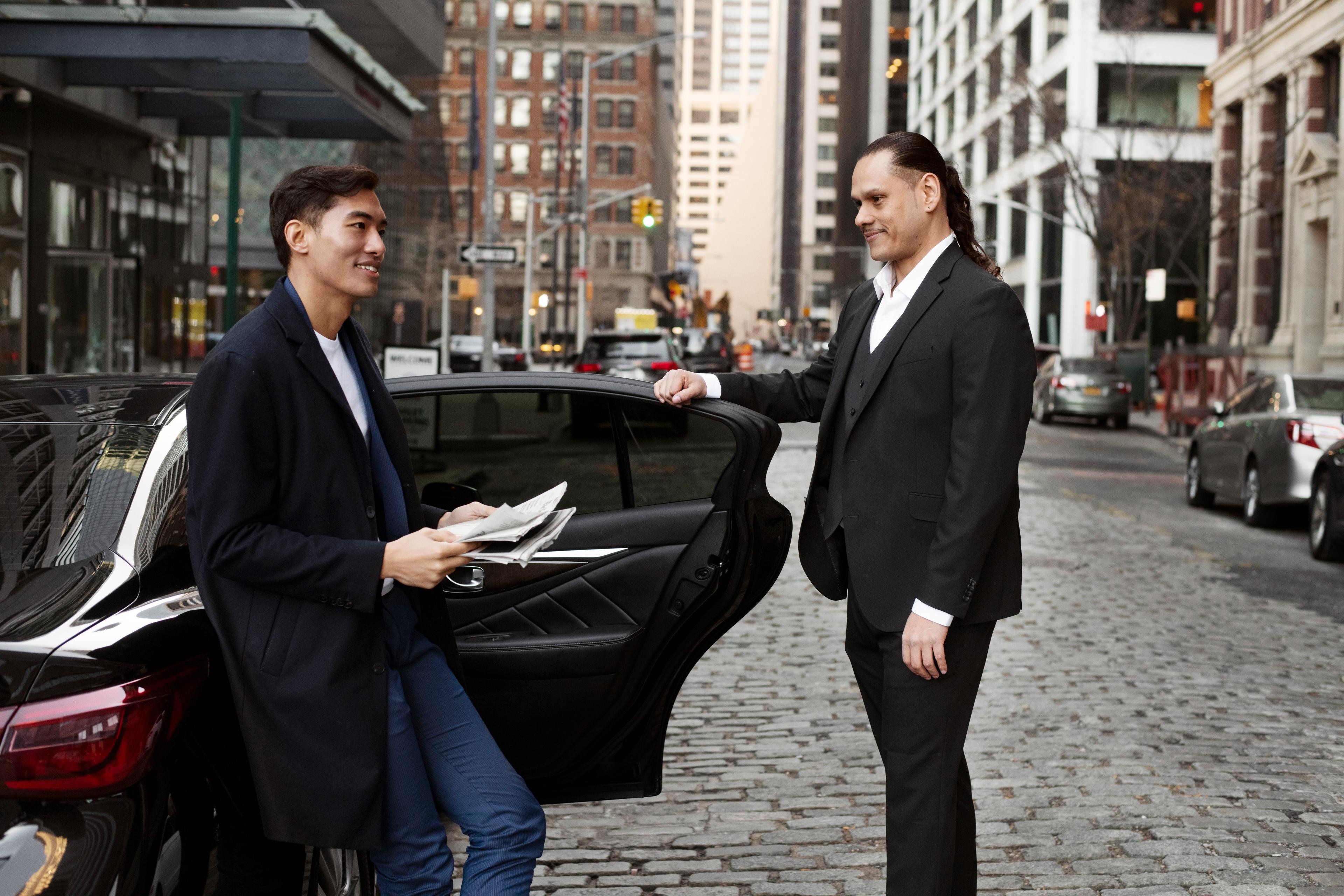
Standing in Manhattan with a Brooklyn address in your phone, the options can feel oddly complicated for a trip that covers just a few miles. Do you drag your suitcase down subway stairs? Pay for a taxi that might sit in bridge traffic? Wait for a ferry you're not sure runs on Sundays? Picking the wrong Manhattan to Brooklyn transfer can turn a 20-minute trip into an hour of frustration, especially with luggage, kids, or a tight schedule. The good news: once you understand how each option actually works, the right choice becomes obvious. Here's how to decide.
Your Manhattan to Brooklyn Transfer Options at a Glance
Manhattan and Brooklyn sit directly across the East River from each other, connected by three free bridges (Brooklyn, Manhattan, and Williamsburg), one tolled tunnel (the Hugh L. Carey Tunnel), more than a dozen subway lines, and several ferry routes. Distances are short — Lower Manhattan to Downtown Brooklyn is roughly 3 miles — but travel times vary widely depending on the mode you choose and the time of day.
|
Option |
Typical Cost |
Typical Time |
Best For |
|
Subway |
$3.00 per ride |
15–45 minutes |
Solo travelers, commuters, budget trips |
|
Taxi / rideshare |
$25–$60+ |
20–60 minutes |
Small groups, door-to-door convenience |
|
Private car service |
Fixed rate, booked ahead |
20–60 minutes |
Luggage, families, airport connections |
|
NYC Ferry |
$4.50 per ride |
10–30 minutes on the water |
Waterfront neighborhoods, scenic trips |
|
Walking (Brooklyn Bridge) |
Free |
30–40 minutes |
Short trips to DUMBO or Brooklyn Heights |
A few things shape which row of that table applies to you: how much luggage you're carrying, how many people are traveling, where exactly in Brooklyn you're headed, and how much a guaranteed arrival time matters. The sections below break each one down.
Taking the Subway: Cheapest and Often Fastest
For most trips between the two boroughs, the subway is hard to beat. More than a dozen lines cross the East River, including the 2, 3, 4, 5, A, C, B, D, F, N, Q, R, and L trains, so nearly every major Brooklyn neighborhood has a direct connection to Manhattan.
The fare is $3.00 per ride as of January 2026, and you pay by tapping a contactless bank card, phone, or OMNY card at the turnstile — the old MetroCard has been retired. If you ride often during your stay, fares automatically cap at $35 per week, after which additional rides are free.
Typical travel times look like this:
-
Lower Manhattan to Downtown Brooklyn: 10–15 minutes on the 4/5 or R
-
Midtown to Williamsburg: about 20–25 minutes on the L from Union Square
-
Midtown to Park Slope or Prospect Heights: 25–35 minutes on the 2/3, B, or Q
-
Upper Manhattan to southern Brooklyn (Bay Ridge, Coney Island): 45–60 minutes
The trade-offs are real, though. Many stations lack elevators, which makes stairs unavoidable with heavy bags or a stroller. Trains get crowded on weekday mornings and evenings, and weekend service changes are common — always check the MTA app before you travel on a Saturday or Sunday, because a line that normally runs to your stop may be rerouted for track work.
Choose the subway when: you're traveling light, your destination is near a station, or you're moving during rush hour, when trains routinely beat cars across the river.
Taxis, Rideshares, and Private Cars: Door-to-Door Comfort
A car makes sense the moment your trip involves suitcases, small children, mobility concerns, or an address far from a subway line. Yellow cabs, app-based rideshares, and pre-booked private transfers all cover the same routes; the difference is price certainty and planning.
A metered taxi or rideshare from Midtown to Downtown Brooklyn usually costs $25–$45, rising with traffic and surge pricing. Two details catch visitors off guard:
-
Congestion pricing. Vehicles entering Manhattan below 60th Street pay a congestion toll, which drivers typically pass on to passengers in some form.
-
The tunnel toll. The Brooklyn, Manhattan, and Williamsburg bridges are free, but the Hugh L. Carey Tunnel charges a toll, so your route affects your fare.
Traffic is the bigger variable. The same trip can take 20 minutes at 11 a.m. on a Tuesday or close to an hour at 5:30 p.m. on a Friday, when bridge approaches back up badly. If your schedule is flexible, midday and late evening are the smoothest windows for driving.
A pre-booked private transfer solves the two biggest headaches of on-demand cars: surge pricing and uncertainty. You lock in a fixed rate, the driver tracks your arrival, and there's guaranteed space for luggage. This matters most when the Brooklyn leg is part of a longer travel day — for example, if you've just landed at LGA, a LaGuardia Airport to Manhattan transfer followed by a scheduled car to Brooklyn removes two separate waits from an already tiring day.
Choose a car when: you have luggage, you're traveling as a group of three or more (splitting the fare often beats four subway rides), or your destination sits in a subway gap like parts of Red Hook or Mill Basin.
The NYC Ferry: The Scenic Middle Ground
The East River ferry routes are one of the most pleasant ways to cross between the boroughs, and they're genuinely practical if both ends of your trip sit near the water. Boats connect Manhattan landings such as Wall St/Pier 11 and East 34th Street with Brooklyn stops including DUMBO, Williamsburg (North and South), Greenpoint, Brooklyn Bridge Park, and Red Hook.
A one-way ticket costs $4.50, purchased through the NYC Ferry app or at vending machines on the piers, and it includes free transfers to another ferry route within 120 minutes. Note that ferry tickets are separate from the subway system — an OMNY tap won't work on board.
The crossing itself is quick, often 10–20 minutes, with skyline and Brooklyn Bridge views the subway can't offer. The limitation is coverage: if your hotel or destination is a 20-minute walk from the nearest pier, the total trip usually ends up slower than the train. Boats also run less frequently than subways — typically every 25–40 minutes depending on the route and season — so check the schedule rather than showing up and hoping.
Choose the ferry
When you're going pier-to-pier (say, Wall Street to DUMBO or Williamsburg), the weather is good, and you'd rather spend the ride outside than underground.
One more option worth a sentence: walking the Brooklyn Bridge from City Hall to DUMBO takes 30–40 minutes and costs nothing. If your destination is Brooklyn Heights or DUMBO and you're not carrying much, it doubles as sightseeing.
Booking a Manhattan to Brooklyn Transfer With Transpovia
If you've decided a private car is the right fit, Transpovia keeps the booking simple. You enter your pickup point in Manhattan, your Brooklyn destination, and your travel date and time on the website. The price you see is the price you pay — no surge multipliers, no meter anxiety in bridge traffic, and no toll surprises added at the end.
Once the booking is confirmed, you receive your driver's details ahead of time, and the vehicle arrives at your door at the scheduled hour. That predictability is the main reason travelers book ahead: when you have a dinner reservation in Park Slope, an event in Williamsburg, or a cruise departing from the Brooklyn Cruise Terminal in Red Hook, a fixed pickup time removes the guesswork.
Transpovia's drivers know which crossing makes sense at which hour — when the Manhattan Bridge beats the Brooklyn Bridge, and when the tunnel is worth the toll. Vehicle options range from standard sedans to larger vehicles for families and groups with luggage. The same fixed-rate model applies across Transpovia's longer routes as well, such as an Orlando to Miami transfer, where predictable pricing matters even more over a multi-hour drive.
For most travelers, the sensible approach is a mix: the subway for quick daytime hops, and a pre-booked Transpovia car for the legs where timing, comfort, or luggage raise the stakes.
FAQ
How long does it take to get from Manhattan to Brooklyn?
It depends on your start and end points. Lower Manhattan to Downtown Brooklyn takes 10–15 minutes by subway or car in light traffic. Midtown to central Brooklyn neighborhoods like Park Slope typically takes 25–40 minutes. During weekday rush hours, driving times can double, while subway times stay fairly consistent.
Is it expensive to take a taxi from Manhattan to Brooklyn?
Expect $25–$60 for most trips, depending on distance, traffic, tolls, and congestion pricing. A pre-booked private transfer costs a fixed rate agreed in advance, which many travelers prefer because the total can't climb while the car sits in traffic.
Do I need to pay a toll to drive from Manhattan to Brooklyn?
Not necessarily. The Brooklyn, Manhattan, and Williamsburg bridges are all free to cross. The Hugh L. Carey Tunnel charges a toll, and vehicles entering the Manhattan congestion zone below 60th Street pay a congestion fee. Your driver's route choice determines what applies.
Final Verdict
The short version: take the subway when you're traveling light and near a station, the ferry when both ends of your trip touch the waterfront, and a booked car when luggage, group size, or a fixed schedule are involved. Decide before you're standing on the curb — a Manhattan to Brooklyn transfer planned the night before is almost always cheaper and calmer than one improvised in the moment.


