
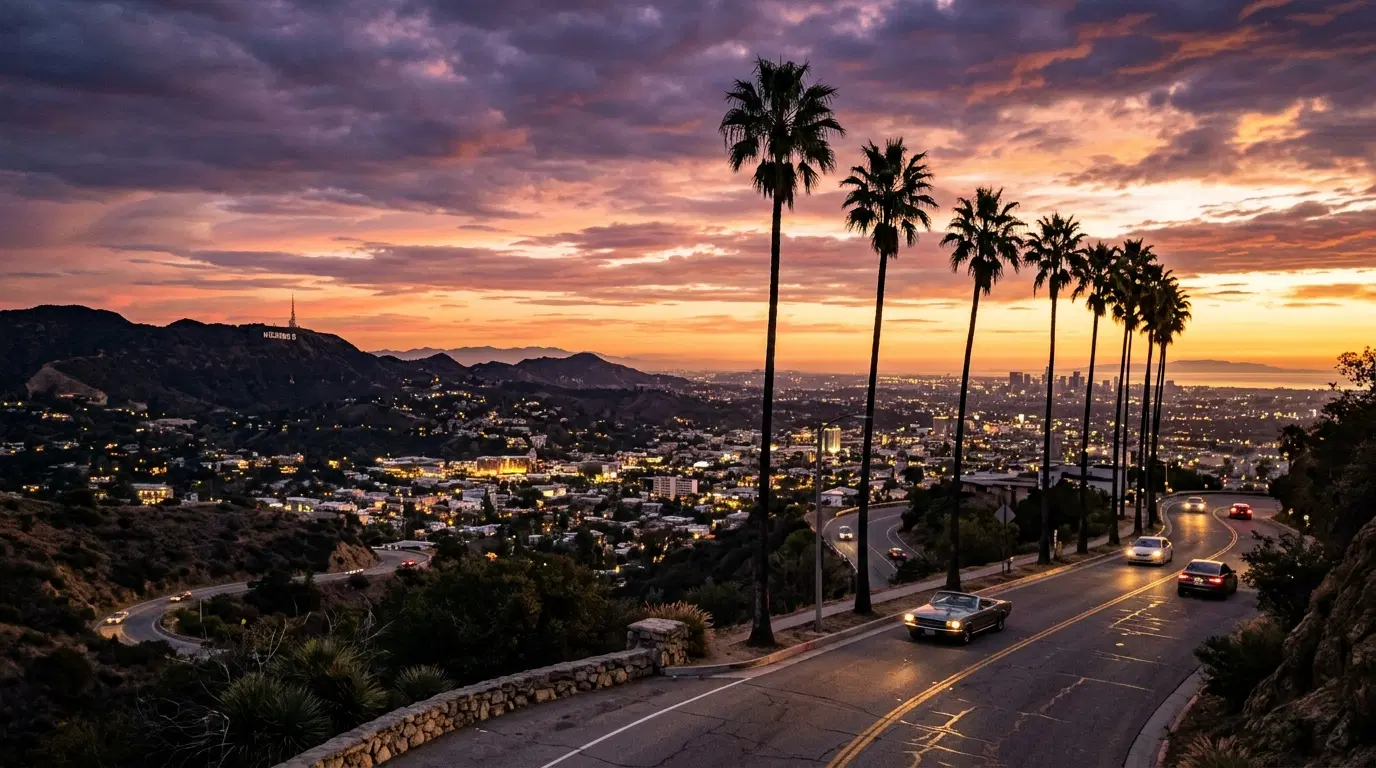
Most first trips to Los Angeles go wrong in the same way: a list of famous places scattered across 500 square miles, and no plan for the hours lost between them. The city rewards a different approach than almost any other American destination — one built around geography, timing, and a few bookings made in advance. These Los Angeles travel tips focus on the decisions that actually shape your days here, from where to base yourself to which attractions need reservations and when to stay off the freeways.
Plan by Neighborhood, Not by Attraction List
Group your days by area. Los Angeles isn't one center with sights around it — it's a chain of distinct districts, and crossing the city twice in one day can cost you three hours in traffic. Visitors who build each day around a single zone see far more than those chasing a checklist.
|
Day zone |
What it covers |
Getting around |
Best for |
|
Westside |
Getty Center, Santa Monica, Venice, Abbot Kinney |
Car or bus; Santa Monica and Venice link by bike path |
Beaches, first-timers, coastal sunsets |
|
Mid-Wilshire |
LACMA, Academy Museum, La Brea Tar Pits, Original Farmers Market |
D Line subway (new stations) |
Museums, rainy or gray days |
|
Downtown & Eastside |
Grand Central Market, The Broad, Arts District, Little Tokyo, Koreatown |
Metro rail, walkable in pockets |
Food, architecture, cultural attractions, and evening walks |
|
Hollywood & Los Feliz |
Griffith Observatory, Thai Town, Silver Lake, and scenic viewpoints |
B Line plus DASH shuttle |
Views, film history, evenings |
|
South Bay & Inglewood |
SoFi Stadium, Manhattan Beach, Intuit Dome |
K Line, C Line |
Events, quieter beaches |
Where you stay matters less than people expect, as long as it sits near the areas you care about and near a Metro line. Santa Monica suits beach-focused trips. Koreatown and Downtown put you on rail with the best food value. Hollywood is central but noisy. Beverly Hills and West Hollywood cost more without saving much travel time.
Getting Around Los Angeles Without Fighting Traffic
A car still helps here, but it's no longer the only workable answer. Metro rail now reaches more of the places visitors actually want, and a mixed approach — rail for the museum and downtown days, a car or rideshare for the coast — usually beats committing to one method.
The rail network changed in 2026. The D Line extension opened on May 8, 2026, adding stations at Wilshire/La Brea, Wilshire/Fairfax and Wilshire/La Cienega. That means LACMA, the Academy Museum and the La Brea Tar Pits are reachable by subway for the first time. Fares are straightforward: $1.75 a ride with two hours of free transfers, and automatic fare capping at $5 a day or $18 over seven days when you tap the same card. There's no need to buy a pass — check current fares at metro.net.
Two transport details that catch nearly every first-time visitor:
-
Rideshare pickup at LAX doesn't happen at the curb. Uber, Lyft and taxis all collect from the LAX-it lot east of Terminal 1, reached by shuttle or on foot. Add 20 to 40 minutes to your arrival plan, and order your ride only once you're standing in the lot.
-
The LAX/Metro Transit Center is open, served by the C and K Lines, with free shuttles to the terminals every 10 minutes. The Automated People Mover connecting trains directly to the terminals has been delayed repeatedly — confirm its status on flylax.com before assuming it's running.
Parking rules deserve real attention. Street signs stack several restrictions on one pole, and street sweeping tickets are among the most common charges visitors face. Read every sign on the pole, not just the top one, and expect to pay $15 to $60 for event and beach parking.
If you're pairing Los Angeles with a wider trip, Las Vegas sits about four hours northeast on I-15 — worth planning alongside these Las Vegas Travel Tips if you're driving on.
Arrival is the one part of an LA trip where paying for certainty makes sense. Pre-booked private transfers keep curbside access at the arrivals level, so booking ahead with a service like Transpovia skips the LAX-it shuttle entirely — a real difference after a long-haul flight or with children and luggage.
Best Time to Visit Los Angeles, and How to Time Each Day
March to May and September to November give you the best mix of warm weather, clear skies and manageable crowds. Late spring brings the marine layer locals call May Gray and June Gloom — gray, cool mornings at the coast that often burn off by early afternoon, while inland neighborhoods stay sunny. Winter is mild, quiet and occasionally rainy.
That coastal fog trips up more visitors than any other weather quirk. If your Santa Monica morning looks overcast, the fix isn't waiting — it's going inland to a museum or Griffith Park and returning to the beach after noon.
Fall through early winter is Santa Ana wind season, when hot, dry winds raise wildfire risk across Southern California. Air quality can drop quickly during an active fire. Check conditions before hiking, and treat any evacuation or closure notice as final. The Pacific Coast Highway has reopened north through Malibu following the 2025 Palisades Fire, though parts of Pacific Palisades remain a recovery area — visit the coast, but skip the burn zones.
Time your driving as carefully as your sightseeing. Freeways slow badly from roughly 7 to 10 a.m. and 3 to 7 p.m. on weekdays, and Friday afternoons are worse. Plan long crosstown moves mid-morning, mid-afternoon or after 8 p.m.
Book These Before You Arrive — Several Are Free
Some of the city's best attractions cost nothing but still require planning. Reservations and closure days catch out visitors who assume they can turn up.
The Getty Center in Brentwood is free to enter but requires a timed-entry reservation, and there's a parking charge that drops later in the day. Book on getty.edu as soon as your dates are set.
Griffith Observatory is also free — the building, grounds and public telescopes have never charged admission. It's closed Mondays, opens at noon Tuesday through Friday and 10 a.m. on weekends, and stays open until 10 p.m. Planetarium shows are ticketed separately. Skip the summit parking at sunset; the DASH Observatory shuttle from the Vermont/Sunset B Line station costs cents and avoids the single-lane backup on the hill. Verify hours on the official site, since weather and events can close it.
The Broad downtown uses free timed tickets that release in advance and go quickly. Studio tours at Warner Bros. and Universal sell out in peak months; the earliest slot of the day gives the best chance of seeing active production.
For the Hollywood Sign, the best free views are from Griffith Observatory's west terrace and the Lake Hollywood Reservoir path. There's no public access to the sign itself, and hillside streets near it have heavy parking restrictions.
Where to Eat, and Which Famous Spots to Skip
Los Angeles is a neighborhood food city, and the strongest meals are rarely near the landmarks. Koreatown runs late and has the city's deepest concentration of Korean barbecue and stew houses. Little Tokyo and Sawtelle cover Japanese cooking at very different price points. Thai Town north of Hollywood Boulevard, the taquerias of Boyle Heights and East LA, and the dim sum restaurants of the San Gabriel Valley all reward a short drive.
Grand Central Market downtown works well as a first stop — a century-old hall with dozens of stalls, best visited on a weekday before noon. The Original Farmers Market at Third and Fairfax pairs naturally with a Mid-Wilshire museum day.
Manage expectations about a few famous names. The Hollywood Walk of Fame is a crowded sidewalk with costumed performers who expect tips, and Rodeo Drive takes about 20 minutes to see. Both are worth a short visit and rarely worth an afternoon. The Venice Boardwalk is more interesting early in the day than at peak crowds.
This is the part of Los Angeles that most rewards slowing down. It's the opposite instinct to a compact, walkable destination like the one covered in these San Francisco Travel Tips — here, two neighborhoods explored properly beat six visited briefly.
Los Angeles Travel Tips for Safety, Costs, and Common Mistakes
Property crime matters more than personal safety for most visitors. Never leave anything visible in a parked car, especially at beach lots, trailheads and museum garages — break-ins target bags left on seats. Keep phones secure on crowded stretches like the Walk of Fame and the Venice Boardwalk.
Neighborhood character can shift within a couple of blocks, particularly in parts of Downtown after dark. Stick to well-lit main streets in the evening and use a car or rideshare late at night rather than long walks between districts.
The costs people underestimate:
-
Parking, which adds up faster than transit ever will
-
Resort fees at beachfront and Downtown hotels
-
Tipping at 18 to 20 percent in restaurants, which isn't included in menu prices
-
Sales tax added at checkout rather than shown on the label
The most common planning mistakes are avoidable: booking one hotel and driving everywhere from it, scheduling the beach and Downtown on the same day, arriving at Griffith Observatory on a Monday, and assuming Disneyland is in Los Angeles — it's in Anaheim, around an hour away in good traffic. For current events and official visitor information, Discover Los Angeles is the city's official tourism source.
Hours, fares and reservation rules change often here. Confirm anything time-sensitive on the official site within a week of travel.
Frequently Asked Questions
Do you need a car in Los Angeles?
Not always. If you're staying near a Metro line and focusing on Downtown, Hollywood, Mid-Wilshire and Santa Monica, rail plus occasional rideshares works well. A car makes more sense for Malibu, the canyons, day trips, or trips with young children.
How many days do you need in Los Angeles?
Four to five days suits most first visits: one Westside day, one museum day, one Downtown and Eastside day, and one for Griffith Park and Hollywood. Adding a fifth leaves room for Malibu, Pasadena or a theme park.
Is Los Angeles walkable?
In pockets, yes. Santa Monica, Downtown, Pasadena's Old Town, Abbot Kinney and Larchmont all reward walking. Between neighborhoods it isn't — plan to drive or take Metro and then explore each area on foot.
Before You Go
Book your timed-entry museum tickets first, then build each day around one part of the city rather than one attraction. Leave the freeways alone at rush hour and you'll gain hours back. Arranging your airport transfer with Transpovia in advance means you start the trip at the curb instead of in the LAX-it line.
"We landed at LAX at midnight after eleven hours in the air. Having someone waiting at arrivals instead of a shuttle queue was the best decision we made all week."


