
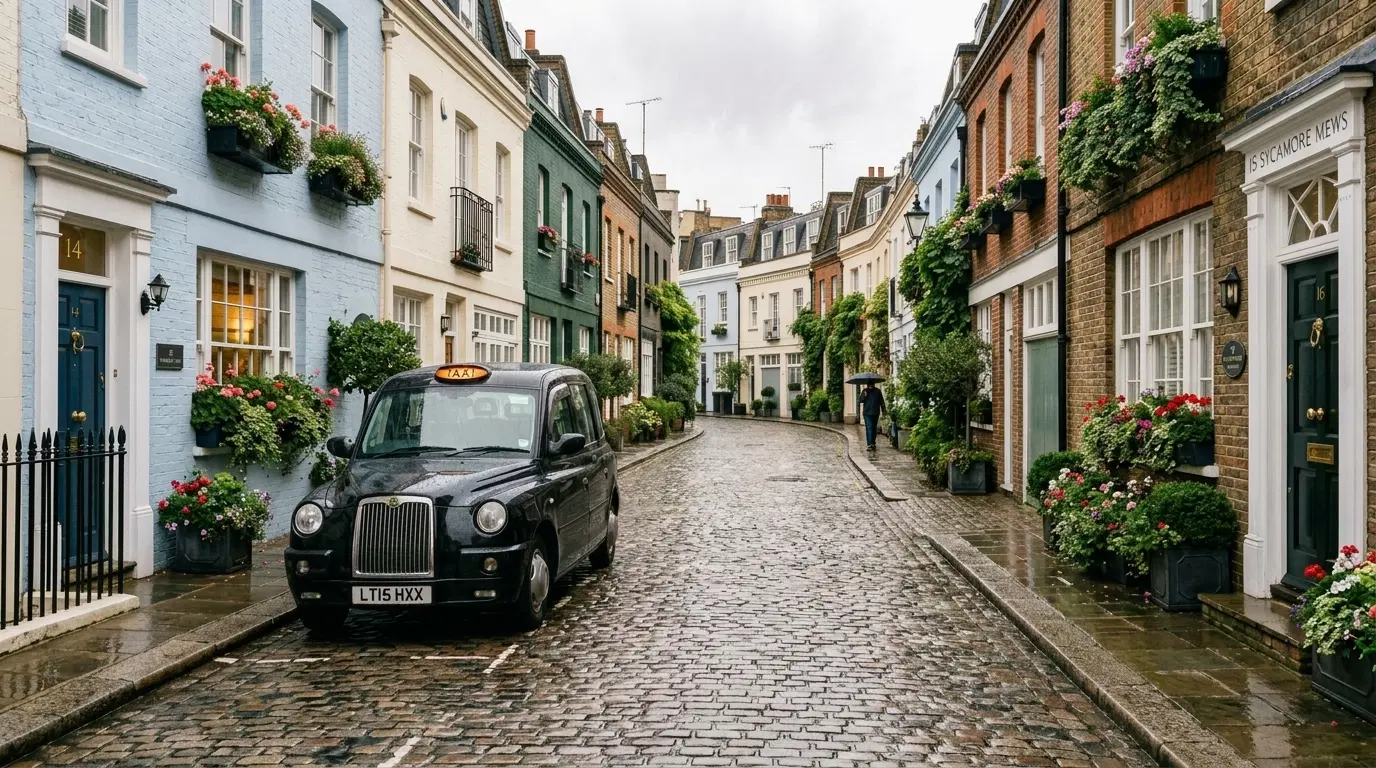
London runs on a tap-and-go transit system, a set of world-class free museums, and one new entry rule that catches travelers off guard. The city is huge, but nearly everything visitors come for sits in a small central core you can cover on foot and by Tube. These London travel tips focus on the decisions that shape your trip: the travel document you now need before you fly, how to pay for transport without overpaying, which airport route into town suits you, and how to spend on the things that actually cost money when so much is free.
Sort Your ETA Before You Book Anything Else
Before any sightseeing plan, handle entry. As of 2026, most visitors to the United Kingdom, including travelers from the United States, Canada, Australia, and the EU, need an Electronic Travel Authorisation (ETA) to enter, applied for online in advance for a small fee. Airlines can deny boarding without it, so this is the first box to tick once your dates are set.
Apply through the official UK government channel or the official app, not a third-party reseller that adds a markup, and give it time to process rather than leaving it to the airport. Rules and fees for the ETA change, so confirm the current requirement and cost on the official government website before you travel. Keep the confirmation accessible, since it links electronically to your passport.
If you're flying into Heathrow, working out how to get from Heathrow Airport to Central London ahead of time saves you from deciding at the terminal with luggage. A pre-booked transfer through a service like Transpovia gives you a fixed price and a driver at arrivals, which is welcome after a long-haul flight.
Paying for the Tube: Contactless Over Oyster
For most visitors in 2026, a contactless bank card or phone is now the simplest way to ride London transport, and it costs the same as an Oyster card with no setup or deposit. Tap in and out at the yellow readers, and the system applies daily and weekly fare caps automatically, so you never pay more than a set amount however much you ride.
The cap is the key money-saver. Once your Tube and bus trips within Zones 1 and 2 hit the daily cap in a single day, every further ride is free until the small hours. That day runs from 4:30 a.m. to 4:29 the next morning, not midnight, so a late evening ride can still count toward the same day as your morning Tube. Caps apply per card or device, meaning each traveler taps with their own, and children under 11 ride free with a paying adult. An Oyster card mainly still makes sense if you're traveling with an 11-to-15-year-old, since the half-price Young Visitor discount loads only onto Oyster. Fares change each March, so check the current figures with the official transport authority before you go.
Choosing Your Heathrow Route
Getting in from Heathrow, in Zone 6 west of the center, comes down to speed versus cost. The Elizabeth line is the sensible-value pick, running direct to Paddington in about 30 minutes and continuing through central stations like Bond Street and Liverpool Street. The faster Heathrow Express reaches Paddington in around 15 minutes but costs a premium, while the Piccadilly line Tube is the cheapest and slowest at close to an hour.
One catch worth knowing: the Heathrow-to-central-London fare on the Elizabeth line sits outside the standard daily cap, so it's charged on top rather than absorbed into it. Pay with contactless or Oyster either way, since walk-up cash tickets cost noticeably more, and skip the Heathrow Express only if the extra minutes matter to you. From the other airports, Gatwick, Stansted, and Luton, dedicated express trains and coaches run into the center, so match the route to where you land.
Making the Most of London's Free Museums
London's biggest travel bargain is its national museums, which are free to enter. The British Museum, the National Gallery, the Tate Modern, the Natural History Museum, and the Victoria and Albert Museum all cost nothing for general admission, with charges only for special exhibitions. That single fact reshapes a London budget, since it frees your money for the paid attractions.
Plan around it. Because entry is free, you can drop into the British Museum for just the Rosetta Stone and the Egyptian galleries rather than trying to see everything in one exhausting visit. Popular museums still get crowded, so arrive at opening or in the late afternoon, and check whether a free timed ticket is needed at busier ones. Save your ticket budget for the sights that do charge, like the Tower of London, Westminster Abbey, and the London Eye, and book those online ahead to skip the longest lines.
Best Time to Visit London
The best months to visit London are late spring, in May and June, and early fall, in September, when days are long, parks are green, and the weather is at its most reliable. Summer is warmest and busiest, with peak crowds at the paid attractions, while winter is cold, dark by mid-afternoon, and quieter, though the seasonal decorations and public markets can still be enjoyable.
London's weather is changeable in any season, so pack a light rain layer year-round and don't let a gray forecast reshape your plans, since showers often pass quickly. The city is very walkable in its center, with landmarks like Westminster, the South Bank, and Covent Garden close together, so comfortable shoes matter more than an umbrella. Many sights and parks stay open late in summer's long evenings, which can be useful for sightseeing and taking photos when the low sun hits the river.
Day Trips and Crossing to Paris
London is a strong base for day trips by train. Windsor, with its royal castle, is about 30 minutes out; Oxford and its colleges are roughly an hour; and Bath, with its Roman baths and Georgian streets, sits within easy reach by fast train for a fuller day.
Many travelers pair London with a trip across the Channel. If Paris is next, the Eurostar runs city center to city center from St Pancras in about two and a half hours, and the Transpovia guide covering what to plan for in Paris can help with the next part of your journey. A common mistake is treating Bath or Oxford as a quick half-day; each rewards most of a day once you factor in the train and the walking, so don't stack them against other plans.
Frequently Asked Questions
How many days do you need in London?
Three to four days cover the core: one for Westminster and the South Bank, one for the British Museum and central London, and one for the Tower of London and a market or park. Add a day for a trip to Windsor, Oxford, or Bath.
Do you need an Oyster card in London?
Not usually. A contactless bank card or phone works on all the same services, costs the same, and applies the daily cap automatically, with no card deposit. An Oyster is mainly worth it for an 11-to-15-year-old, who can get a half-price discount that loads only onto Oyster.
Is London expensive to visit?
London is pricey for hotels and paid attractions, but the national museums are free, the transport daily cap limits your travel spend, and markets offer affordable food options. Budgeting well means spending on a few paid attractions and leaning on the many free ones.
Is London safe for tourists?
London is generally very safe, with staffed, monitored transport. The main risk is pickpocketing in crowded spots like Oxford Circus, busy Tube trains, and tourist areas. Keep bags zipped and phones out of sight in crowds, stay aware of your surroundings, and you're unlikely to have problems.
Before You Go
London rewards a little preparation. Apply for your ETA as soon as your dates are set, plan to pay with contactless and let the daily cap work for you, and build your days around the free national museums so your budget goes to the paid attractions. The smoothest start is arranging your Heathrow transfer with Transpovia in advance, so a driver is waiting rather than having to make a transport decision at arrivals.
"We had our ETAs sorted and the airport transfer booked before we left, then just tapped our phones everywhere and let the daily cap handle the fares — it made a big city feel completely manageable." — a family traveling from Chicago


