
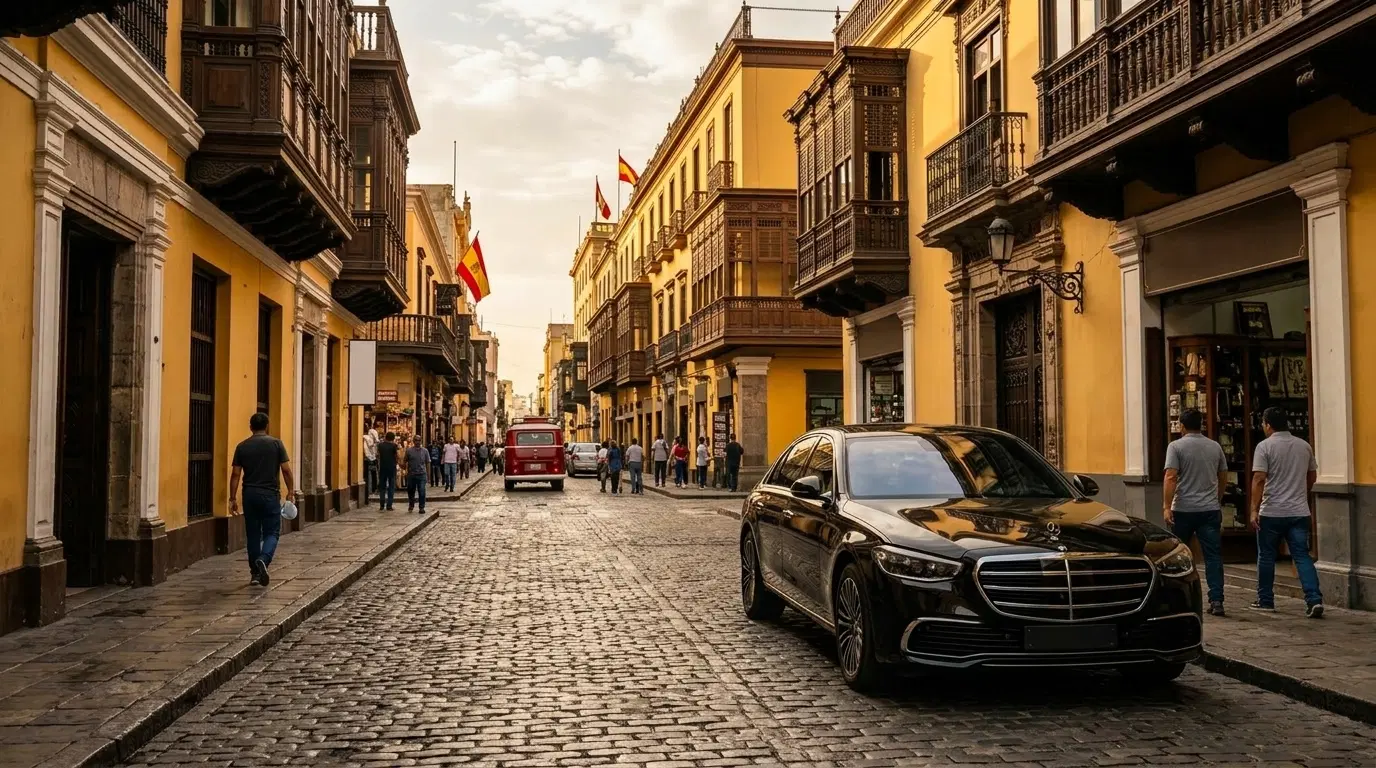
Lima is a food capital wrapped in a sprawling coastal city, and getting the most from it means planning around three things: the airport, the traffic, and the fog. The neighborhoods you'll actually use are compact and walkable, but they sit inside a metropolis known for gridlock, so cross-city timing matters. These Lima travel tips cover the decisions that shape a good visit: how to get in safely from an airport with a notorious taxi problem, which district to base in, when to eat the dishes Lima is famous for, and how the season quietly changes the whole mood of the city.
Getting In From the Airport Safely
The most important Lima decision happens before you leave the airport. Jorge Chávez International Airport (LIM) sits in Callao, a district you don't want to wander, and the ride to the tourist neighborhoods takes anywhere from 30 minutes to over an hour, since Lima ranks among the world's most congested cities. There's no realistic way in but by vehicle, so plan the transfer rather than improvise.
The key safety rule is to never take an informal taxi at the curb, since street-taxi scams from the airport are well documented. Use the official taxi counters inside arrivals, a booked private transfer, or ride-hailing apps like Cabify or InDriver that show a fixed fare in advance. The Airport Express Lima bus is a reliable budget option running direct to Miraflores. Because this is the single point where Lima trips most often go wrong, sorting out how to get from Lima Airport to Miraflores ahead of time is worth the few minutes. A pre-booked ride through a service like Transpovia puts a driver in arrivals with your name, which removes the negotiation and the risk after a long flight.
Where to Stay: Miraflores, Barranco, or San Isidro
For a first visit, Miraflores is the easiest base, safe, walkable, and set along the clifftop Malecón with ocean views and top restaurants. Barranco is the artsy neighbor a short taxi away, and San Isidro is the calmer, upscale district that's quieter but less lively. Choose by how you want your days to feel.
Miraflores wins on convenience, combining security, the cliff walk, and world-class ceviche in one place, which suits anyone who wants everything close and low-stress. Barranco delivers color, street art, galleries, and a distinctive local atmosphere, though it's a ride from the main sights. San Isidro is polished and residential, good for a peaceful stay but thinner on street life. Stick to well-lit streets near Parque Kennedy and the Malecón after dark, and treat the Historic Center as a daytime visit rather than a base.
Eating in the World's Ceviche Capital
Lima is one of the planet's great food cities, and a little planning turns a good trip into a memorable one. The most useful rule is timing: ceviche is a lunch dish, and dedicated cevicherías typically close by around 4 p.m., so treat it as a proper midday meal rather than a dinner plan. Show up expecting fresh ceviche at 8 p.m. and you'll be disappointed.
Spread your meals across price points for the best experience. A celebrated tasting-menu restaurant, some of which rank among the world's best, needs reservations booked weeks ahead, while excellent mid-range cevicherías and a market visit for street food fill out the rest without the wait or the cost. Market stalls in areas like Surquillo serve fresh, affordable seafood. Tipping runs around 10 percent, often already added as a service charge, so check the bill first.
Getting Around and Managing the Traffic
Lima's honest transport reality is a two-mode plan: walk where it's walkable, and use ride-hailing apps for everything else. Inside Miraflores and Barranco you can cover most ground on foot, but crossing districts means dealing with some of the world's worst traffic, so build in a generous buffer for any timed reservation, museum slot, or meetup.
Ride-hailing apps are the safest and simplest option for cross-town trips, showing a fixed fare that sidesteps street-taxi haggling. The public transit system exists but is confusing and crowded for short-stay visitors, so most skip it. Give yourself far more time than the map suggests when heading to a restaurant reservation across the city, since cross-town planning is exactly where Lima schedules break. Peru uses the sol, and small bills help for markets and tips.
Best Time to Visit Lima
The best months to visit Lima for warmth and clear skies are December through April, the coastal summer, when the sun comes out and the Malecón and beaches are at their best. From roughly May to October, Lima enters its garúa season, a persistent gray marine fog that locals call "Lima la Gris," keeping the city cool and overcast without much actual rain.
The garúa is Lima's defining quirk, and it's worth understanding rather than avoiding. It's not cold, sitting around 15 to 19°C, but it flattens the cliff views and beach appeal. The upside is real: hotel rates often drop, and the food and museum scene is completely unaffected, so serious food travelers sometimes prefer this season for easier restaurant availability. If you visit during garúa, shift your priorities toward eating and museums rather than coastal photography. Lima gets almost no true rainfall year-round, so an umbrella is rarely needed in any season.
Day Trips and Continuing to Cusco
Lima works as a base for a few worthwhile outings. The Museo Larco, in a restored mansion, and the Huaca Pucllana, an ancient adobe pyramid in the middle of Miraflores, are in-city highlights, and the pyramid's evening torchlit visit is more atmospheric than the daytime one. Farther out, the coastal ruins of Pachacamac make a half-day trip, though they reward those with a specific interest in archaeology.
Most travelers use Lima as the gateway to the rest of Peru, and the classic next stop is the Andean highlands. If Cusco and Machu Picchu are on your route, the Transpovia guide covering what to plan for in Cusco covers the altitude considerations, a sharp contrast with sea-level Lima, since Cusco sits high enough to require acclimatization. A common mistake is booking a tight Lima-to-Cusco connection; give yourself buffer, since Lima's traffic and airport can eat the time.
Frequently Asked Questions
How many days do you need in Lima?
Two to three days cover the essentials: Miraflores and the Malecón, Barranco's art, the Historic Center by day, and a couple of standout meals. That's enough to enjoy Lima before continuing to Cusco, Arequipa, or the coast.
Is Lima safe for tourists?
Lima is reasonably safe in the tourist districts of Miraflores, Barranco, and San Isidro, with visible police and walkable streets. Take normal precautions, use ride-hailing apps rather than street taxis, avoid Callao and quiet areas at night, and treat the Historic Center as a daytime visit.
When should you eat ceviche in Lima?
At lunch. Traditional cevicherías serve the freshest fish midday and often close by around 4 p.m., so ceviche is a lunchtime dish in Lima, not a dinner one. Plan your day around a proper midday seafood meal for the best experience.
Is the garúa fog a reason to avoid Lima?
Not really. The May-to-October garúa keeps skies gray and cool but brings little rain, and it doesn't affect the food or museum scene at all. You lose the beach and cliff views, but you often gain lower prices and easier restaurant reservations.
Before You Go
Lima rewards planning around its quirks. Book your airport transfer and never take a curbside taxi, base yourself in Miraflores or Barranco, and eat ceviche at lunch when it's freshest. Build extra time into any cross-town trip for the traffic. The smoothest start is arranging your airport ride with Transpovia in advance, so a driver is waiting rather than a scramble in Callao.
"We had the airport transfer booked, which took all the stress out of arriving, then based ourselves in Miraflores and walked to dinner every night — the ceviche at lunch tip alone was worth knowing." — a couple traveling from Houston


