
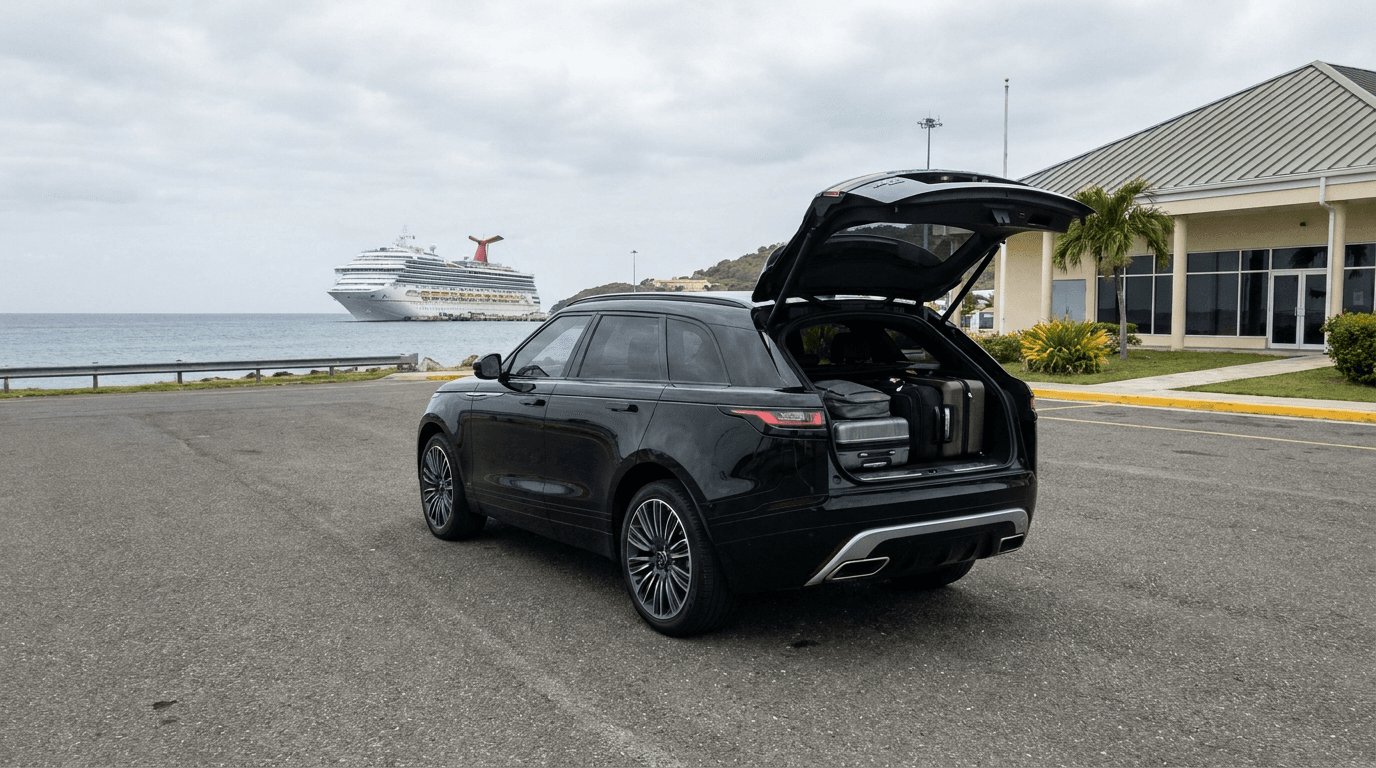
The trip from the JFK airport to Brooklyn cruise terminal covers roughly 16 miles. Most cars finish it in 30 to 55 minutes, though a bad traffic day can stretch that out. The terminal sits in Red Hook, a quiet waterfront corner of Brooklyn that the subway does not reach, and that one fact shapes every choice you make. A private car, a taxi, a rideshare and a long transit route will all get you to the pier. They differ a lot in price, effort and risk on a day when your ship will not wait. This guide walks you through each option, the real travel time and the small planning steps that matter most when you land with luggage and a boarding deadline.
Where the Brooklyn Cruise Terminal Sits
The Brooklyn Cruise Terminal opened in 2006 and stands at 72 Bowne Street in Red Hook. Passengers get wide views of the Statue of Liberty and the Manhattan skyline across the water. The terminal has just one pier, and it still handles close to 50 ships and about 250,000 passengers every year. Carnival, Princess and Cunard sail here, and itineraries reach the Caribbean, Bermuda, Canada, New England and Europe.
Red Hook feels calm next to the rest of New York. No subway station waits at the door. The blocks around the terminal mix old warehouses, low brick buildings and open waterfront. A few restaurants and cafes line Van Brunt Street, about a five minute walk away, and a small park with harbor views sits at a similar distance. Both help if you arrive early and need somewhere to sit before check in opens.
JFK lies in Queens. Your ride heads west across the borough and drops into Brooklyn. Most of the trip runs on highways. The last stretch uses city streets in Red Hook, and that part slows down on boarding day because hundreds of passengers arrive in the same few hours.
How Long the Drive Really Takes
Published estimates for this drive range from about 27 minutes to 55 minutes. That gap tells you something. Route planners that assume light traffic quote around 27 minutes for the 16 mile trip. Cruise guides that reflect real roads say 35 to 55 minutes, and the higher figure is the safer number to plan around. A Friday afternoon, a rainy morning or a holiday weekend can push the drive past that range.
Your total travel time is longer than the drive. After touchdown you still need to leave the plane, wait for bags and find the right pickup spot. On a busy day that takes 45 minutes to an hour. After an international flight, immigration lines can add more. Put those pieces together and most passengers need two to three hours between landing and standing at the pier.
A simple rule works well. Take the time your phone shows for the drive and add 30 minutes. If your boarding window closes in the early afternoon, count backward out of that time instead of working only with your flight arrival.
Your Options for Reaching the Pier
You have four realistic choices. Each one trades money for comfort and certainty in a different way.
Private Transfer
A private transfer is the easiest way to handle this route with luggage. You book a vehicle before you fly, share your flight details, and one driver takes you out of the airport and straight to the terminal with no change of vehicle. Booking a Brooklyn cruise terminal transfer before you travel takes one decision off a stressful day. It helps most for families, groups that share a van and anyone with several large suitcases.
Prices change with vehicle size and provider. Published estimates for private cars on this route cover a wide range. Compare the full price with taxes and fees included. Check what waiting time the booking allows if your flight runs late, and confirm how the driver will find you in the arrivals area.
Taxi and Rideshare
A taxi line forms at the JFK ground transportation area, and rideshare apps work at the airport too. Estimates for this ride sit between about 40 dollars and 110 dollars, depending on the source, the hour and the vehicle. One route planner puts rideshare near 55 to 75 dollars and a taxi near 85 to 110 dollars. Rideshare prices can jump on embarkation mornings when many travelers request cars at once. A taxi gives you a clearer idea of the fare, though large groups and big bags may need a van or a second car.
Give the driver the full terminal name and the street address, 72 Bowne Street. Some drivers know Red Hook by its streets, and the address gives them a clear target.
Public Transit
Public transit works, though it is the slowest and most tiring choice. The usual route begins with the AirTrain, which carries you to Jamaica station or Howard Beach. The AirTrain fare is 8.75 dollars when you enter or exit through those two stations, and rides inside the airport cost nothing. Next you take a subway line into Brooklyn and finish on a bus, since the subway never reaches Red Hook. Route planners show no direct bus between the airport and the terminal.
Estimates for the whole trip start around one hour and 20 minutes and cost roughly 13 to 19 dollars per person. Add time for waiting, stairs and transfers. With one carry on bag and a loose schedule, this route can work. With checked bags and a hard deadline, it rarely makes sense.
Driving Yourself
A rental car is possible, and few passengers choose it. You would return the car near the airport or leave it in the terminal lot, which charges a nightly fee for the length of your cruise. Most travelers who fly in do better with a driver.
What to Settle Before You Land
A few small tasks save a lot of stress once you reach the curb at JFK.
First, confirm your boarding window and sailing time in your cruise documents. Second, save the terminal address, 72 Bowne Street, Brooklyn, in your phone. Third, count your bags and decide how many people need a seat. A family of five with four large suitcases needs a van, and a sedan will not hold that load.
Charge your phone before the flight ends, and download an offline map in case the signal drops near the water. Keep passports in your day bag. If you arranged a pickup, save the driver contact details in a place you can reach fast.
Timing Your Arrival Around Boarding
Cruise lines assign boarding windows, and the window decides when you should reach the pier. One line opens check in at 10 a.m. and closes it in mid afternoon for its Brooklyn sailings, and other lines publish their own hours. Read your cruise documents and note the time that applies to you. Arriving far ahead of your window may leave you waiting on the sidewalk. Arriving after the cutoff can cost you the cruise, since ships sail on a fixed schedule.
A flight that lands in the early afternoon for a late afternoon sailing leaves almost no room for trouble. One cruise guide strongly suggests flying in the day before, and the advice holds up. A late plane, a long wait at baggage claim or a traffic jam on the way into Brooklyn can burn an entire cushion in minutes.
If you must fly on sailing day, pick the earliest sensible flight and book your ground transportation in advance. One less problem will be waiting when your bags finally arrive on the carousel.
Luggage and the Last Mile
Keep your passports, cruise documents and boarding forms in a bag that stays with you. Suitcases go to the ship, and papers should never ride inside them. Cruise guides describe the car entrance near the corner of Bowne Street and Imlay Street. Drivers who know the area head straight there, and it helps to keep your cruise line instructions open on your phone.
"Our bags were huge and the kids were tired. One car straight to the pier was the easiest decision of the whole trip."
After check in, passengers wait in a boarding lounge with seating. The terminal offers free WiFi. You can message family or load your cruise app while you wait. If you arrive early, Van Brunt Street gives you a spot for coffee before the walk to the pier.
Costs to Expect
Published prices for this route depend on the vehicle and the day. Rideshare estimates sit around 55 to 75 dollars. Taxis and town cars are quoted at roughly 75 to 110 dollars. One cruise guide lists a lower range of 40 to 65 dollars out of JFK. Treat every figure with caution, and expect surge pricing during peak boarding hours.
Remember the extras. Tolls can add to the total, and tipping a driver is normal practice in the United States. Large vans cost more than sedans, though they often work out cheaper per person for a group. Add up the full total before you compare options, and look past the headline price.
Staying Close to Red Hook the Night Before
Flying in a day early removes most of the pressure on this trip. You land, rest and take a shorter ride on boarding morning. If you sleep in Brooklyn or Manhattan, your ride to the pier is shorter and easier to predict than a ride that starts at JFK on the same morning.
If you can choose between airports, LaGuardia sits a little nearer to the terminal than JFK, around 40 minutes by one guide. Newark is farther away, with drives of 45 minutes to over an hour, and it often costs more to reach. JFK still makes sense for many international travelers, and the plan in this guide works well out of it.
Getting Back to JFK After the Cruise
The return drive covers about 14.7 miles, and estimates put it near 28 minutes in light traffic. Taxi and town car quotes for the return run roughly 70 to 100 dollars. Disembarkation takes time, and your exact schedule depends on your cruise line and customs checks. Book a flight that leaves several hours after your ship docks, and skip early morning departures.
Planning the return ride in advance works the same way the arrival ride does. Transpovia is one place to look, and you can compare options before the trip instead of on the pier with bags at your feet.
Mistakes That Cost Travelers Time
Some errors repeat again and again. Travelers assume the subway reaches the terminal, and it does not. They plan around the 27 minute estimate and forget baggage claim. They book a flight home a few hours after docking. They request a rideshare at the busiest hour and pay surge prices. They head to the wrong gate area with a driver who never got the full address. Each of these takes a small amount of planning to avoid.
FAQs
How far is JFK airport to Brooklyn Cruise Terminal by road?
The road distance is roughly 15 to 16 miles. The exact number shifts a little with your JFK terminal and the route your driver takes.
How long does the ride take?
Plan for 30 to 55 minutes by car in normal conditions. Rush hour and heavy weekend traffic can add more. Public transit takes at least one hour and 20 minutes.
Can I take the subway to the Brooklyn Cruise Terminal?
Not directly. The subway does not serve Red Hook. Transit routes use the AirTrain, a subway line and a bus, and some walking fills in the gaps.
How much does a taxi or rideshare cost for this trip?
Estimates range between about 40 dollars and over 100 dollars. Rideshare prices can rise sharply on embarkation mornings, and tolls and tips come on top.
What time should I arrive at the cruise terminal?
Arrive inside the boarding window your cruise line gives you. Check your cruise documents for the exact hours, and leave extra time for traffic.
Is it smarter to fly in the day before my cruise?
For most travelers, yes. A spare day protects you against flight delays, long baggage waits and traffic on boarding morning.
Conclusion
The ride between JFK and the pier is short on the map and easy to underestimate in real life. Plan for 30 to 55 minutes in the car, add time for landing and baggage, and let your boarding window set the deadline that counts. A private car gives you the most certainty with luggage. Taxis and rideshares suit smaller groups, and public transit suits only light packers. Book your airport transfer with Transpovia before you fly, and your first stop in Brooklyn can be the pier instead of a long wait at the curb.


