
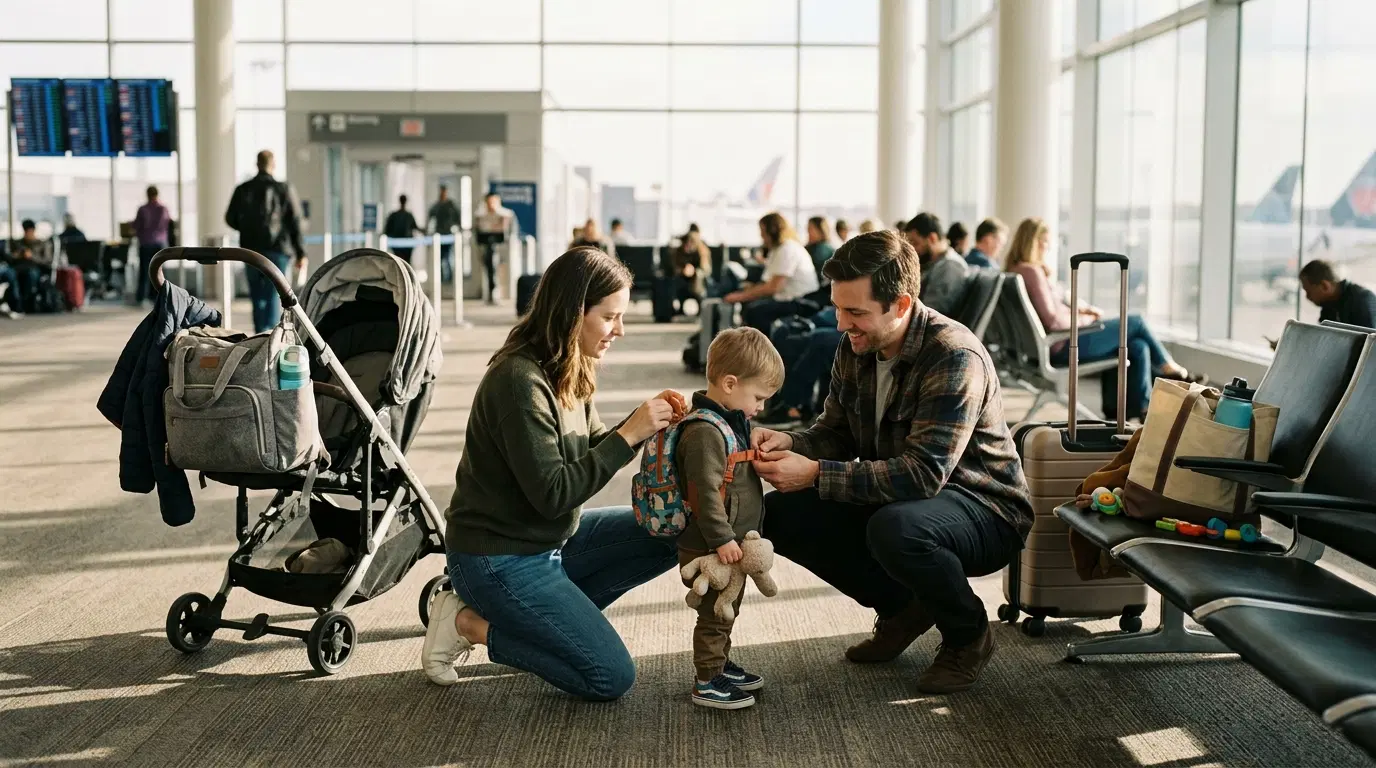
Most family trips don't go wrong in a big way. They go wrong in small ways that pile up. A missed nap leads to a meltdown at the gate, the stroller ends up at baggage claim instead of the jet bridge, and then there's a 40-minute taxi line with an overtired toddler at the end of a long day. Learning how to travel with kids mostly means planning around those small moments before they happen. This guide covers what works at every stage: booking, documents, packing, airport security, the flight, getting from the airport to where you're staying, and keeping the trip itself enjoyable for everyone.
Plan the Trip Around Your Kids' Rhythms
The best time to fly is when your children are at their most cooperative. For babies and toddlers, that often means booking a flight that overlaps with a nap, or an early morning departure while they're still fresh. School-age kids tend to handle mid-morning flights well, when they've had breakfast but aren't yet restless.
Nonstop flights are worth paying a little more for when you can. Every connection adds another round of deplaning, walking, waiting, and boarding, plus the risk of a missed connection with tired children in tow. If you need a layover, choose one long enough to allow a bathroom break, a snack, and a slow walk to the next gate. About 90 minutes is a comfortable minimum for most domestic connections with kids.
When you book, select seats right away instead of waiting until check-in. Families aren't always seated together automatically, especially on basic economy fares. A window seat keeps a small child away from the aisle cart and gives them something to look at, while an aisle seat for the adult makes bathroom trips easier.
Documents and ID Your Children Need
Paperwork is the one thing you can't fix at the airport, so it deserves attention early.
Domestic Flights in the US
TSA doesn't require travelers under 18 to show ID on domestic flights when they're flying with an adult companion. Airlines are a different matter. If you're flying with a lap infant, many carriers ask for proof of age, such as a birth certificate, to confirm the child is under 2. Keep a copy on your phone and a paper copy in your carry-on.
International Trips
For international air travel, every US citizen child needs a valid passport book, including newborns. Passports for children under 16 are valid for only five years, so check expiration dates well before you book. Applying for a minor's passport generally requires both parents' consent, which can take extra time if one parent is traveling or otherwise unavailable.
If only one parent is traveling with a child, or the child is traveling with grandparents or another adult, bring a signed consent letter from the absent parent or parents. Border officers in many countries can ask for one, and Canada specifically recommends carrying it. Mexico has its own rules for minors leaving the country without both parents, particularly for Mexican citizens and residents, so it's smart to bring a notarized letter and check the current requirements before you go.
Packing Tips for Traveling With Children
Overpacking is easy when you're trying to prepare for everything. A better approach is to pack carefully for the travel day and lightly for the rest of the trip, since most destinations sell diapers, sunscreen, and snacks.
Your carry-on should get you through a full day of delays without needing checked bags. That usually means:
-
At least one complete change of clothes for each child, plus a spare shirt for yourself
-
Diapers and wipes for twice as long as you expect to be traveling
-
Familiar snacks, an empty water bottle to fill after security, and any formula or baby food
-
Medications, including fever reducer and anything your child takes regularly
-
A small bag of new or rarely seen toys, stickers, or activity books
-
Headphones sized for children, along with downloaded shows or games
Packing cubes help when you're sharing a suitcase with kids. Giving each child their own color makes it easier to find pajamas on the first night without unpacking everything onto the hotel bed.
Airport Tips for Families
Getting through the airport is often harder than the flight. A few habits make it much smoother.
Getting Through Security
Kids 12 and under can keep their shoes on during TSA screening, which saves time. Formula, breast milk, baby food, and juice for children are allowed in reasonable quantities above the usual 3.4-ounce liquid limit. Take them out of your bag and tell the officer at the start of screening. They may be tested separately, so allow a few extra minutes.
If you have TSA PreCheck, children 12 and under can go through the PreCheck lane with you. Teens 13 to 17 can join you when they're on the same reservation and the PreCheck indicator appears on their boarding pass. Some airports also have dedicated family lanes at security, which are worth looking for.
Arrive earlier than you would on your own. Two hours before a domestic flight is a reasonable target with young children, and three hours for international departures.
Strollers and Car Seats
Most major US airlines let you check a stroller and a car seat for free, either at the ticket counter or at the gate. Gate-checking a stroller is usually the better choice because you keep it through the terminal and get it back at the aircraft door when you land (though some airlines return larger strollers at baggage claim, so ask when you tag it). A protective bag helps keep it clean and undamaged.
If your child has a seat on the plane, an FAA-approved car seat is the safest way for them to fly, and you'll have it ready for the car at your destination. Look for the label stating the seat is certified for aircraft use.
Flying With Kids: How to Make the Flight Easier
Children under 2 can usually fly as lap infants on domestic flights, while international lap infants often require a fee or a percentage of the adult fare. A lap seat saves money, but the FAA recommends that every child have their own seat with an approved restraint. For kids who have outgrown a car seat but are under about 44 pounds, the CARES harness is an FAA-approved option that's much lighter to carry.
Ear pressure during takeoff and landing is one of the most common reasons kids cry on planes. Babies do best with a bottle, breastfeeding, or a pacifier during climb and descent, since swallowing helps their ears adjust. Older kids can chew gum, sip water, or eat a crunchy snack.
Pace the entertainment. If you hand over the tablet before the plane leaves the gate, you've got nothing new to offer two hours later. Start with lower-key activities like coloring, books, or looking out the window, and save screens for when attention runs out. Walk the aisle with toddlers when the seatbelt sign is off, as long as you're not blocking the cart.
Most importantly, try not to worry too much about the people around you. Most passengers have been there or understand. A calm parent tends to settle a fussy child faster than an anxious one.
How to Travel With Kids After You Land
The arrival is where many family travel plans fall apart. You're tired, the kids are tired, and you still have bags to collect and a ride to find. Waiting in a taxi line or trying to figure out a rideshare pickup zone with luggage and a car seat is a rough way to start a vacation.
Having ground transportation booked before you fly takes that pressure away. A pre-booked private airport transfer means a driver is waiting when you come out, the vehicle is sized for your group and your luggage, and you aren't negotiating a fare or comparing apps while keeping track of your kids. Transpovia lets you compare and reserve airport transfers ahead of time, so you can choose a vehicle with enough space for a stroller, car seats, and the extra bags that come with family travel.
Car seat rules for taxis and hired vehicles vary by country and even by state or province, and taxis are often exempt. Don't assume a child seat will be available. If you aren't bringing your own, request one when you book and include your children's ages and approximate weights so the provider can plan accordingly. Many transfer providers can arrange child seats when asked in advance.
Choose Destinations and a Pace That Suit Your Family
Family-friendly destinations don't have to be theme parks. What matters most is short travel times, easy logistics, and a mix of activities kids can enjoy. For North American families, crossing a border can feel like a big trip without the long-haul flight. Planning family travel in Canada can mean city museums, national parks, and lake towns that are easy to reach from many US airports.
Beach resorts and colonial towns make family travel in Mexico popular for good reason, especially during school breaks. Flights are often short, many resorts are designed with children in mind, and the warm weather makes outdoor time simple.
Wherever you go, plan less than you think you can do. One main activity a day, with a pool break or playground stop in the afternoon, usually works better than a packed itinerary. Kids remember the ice cream and the hotel pool as clearly as the famous landmark, and a relaxed pace keeps everyone in a better mood.
Accommodation choices matter too. A vacation rental or suite with a separate bedroom lets parents stay up after the kids go to sleep, and a kitchen makes breakfasts and picky eaters easier to manage.
Keeping Kids Healthy and Safe on the Road
A few simple precautions prevent many common problems. Wipe down tray tables and armrests, and keep hand sanitizer handy for times when you can't wash up. Changes in time zone, diet, and sleep can upset young stomachs, so bring familiar foods for the first day or two.
For younger children, write your phone number on a wristband or put a card in their pocket in case you get separated in a crowded airport or attraction. Take a quick photo of your kids each morning so you have an accurate record of what they're wearing. Older kids should know what to do if they get lost: stay put and find an employee in uniform or another parent with children.
Check whether your health insurance covers you abroad before an international trip, and bring a simple medical summary for any child with allergies or ongoing conditions.
Frequently Asked Questions
What is the best age to start traveling with kids?
There isn't one best age. Babies under about 9 months are often easier to fly with than toddlers because they sleep more and don't need to move around. Toddlers between 18 months and 3 years tend to be the most challenging. Kids 4 and older usually enjoy the experience and remember more of it.
Do kids need their own seat on a plane?
Children under 2 can usually ride on an adult's lap, but anyone 2 or older needs their own seat. Even for babies, a separate seat with an FAA-approved car seat is the safest option, and it often makes the flight more comfortable for both parent and child.
How early should families arrive at the airport?
Plan on about two hours before a domestic flight and three hours before an international flight. Checking bags, getting strollers through security, bathroom stops, and walking at a child's pace all take longer than they do when you're traveling alone.
Conclusion
Traveling with children will never be as quick as traveling alone, but it doesn't have to be stressful. Most of the work happens before you leave home: booking flight times that fit your kids' routines, checking passports and consent letters, packing a carry-on that can handle delays, and arranging how you'll get from the airport to your accommodation.
Once those basics are covered, you can focus on the trip itself. Keep the schedule flexible, expect some rough moments, and remember that the travel day is only a small part of the vacation. With good planning, it can become one of the easier parts.
"Our first trip with both kids, the best decision we made was having a driver waiting at arrivals. After a delayed flight, not having to figure out a ride made the night so much easier."


