
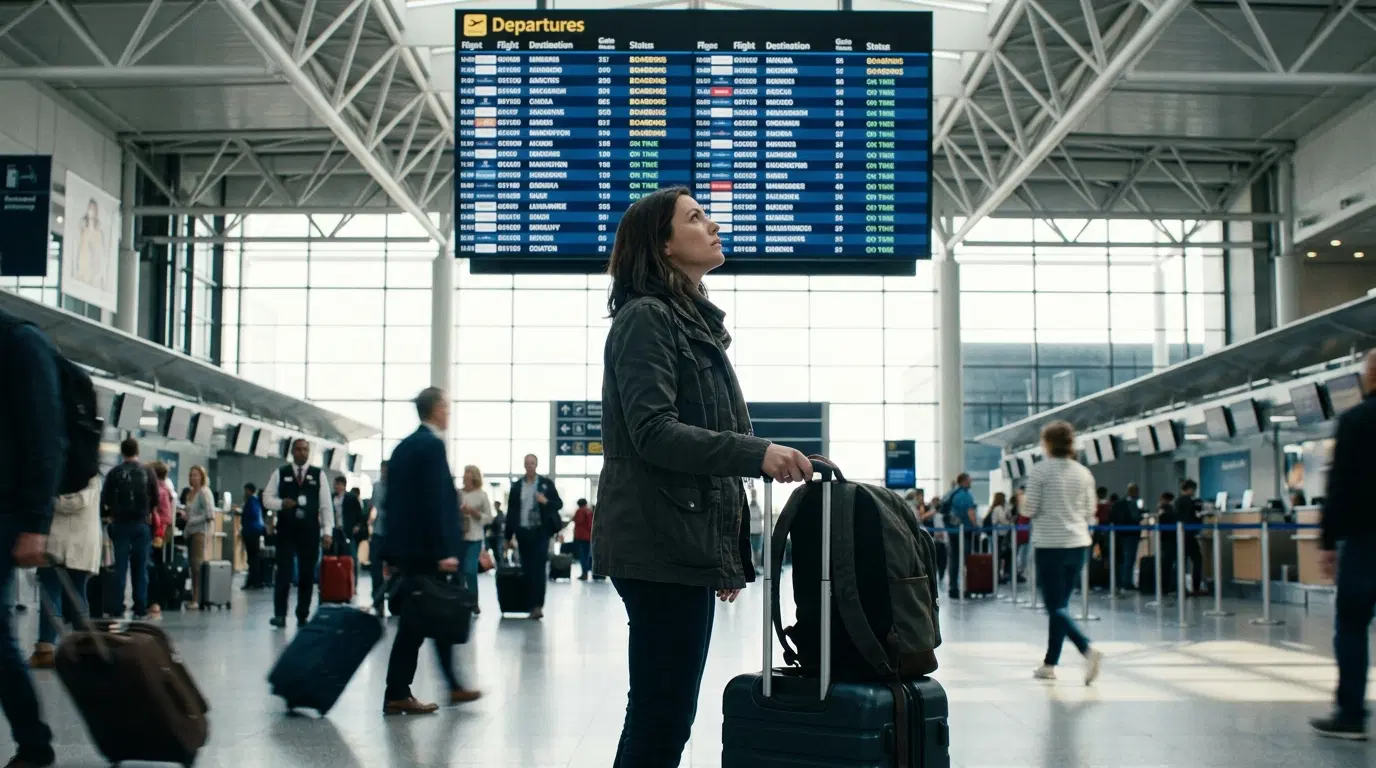
Most travel problems don't start with anything dramatic. They start with a phone left on a café table, a stranger offering a "cheap taxi" in the arrivals hall, or a passport photo nobody bothered to save. Knowing how to stay safe while traveling is mostly about closing those small gaps before someone else notices them. The good news is that it doesn't take paranoia or expensive gear. It takes a bit of planning, a few habits you repeat on every trip, and a clear idea of where travelers tend to be most exposed, which is usually in transit, when they're tired, distracted, and carrying everything they own.
This guide walks through the practical side of travel safety, from the week before departure to the moment you're settled at your hotel and heading out to explore.
How to Stay Safe While Traveling Starts Before You Leave Home
The work you do at your kitchen table often matters more than anything you do on the road. A little preparation gives you options when something goes wrong.
Read official travel advisories for your destination
If you're a US traveler, the State Department publishes advisories for nearly every country on a four-level scale, from Level 1 (Exercise Normal Precautions) to Level 4 (Do Not Travel). The level itself is only part of the story. The written advisory explains why a country carries that rating and often names specific regions, neighborhoods, or risks such as petty theft, strong ocean currents, or road conditions. Many popular destinations sit at Level 2, which usually means everyday crime awareness rather than a reason to cancel.
While you're there, consider enrolling in the Smart Traveler Enrollment Program (STEP). It's free, and it lets the nearest US embassy send you alerts and reach you in an emergency such as a natural disaster or civil unrest. Travelers from other countries usually have a similar registration service through their own foreign ministry.
Back up your documents
Take clear photos of your passport ID page, driver's license, visas, travel insurance policy, and the front and back of your bank cards. Store them in a secure cloud folder or an encrypted notes app, and keep one paper copy in a different bag from the originals. If your passport is lost or stolen, these copies make the replacement process at an embassy or consulate much faster.
Share your itinerary with someone you trust
Send a family member or friend your flight numbers, hotel addresses, and any transfer or tour bookings. Agree on a simple check-in routine, like a quick message when you land and when you reach each new city. It feels like a small thing until the day it isn't.
Sort out insurance and health coverage
Many domestic health plans offer limited or no coverage abroad, and Medicare generally doesn't cover care outside the US. A travel insurance policy with medical and emergency evacuation coverage is worth comparing before you go, especially for remote destinations or adventure activities.
Airport Safety Tips From Check-In to Arrivals
Airports feel secure because of the screening checkpoints, but the busy public areas around them are where travelers are often easiest to target. People are juggling bags, boarding passes, and phones, and their attention is somewhere else.
Keep your bags and documents within reach
Never leave luggage unattended, even for a minute to grab a coffee. Beyond the theft risk, unattended bags can trigger security responses and delays. At the security checkpoint, wait until you're next in line before placing your laptop, phone, and wallet in the bins, so your belongings aren't sitting on the far side of the scanner while you're still waiting to walk through. When you reach the other end, collect your valuables first and your shoes and jacket last.
A lightweight tracker, such as an AirTag or a similar device, in checked luggage won't stop a bag from being misrouted, but it can help you show the airline exactly where it ended up.
Be careful with public Wi-Fi and charging stations
Free airport Wi-Fi is convenient, but open networks aren't a good place to log into your bank or enter card details. Use your mobile data or a reputable VPN for anything sensitive. US authorities have also warned travelers about the risk of tampered public USB charging ports, so it's safer to carry your own wall adapter or a charged power bank and plug into a regular outlet.
Watch for unsolicited offers in the arrivals hall
In many international airports, the moment you walk out of customs you'll be approached by people offering taxis, hotel rides, or "official" help. Some are legitimate, many aren't, and unlicensed drivers are one of the most common ways travelers get overcharged or worse. Decide how you're getting to your accommodation before you land. If you've arranged a private transfer, our airport pickup guide explains how to find your driver and what to expect at the meeting point.
Getting From the Airport to Your Accommodation Safely
The first ride of a trip is when you know the least about where you are. You may not speak the language, you don't know what a fair fare looks like, and you probably don't know whether the route the driver takes makes sense.
A few habits reduce that risk significantly:
-
Book ahead when you can. A pre-booked private transfer or shuttle means a confirmed price, a named driver, and a vehicle you can identify before you get in.
-
Verify before you board. Match the driver's name, the license plate, and the car model to your booking or ride-hailing app. Ask the driver who they're picking up rather than offering your own name first.
-
Use official taxi stands only. If you take a taxi, go to the marked stand inside or just outside the terminal rather than accepting a ride from someone who approaches you.
-
Share your trip. Most ride-hailing apps let you send your live route to a friend. Turn it on, especially at night.
-
Keep essentials on you. Your passport, wallet, and phone should stay in your hands or a bag on your lap, not in the trunk with your suitcase.
Local rules differ, so it pays to learn them in advance. If you're planning to travel in Costa Rica, for example, licensed taxis are red with a yellow triangle on the door, while the official airport taxis at Juan Santamaría International Airport near San José are orange. Knowing details like that makes it much easier to spot a ride that doesn't belong.
Protecting Your Money and Valuables
Pickpocketing and bag snatching are far more common than violent crime in most tourist areas, and they tend to happen in predictable places: crowded metro cars, busy markets, beach towns, and outdoor café tables.
Split your money so a single loss can't leave you stranded. Carry one card and a modest amount of cash for the day, and leave a backup card and emergency cash in your room safe or a separate bag. Keep your phone in a front pocket or a zipped crossbody bag instead of a back pocket, and avoid hanging a purse on the back of a chair.
When you need cash, use ATMs inside banks or shopping centers during the day. Cover the keypad when entering your PIN, and check the card slot for anything that looks loose or added on, since skimming devices often sit right over the real reader.
It also helps to recognize the classic travel scams, which follow a similar script in many cities:
-
Someone "accidentally" spills something on you and helps clean it up while an accomplice lifts your wallet.
-
A stranger tells you your hotel or a major attraction is closed and offers to take you somewhere better.
-
A person posing as a police officer asks to inspect your wallet for counterfeit money.
-
A friendly local offers a free bracelet, photo, or flower and then demands payment.
The common thread is a distraction or an unexpected change of plans. When something feels off, you can always say no and walk away.
Personal Safety While Traveling Around Your Destination
Once you're settled, personal safety while traveling mostly comes down to awareness and blending in. Flashy jewelry, expensive cameras slung around your neck, and standing on a corner staring at a map all signal that you're new in town. Check your route before you leave your hotel, and if you need to look at your phone, step into a shop or café to do it.
Ask your hotel or host which areas to avoid after dark. Locals usually give more specific and current advice than any guidebook. At night, stick to well-lit, busy streets, and use a booked ride rather than walking long distances in unfamiliar areas.
Staying safe at your hotel or rental
A few simple steps make your accommodation more secure:
-
If a receptionist says your room number out loud, quietly ask for a different room.
-
Use the deadbolt and door chain whenever you're inside, and don't open the door for unexpected "maintenance" or deliveries without calling the front desk first.
-
Note the nearest emergency exit on the evacuation map behind your door.
-
Lock your passport, spare cards, and electronics in the room safe when you go out.
-
For vacation rentals, check that every door and window locks properly when you arrive, and message the host right away if anything doesn't.
Digital Security on the Road
Your phone holds your boarding passes, bank access, photos of your documents, and your entire contact list, which makes it one of the most valuable things you carry. Before you leave, turn on a strong passcode or biometric lock, enable two-factor authentication on your email and banking apps, and make sure a device-finding feature such as Find My or Find My Device is switched on.
Think twice before posting your location in real time. Sharing that you're at a specific beach or that your house is empty for two weeks gives strangers more information than they need. Many travelers wait until they've left a place, or until they're home, to post the highlights.
Finally, save key details offline: hotel addresses, booking confirmations, and the address and phone number of your country's embassy. Download offline maps for your destination too, so a dead signal or an expired data plan doesn't leave you lost.
Health and Emergency Preparedness
Look up the local emergency number before you arrive. It's 911 in the US, Canada, Mexico, and Costa Rica, and 112 works across the European Union, but many countries use different numbers for police, ambulance, and fire. Save them in your phone along with your embassy's contact information.
Pack prescription medication in your carry-on, in the original labeled containers, with enough to cover a few extra days in case of delays. Some medications that are routine at home are restricted elsewhere, so check the rules for your destination if you take anything controlled.
For health risks specific to your destination, such as mosquito-borne illnesses, required vaccinations, or water safety, the CDC's travel health pages are a reliable place to start, and a travel clinic visit four to six weeks before departure gives any vaccines time to work. Don't underestimate the natural environment either. Rip currents, altitude, heat, and hiking accidents cause more trouble for visitors in many destinations than crime does.
Travel Safety Precautions for Different Types of Travelers
The basics apply to everyone, but a few safe travel tips matter more depending on who you're traveling with and why.
Solo travelers
Stay in accommodations with strong recent reviews from other solo guests, and plan to arrive in a new city during daylight. Keep someone at home updated on your plans, and trust your instincts if a person or situation makes you uncomfortable. You never owe a stranger an explanation for leaving.
Families with children
Take a current photo of each child on the morning of travel day so you have their exact clothing on record if you get separated. Give older kids a card with your phone number and hotel name, and agree on a meeting spot in airports, theme parks, and other crowded places. Pre-booking transport also lets you request child seats, which are often unavailable in street taxis.
Business travelers
Work laptops and phones carry sensitive data, so keep them with you rather than in checked bags and avoid working on confidential files over hotel or café Wi-Fi without a company VPN. Be mindful of conversations in airport lounges and taxis, and use a privacy screen if you work in public spaces.
Frequently Asked Questions
What is the most important travel safety tip?
If there's one habit that prevents the most problems, it's planning your arrival. Knowing how you'll get from the airport to your accommodation, where you're staying, and what the area is like removes you from the moment when travelers are most vulnerable: tired, unfamiliar with the place, and surrounded by people offering help.
How can I stay safe when traveling alone?
Share your itinerary with someone at home, check in regularly, and choose well-reviewed accommodations in central, well-lit areas. Arrive during the day when you can, book reliable transport in advance, and avoid telling strangers that you're traveling alone or where you're staying.
Is it safe to take a taxi from the airport in another country?
It usually is, as long as you use the official taxi stand, a reputable ride-hailing app, or a pre-booked transfer. The main risk comes from unlicensed drivers who approach travelers inside the terminal. Agree on the fare or confirm the meter is running before you set off, and keep your valuables with you rather than in the trunk.
Conclusion
Staying safe on the road isn't about expecting the worst. It's about removing easy opportunities: the unattended bag, the unverified ride, the wallet in a back pocket, the passport with no backup copy. Most of these precautions take only a few minutes, and once they become habits, you stop thinking about them.
Prepare before you leave, pay extra attention at airports and during your first ride, keep your money and devices protected, and trust your instincts once you arrive. Do that, and you'll spend far more of your trip enjoying the places you came to see.
"The first time we traveled abroad with the kids, the airport was the part I dreaded most. Having our ride booked and knowing exactly who would meet us made the whole arrival feel calm."


