
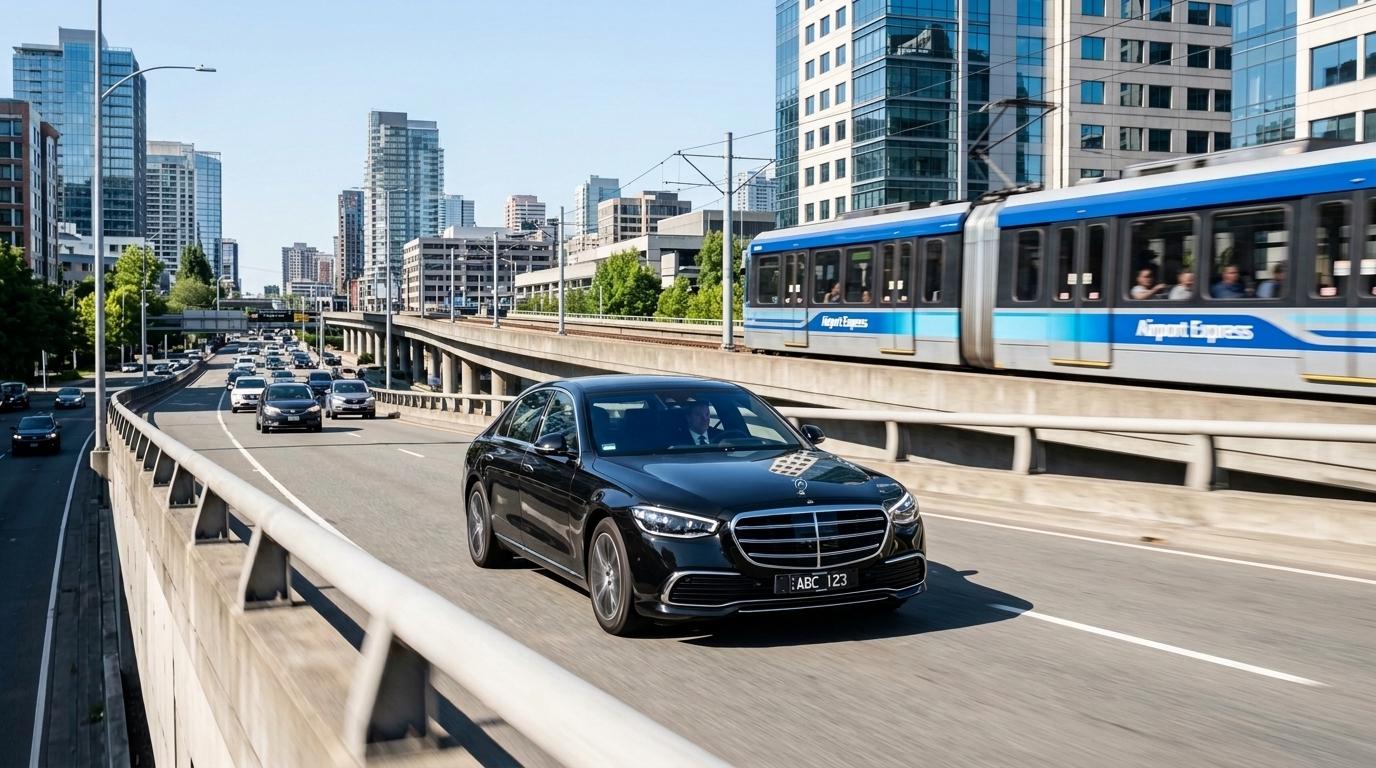
The trip to the airport sets the tone for the whole flight. Miscalculate the timing, pick the wrong ride for your luggage, or hit traffic you didn't plan for, and you're at the check-in desk sweating before you've even reached security. Knowing how to get to the airport calmly comes down to two decisions made in advance: which transportation option fits your trip, and how much time to leave for it. Get those right, and the rest of the departure tends to fall into place.
Choose your transportation before the day of travel
The best way to get to the airport depends on your luggage, your group size, the time of day, and how much you value predictability over cost. There's no single winner; each option trades something for something else. Deciding the night before, rather than at the front door, is what removes most of the stress.
Here's how the main airport transportation options compare:
|
Option |
Best for |
Watch out for |
|
Driving and parking |
Early departures, returning to your own car |
Parking fees add up fast on longer trips; reserve a spot ahead at busy airports |
|
Public transit (train/bus) |
Solo travelers, light luggage, budget trips |
Limited late-night service; stairs and transfers are hard with heavy bags |
|
Taxi |
Late arrivals, door-to-door with luggage |
Metered fares vary with traffic; not always available on demand at odd hours |
|
Rideshare |
Flexibility and app-based pricing |
Surge pricing at peak times; designated pickup zones can be a walk from the terminal |
|
Private transfer |
Families, groups, international arrivals, fixed pricing |
Book in advance; less useful for last-minute plans |
Public transit is usually the cheapest way in, but it asks the most of you physically, since you handle your own bags across platforms and transfers. A taxi or rideshare gives you door-to-door service, though the fare rises and falls with traffic and demand. A pre-booked private transfer costs more than transit but fixes the price and the pickup time upfront, which many travelers find worth it after a long-haul flight or when wrangling kids and suitcases. If you want to weigh these side by side for a specific route, a breakdown of Airport Transportation Options can help you match the choice to your situation.
How early should you arrive?
For most trips, plan to arrive at least two hours before a domestic flight and three hours before an international one. According to the Transportation Security Administration, those windows give you time to check bags, clear security, and reach the gate before boarding, which usually starts well before the departure time printed on your ticket.
Treat those numbers as a floor, not a guarantee. Large hub airports during early-morning and late-afternoon peaks, holiday periods, and evenings full of long-haul departures can all call for more buffer. Some airports, including a few in the United States, ask departing passengers to arrive around two and a half to three hours early even for domestic flights. Checking your specific airport's or airline's current advice before you leave is the reliable move, since these recommendations change with staffing and passenger volume.
You can shave real time off the front end by checking in online, which most airlines open 24 hours before departure. That lets you pick a seat, download a mobile boarding pass, and walk straight toward security if you're not checking a bag.
Match your timing to the traffic, not just the flight
Working out when to leave home means counting backward from your target arrival time, then adding for the road. A route that takes 30 minutes at noon can take an hour during rush hour, so build in the traffic you'll actually face, not the best-case drive.
A few factors change the math:
-
Rush hour and school runs clog airport routes on weekday mornings and late afternoons.
-
Event traffic and roadworks can close or slow key approaches with little warning.
-
Return of a rental car or a parking shuttle adds a step between arriving on the airport grounds and reaching the terminal.
If you're relying on public transit, check the timetable for your exact travel time rather than the frequency, and confirm the last useful departure. Missing one train at 5 a.m. can mean a 40-minute wait that erases your entire buffer.
Getting to the airport late at night or before dawn
Off-peak trips carry a specific risk: the transport you'd normally count on may not be running. Public transit often stops or thins out overnight, and some routes don't resume until well after the first flights board. For a red-eye departure or a pre-dawn start, confirm your option runs at that hour before you commit to it.
This is where door-to-door choices earn their place. A taxi or rideshare avoids the transit gap, though availability at 3 a.m. can be patchy in smaller cities, and surge pricing may apply on rideshare apps during early-morning demand. A private transfer booked in advance sidesteps both problems by locking in the pickup time and the driver, which is reassuring when you can't afford to gamble on whether a car will show. Arriving on a late international flight raises the same question in reverse: know how you're getting from the airport into the city before you land, not after you've cleared customs to find the transit hall closed.
Traveling with luggage, children, or mobility needs
Your cargo should shape your choice as much as your budget. Heavy or multiple bags make public transit's stairs and transfers genuinely difficult, so a vehicle that takes you door to door usually wins for anyone traveling heavy. Families with car seats, strollers, and tired kids tend to do better with a taxi or a pre-booked transfer that keeps everyone together rather than splitting across transit connections.
Travelers with mobility needs should allow extra time and, where possible, arrange assistance ahead. Airlines and airports provide help through security and to the gate, but attendants can be in demand, so arriving earlier than the standard guidance is wise. If you use a battery-powered wheelchair, the U.S. Department of Transportation suggests arriving at least an hour before the airline's normal check-in time. Confirm any assistance directly with your airline in advance so it's arranged when you arrive.
Avoid the mistakes that cause missed flights
Most airport stress traces back to a handful of avoidable errors. Underestimating traffic is the big one, followed by forgetting that boarding closes well before departure. Others include heading to the wrong terminal at a multi-terminal airport, not checking whether your ID meets current requirements, and assuming late-night transport will simply be there.
A quick check the night before heads off nearly all of these: confirm your terminal, verify your transport runs at your travel time, check your airport's current security wait guidance, and make sure your ID is valid and accepted.
FAQs
What is the easiest way to get to the airport?
The easiest option is usually the one that takes you door to door without transfers, such as a taxi, rideshare, or pre-booked private transfer, especially with luggage or after a long flight. Public transit is cheaper but asks you to manage bags and connections yourself, which suits light, budget-conscious solo trips better.
How long before my flight should I leave home?
Count backward from your target airport arrival (two hours before domestic, three before international), then add your real door-to-airport travel time including likely traffic. For a 6 a.m. domestic flight, that often means arriving around 4 a.m. and leaving home well before that, depending on distance and route.
Is it cheaper to drive and park or take a rideshare?
It depends on trip length. For short trips, driving and parking can be economical, but daily parking fees add up quickly on longer journeys and may exceed a round-trip rideshare or taxi fare. Compare your airport's current parking rates against an estimated fare before deciding.
What should I do if I arrive at the airport very early?
Some airports limit how early you can check in or clear security, since baggage counters and gates open on a schedule. If you arrive far ahead, you may need to wait in the public area until check-in opens, so confirm your airline's counter hours if you're planning a very early start.
Before You Go
Settle two things the night before: how you're getting to the airport and what time you're leaving. Confirm your transport runs at your travel time, check your airport's current arrival guidance, and account for traffic. Booking a private transfer in advance through Transpovia can remove the timing guesswork for early departures and late-night arrivals, so the ride is one less thing to think about.


