
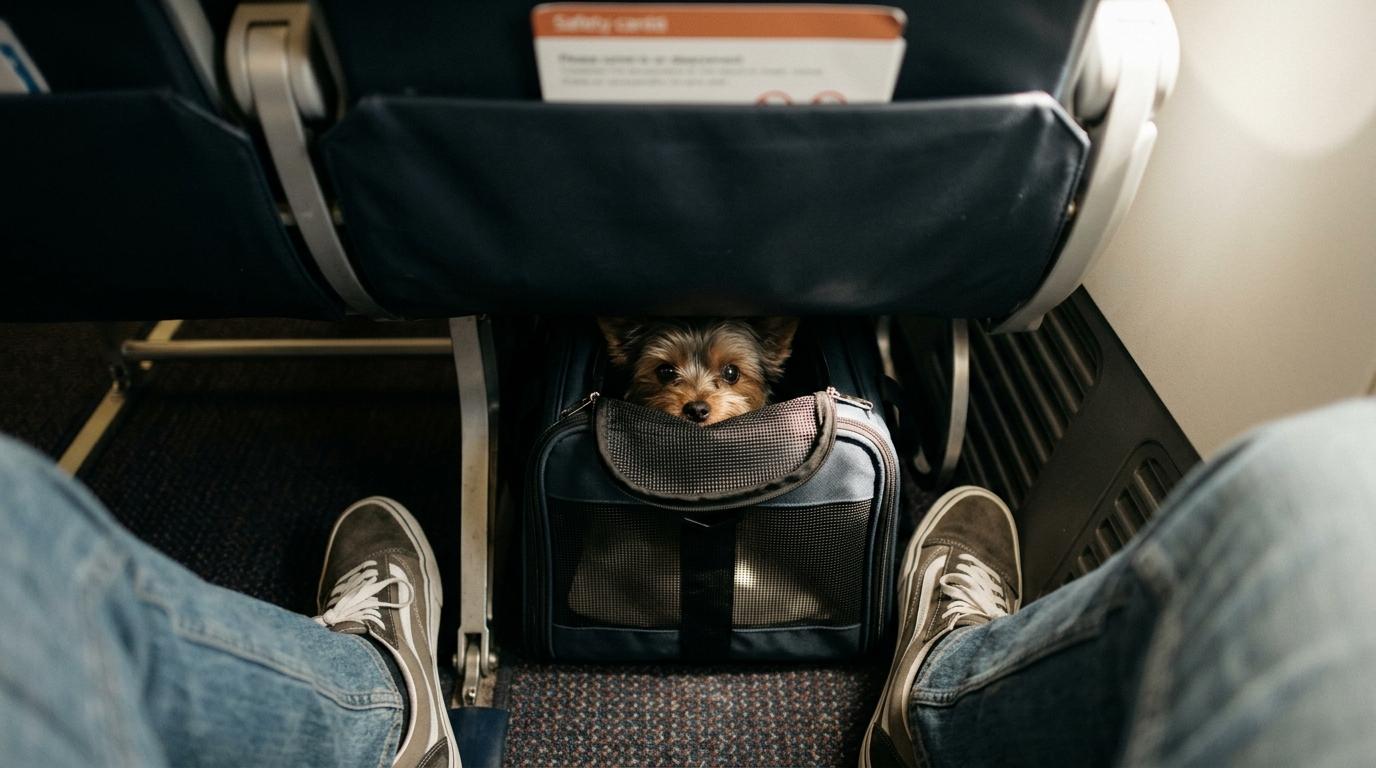
Most of the work happens before you ever reach the airport. If you're figuring out how to air travel with a dog, the flight itself is usually the easy part. The harder parts are finding a seat on a flight that still has room for pets, getting the right paperwork in order, and teaching your dog to settle into a carrier for hours at a time.
Rules differ by airline, by route, and by your dog's size, so a plan that works for a friend's Chihuahua on a short domestic hop may not work for your beagle on an international trip. This guide walks through the decisions you'll face, the documents that matter, what happens at security, and how to get from the plane to your final destination without a scramble.
Start With an Honest Look at Your Dog
Before you compare airlines, ask whether flying makes sense for this particular dog. A calm, crate-trained adult that naps through car rides is a very different traveler from an anxious rescue that panics when the door closes.
A few factors deserve real weight:
-
Size. If your dog can't fit in a soft-sided carrier that slides under the seat in front of you, cabin travel is off the table on most airlines. That changes your options more than anything else on this list.
-
Breed. Short-nosed breeds such as pugs, French bulldogs, Boston terriers, and boxers are more prone to breathing trouble in heat and stress. Many airlines restrict or refuse these breeds in the cargo hold, and some add extra conditions even in the cabin.
-
Age and health. Very young puppies, senior dogs, and dogs with heart, respiratory, or mobility issues may not handle a long travel day well. Airlines also set minimum ages for pets on board.
-
Temperament. Constant barking, whining, or attempts to escape the carrier make the trip hard on your dog and on everyone sitting nearby.
Book a vet visit a few weeks before you travel, not a few days. Your vet can flag health concerns, update vaccines, confirm the microchip scans properly, and tell you whether your dog is a good candidate for flying at all. For some dogs, a road trip or leaving them with a trusted sitter is the kinder choice.
Cabin, Cargo, or Service Dog: The Three Ways Dogs Fly
Every dog on a commercial flight falls into one of three categories, and each comes with its own rules.
Flying in the Cabin
This is the most common setup for small dogs. Your dog stays in an airline-compliant carrier under the seat in front of you for the entire flight, including taxi, takeoff, and landing. Airlines limit how many pets can travel in each cabin, so spots can sell out on busy routes and holiday weekends. Most carriers treat the pet carrier as your carry-on bag or personal item, which means packing lighter for yourself.
Checked Baggage and Cargo for Larger Dogs
Larger dogs face a much tougher path. Several major US airlines no longer accept pets as checked baggage, and some have ended or sharply limited their cargo programs for personal pets. Where cargo travel is still offered, it usually involves a sturdy hard-sided kennel, a health certificate, separate drop-off at a cargo facility, and temperature restrictions that can block travel during hot summers or cold winters. Many owners of big dogs now work with a professional pet shipper or skip flying in favor of driving.
Service Dogs and Emotional Support Animals
Under US Department of Transportation rules, airlines must accommodate trained service dogs, which fly in the cabin at no charge. Airlines can ask you to complete the DOT's Service Animal Air Transportation Form, which covers the dog's training, health, and behavior. Emotional support animals no longer have the same protection, so most airlines treat them as regular pets with the usual fees and carrier rules.
How to Air Travel With a Dog: Booking the Right Flight
Airline travel with dogs rewards people who book early and confirm everything twice. Because pet spots are capped per flight, buying your own ticket first and adding the dog later can leave you holding a seat your dog can't use.
A smarter order of operations looks like this:
-
Pick two or three flights that work for your schedule.
-
Call the airline or use its pet booking tool to confirm a pet spot is open on each one.
-
Book your ticket and add your dog in the same transaction if possible.
-
Get the pet reservation confirmed in writing, then check it again a day or two before departure.
In-cabin pet fees on major US airlines commonly run from about $95 to $150 each way on domestic routes, and some carriers charge more on international flights. Fees, size limits, and policies change often, so read the airline's current pet page before you pay.
A few booking choices make the day easier:
-
Fly nonstop when you can. Every connection adds time in the carrier and another chance for delays. Some airlines also charge pet fees per segment or restrict pets on longer layovers.
-
Choose your seat carefully. Bulkhead and exit rows usually aren't allowed with a pet, since there's no under-seat space or the row must stay clear. Ask which seats work on your aircraft.
-
Check the route, not just the airline. Some destinations don't allow pets in the cabin at all, and some international routes require dogs to arrive as cargo.
-
Watch the weather. If your dog must fly in the hold, morning or evening flights in summer and midday flights in winter can help avoid temperature embargoes.
Paperwork and Health Requirements
Missing a single document can end your trip at the check-in counter or, worse, at a border. Keep paper copies and digital copies of everything on your phone.
Domestic Flights
For flights within the US, the basics are usually a current rabies vaccination certificate and, depending on the airline and destination state, a health certificate from a licensed veterinarian. Some states and airlines want that certificate issued close to the travel date, so check the timing before your vet appointment. Hawaii has its own strict entry program for dogs, and it takes months of planning.
Bringing a Dog Into the US
The CDC's dog import rules apply to every dog entering the United States, including pets that live in the US and are just coming home from vacation. At a minimum, each dog must:
-
Be at least 6 months old
-
Have an ISO-compatible microchip that a universal scanner can read
-
Look healthy on arrival
-
Travel with a receipt from the online CDC Dog Import Form, filled out for each dog
Dogs that have been only in rabies-free or low-risk countries during the six months before entry generally need just these items. Dogs that have spent time in a country the CDC lists as high-risk for dog rabies face extra requirements, including additional vaccination paperwork and restrictions on which airports they can enter through. A dog that doesn't meet the rules can be refused entry and sent back at the owner's expense.
Flying Between the US and Canada
Trips across the northern border are common, and the rules on each side are separate. To enter Canada, a pet dog from the US generally needs a rabies vaccination certificate signed by a licensed veterinarian, and younger dogs may need more documentation. Coming back, the same dog still needs the CDC Dog Import Form receipt, a microchip, and to be at least 6 months old, which catches families with young puppies off guard. If you're planning to travel in Canada with your dog, sort out both sets of requirements before you book, not after you land.
Choosing the Carrier and Getting Your Dog Used to It
The carrier is your dog's whole world for the day, so it deserves more thought than a quick online order the week before you fly.
For cabin travel, look for a soft-sided, well-ventilated carrier with a leak-resistant bottom and secure zippers. Your dog should be able to stand, turn around, and lie down comfortably inside. Then compare the carrier's dimensions with your airline's under-seat limits, which vary by airline and sometimes by aircraft. Some airlines also cap the combined weight of dog and carrier.
Start training at least three to four weeks ahead:
-
Leave the carrier open at home with a familiar blanket inside, and toss in treats so your dog explores it on their own.
-
Feed meals near the carrier, then inside it.
-
Close the door for short stretches and slowly build up the time.
-
Take short car rides with your dog in the carrier so movement and noise feel normal.
On travel day, an absorbent pad in the bottom and a worn T-shirt that smells like you can make a real difference. Clip a luggage tag with your name, phone number, and destination address to the outside of the carrier, and make sure your dog's collar tag is current too.
Airport Travel With Pets: Check-In, Security, and the Gate
Give yourself more time than usual. Most airlines don't allow online-only check-in for pets, so plan to stop at the ticket counter, where an agent will check your dog's documents, look at the carrier, and collect the fee if you haven't paid it yet.
Getting Through TSA Screening
Your dog never goes through the X-ray machine. At the checkpoint, the routine generally goes like this:
-
Place the empty carrier on the belt so it can be X-rayed with your bags.
-
Take your dog out of the carrier and either carry them or walk them on a leash through the metal detector.
-
An officer may swab your hands for explosive residue.
-
Put your dog back in the carrier once you're past the screening area.
If your dog is likely to bolt or panic in a crowded checkpoint, ask for private screening. A snug harness is safer than a collar here, since a startled dog can slip out of a collar in seconds.
Using Pet Relief Areas
Most US airports have pet relief areas, but their locations vary. Some sit outside the terminal before security, while others are inside near the gates. Look up both your departure and arrival airports ahead of time, and give your dog a final bathroom break as close to boarding as you can. At the gate, keep your dog zipped in the carrier; many airlines require pets to stay in their carriers inside the terminal, and all of them do on board.
Keeping Your Dog Calm During the Flight
A tired dog is a quieter traveler. A long walk or play session before you leave for the airport helps your dog rest once the cabin settles down.
Food timing matters too. Many vets suggest a light meal several hours before departure rather than a full breakfast right before you leave, which lowers the chance of an upset stomach. Offer small sips of water or a few ice chips during the trip, but skip big drinks right before boarding.
Think twice about sedatives. Veterinary guidance generally discourages sedating dogs for air travel because it can affect breathing and balance, especially at altitude. If your dog struggles with anxiety, talk to your vet well before the trip about safer options and do a trial run at home.
Once you're on the plane, keep the carrier fully under the seat and your dog inside it for the entire flight. Opening it to let your dog sit on your lap breaks airline rules and can lead to trouble with the crew. A hand resting on the mesh, a soft voice, and a favorite chew toy usually do more good than you'd expect.
For longer flights, pack a small pet kit within reach: a collapsible bowl, a few treats, spare pads, waste bags, wipes, a leash, and copies of your dog's documents.
After You Land: Getting From the Airport With Your Dog
The first stop after deplaning should be a relief area, not baggage claim. Your dog has likely been holding it for hours. On international arrivals, you'll go through customs and immigration first, and an officer may ask to see your dog's import receipt, microchip record, and vaccination papers, so keep them easy to reach.
Ground transportation is where many pet trips hit an unexpected snag. Taxi and rideshare drivers can decline animals that aren't service dogs, and waiting in a pickup line with a restless dog after a long flight wears everyone out. Arranging your ride before you fly takes that uncertainty away.
If you book a private airport transfer, mention your dog when you reserve, including its size and whether it will stay in a carrier, and confirm the provider accepts pets. Ask the driver to bring the vehicle close to your exit if possible, and pack an old towel or seat cover to protect the upholstery. Our airport pickup guide explains how meeting your driver works, which helps when you're juggling bags and a leash at the same time.
Once you reach your hotel or rental, give your dog a quiet space, fresh water, and a short walk before introducing them to anything new. Travel days are tiring, and most dogs bounce back quickly with a little rest.
Frequently Asked Questions
Can my dog sit on my lap during the flight?
No. Pets traveling in the cabin must stay inside their carrier, stowed under the seat in front of you, from boarding until you leave the aircraft. Trained service dogs are the exception, and they still need to stay within your foot space without blocking the aisle.
How big can a dog be to fly in the cabin?
There isn't one universal weight limit. What usually decides it is whether your dog can stand and turn around inside a carrier that fits under the seat on your specific flight. Some airlines add a combined weight cap for dog and carrier, so check the exact numbers for your airline and aircraft.
How early should I start planning a flight with my dog?
For a domestic trip, start about a month out so you have time to secure a pet spot, see your vet, and train your dog to the carrier. International travel can take much longer, especially if your dog needs additional vaccinations, blood tests, or documents to enter another country or return to the US.
Conclusion
Flying with a dog comes down to preparation more than luck. Confirm your dog is a good fit for air travel, lock in a pet spot before or as you book, gather the right documents for every border you'll cross, and give your dog weeks, not days, to get comfortable in the carrier.
The best pet travel tips are often the simplest: build in extra time, keep paperwork within reach, and plan the trip from your front door to your final address, not just from gate to gate. Traveling with a dog takes a bit more effort, but arriving together makes it worth it.
"We booked our ride from the airport before we left home and told them about our terrier. After a long day of flying with pets in tow, walking straight out to a car that was ready for both of us felt like a small miracle."


