
You're weighing two bad outcomes: showing up so early you kill three hours by the gate, or cutting it fine and watching the bag-drop counter close in your face. Getting the timing right depends on more than a single rule — your airport, your bags, your security status, and the time of day all move the number. This guide gives you the recommended arrival times, then shows you exactly when to add a buffer and when you can safely trim one.
The Short Answer
For most travelers, arrive about 2 hours before a domestic or short-haul flight and about 3 hours before an international or long-haul flight. In the United States, the Transportation Security Administration (TSA) recommends arriving at least two hours ahead for domestic departures and three hours for international ones. Major UK and European hubs, including London Heathrow, give the same guidance.
Those windows exist to cover the full pre-flight sequence: check-in and bag drop, the security line, passport or document control where it applies, and the walk to your gate — which at a large airport can take longer than you'd guess. The figures assume you still need to check in and drop a bag. If you're traveling with hand luggage only and you've already checked in online, you can often trim 30 to 45 minutes.
Why "2 and 3 Hours" Still Holds — But With Caveats
The old rules survive because the reasons behind them got stronger, not weaker. Airports are handling record passenger volumes, security waits have become less predictable, and airlines are enforcing check-in cut-offs more strictly than they used to.
One point many travelers miss: boarding starts well before your departure time, usually 30 to 45 minutes ahead. The clock that matters isn't takeoff — it's the check-in cut-off, the bag-drop close, and the boarding-gate close, each of which lands earlier than the time printed on your ticket. Miss the bag-drop or check-in cut-off and an airline can deny you boarding even though the plane is still at the gate.
During 2026, some airports have adjusted their public advice in both directions depending on staffing and crowds. A few busy hubs have pushed recommended arrival times higher during peak periods, while others have asked passengers not to show up more than about four hours early, because a wave of too-early arrivals clogs the security lines for people flying sooner. The practical takeaway: treat 2 and 3 hours as the baseline, then adjust for your specific day.
If you want a fuller breakdown of the reasoning, this guide on How Early Should You Arrive at the Airport covers the timing logic in more depth.
When to Add Time
The baseline assumes an average day and an average traveler. Several things push your arrival time earlier, and they stack on top of one another:
-
Checked baggage: Bag-drop counters often close 60 minutes before departure on long-haul routes, and lines build during peak periods. Don't cut this fine.
-
Peak travel days and seasons: Friday and Sunday evenings, holidays, school breaks, and summer months all mean longer queues. Add 30 to 45 minutes.
-
Peak hours: Early mornings (roughly 5 a.m. to 9 a.m.) and late afternoons (about 4 p.m. to 7 p.m.) are the busiest windows at many airports.
-
Large or unfamiliar airports: Mega-hubs with multiple terminals mean longer walks and more wayfinding. A few extra minutes for navigation pays off.
-
Document checks: If you need a manual passport or visa check at the counter rather than an automated one, build in extra time.
-
Outsize or special baggage: Golf clubs, strollers, sports gear, and similar items route through separate handling that takes longer.
The safest way to size your buffer is to check your specific airline's cut-off times and your departure airport's current security-wait guidance before you leave home, since both change.
When You Can Arrive Later
Not everyone needs the full window. You can reasonably trim your arrival time when several conditions line up in your favor.
Traveling with hand luggage only removes the bag-drop step entirely, and checking in through your airline's app removes the counter visit. If you also hold an expedited-screening membership — TSA PreCheck or Clear in the US, or a fast-track pass at many UK and European airports — the security step shrinks. With that combination, some domestic travelers arrive as late as 75 to 90 minutes before departure and still make it comfortably.
Two cautions apply. Expedited lanes aren't always open at every hour, so they help less for a very early or very late flight. And security waits at the largest hubs stay unpredictable even for fast-track passengers, so trimming works best at airports you know well. When in doubt, keep the buffer.
Getting to the Airport Is Part of the Timing
The recommended windows all assume you're already inside the terminal. The trip to the airport is a separate calculation, and it's where a lot of missed flights actually begin.
Build in realistic time for traffic, especially during rush hours that overlap with those early-morning and late-afternoon peaks. If you're relying on public transport, check the first and last service times and allow for the possibility of a delay or a missed connection. For an early-morning international departure, an unreliable ride to the terminal can eat the entire buffer you carefully planned.
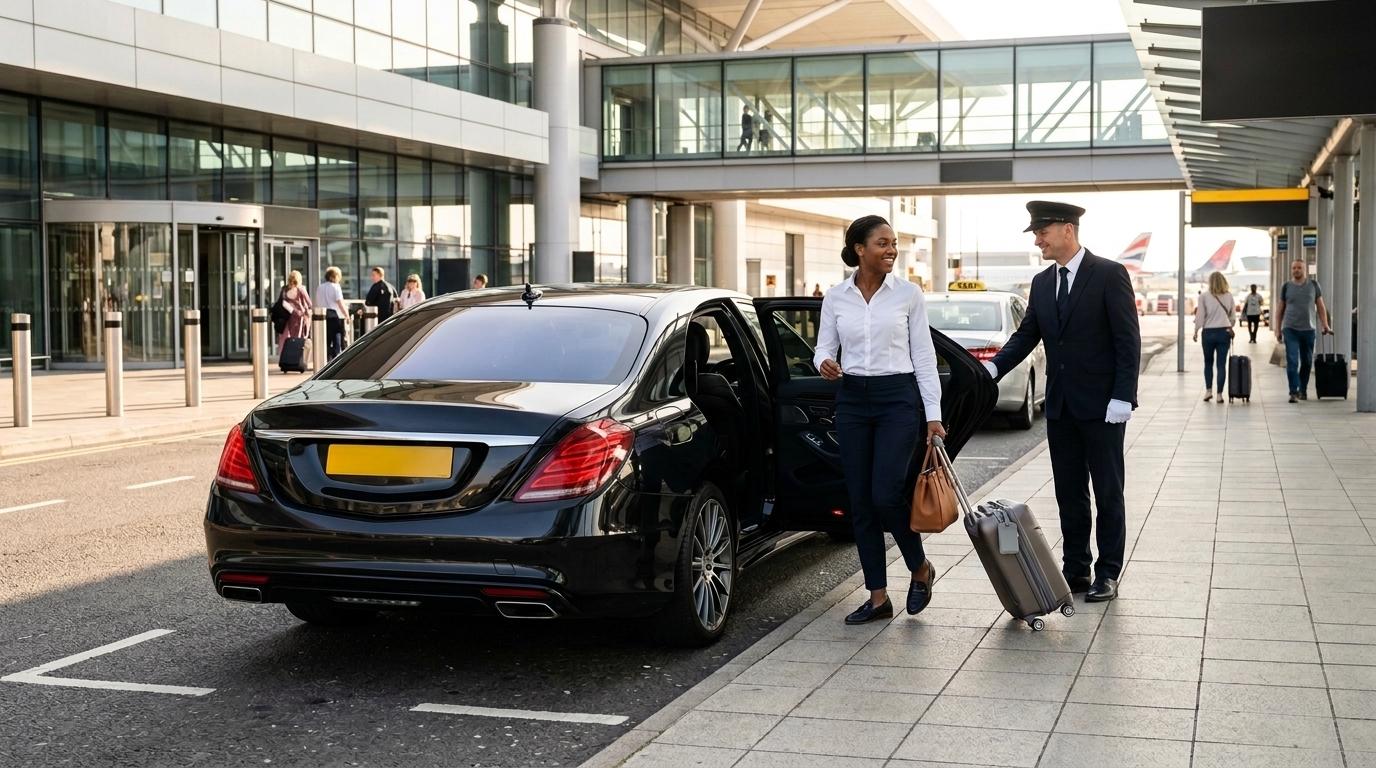
Booking a private airport transfer in advance takes that variable off the table, since a service like Transpovia gives you a fixed pickup time built around your flight rather than leaving you to flag something down or wait on a timetable. For a group, a family with bulky luggage, or a pre-dawn start when public transport hasn't begun running, that predictability is often worth more than a lower fare.
A Quick Reference
|
Your situation |
Suggested arrival before departure |
|
Domestic / short-haul, checked bag |
2 hours (2.5 at peak) |
|
Domestic / short-haul, hand luggage + online check-in |
90 minutes |
|
International / long-haul, checked bag |
3 hours (3.5 at major hubs or peak) |
|
Expedited screening, no checked bag, domestic |
75–90 minutes |
|
Any flight on a holiday or peak weekend |
Add 30 minutes to the above |
Treat these as starting points, not guarantees. Your airline sets its own check-in and bag-drop cut-offs, and those are the hard deadlines that decide whether you fly.
FAQs
How early should you arrive for a domestic flight?
Plan for about 2 hours before departure, or 2.5 hours during busy periods. If you're carrying hand luggage only, have checked in online, and use expedited screening, you can often arrive 75 to 90 minutes ahead. Always confirm your airline's check-in cut-off, since that's the real deadline.
Is 2 hours enough for an international flight?
For most international or long-haul departures, 3 hours is the standard recommendation rather than 2, because document checks and larger passenger volumes take longer. Two hours can work if you have no checked bag and have checked in online, but it leaves little margin at a busy hub. When in doubt, allow the full 3 hours.
What happens if you arrive too early?
You'll usually wait in the pre-security area until your airline's check-in desk opens, often 3 to 3.5 hours before a long-haul flight. Some busy airports now ask passengers not to arrive more than about 4 hours early, because early crowds slow the security lines for travelers flying sooner.
Does the recommended time include getting to the airport?
No. The 2- and 3-hour windows assume you're already at the terminal. Plan your trip to the airport separately, allowing for traffic, parking, or public-transport timing on top of the recommended arrival window.
Before You Go
Start from 2 hours for domestic and 3 for international, then adjust for bags, peak timing, and how well you know the airport. Confirm your airline's check-in and bag-drop cut-offs, since those are the deadlines that count. Lock in your ride to the terminal early — booking a transfer with Transpovia keeps the trip itself from eating your buffer.
"The flight you miss is almost never the one where you left too much time — it's the one where the drive ran long and the bag counter had already closed."


