
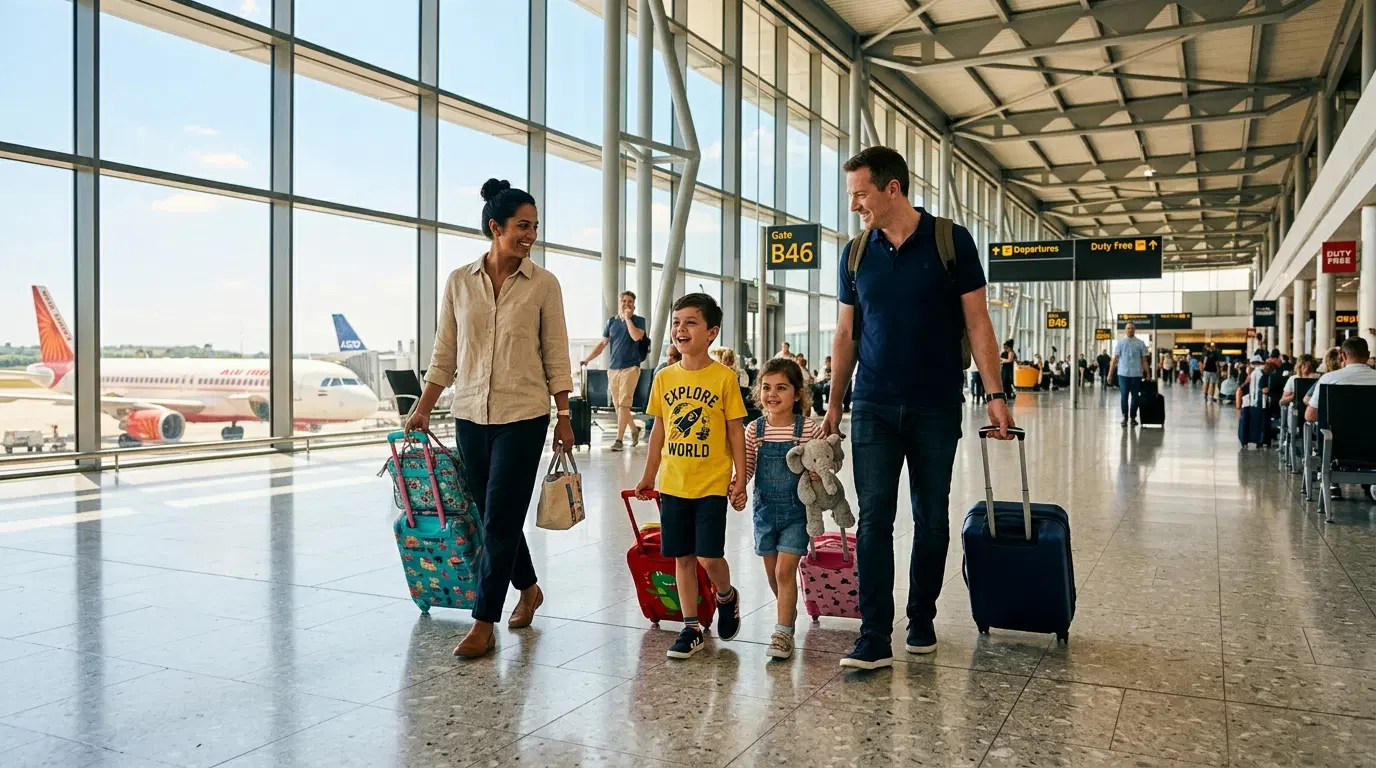
Flying with young kids rarely goes exactly to plan, but most of the hard parts are predictable — and that means you can prepare for them. The best travel tips for families flying with children come down to a few decisions you make before you leave home: which seats you book, what goes in the carry-on, how much time you leave at the airport, and how you'll get from the arrival terminal to where you're staying. Get those right, and the flight itself becomes far more manageable, even with a toddler who refuses to nap.
Book Seats Early and Learn the Family-Seating Rules
Seat choices shape everything else, so make them first. Children under 2 can fly as a lap infant on domestic U.S. flights at no charge, but the FAA strongly recommends securing every child in an approved child restraint system (CRS) in their own purchased seat. Turbulence is the most common cause of in-flight injuries to children, and arms can't hold a child during it. If budget allows, a paid seat with an FAA-approved car seat is the safest setup.
The catch with seat selection is family separation. As of early 2026, only a handful of major U.S. carriers — including Alaska, American, Frontier, and JetBlue — guarantee that a child 13 or under will sit next to an accompanying adult at no extra cost, and only when adjacent seats are open at booking. A proposed federal rule to ban family-seating fees was introduced but has not been finalized, and parts of the wider effort have stalled. The practical takeaways for flying with kids:
-
Book as early as possible, while free adjacent seats are still available.
-
Check the DOT's family-seating dashboard at flightrights.gov before choosing an airline.
-
Be cautious with Basic Economy fares, which often assign seats only at check-in and can split a family up.
-
Note that Southwest moved to assigned seating in January 2026 and retired its old open-boarding approach, so its family process now works differently than many parents remember.
If you're set on a specific airline that doesn't guarantee adjacent seats, paying to select seats is usually cheaper and less stressful than gambling on a gate-side fix.
Move Through the Airport With Less Hassle
Airports slow families down, so build in a buffer. Arriving earlier than you would flying solo gives you room for stroller folding, diaper changes, and the inevitable last-minute bathroom trip. Security is smoother than most parents expect once you know the rules. TSA uses modified screening for children 12 and under: they can keep shoes, light jackets, and headwear on, and officers work to avoid pat-downs on kids. Babies and toddlers are carried through the metal detector in your arms, while strollers, car seats, and carriers go through the X-ray belt and may need to be folded.
A few things speed the line further. Children under 18 don't need ID at the document checkpoint. Kids 12 and under can go through the TSA PreCheck lane with an enrolled parent. Some airports now have family-friendly screening lanes, though availability varies. If your child has a medical device or you expect screening to be complicated, call TSA Cares at least 72 hours ahead to arrange checkpoint help.
For families managing multiple young kids, a wheelchair user, or a grandparent traveling along, requesting airport assistance in advance can remove a lot of friction. Our guide to Airport Assistance Tips for Senior Travelers and Families covers how to arrange help through the terminal so no one gets left behind at a gate change. These family airport tips matter most during tight connections, when a long walk between gates can turn into a sprint.
Pre-boarding used to be a reliable perk, but policies now differ by airline, so confirm your carrier's current approach rather than assuming you'll get extra time on the jet bridge.
What to Do About Ear Pain and Cabin Pressure
Ear discomfort during climb and descent is one of the most common reasons kids cry on planes. The pressure change strains the small tubes that equalize the middle ear, and the fix is simple: encourage swallowing. Babies and toddlers can nurse, take a bottle, or use a pacifier during takeoff and, especially, descent. Older children can chew gum, sip water, or eat a snack.
Timing helps. Descent is usually worse than climb, so save a drink or snack for the last 30 to 40 minutes of the flight. If your child has a cold, ear infection, or recent ear surgery, the pressure can be genuinely painful — check with a pediatrician before flying, since congestion makes it harder for ears to equalize. Keep in mind that a screaming infant is often self-treating, because crying makes them swallow.
Smart Carry-On Packing: Best Travel Tips for Families Flying With Children
Pack the carry-on as if the checked bag might not arrive, because the items that keep a child calm can't wait at baggage claim. One rule saves families real trouble at security: formula, breast milk, toddler drinks, and baby or toddler food — including puree pouches — are allowed in carry-ons in quantities larger than 3.4 ounces and don't need to fit in a quart-sized bag. They count as medically necessary liquids. Ice packs, freezer packs, and gel packs to keep them cold are allowed too, and your child doesn't even need to be present for you to bring breast milk. Declare these items to the officer at the start of screening and remove them for separate testing; clear bottles move through faster than pouches.
Beyond feeding supplies, a workable carry-on for traveling with kids includes:
-
A full change of clothes per child, plus one spare shirt for the adult.
-
More snacks than you think you need, in spill-proof containers.
-
Wipes, a few diapers or pull-ups, and a compact changing mat.
-
Any regular medications, plus infant pain reliever if your pediatrician approves.
-
One comfort item — a familiar blanket or stuffed animal — packed where you can reach it fast.
For longer or international trips, packing strategy gets more involved. Our checklist on What to Pack for a Stress-Free International Trip helps you balance essentials against baggage limits so you're not hauling three overstuffed bags through customs.
Keep Kids Occupied During the Flight
Entertainment is the difference between a quiet flight and a long one. A reliable trick is to bring a small stash of new or forgotten toys and hand them out one at a time, roughly one item per hour of flight. Novelty holds attention far longer than familiar toys.
Download shows, games, and audiobooks before you leave, since in-flight Wi-Fi is inconsistent and streaming eats data. Pack kid-sized headphones so your child can hear their content without disturbing neighbors. Sticker books, reusable coloring pads, and simple card games work well for hands that need a break from screens. Go easy on sugary snacks right before a flight you're hoping a child will sleep through, and try to schedule around nap or bedtime when it fits your family's rhythm — an overtired child on a plane is harder to settle than a well-rested one.
Plan Arrival Transportation Before You Land
The trip isn't over when the plane lands. Getting a tired family from the arrival hall to a hotel is where a lot of good plans fall apart, especially in an unfamiliar city where car seat laws and taxi availability differ from home. Standard rideshares and taxis often don't provide child seats, which can leave you stuck at the curb with a toddler and no safe way to buckle up.
Arranging ground transport in advance solves this. Pre-booked airport transfers let you skip the taxi line with kids in tow, and services set up for family and group travel — including Transpovia — can often accommodate child seats when you request them at booking and confirm availability for your destination. Booking ahead also fixes the price and the pickup, so there's no negotiating with a driver while managing luggage and children after a long flight. Whether you use a private transfer, a pre-arranged shuttle, or a rental car with your own installed seat, decide before departure rather than at the terminal.
Frequently Asked Questions
Do babies need their own seat on a plane?
Not legally on domestic U.S. flights — children under 2 can travel free as a lap infant. However, the FAA strongly recommends buying a seat and using an approved child restraint system, because a lap-held child isn't protected during turbulence. Buying a seat is the only way to guarantee you can use a car seat onboard.
Can you bring formula and breast milk through airport security?
Yes. Formula, breast milk, toddler drinks, and baby or toddler food are permitted in carry-ons in amounts over 3.4 ounces and don't need to fit in a quart bag. Cooling packs are allowed too. Tell the TSA officer at the start of screening and remove the items for separate testing.
How early should you arrive at the airport with kids?
Leave more time than you would traveling alone. For domestic flights, aim to arrive at least two hours ahead, and closer to three for international departures, so security, stroller screening, and unexpected delays don't leave you rushing to the gate with children.
Will the airline seat my family together automatically?
Only some airlines guarantee it at no charge, and only when adjacent seats are available at booking. Check the DOT dashboard at flightrights.gov, book early, and be wary of Basic Economy fares that assign seats late and can separate you.
Before You Head to the Airport
Handle the decisions that are hard to fix later: lock in seats together, pack the carry-on so nothing critical rides in checked luggage, and confirm how you'll reach your accommodation after landing. Arranging airport transfers in advance, with a child seat where you need one, removes the last unpredictable step. Do those three things, and the flight becomes the easy part.


