
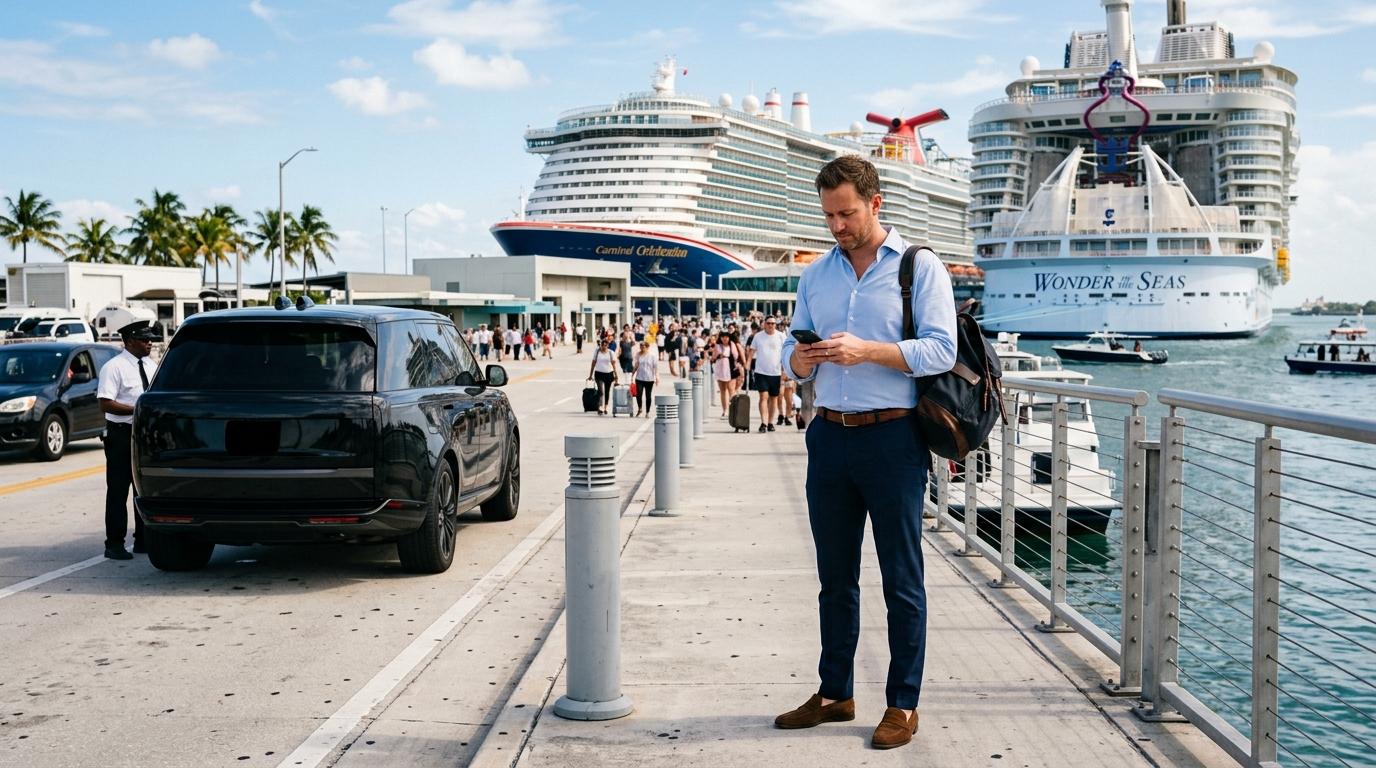
You clear customs in a new country, and the first thing you want is a working phone: maps to the taxi rank, a message to your hotel, a ride booked before the queue grows. Two options can get you online. You can buy a local SIM card once you land, or you can set up an eSIM before you leave home. The eSIM vs local SIM decision comes down to cost, convenience, and how much hassle you'll accept on arrival. Here's how the two compare so you can pick the right one.
The Short Answer
For most short trips, an eSIM is the easier choice because you install it before you fly and land already connected. A local SIM card often wins on price for longer stays or heavy data use, and it usually comes with a local phone number. The right pick depends on your trip length, your phone, and whether you need a local number.
Keep that framing in mind as you read. Neither option is "best" in the abstract — they solve slightly different problems.
What Each Option Actually Is
A local SIM card is a physical chip you buy in your destination, usually from a carrier store, an airport counter, or a convenience shop. You swap it into your phone in place of your home SIM, which means your home number goes offline unless your phone holds two SIMs at once.
An eSIM is a digital SIM already built into most recent phones. Instead of inserting a card, you download a carrier profile — often by scanning a QR code or using a provider's app — and the profile installs onto a chip that's soldered into the phone at the factory. Because the download happens over the internet, you can buy a travel eSIM and set it up at home, then arrive with data ready to go.
The travel eSIMs most tourists buy are what the industry calls roaming eSIMs: they're issued in one country and connect to local networks the way your home SIM does when it roams. That detail matters for the registration rules below.
Cost: Which One Saves You Money?
This is where a lot of the local SIM or eSIM abroad debate lands. Local SIMs often have the lowest headline data rates, especially for large allowances on longer trips. But the sticker price isn't the whole story.
Airport SIM counters are the common trap. They're convenient, but they charge a premium. Airport SIM cards can cost more than similar plans sold at official carrier stores elsewhere in the city, so comparing prices can help you find better value. So the "cheap local SIM" you grab at arrivals may cost far more than one bought in the city a day later — and more than a travel eSIM you set up before departure.
A few cost points to weigh:
-
Short trips (a few days to two weeks): A travel eSIM is usually competitive and saves you the airport markup and the errand.
-
Longer stays or heavy data use: A local SIM from an in-city store often gives you more data per dollar.
-
Multiple countries on one trip: A regional eSIM covering many countries can beat buying a new local SIM at each border.
If you're comparing an eSIM against simply leaving your home plan on, that's a different calculation — this breakdown of eSIM vs roaming is worth a read, since roaming is almost always the most expensive of the three.
Setup and Convenience
Convenience is where the eSIM pulls clearly ahead. You buy the plan online, receive a QR code or app link, install the profile over Wi-Fi at home, and switch it on when you land. Setup usually takes two to five minutes and needs no shop visit.
A local SIM means arriving first, then finding a legitimate seller, proving your identity, and swapping the card — often while jet-lagged and juggling luggage. If you land late at night, the in-city stores with the best prices may be closed, leaving only the marked-up airport counter.
There's a subtler benefit to setting up before you fly. When your data works the instant you land, you can get airport directions, open maps, and book a ride without hunting for Wi-Fi first. Sorting your airport transfer in advance with a service like Transpovia fits the same logic: the fewer decisions you have to make in the arrivals hall, the smoother your first hour.
Passport Rules and Privacy
Here's a difference many travelers don't expect. Buying a local SIM increasingly means handing over your passport. More than 150 countries now require identity registration to activate a local SIM card, with checks ranging from a passport scan to fingerprints in the strictest places. If you're heading to destinations like Thailand, India, Indonesia, or the United Arab Emirates, expect a passport check at the counter.
A travel eSIM often sidesteps that. Because a roaming eSIM is regulated in the country where it's issued rather than your destination, local registration usually doesn't apply — the same way your home SIM needs no paperwork when it roams. Many travel eSIM plans ask only for standard account and payment details.
One caution: don't assume "eSIM" always means "no ID." An eSIM sold by a local carrier on a local number is still subject to that country's registration laws. The no-paperwork advantage applies to travel and roaming eSIMs, not to local-operator eSIMs. When rules vary this much by country and provider, check the specific plan before you buy.
Coverage, Calls, and Your Home Number
Local SIMs connect directly to a home network in that country, which can mean strong coverage and, often, a local phone number for calls and texts. That local number helps if you need to receive SMS codes from local apps, banks, or ride-hailing services during a longer stay.
Travel eSIMs are frequently data-only. That's fine for most travelers, since apps like WhatsApp and iMessage handle calls and messages over data. But if you specifically need a local number with voice and SMS, confirm the plan includes it — many don't.
The biggest practical advantage of an eSIM is that you don't have to give up your home number. Most recent phones support dual SIM, so your home SIM stays in the phone for calls and texts on your usual number while the eSIM carries cheaper data. To avoid surprise charges, turn off data roaming on your home line and set the eSIM as your data source. Reliable data is what lets you check flight updates, translate signs, message family, and pull up digital tickets — and if you've booked your ground transport through Transpovia, it's how you'll confirm the pickup and track it after you land.
eSIM vs Local SIM at a Glance
|
Factor |
Travel eSIM |
Local SIM card |
|
Setup |
Online, before you fly; live on arrival |
In person, after you land |
|
Cost |
Competitive for short trips; avoids airport markup |
Often cheapest for long stays and heavy data |
|
Passport/ID |
Usually not required for roaming eSIMs |
Required in 150+ countries |
|
Home number |
Stays active alongside the eSIM (dual SIM) |
Home SIM goes offline unless dual SIM |
|
Local number |
Rare; many plans are data-only |
Usually included |
|
Best for |
Most travelers with a recent, unlocked phone |
Long stays, heavy data, or needing a local number |
FAQs
Is an eSIM cheaper than a local SIM card?
It depends on your trip. For short visits, a travel eSIM is usually competitive and saves you the airport markup local SIMs often carry. For longer stays or heavy data use, a local SIM bought at an in-city store can offer more data per dollar. Compare the actual per-gigabyte cost for your trip length rather than the headline price.
Do you need a local SIM to get a phone number abroad?
If you need a local number for calls, SMS codes, or local apps, a local SIM is usually the way to get one, since most travel eSIMs are data-only. For calls and messages over apps like WhatsApp, a data-only eSIM is enough and keeps your home number active at the same time.
Can you use an eSIM instead of buying a SIM at the airport?
Yes, and that's often the point. You install the eSIM before you fly and land already connected, which skips both the airport SIM counter and its markup. Just confirm your phone supports eSIM and is unlocked before you buy a plan.
Does your phone need to be unlocked for a local SIM or an eSIM?
For an eSIM, yes — a carrier-locked phone will reject profiles from other providers. A local physical SIM also needs an unlocked phone to work. If you're unsure, ask your home carrier to unlock the device; most do it for free once the phone is paid off.
Before You Travel
Match the option to the trip. For a short visit with a recent, unlocked phone, set up a travel eSIM at home and land ready to go. For a long stay or a local number, plan to buy an in-city SIM rather than one at the airport. Either way, arrange your airport transfer with Transpovia in advance so connectivity is the only thing you set up on arrival.
"The connection you sort out before takeoff is the one that's actually working when you step off the plane — that's the difference between finding your ride and standing there searching for signal."


