
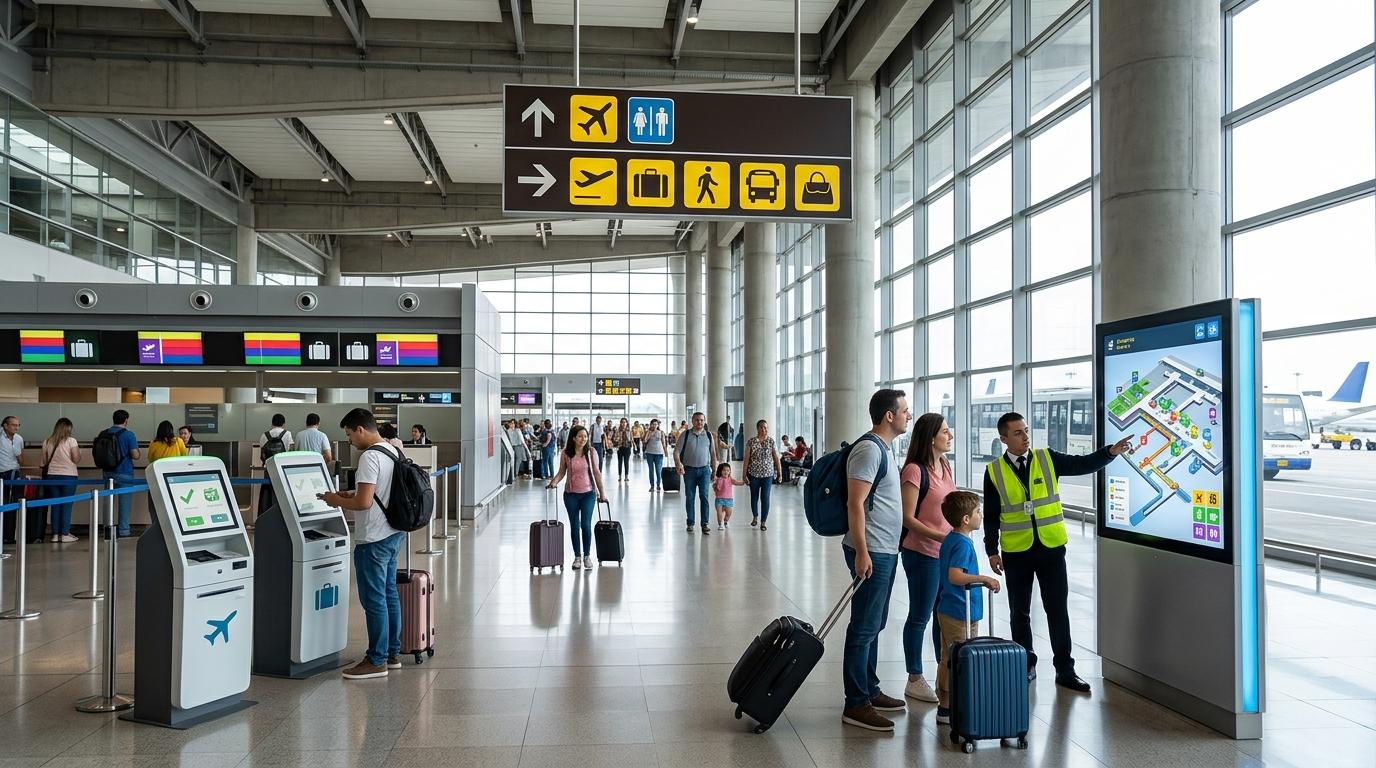
Bogotá has one main airport with two passenger buildings, and walking into the wrong one can turn a calm morning into a rushed taxi ride. The El Dorado Terminal 2 Puente Aereo is a separate building that serves a short list of domestic airlines. Terminal 1 handles every international flight and most domestic ones. If your ticket shows Clic, JetSMART Colombia or SATENA, expect Terminal 2. If it shows nearly any other airline, expect Terminal 1.
This guide explains which building is yours, what each one offers, how the free shuttle between them works and what to do after you land. It also covers the small details that trip people up, including the old name, the shuttle hours and the gap between what older articles say and what happens today.
Which Terminal Is Yours at El Dorado Airport
The answer depends on your airline, not on your destination. Avianca moved all of its domestic flights into Terminal 1 on 28 April 2018, and that change explains why a lot of older advice about the Puente Aereo is wrong. Many guides still call it the Avianca shuttle building. Today it serves other carriers and stays smaller than the main terminal.
Check Your Ticket First
Open your boarding pass, your booking email and your airline app. Some show the terminal number, and some show only the airport code BOG. If the terminal is missing, open the airport's own flight board and search with your flight number. Airlines can change buildings. A quick check the day before costs two minutes and can save an hour.
A map makes the layout easier to picture. The Bogotá El Dorado Airport map shows where each building sits in relation to the other and to the roads that lead in.
Airlines That Use Terminal 2 Today
Recent listings place Clic, JetSMART Colombia and SATENA in Terminal 2. One airport guide names only Clic and SATENA, which shows how quickly these lists age. JetSMART also appears at Terminal 1 for some flights, including a seasonal route to Santiago. A JetSMART ticket alone does not settle the question. Clic and SATENA even show up under Terminal 1 in a few listings. Use any list for a first guide and make your boarding pass the last word.
Terminal 1 covers the rest. That means Avianca, LATAM, Wingo and Copa Airlines, plus international carriers including Air France, American Airlines, Iberia, Lufthansa, United and Emirates. Every international flight uses Terminal 1.
Terminal 1 and Terminal 2 at a Glance
|
Detail |
Terminal 1 |
Terminal 2 Puente Aereo |
|
Flights |
All international and most domestic |
Domestic only, a few airlines |
|
Size |
Large main building |
Smaller and older |
|
Lounges |
All airport lounges |
None |
|
Information desk |
Second floor, between doors 5 and 6 |
First floor, next to door 2 |
|
Luggage storage |
First floor, near exit door 11 |
Opposite door 2 |
|
Taxis |
Gates 2, 3, 5 and 6 |
Arrivals gate |
The details come out of the airport's own passenger guide and travel guides that cover El Dorado. A recent renovation or a gate change may shift a row. The airport's website is the place to confirm anything that matters for your trip.
Why Terminal 2 Is Called the Puente Aereo
The name means air bridge. Avianca built the building in 1981 for its busiest domestic routes, with Bogotá to Cali and Medellín near the top of the list. For years the Puente Aereo was the airline's domestic base while the main terminal served international traffic.
That arrangement ended in April 2018. Avianca moved its domestic operation to Terminal 1, and regional carriers took over the Puente Aereo. The airport now labels it Terminal 2, although taxi drivers, locals and many signs still use the old name. Say both names when you give directions, because Terminal 2 Puente Aereo leaves no room for a mix up.
The building got a refresh in March 2024, when JetSMART began domestic flights. The airport reports more than 270 seats in the waiting areas, 27 more at a charging bar, two new retail spaces, remodeled restrooms, live flight information screens and machines that read boarding passes digitally. The flooring and the counters were redone too.
Terminal 1 at El Dorado Airport in Brief
Terminal 1 is the large main building, and most visitors use it. It handles all international flights and most domestic departures. The general information desk sits on the second floor between doors 5 and 6. The airport's passenger guide also places the Avianca, LATAM and Wingo check in counters on the second floor, with Avianca at door 8, LATAM at door 7 and Wingo at doors 1 to 4.
Every lounge at the airport sits in Terminal 1, spread across the domestic and international departure areas. Car rental counters are here too. When you read about Terminal 1 El Dorado Airport food, shops or lounges, this is the building those pages describe.
Terminal 1 also has kiosks run by Claro, Movistar and Tigo in the public area, where visitors can buy a SIM card with a data plan. The lost and found office sits on the first floor next to door 1 and, according to one airport guide, opens at 6 a.m. and closes at 10 p.m.
Luggage storage runs around the clock according to that same guide, with an office on the first floor of Terminal 1 near exit door 11. A second office sits opposite door 2 in Terminal 2.
Terminal 2 at El Dorado Airport in Brief
Anyone who searches for Bogota Airport Terminal 2 finds the same simple picture. The building is smaller, older and easier to cross. It has no lounges, and the services stay basic. After the 2024 work, the waiting areas have more seating, there are a couple of shops and screens show live departures.
One airport guide gives the building about 15,213 square meters, with a platform area of 36,870 square meters built for domestic flights. That is a fraction of the main terminal, and you notice it right away. Guides call the walk between check in and the gates short, with one main airside area beyond a single security checkpoint. The airport's accessibility guide places the Clic, JetSMART and SATENA counters on the first floor of Terminal 2, close to the arrivals hall and the shuttle curb.
The general information desk is on the first floor next to door 2, close to the luggage storage office. Terminal 2 has its own parking area right in front of the building, and the entrance lies on the right lane of Calle 26. If you plan to drive, leave extra time on the day, because road works around the airport have changed access more than once in recent years.
Terminal 2 stands apart, a short ride down the road. Sources put the gap anywhere between under half a kilometer and about one kilometer. The exact number matters less than the fact that the route crosses roads and traffic lanes, which explains why the airport runs a free shuttle.
How to Move Between Terminal 1 and Terminal 2
The free shuttle goes by the name Satélite, or the satellite bus. The airport's website says it runs daily between 5 a.m. and 11 p.m. and has a ramp for passengers with reduced mobility. Airport guides say a bus leaves about every 20 minutes. Stops sit on the first level of both buildings, and signs mark them. The route also reaches the cargo terminal, which you will not need.
A local news report says you can board at door 1 in Terminal 1 and that Terminal 2 is stop 7. Look for the signs when you arrive, because stop names and numbers can change. Recent news also reports electric buses on this route.
Some third party guides print wider hours that start at 4 a.m. and end at midnight. Trust the airport's own figures and keep a backup plan for anything outside them. For an early flight, a taxi or a ride app between the buildings costs little next to a missed departure. With bags in hand, a short taxi ride makes more sense than a walk along busy roads.
Plan the transfer on its own. You walk to the stop, you may wait up to 20 minutes, you ride, and you walk inside the other building. Missing one bus adds a full waiting cycle, and that is what breaks tight connections.
Connecting Flights and Tight Transfers
A common trip begins with an international arrival at Terminal 1 and ends with a domestic flight out of Terminal 2. That route needs more time than the map suggests.
A recent airport guide says transit passengers must enter Colombian territory for their transfer. That means immigration, baggage claim and customs come first. Then you head to the shuttle, ride to Terminal 2 and check in again with the domestic airline. Ask your airline for the current rule and for a clear answer on if your bags go through to the final stop.
Many travelers leave several hours between an international landing and a domestic departure out of the Puente Aereo. A short gap depends on luck with the immigration line and the shuttle interval. When both flights sit on one booking, the airline carries some responsibility if a delay breaks the connection. When they sit on separate bookings, that protection usually disappears, which calls for a longer buffer.
The reverse trip is easier. A domestic arrival at Terminal 2 followed by an international departure out of Terminal 1 means you ride the shuttle or take a taxi, then check in at Terminal 1 with plenty of time before an international flight.
Getting to the Right Terminal Out of the City
El Dorado sits about 15 km northwest of La Candelaria, the historic center. The trip takes between 30 and 90 minutes depending on traffic, and the business areas in the north, including Zona Rosa and Usaquén, are a little closer. Whatever the route, tell your driver the terminal and the airline before the car starts moving.
Official yellow taxis, ride apps, the TransMilenio feeder buses and the K86 bus all reach the airport. Prices and timing differ for each. The page on How to get to El Dorado Airport walks through every option and helps you pick what fits your luggage and your schedule.
Public transport works best when you travel light. The free feeder bus 16-14 connects Portal El Dorado station with the terminals, and the K86 bus stops at Terminal 1, first floor, door 2. With a stroller or several suitcases, a car is easier, and a driver who knows both names for Terminal 2 will drop you at the right curb.
After You Land and Where to Go Next
Your options at the curb depend on the building. At Terminal 1, official taxis wait at gates 2, 3, 5 and 6. At Terminal 2, you can hail a taxi at the arrivals gate. The yellow taxis answer to the city, and they use meters with set surcharges, and you can ask the driver to turn the meter on.
Ride apps work in both buildings, and meeting points can shift because of road works and police control. Share your exact terminal in the app chat, then walk to the pickup point the driver confirms.
If you prefer to settle the ride before you land, a private transfer removes the curb decisions. Transpovia lets you arrange one, and it is a ground transportation marketplace and not a tour company. You book a ride, and the driver handles the rest. Give your flight number and your terminal, and the pickup will match your arrival.
A pickup also helps after a late landing, with young children or with heavy bags. You skip the taxi line and the app guesswork, and you can head straight to a hotel in Fontibón, Chapinero or the north of the city.
Mistakes That Cost Travelers Time
Most problems start with a handful of habits. Read through them before you leave for the airport.
-
Trusting an old article. Plenty of pages still say the Puente Aereo belongs to Avianca. It does not, and it has not for years.
-
Assuming one airline means one building. JetSMART, Clic and SATENA can appear in more than one listing, which means each flight needs its own check.
-
Forgetting the shuttle hours. A first bus at 5 a.m. does not help a flight that opens check in earlier.
-
Arriving at the wrong curb. A driver who hears only the word airport may stop at Terminal 1 by default.
-
Counting on a lounge. Terminal 2 has none, which makes food and rest a job for before you go.
We nearly drove to Terminal 1 with two kids and four bags. Checking the boarding pass the night before showed our airline used Terminal 2, and the driver took us to the right curb.
Tips for Families, Business Travelers and Reduced Mobility
Families do best with a simple routine. Confirm the terminal the night before, tell the driver at pickup and arrive early. Many travelers plan to reach the airport about two hours before a domestic flight and three hours before an international one, and the smaller size of Terminal 2 can shorten the walk inside the building. Your airline's own advice comes first.
Business travelers should know that lounge access applies only at Terminal 1. A Terminal 2 departure means a quick coffee in the waiting area and no lounge session. If you land at Terminal 1 with a lounge pass for a Terminal 2 flight, use the lounge first and leave enough time to catch the shuttle afterward.
Travelers with reduced mobility can use the shuttle ramp, and the airport has an accessibility section on its website with assistance details. Contact your airline before the trip and ask for help at both ends. A Bogotá El Dorado Airport Transportation – private transfer also removes the guesswork at the curb for anyone traveling with a wheelchair, a stroller or a lot of bags.
FAQs
Is Terminal 2 the Puente Aereo?
Yes. The airport now calls the building Terminal 2, and many people still use the old name. Both refer to the separate domestic building a short ride down the road.
Which airlines use El Dorado Terminal 2?
Recent listings show Clic, JetSMART Colombia and SATENA. Some sources list fewer airlines, and a few show these airlines at Terminal 1 too. Confirm with your boarding pass or the airport's flight board.
Do international flights use Terminal 2?
No. International flights use Terminal 1. Terminal 2 handles domestic flights only.
Is there a free shuttle between the terminals?
Yes. The free Satélite bus links Terminal 1 and Terminal 2, and the airport says it runs daily between 5 a.m. and 11 p.m. It has a ramp for passengers with reduced mobility.
How often does the shuttle run?
Airport guides say about every 20 minutes. Waiting times can vary. Allow extra time and do not plan the transfer around a perfect connection.
Are there lounges in Terminal 2?
No. The airport's lounges sit in Terminal 1. Plan any lounge visit before you head to Terminal 2.
Can I get a taxi at Terminal 2?
Yes. Taxis serve the arrivals gate at Terminal 2, and official yellow taxis also wait at gates 2, 3, 5 and 6 of Terminal 1.
How early should I arrive for a Terminal 2 flight?
Many travelers aim for about two hours before a domestic departure, and some add time when they start out in Terminal 1. Check your airline's advice and add a buffer when the shuttle is part of your plan.
Pick the Right Door Before You Leave
The El Dorado Terminal 2 Puente Aereo is easy to use once you know it exists. Confirm your airline's terminal on the boarding pass, remember that Avianca left the building in 2018, and give the shuttle its own step with its own hours. Connections need the most care, and a calm buffer beats a clever plan.
When you want the ride sorted before you land, Transpovia can help you book a private airport transfer for the Bogotá route and share your terminal with the driver ahead of time. Then your only job at arrivals is to find the right door.


