
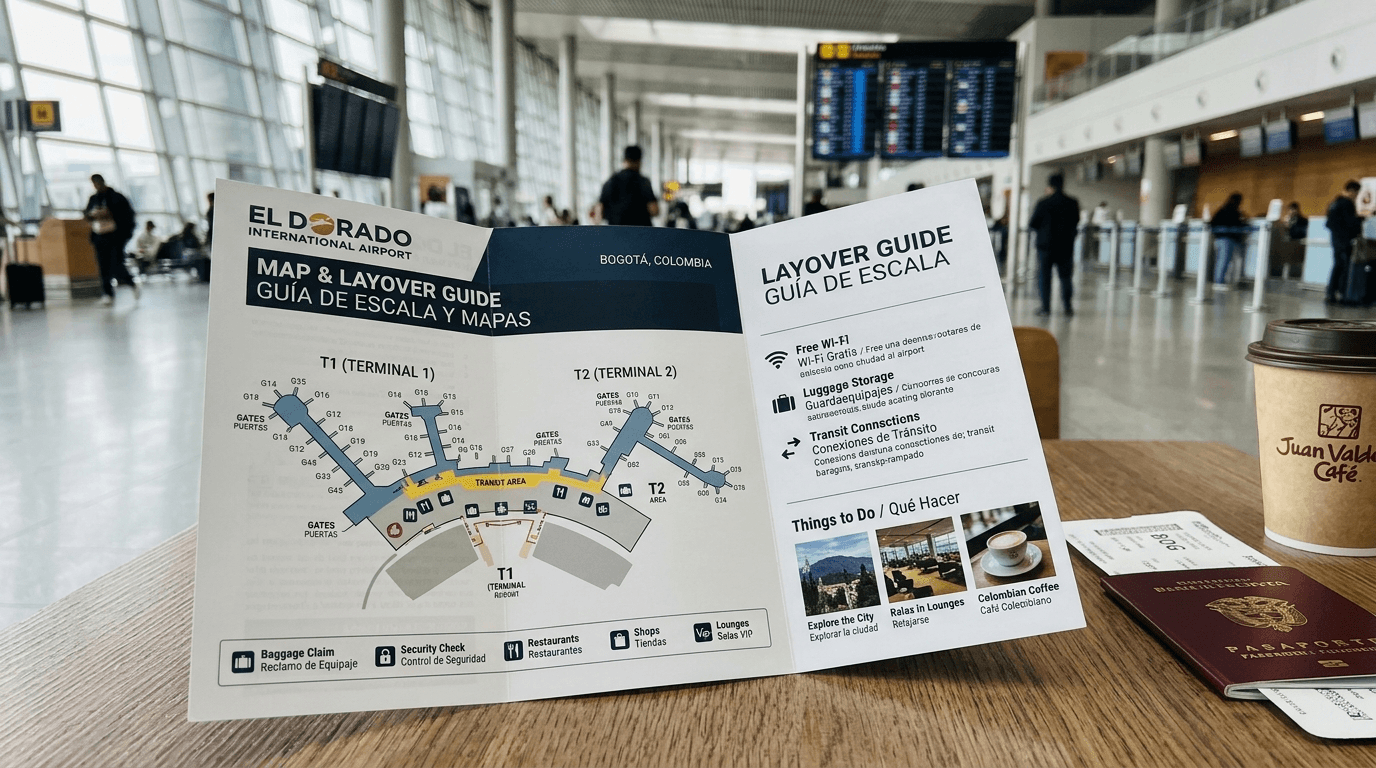
The El Dorado airport map looks simple right up to the moment you land. Two terminals sit about a kilometer apart, one building handles both international and domestic flights, and a layover means very different things depending on your ticket. This guide walks you through Bogotá's main airport piece by piece. You will see where each terminal sits, how to move between them, which lounges deserve your time and what to do when a connection leaves you a few spare hours. Gates and lounge hours change often. Confirm your own details on the boarding pass and in the airport app on the day.
How the airport is laid out
El Dorado sits in the Fontibón area of Bogotá, roughly 15 kilometers west of the city center. Avenida El Dorado, also called Calle 26, runs straight to the terminals, and every taxi and bus uses that road. The airport opened in 1959. Terminal 1 grew to about 235,000 square meters after the big expansion finished in 2017, which explains why it feels huge for a single building.
There are two terminals. Terminal 1, the main El Dorado building, handles international flights and most domestic ones. Terminal 2, known locally by the name Puente Aéreo, is a smaller separate building used by a few domestic airlines. Avianca moved its entire domestic operation into Terminal 1 in April 2018, and Satena and Clic took over Puente Aéreo.
Imagine a central hall with long piers branching off it. That is Terminal 1. Arrivals and ground transport sit on the lower level. Departures, security and emigration sit one floor up. International gates use the A and B piers, and domestic gates use the D pier. Walking between the two far ends of the terminal can take 15 to 25 minutes, and a gate that looks close on a map can still cost you a real walk.
Anyone landing at night or with a family should think about the exit before the plane touches down. Taxis, TransMilenio feeder buses and rideshare cars all compete for curb space outside. Transpovia is a ground transportation marketplace, and its Bogotá El Dorado Airport Transportation – private transfer page lets you arrange a ride before you fly. You walk out of the arrivals hall with a plan in your pocket.
Terminal 1 in detail
Terminal 1 is where most travelers spend their time, and it helps to know the logic of the building before you start walking. You enter at the arrivals level, follow signs upstairs for check in, and pass security before reaching your pier. Domestic and international passengers use separate zones once past security, and those zones do not connect freely.
The international side
International departures run along the A and B piers. Gate A1 sits near the renovated LATAM lounge, gate A6 near the Copa Club and gate A8 opposite the El Dorado Lounge. The Avianca international lounge sits near gate 32 on the upper floor, right after the duty free shops and passport control.
If you land on an international flight and keep going abroad, the path depends on your airline and ticket. Travelers with one ticket and bags checked through to the final city report a short connection line and a fresh security scan before the departure area. Travelers with separate tickets must collect bags, clear immigration and check in again. If you plan to leave the airport, ask your airline at the first check in desk what happens to your suitcase.
The domestic side
Domestic departures use the D pier in the south part of the terminal. The Avianca domestic lounge sits near gate 71, and The Lounge Bogotá serves the same pier. There is a central food court before security and a good choice of cafes after it. Passengers who arrive on an international flight and continue inside Colombia must clear immigration and customs in Bogotá first. After that, you leave the transit zone, take the escalator up, and pass security again to reach the domestic zone.
Leave extra time for this route. Even on a good day, collecting bags and clearing two checkpoints takes longer than most people expect.
Terminal 2 and the free shuttle
Puente Aéreo is a compact building with its own check in hall, one central security checkpoint and a single short airside pier. Check in and bag drop are on the second floor. The terminal is quick to cross, usually one to three minutes between security and the gates, and that speed is its main appeal. Overnight, the public hall stays open while the airside area closes before dawn.
Terminal 2 has no airside link to Terminal 1. You cannot walk between the two through the airport. A free shuttle bus connects them every day, running between 4 a.m. and midnight according to the airport's own information. At Terminal 1 the stop is on the lower level near Door 2. Ask the driver or a staff member if the stop has moved, because door numbers were reshuffled in recent years and many travelers still head for the wrong one.
Getting this part wrong is the most common mistake on a connection. If your boarding pass shows Terminal 2, do not wait airside in Terminal 1. Read El Dorado Terminal 1 vs Terminal 2 (Puente Aéreo) before you travel, then keep at least three hours between any two flights that use different buildings.
Puente Aéreo has one small lounge on the domestic side, the Harmony Lounge Bogotá, which Priority Pass and Mastercard members can use. It opens in the early morning and closes in the evening, and it serves domestic flights only. Every other lounge in the airport sits in Terminal 1.
El Dorado airport lounges
People who search for El Dorado airport lounges usually want three answers. Where are they, who can enter and what do they cost? The answers are easier than they look, because nearly every lounge sits in Terminal 1 and most accept a paid walk in pass.
International lounges
The El Dorado Lounge is the biggest name here. It sits airside opposite gate A8, opens 24 hours a day and covers about 1,700 square meters. Showers are listed, subject to availability. Priority Pass and Mastercard programs recognize it, and the lounge also sells day passes.
The Copa Club sits near gate A6 and serves international departures. The LATAM lounge faces gate A1, runs around the clock and was fully renovated. Avianca runs its international lounge near gate 32. An American Express lounge also operates on the international side, with access tied to certain card tiers.
Wait N' Rest, near gates A12 and A13, is a rest room facility rather than a classic lounge. Priority Pass cardholders can use it for up to two hours on one visit.
Domestic lounges and Terminal 2
On the domestic side, you will find the Avianca lounge near gate 71 and The Lounge Bogotá on the D pier. Terminal 2 has the Harmony Lounge, covered above.
Passes and prices
Many premium credit cards include lounge visits. Check yours before you pay. In autumn 2026 listings, walk in passes for the main lounges sold for roughly 32 to 37 US dollars for three hours, and a six hour pass at the El Dorado Lounge sold for about 59 dollars. Treat these numbers loosely, because prices and conditions change. Before you pay, check three things. Does your airline or card already include access, does the lounge accept guests and does your gate sit close enough to make the visit worthwhile?
Services you will actually use
Free wifi runs across the terminals under the network name Airport_El_Dorado, and you can reconnect whenever you need. The airport app shows flight status, security wait times, restaurants, lounges and ground transport, and it works in English and Spanish.
Food options include a food court before security and airside cafes in both terminals. Terminal 1 also has shopping facilities and two capsule-style hotels offering short rest periods. Wait N' Rest is one of them, and Sleep Oasis is the other.
Car rental desks sit in the main public hall of Terminal 1, and several international and local brands operate there. Parking is available at both terminals. The airport website also lists a tour partner at the public hall on level 2, near Door 2, for travelers with a long layover.
One more option sits outside the terminal. A shopping mall close to the airport opened a small lounge zone of about 67 square meters for arriving, departing and connecting passengers, and a free circular route links it to El Dorado. Travelers only need to show a flight ticket. It does not replace an airport lounge, though it can help when you want a break outside the security zone.
We had five hours between flights, and finding Door 2 for the shuttle took us ten minutes of wandering. Now we know where to stand.
A layover plan by number of hours
Bogotá sits about 2,550 meters above sea level, which means the first walk through the terminal can leave you a little short of breath. Move slowly and drink water.
Under four hours
Stay inside the airport. Clear security early, find a seat close to your gate and use the time for a meal or a lounge visit. If your ticket changes terminals, count on a shorter layover than it looks, because the shuttle ride and the second security check eat into it.
Four to six hours
This is a gray zone. Immigration alone can take 30 to 90 minutes in busy periods, and the return trip needs another buffer for security. For most travelers, the better choice is a long meal, a lounge or a rest block at Wait N' Rest. Leaving makes sense only when your bags are checked through, your documents let you enter Colombia and traffic looks light.
Six to ten hours
Now a city trip becomes realistic. La Candelaria, the old center, sits about 15 kilometers away, and a taxi or private car can reach it in 30 to 90 minutes depending on traffic. Count the full round trip before you commit, then add two hours for the return security. A morning arrival gives you the best chance, because museums and cafes are open.
Overnight or longer
A hotel is usually smarter than sleeping in a chair. Terminal 1 stays open all night, though there are no free rest zones. Several hotels sit close to the terminals, and Hotels near Bogotá El Dorado Airport is a handy place to compare options and plan the ride to the front door. If you stay in the north of the city, in Zona Rosa or Usaquén for example, remember that the airport sits a bit closer to those districts than to the center.
Getting between the airport and the city
TransMilenio is the cheapest way into Bogotá. The usual route reaches the Portal El Dorado station through a feeder bus that leaves the terminals, and you need a Tullave card to pay. Buses fill up quickly, which means they work best when you travel light.
Official yellow taxis are regulated and use a meter, with a surcharge for airport trips. Rideshare apps work too, though pickup points vary and drivers sometimes wait at a different curb. Traffic on Avenida El Dorado can turn a 20 minute drive into a much longer one, especially at rush hour.
On a first visit, a pre booked driver removes the guesswork about curbs, doors and traffic. You share your flight number, you meet the driver at arrivals and you leave. That setup works well for late flights, families and anyone who does not speak much Spanish.
FAQs
Does El Dorado airport have one terminal or two?
Two. Terminal 1 handles international flights and most domestic ones. Terminal 2, called Puente Aéreo, serves a smaller group of domestic airlines in a separate building.
How do I get between Terminal 1 and Terminal 2?
Use the free shuttle bus. It runs every day between early morning and midnight, and the Terminal 1 stop is near Door 2 on the lower level. The two terminals do not connect airside. You will pass through security again.
Which lounges are open 24 hours at El Dorado?
The El Dorado Lounge near gate A8 and the LATAM lounge facing gate A1 are listed with round the clock hours. Other lounges close in the evening. Check their hours before planning a late visit.
Can I leave the airport during a layover?
Yes, when you have enough time and your documents allow entry to Colombia. A layover of six hours or more gives you room for a short city visit. Confirm with your airline what happens to your checked bags before you leave.
Is there free wifi at El Dorado?
Yes. Connect to Airport_El_Dorado and reconnect if the signal drops. The service is free.
Can I use a lounge without a membership?
Often yes. Several lounges sell walk in passes, and prices in late 2026 listings ranged around 32 to 37 dollars for three hours. Access rules change. Confirm at the door.
Know your route before you land
The best way to use the El Dorado airport map is to read it twice. First, find your terminal. Then find your pier, your lounge and your exit. Most problems at this airport come when travelers mix up the two terminals or underestimate how long the walk and security take. Once you know those two things, the rest is easy. If you want one less thing to plan, book your airport ride in advance with Transpovia and step into the arrivals hall knowing exactly where you are going.


