
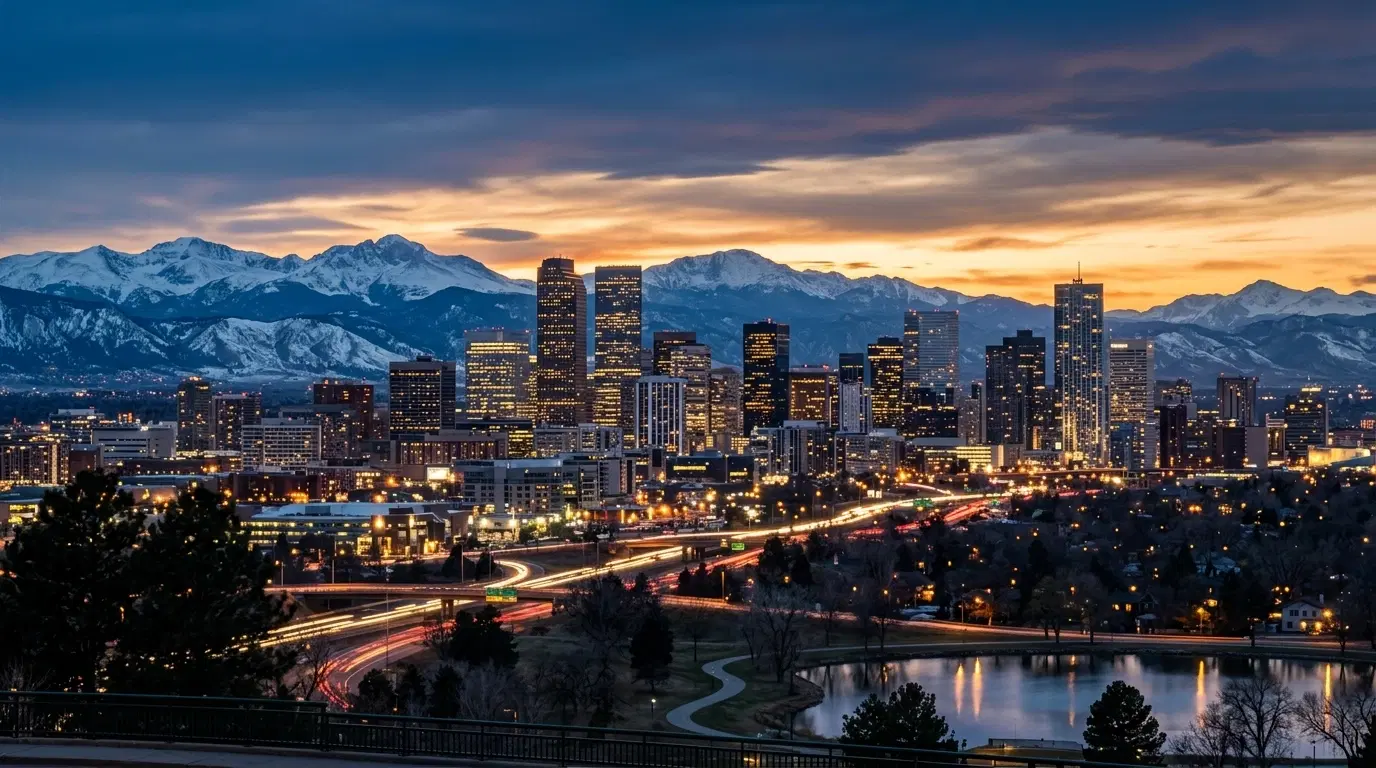
Denver rewards travelers who plan around three things: altitude, distance, and season. The city sits exactly a mile above sea level, so your first day should be gentler than you expect. Downtown is walkable and easy to reach without a car, yet the sights worth your time stretch from museum districts to mountain foothills. These Denver travel tips focus on the practical decisions—when to come, how to get around, and how to pace a first visit—so you spend less time guessing and more of it enjoying the Mile High City.
Denver Travel Tips for Getting Around
Most first-time visitors do not need a rental car in Denver. The A Line commuter train connects Denver International Airport to downtown Union Station for $10 each way, running roughly every 15 minutes at peak times and taking about 37 minutes. Once you reach Union Station, the free 16th Street FreeRide shuttle covers the core of downtown.
That airport train is the single biggest money-saver for solo travelers and couples staying near the center. A rideshare from the airport can cost several times more during busy periods, and downtown parking adds up fast. Families with young children or lots of luggage often prefer a door-to-door airport transfer instead, which is where a service like Transpovia can smooth the arrival before you settle into the RTD network for the rest of the trip.
Around town, RTD light rail and buses use a simple fare structure: $2.75 for a three-hour pass and $5.50 for a day pass, with riders 19 and under traveling free. The 16th Street corridor reopened fully in late 2025 after a long reconstruction, and its FreeRide shuttle now runs the length of the street between Union Station and Civic Center, stopping at every block. Keep a rental car in mind only if you plan to reach the mountains, where transit thins out.
Adjusting to the Mile-High Altitude
Denver sits at 5,280 feet, and the thinner, drier air affects newcomers before anything else does. Only about 8 to 10 percent of visitors feel altitude sickness in the city itself, but the risk climbs to 25 to 30 percent once you head into the Rockies, according to VISIT DENVER, the city's official tourism office.
The fixes are easy and worth taking seriously. Drink close to twice the water you would at sea level, since dehydration is a leading trigger. The high-altitude sun is also stronger than the temperature suggests, so pack sunscreen and layers even in summer, because evenings turn chilly quickly in spring and fall.
The practical takeaway shapes your whole itinerary: save the mountains for the back half of your trip. Spending your first day at street level lets your body settle before you gain another few thousand feet.
Top Attractions Worth Your Time
Denver's best-known sights cluster in and around downtown, which keeps a car-free trip realistic. Start with the classics, then decide how much time each one deserves based on your interests.
-
Denver Art Museum suits travelers who want a half day indoors, with a strong Indigenous arts collection and bold architecture. Hours and special-exhibit tickets change, so confirm before you go.
-
Denver Museum of Nature & Science, on the edge of City Park, works well for families and pairs with mountain views from the building's east side.
-
Denver Botanic Gardens rewards a slower morning and is especially good in late spring and summer.
-
Colorado State Capitol offers a free visit and the famous step marking exactly one mile high; the dome and rotunda are open on weekdays, though access can vary.
-
Union Station is worth walking through even if you are not catching a train, thanks to its restored Great Hall and cafes.
A common mistake is trying to pack all of these into a single day. Two or three, spaced with meals and downtime, make for a far better Denver itinerary than a rushed checklist.
Neighborhoods That Reward a Slow Afternoon
Some of the best things to do in Denver happen outside the ticketed attractions. The River North Art District, known locally as RiNo, is the city's mural-covered creative pocket, coffee roasters, and street art that changes often. It suits travelers who would rather wander than line up.
LoDo, short for Lower Downtown, holds Denver's oldest brick buildings and the liveliest evening scene near Union Station and Coors Field. Cherry Creek, a short ride south, leans upscale, with shopping and quieter cafes that appeal to travelers who want calm over crowds.
For a genuine local tip, visit RiNo on a weekday afternoon rather than a weekend night. You will see the murals in better light, get into restaurants without a wait, and catch the neighborhood at its most relaxed. Travelers comparing big-city districts often notice the same pattern in the Best Things Travelers Should Know Before Visiting Chicago, where timing your neighborhood visits matters as much as choosing them.
Easy Day Trips Into the Mountains
Denver's location is its biggest draw, and a few standout day trips sit within an hour's drive. Red Rocks Park and Amphitheatre, about 15 miles west near Morrison, is free to visit during the day. Golden, home to a historic main street and mountain trailheads, makes a relaxed half-day.
Rocky Mountain National Park is the marquee trip, roughly 90 minutes away. During peak season it uses a timed-entry reservation system, and slots can sell out well in advance, so check the National Park Service site and book early. Going without a reservation on a summer weekend is one of the more common tourist mistakes.
If you rented a car only for the mountains, plan these drives for later in your trip when your body has adjusted to the elevation. Weather shifts fast at altitude, so carry water, layers, and sun protection even on short outings.
Best Time to Visit Denver
June through August brings warm, dry weather and the widest choice of events, but also the highest hotel rates and biggest crowds. September is the quiet favorite: mild days, thinner crowds, and golden aspens in the nearby mountains. Winter drops city hotel prices sharply and puts you close to world-class skiing, a strong option for budget-minded travelers who do not mind the cold.
Your ideal window depends on priorities. Outdoor-focused visitors do best from late spring through early fall. Deal-seekers should look at winter weekdays, when downtown rooms often cost far less. With around 300 days of sunshine a year, most seasons deliver clear skies; the bigger variable is temperature and price, not rain.
Frequently Asked Questions
How many days do you need in Denver?
Three days suits most first-time visitors. That gives you one day downtown, one for neighborhoods and museums, and one for a mountain day trip such as Red Rocks or Rocky Mountain National Park, with altitude in mind for pacing.
Is Denver a walkable city?
Downtown Denver is very walkable, and the free 16th Street FreeRide shuttle plus RTD light rail cover most visitor areas. You only really need a car for reaching the mountains or spread-out suburbs.
Do you need a car in Denver?
Not for a downtown-focused trip. The A Line train handles the airport, and transit covers the core. Rent a car only for day trips into the foothills or national parks, ideally later in your stay.
What should I pack for Denver's altitude?
Bring a refillable water bottle, high-SPF sunscreen, sunglasses, lip balm, and layers. The air is dry and the sun is strong, and temperatures swing widely between afternoon and evening, especially in spring and fall.
Before You Go
Book any timed mountain-park entries early, keep your first day light while you adjust to the altitude, and lean on the A Line and free downtown shuttle to skip parking headaches. For airport arrivals with family or heavy bags, arranging a transfer through Transpovia ahead of time saves stress before the RTD network takes over the rest of your visit.
"We landed, took the train straight to Union Station, and never touched a car until our drive to the mountains on the last day. Slowing down that first afternoon was the best decision we made." — a couple who spent a long weekend in Denver


