
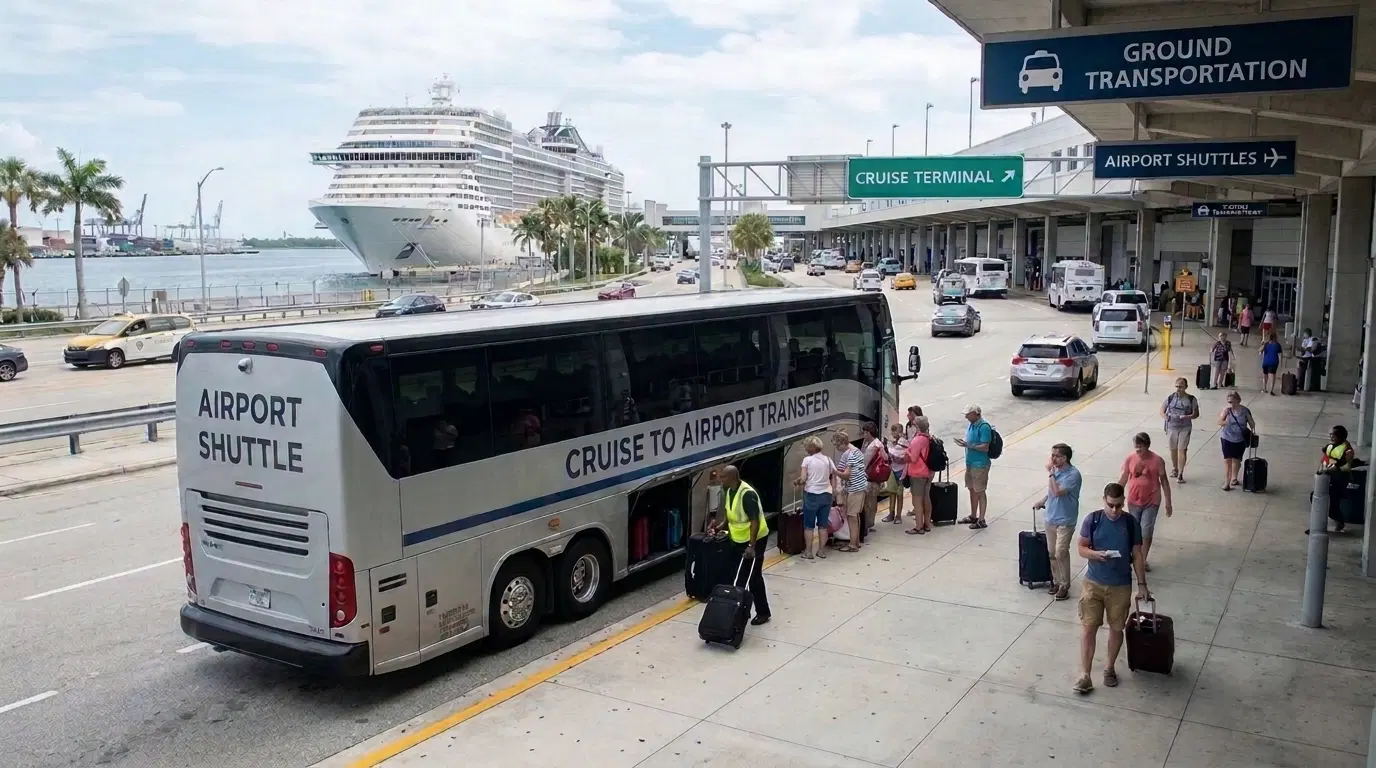
Your ship won't wait for a delayed flight, a stalled shuttle, or a long taxi line. That one fact shapes every decision about cruise airport transportation. On the first day, you have to reach the terminal before check-in closes. On the last day, you have to get from the gangway to the airport in time to clear security. Neither depends only on how far the airport is from the port. Each depends on how well your ride fits around times you don't control.
This guide covers how to plan both trips. It explains which times to build around, how much buffer each leg needs, how the main transfer options compare, and when booking a private car is worth it.
Start With the Times You Can't Change
Every cruise schedule has a few fixed points. Plan your transportation backward from those.
Embarkation Day
Your cruise documents list a check-in window and a final boarding cutoff. The cutoff usually falls an hour or more before the ship sails, and some lines set it earlier. If you arrive after it, you may not be allowed to board, even if the ship is still at the pier.
Many lines also assign arrival appointments to spread out the crowds. If yours does, treat that slot as your real deadline. Arriving early at a busy terminal often just means waiting outside it.
Disembarkation Day
The time your itinerary says the cruise "ends" is when the ship docks. It is not when you walk off. On most ships, guests start leaving around 7:00 or 8:00 a.m., and most are off by 9:00 or 10:00 a.m. Your exit time depends on your luggage tag group, how quickly customs and immigration move, and whether you carry your own bags off.
Guests who carry all their luggage themselves are usually allowed off first. If you have an early flight, that's often your best option. You can also tell Guest Services your flight time so they can assign you a suitable disembarkation group.
Flying In the Day Before vs. Flying In the Same Day
Flying in the same day you sail is possible, but it leaves no room for error. One canceled flight, a missed connection, or a slow baggage claim can cost you the cruise. If you do fly in that morning, choose a flight that lands at least five to six hours before departure. That covers baggage claim, the drive, terminal lines, and the check-in cutoff.
Arriving the day before turns embarkation morning into a short, relaxed ride. It also changes your transportation plan. You'll need two transfers instead of one: airport to hotel the first evening, then hotel to port the next morning. Pre-booked airport transfers help with the first leg. Your driver tracks your flight, so a late arrival doesn't leave you searching for a ride at 11 p.m. in an unfamiliar city.
Know How Far Your Airport Is From the Port
Distance between airport and pier varies widely across major US cruise ports. That difference affects both your flight choice and your transfer choice. The drive times below are rough figures for light-to-moderate traffic. Weekday rush hours, weather, and construction can make them much longer.
|
Cruise Port |
Common Airport(s) |
Typical Drive Time |
|
Port Everglades (Fort Lauderdale) |
FLL |
About 10–15 minutes |
|
PortMiami |
MIA, FLL |
20–30 min from MIA; 40+ min from FLL |
|
Port Canaveral |
MCO (Orlando) |
About 45–60 minutes |
|
Port of Galveston |
HOU, IAH (Houston) |
About 1 hour from HOU; 1.5 hours or more from IAH |
|
Seattle (Pier 91 / Pier 66) |
SEA |
About 30–40 minutes |
|
Manhattan Cruise Terminal |
LGA, JFK, EWR |
30 minutes to over an hour, depending on airport and traffic |
Two ports in the same region can need very different plans. A Fort Lauderdale cruiser can manage a midday flight with little stress. A Galveston cruiser flying out of IAH should allow for a long drive and possible Houston traffic.
Comparing Your Cruise Transportation Options
Most travelers choose from five ways to get between the airport and the ship. Each fits a different kind of traveler.
Cruise line transfers. Most cruise lines sell motorcoach transfers between the airport and the terminal. They're simple to add to a booking, and the line knows when you're coming. The downsides are a per-person price that adds up for families, waits while the bus fills, and a fixed schedule that doesn't adjust if your flight is very early or late.
Shared cruise port shuttle. Third-party shuttles usually cost less per seat. They also make multiple stops at hotels or terminals, and the departure time depends on other passengers.
Taxis and rideshares. These work well for short trips with light luggage, and they're easy at ports close to the airport. They're less predictable at peak times, when many ships unload at once and the pickup area gets crowded. Large groups may also need two cars, and a standard sedan may not fit a week's worth of luggage.
Rental car. This only makes sense if you're staying in the area before or after the cruise. Parking near the port, returning the car on disembarkation morning, and getting from the rental lot back to the airport add steps to an already busy day.
Private transfer service. A pre-booked private car or van picks up only your group, at your time, and drives directly to your destination. You know the vehicle size and price before you travel. For many cruisers, this is the most reliable fit for a schedule built around strict deadlines.
Why a Private Transfer Works Well With a Cruise Schedule
On a cruise trip, the main risk is missing a deadline, not paying a few dollars more. A private cruise transfer service reduces the risk in several ways.
It follows your flight, not a bus schedule. If your plane lands 40 minutes late, the driver adjusts. A shared shuttle may already have left, and you'd wait for the next one.
It leaves when you're ready. On disembarkation morning, you can schedule the pickup for your expected exit time. You won't wait for a coach to fill with passengers from other ships or later tag groups.
It handles luggage properly. Cruise travelers usually carry more than a weekend bag: formal wear, snorkel gear, and souvenirs on the way home. Booking an SUV or van in advance means everything fits in one vehicle, so your group doesn't split into two rideshares.
It costs the same for a group. A private vehicle is priced per vehicle, not per person. For a family of four or a few couples traveling together, that can compare well with buying several cruise line transfer tickets.
It can make extra stops. Need to pick up a relative at a hotel, or stop for groceries before a post-cruise night nearby? A private driver can plan around it. A scheduled shuttle can't.
Transpovia is built for this kind of trip. You can browse cruise port transportation for major terminals, pick a vehicle that fits your group and bags, and lock in pickup details before you leave home.
Two Sample Timelines
These sample schedules show how the pieces fit together. Adjust the times for your own port, ship, and airport.
Embarkation Day (Day-Before Arrival)
You land at Orlando the evening before a Port Canaveral sailing, and a pre-booked driver takes you to a hotel near the port. The next morning, your boarding appointment is 11:30 a.m. A private pickup at 11:00 a.m. gets you to the terminal with time to spare and no hotel shuttle line to wait in.
Disembarkation Day (Same-Day Flight Home)
Your ship docks at Port Everglades at 6:00 a.m. You carry your own bags and plan to walk off around 8:00 a.m. Your driver meets you at the terminal pickup zone at 8:30 a.m., and you reach FLL by about 9:00 a.m. With an hour or two of check-in and security time, a flight after 11:00 a.m. is realistic. Add more time if you're flying internationally or leaving from a port farther from its airport.
A general rule for US ports: book return flights after 11:00 a.m. or noon, and later if you need to clear international departure procedures or have a long drive to the airport.
Tips for Booking an Airport to Cruise Port Transfer
Book the return leg when you book the first one. Disembarkation mornings are among the busiest times at any port, and vehicles can sell out on heavy sailing days.
Give the right details. Share your flight number, ship name, terminal number if you have it, and the number of bags. Large ports such as PortMiami and Port Canaveral have several terminals, and arriving at the wrong one wastes time.
Size the vehicle for luggage, not just passengers. Four adults with checked bags often need an SUV or minivan, not a sedan.
Check where pickup happens at the terminal. Many ports have separate zones for buses, taxis, and pre-arranged cars. Knowing yours ahead of time saves a confusing walk with heavy bags.
Plan extra time at international ports. Overseas, the airport may be far from the city, and passport control adds time on both ends. A pre-booked driver who meets you at arrivals saves you from finding local transport after a long flight.
Frequently Asked Questions
How early should I arrive at the cruise port before departure?
Arrive at your assigned boarding time, or early in the check-in window if your line doesn't assign one. The main deadline is the final check-in cutoff, which is usually an hour or more before sailing. Your boarding documents list the exact time for your ship.
Is a private transfer cheaper than the cruise line's shuttle?
It depends on group size. Cruise line transfers are usually priced per person, while a private car is priced per vehicle. Solo travelers often pay less for a shared shuttle. Families and groups of three or more often find a private transfer competitive, and it adds direct, on-schedule service.
What time should I book my flight home after a cruise?
At most US ports, flights after 11:00 a.m. are generally workable, and noon or later gives more breathing room. Allow more time if your port is far from the airport, if you're flying internationally, or if you won't be carrying your own luggage off the ship.
Conclusion
Good cruise airport transportation starts with the times you can't control: the check-in cutoff before you sail and the disembarkation window when you return. Once you know those, you can choose flights and transfers that fit them with enough buffer.
For most travelers, that means flying in the day before, choosing a return flight later in the morning, and booking rides that adjust to your schedule. A private transfer gives you that flexibility on both ends, so the trip to and from the ship stays as relaxed as the cruise.
"Our flight landed almost an hour late, and the driver was still waiting with a sign at baggage claim. On the way home, we walked off the ship, got in the car, and were at the airport before most people from our deck had found a cab." — A couple returning from a Caribbean cruise out of Fort Lauderdale


