
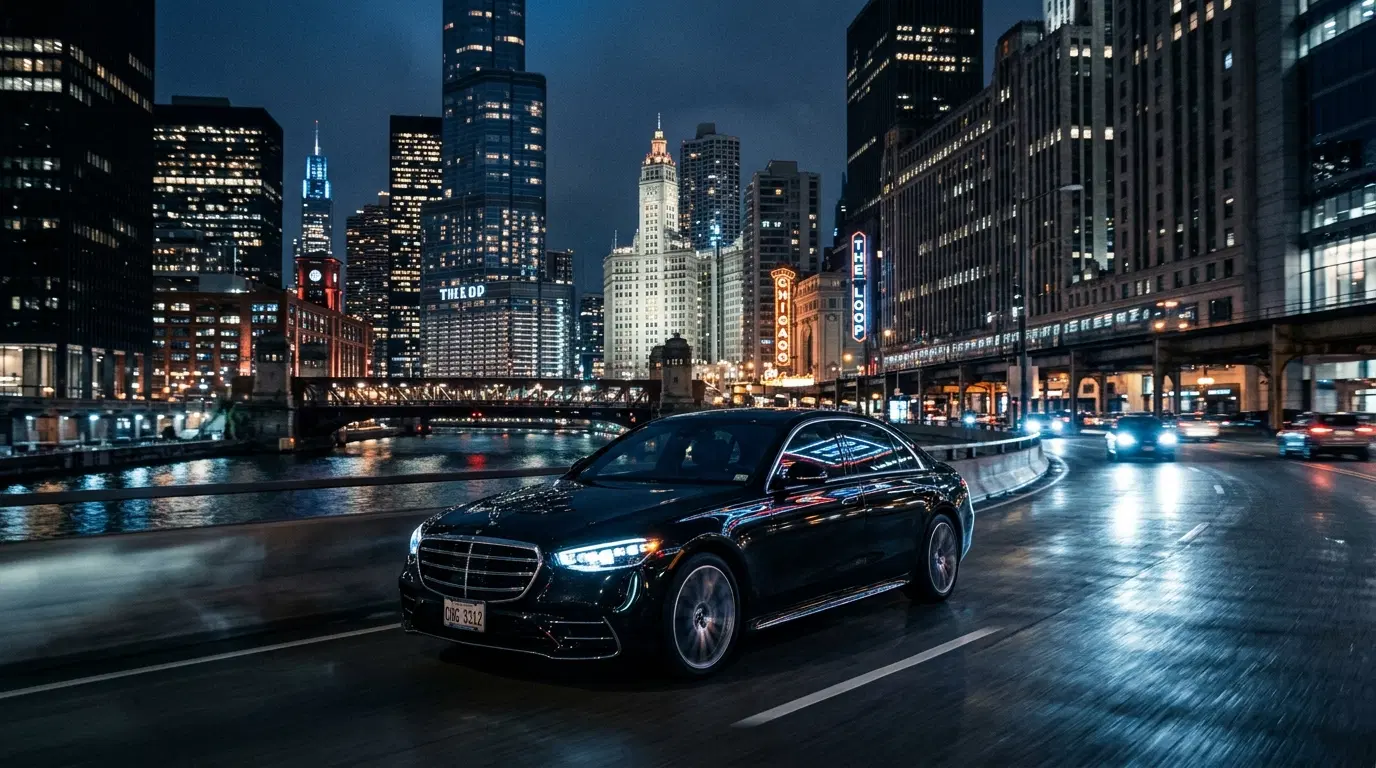
Chicago is one of the few large American cities where you can base yourself downtown, skip the rental car, and still reach almost everything worth seeing. The decisions that matter here are different: which architecture tour to book, how to handle the airport fare, when to visit a city with four extreme seasons, and which famous attractions are worth the ticket price. These Chicago travel tips cover the choices that shape your days, including a few costly assumptions that catch nearly every first-time visitor.
Book the Architecture Cruise First — and Check Which Dock
A river architecture cruise is the single best first activity in Chicago, and it's the one thing worth booking before you arrive. Ninety minutes on the water explains the skyline you'll spend the rest of the trip walking through. It runs roughly late March through November, weather permitting.
The detail that trips people up: several companies run "architecture cruises" from different docks, and quality varies. The Chicago Architecture Center's cruise uses trained volunteer docents; cheaper operators often use general entertainment guides. Departure points are scattered — some leave from the Michigan Avenue bridge area, others from the Riverwalk or Navy Pier — and arriving at the wrong dock is a common and expensive mistake, since most tickets are non-refundable and non-transferable.
Practical points worth knowing:
-
Arrive 30 minutes before departure, not five
-
Bring a layer — it runs several degrees cooler on the water than on the street, even in July
-
Book at least a week ahead for summer weekends
-
Cruises usually depart rain or shine
If the boats aren't running or the budget's tight, the free alternative is the Chicago Cultural Center on Michigan Avenue — open to everyone at no charge, with the Tiffany dome upstairs. Confirm current schedules through the Chicago Architecture Center.
Getting Around Chicago on the 'L'
The CTA runs eight color-coded train lines and a dense bus network, and for most visitors it beats driving and rideshares outright. Fares rose in February 2026 for the first time since 2018: a train ride is now $2.75 and a bus ride $2.50 using a Ventra card, with transfers priced low within two hours.
The airport detail that costs people money: boarding the Blue Line at O'Hare carries a $5 surcharge when you pay with transit value or a single-ride ticket. A one-day pass costs $6 and doesn't carry the surcharge — so for one extra dollar, you get your airport ride plus 24 hours of unlimited travel. Pass prices moved in 2026 as well, with the seven-day pass at $25 and the three-day pass discontinued entirely.
Chicago doesn't automatically cap your daily spending the way some systems do, so unlike the tap-and-forget approach that works in these New York Travel Tips, you need to decide up front whether a pass or pay-per-ride suits your trip. Roughly three rides a day makes a pass worthwhile.
Two more things to plan around. The Blue Line to O'Hare runs 24 hours a day and takes about 45 minutes from the Loop; the Orange Line to Midway does not run overnight. And the CTA has been working through a serious budget shortfall, with service adjustments discussed for late 2026 — check live times in the Ventra app or at transitchicago.com rather than trusting a fixed timetable.
The train works well for most arrivals. It works less well at midnight in February, with luggage, or with young children — O'Hare sits about 17 miles from downtown, and booking a transfer with a service like Transpovia removes the transfers and the platform wait at the end of a long flight.
Best Time to Visit Chicago
Late May through June and September through mid-October give you the best balance of weather, crowds, and price. Highs sit in the 60s and 70s, the lakefront is open, the festival calendar is full, and hotel rates haven't hit peak summer levels.
Summer is the city at full volume — Navy Pier fireworks on Wednesday and Saturday evenings, Cubs games at Wrigley, the 18-mile Lakefront Trail busy from dawn. It's also the most crowded and expensive stretch, and July can be genuinely humid.
Winter deserves an honest description rather than a warning. From December through March, temperatures regularly sit below freezing and the wind coming off Lake Michigan makes it feel considerably colder than the forecast number. But hotel rates drop sharply, museums have no lines, and the city's indoor culture is at its best. If you visit in winter, plan indoor anchors for the middle of each day and dress for wind rather than air temperature.
March and April swing unpredictably. Pack for two seasons and check the forecast the day before you commit to any outdoor plan.
Know What's Actually Free — and What the Free Days Don't Cover
This is where visitors lose the most money on bad information. Chicago's widely advertised free museum days apply to Illinois residents only, with proof of residency required. The Field Museum's free Wednesdays, the Shedd Aquarium's free evenings, and the Art Institute's free stretches are all residency-based. If you're visiting from out of state, you'll pay full admission.
What genuinely costs nothing for everyone: the Chicago Cultural Center, Lincoln Park Zoo, Millennium Park and Cloud Gate — reopened after plaza work — the Riverwalk, the Lakefront Trail, and Garfield Park Conservatory. That's a full day of good sightseeing at no cost.
For paid attractions, the observation deck choice comes up constantly:
|
Skydeck Chicago |
360 Chicago |
|
|
Height |
103rd floor, the taller of the two |
94th floor |
|
Signature feature |
The Ledge glass boxes, included in admission |
TILT, sold separately as an add-on |
|
Crowds |
Busier, longer waits |
Generally shorter lines |
|
Best for |
First-timers wanting maximum height |
Sunset, drinks, a calmer visit |
That TILT detail catches people out — marketing implies it's part of the experience, and it isn't. Both decks are best in the hour before sunset and worst at midday.
If you're bundling several paid attractions, run the math on a CityPASS before booking individually; it only pays off if you'll genuinely visit four or five. New this year, the Obama Presidential Center opened in Jackson Park on June 19, 2026, adding a major South Side stop — book museum tickets ahead, since opening-year demand is high.
Prices, hours, and free-day rules change often. Verify on each attraction's official site before you go.
Eat the Way the City Actually Eats
Deep dish is worth trying once, and almost no one here eats it regularly. The pizza Chicagoans order on a weeknight is tavern-style: cracker-thin, cut into squares rather than wedges, usually topped with sausage or giardiniera. It predates deep dish and lives in local neighborhood pizzerias rather than tourist-corridor chains, so it costs less and takes 20 minutes instead of 45. Order deep dish for the experience; order tavern-style for the better meal.
Beyond pizza, the Italian beef sandwich is the other local institution — ask for it dipped, and add giardiniera, the pickled pepper relish that turns up on nearly everything here.
The strongest eating is neighborhood-based and easy to reach by train. Pilsen has Chicago's Mexican food heart plus the National Museum of Mexican Art, which is free. Chinatown sits a short Red Line ride south of the Loop. Argyle Street in Uptown covers Vietnamese cooking, Devon Avenue covers South Asian, and Randolph Street in the West Loop holds the highest concentration of ambitious restaurants — book those weeks ahead.
Chicago Travel Tips for Safety, Neighborhoods, and Common Mistakes
Chicago's reputation and a visitor's actual experience rarely match. The violence that drives national headlines is concentrated in specific South and West Side areas far from where tourists spend time. Downtown, the North Side, and the lakefront are heavily used and generally safe, and the practical risks are ordinary city ones.
The advice that actually helps:
-
Keep your phone away from train doors as you approach a station — grab-and-run thefts on the platform are the most common incident affecting visitors
-
Use a rideshare rather than waiting alone on a quiet platform very late at night
-
Watch your footing in winter; untreated side streets ice over
Chicago's downtown is compact and rewards walking in a way that suits the same approach as these Boston Travel Tips — the Loop, Millennium Park, and the Riverwalk sit within about 20 minutes of each other on foot. Beyond that core, take the train rather than walking; distances stretch out fast.
The mistakes worth avoiding: staying so far out that every day starts with a long commute, spending all three days downtown and never reaching a neighborhood, booking Navy Pier as a headline attraction rather than a pleasant hour, and underestimating how much a lakefront wind changes what you need to wear. For current events and official visitor information, Choose Chicago is the city's official tourism source.
Frequently Asked Questions
How many days do you need in Chicago?
Three to four days suits most first visits: one for the Loop, Millennium Park and an architecture cruise, one for a major museum and the lakefront, and one or two for neighborhoods like Pilsen, Wicker Park or Hyde Park.
Do you need a car in Chicago?
No. The 'L', buses, and walking cover almost everything visitors want, and downtown parking is expensive. A car only makes sense for day trips beyond the city.
Is Chicago walkable?
The downtown core is very walkable — the Loop, Riverwalk, Millennium Park and Magnificent Mile connect on foot. Between neighborhoods it isn't; use the train and then explore each area on foot.
Before You Go
Book your architecture cruise and any restaurant reservations first, then build the rest around them. Buy a transit pass at the airport machine instead of a single ride, and pack a layer heavier than the forecast suggests. Arranging your airport transfer with Transpovia in advance takes the last unknown out of arrival day.
"We came for a long weekend in October, took the boat tour the first morning, and spent the rest of the trip actually recognizing the buildings. Best decision we made."


