
Cancun makes a beach vacation easy, but a few local realities catch first-time visitors off guard. Rideshares can't pick you up at the airport, seaweed season can change which beaches look their best, and the Hotel Zone's north and south ends feel like different places. You'll decide how to reach your resort, when to come, where along the beach to stay, and which day trips earn leaving the sand. These Cancun travel tips cover the practical calls competitors gloss over, so your trip starts smooth and stays that way.
Cancun Travel Tips for Getting Around
Rideshare apps like Uber cannot pick up passengers at Cancun International Airport, so your options from the terminal are an authorized taxi, the ADO bus, or a pre-booked private transfer. The Hotel Zone sits about 20 kilometers north, a 20-to-40-minute ride depending on traffic and where your hotel falls along Boulevard Kukulcán.
Uber can drop you at the airport but not collect you there, a local rule worth planning around, per the official Cancun Airport information. Authorized taxis wait at official stands and set fares at the curb, so agree the price before you get in. The ADO bus is the cheapest route, running from inside the terminal to several Hotel Zone stops for around 170 pesos, though departures are limited and it won't reach your hotel door.
Families with luggage or late-night arrivals often prefer a fixed-price private airport transfer through Transpovia, which tracks your flight and drops you at the lobby. For a full breakdown of every option and current prices, see How to Get From Cancun Airport to Hotel Zone Easily. Once you're settled, the R1 and R2 local buses run up and down Kukulcán for a few pesos, so keep small bills handy for getting around.
Choosing Where to Stay in the Hotel Zone
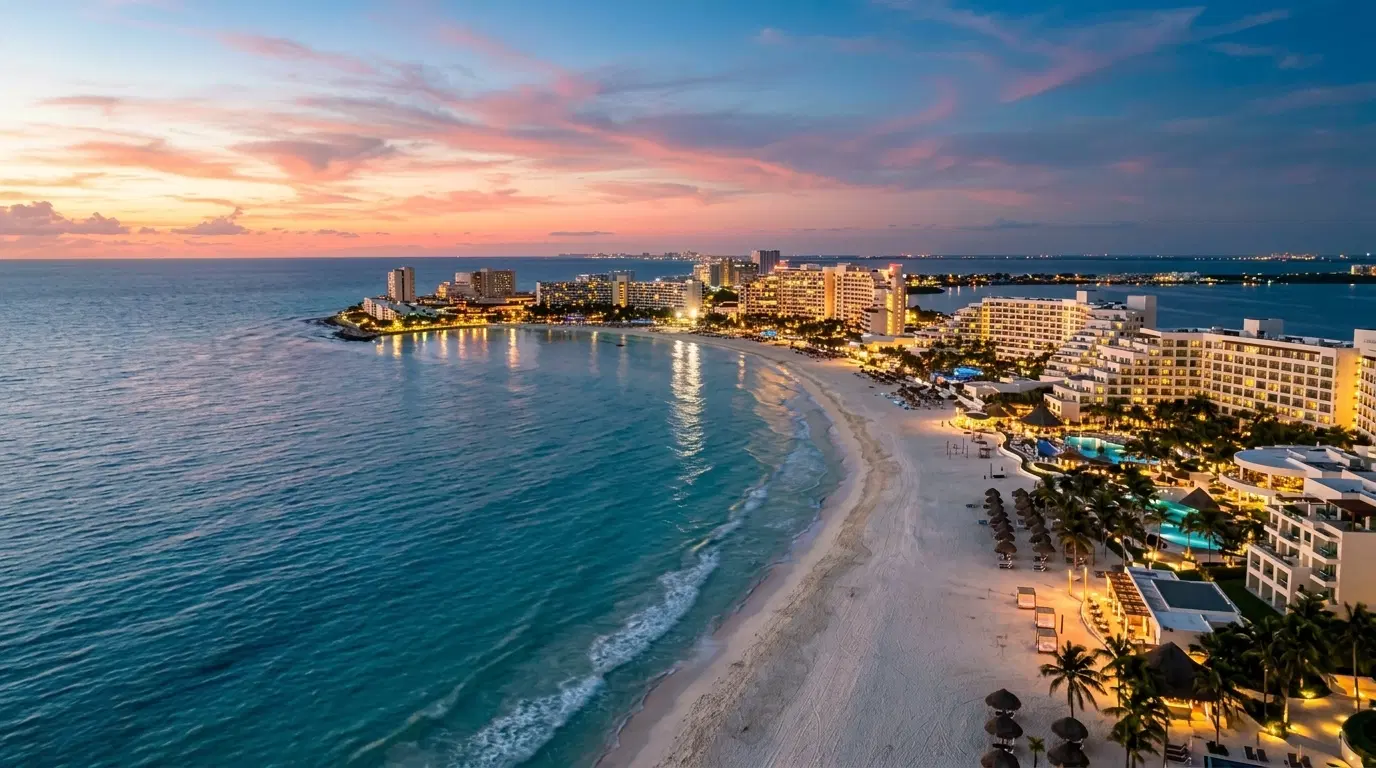
The Hotel Zone (Zona Hotelera) is a 22-kilometer barrier island shaped like the number seven, with resorts, beaches, and malls strung along Boulevard Kukulcán and marked by kilometer numbers. The north end faces a calm bay, and the south faces the open Caribbean, so where you stay shapes your days.
The north stretch, around kilometers 8 to 9 near Punta Cancún, brings shallower, calmer water that suits families and swimmers, plus walkable access to malls like La Isla. The south, past kilometer 15, has bigger waves, stronger currents, and quieter sand, along with the famous Cancún sign and viewpoint at Playa Delfines.
For a different feel, downtown Cancun (El Centro) sits off the beach but rewards you with lower prices and authentic food around Parque de las Palapas and Mercado 28. Budget travelers often base there and take the bus to the beach.
Best Time to Visit and the Sargassum Question
The best months to visit Cancun run from November through April, when humidity drops, rain is rare, and beaches are usually at their clearest. Summer is hotter and cheaper but overlaps both the Atlantic hurricane season and the peak of sargassum, the seaweed that washes onto Caribbean-facing shores.
Sargassum season generally spans April through October, heaviest from June to August, and clears through the winter. Early 2026 broke the usual pattern with arrivals in January and March, so check current conditions rather than trusting the calendar alone. It's mainly a matter of the shoreline's look and smell, not swimming safety, and it varies sharply by beach: north-facing shores and Isla Mujeres' Playa Norte stay clearest.
Track it before you go using government and university tools like NOAA's Sargassum Inundation Risk system or the University of South Florida's satellite outlook. On heavy days, the best moves are a cenote swim inland, a resort day pass, or a boat tour that heads to clean offshore water. That flexibility protects the trip more than any single hotel choice.
Things to Do in and Around Cancun
Beyond the sand, Cancun blends Maya history, island escapes, and freshwater cenotes within easy reach. A balanced plan pairs a couple of beach days with one or two outings.
Inside the Hotel Zone, the small El Rey Maya ruins and the Museo Maya de Cancún give a quick dose of history, while the MUSA underwater sculpture museum offers snorkeling, diving, or a glass-bottom boat view. A short ferry reaches Isla Mujeres, where Playa Norte's calm, shallow water and rentable golf carts make an easy day.
For freshwater, the region's cenotes deliver cool, clear swims that stay pleasant even when the ocean doesn't. Family-focused eco-parks like Xcaret round out the options. Popular tours sell out in peak season, so reserve ahead when your dates are set.
Day Trips Worth Taking
Cancun works well as a base for some of Mexico's standout day trips, and the big three are Chichén Itzá, Tulum, and Isla Mujeres, each with a different rhythm.
Chichén Itzá, one of the New Seven Wonders, sits about two and a half to three hours west; arrive early to beat the heat and crowds, and pair it with a cenote and the colonial town of Valladolid. Tulum, roughly two hours south, pairs clifftop Maya ruins above the beach with nearby cenotes, though its open-ocean sand is more seaweed-prone.
For Tulum, a direct transfer from the airport or your hotel saves juggling buses and shared vans, and Transpovia handles that run.
Staying Safe and Sidestepping Tourist Traps
The Hotel Zone ranks among Mexico's most heavily policed tourist areas and feels safe day and night, but a few habits and one big airport trap are worth knowing first. Petty theft is the main concern, so use hotel safes, watch your belongings on the beach, and stick to ATMs inside banks.
The most common trap is timeshare sellers posing as "information" or "transportation" desks in the arrivals hall and along Kukulcán. Walk past them and head to your booked ride or the official taxi stand. Drink bottled water, since the tap isn't potable, and respect the colored beach flags, where red or black means dangerous currents and no swimming.
Paying in pesos usually beats paying in dollars, and a 10 to 15 percent tip is standard. For current guidance, check your government's travel advisory before you travel, as conditions can change.
Frequently Asked Questions
Can you use Uber in Cancun?
Uber operates within the city, but it cannot pick up at Cancun airport due to local rules. For arrivals, use an authorized taxi, the ADO bus, or a pre-booked private transfer instead.
Is Cancun safe for tourists?
The Hotel Zone is well-policed and generally safe day and night. Take normal precautions against petty theft, use authorized taxis, and check your country's current travel advisory before your trip.
When is the best time to visit Cancun?
November through April brings the driest weather and clearest beaches, with the least sargassum. December through March is the busiest and priciest stretch, so book early if you travel then.
Is there seaweed on Cancun's beaches?
Sargassum typically appears from April to October, heaviest June through August. North-facing beaches and Isla Mujeres stay clearest, and live trackers help you check conditions before heading to the sand.
Before You Go
Arrange your airport ride before you land, keep small peso bills for the R1 and R2 buses, and pick a north Hotel Zone beach if your dates overlap seaweed season. Check a live sargassum tracker the week you travel, and walk past the "information" booths pushing timeshares. A little prep keeps the trip easy from the first day.
"We booked our transfer ahead, stayed on the north end near Punta Cancún, and kept a cenote day in our back pocket. When the seaweed rolled in one morning, we barely noticed—we just changed the plan." — a family on their first trip to Cancun


