
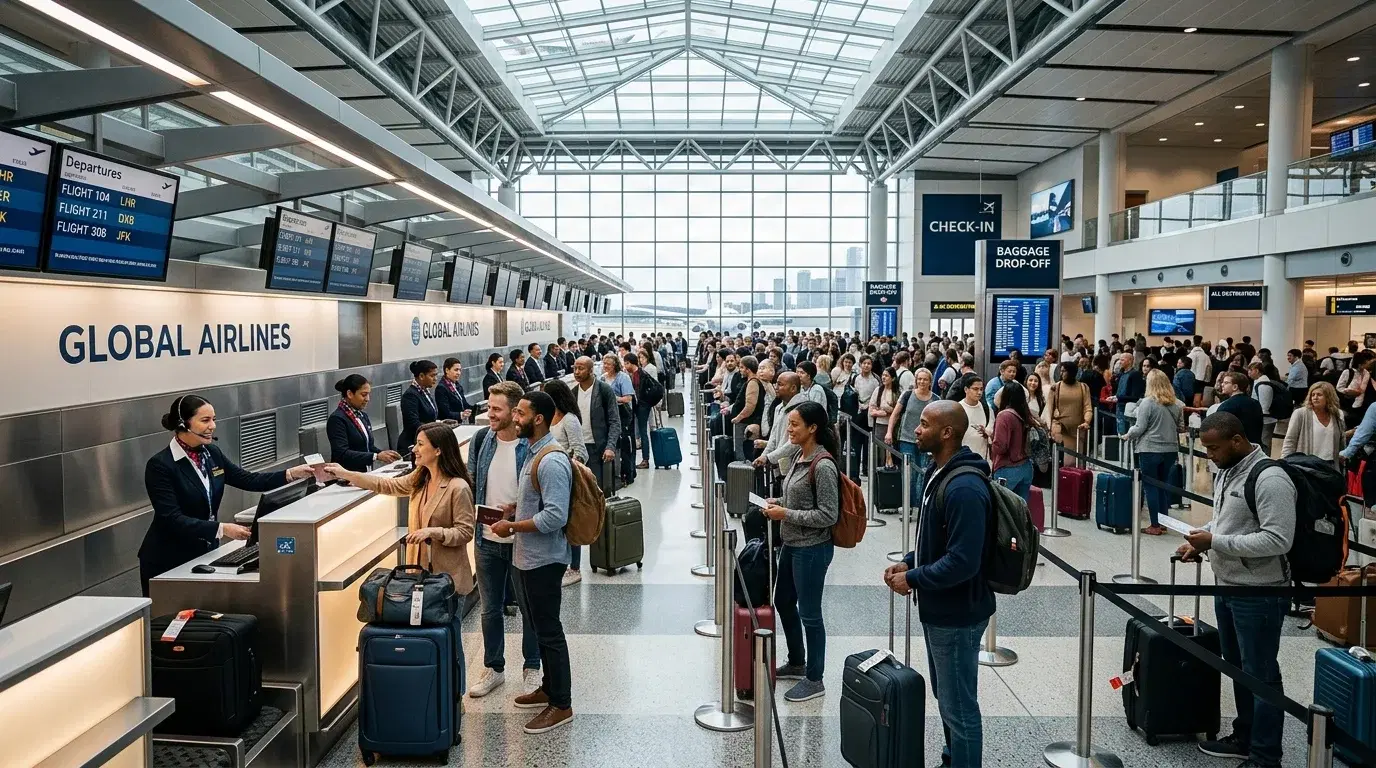
Peak-hour airports test your patience before you've even reached the gate. Check-in lines stretch toward the doors, the security queue disappears around a corner, and the terminal moves at a shuffle. On its busiest days, U.S. airport security now screens well over three million people. The upside is that crowds are predictable, and a few busy airport travel tips, planning your timing, prepping for security, and knowing when the rush hits, keep you moving while everyone around you stalls. Here's how to get through a packed airport without losing your flight or your composure.
When airports actually get busy
Airport crowds cluster around predictable moments: major holiday weekends, Sunday afternoons, and the early-morning and late-afternoon flight banks on any given day.
The heaviest periods line up with the big holidays: The Fourth of July, Labor Day, and the winter stretch from mid-December into early January. Against a normal 2025 daily average of about 2.48 million screenings, those peaks push every line in the building longer, not just security. Within a single day, the first wave of morning departures and the late-afternoon rush tend to be the most crowded windows. If your dates are flexible, a midday flight in the middle of the week usually means thinner lines than a Friday evening or Sunday afternoon. When you have to fly on a peak day, checking your airport's live security wait times, which many now publish on their website or app, tells you what you're walking into.
Give yourself more time than usual
On peak days, add to the standard arrival windows. TSA suggests arriving two hours before a domestic flight and three hours before an international one; during a holiday rush, an extra 30 to 60 minutes is a sensible cushion, because the lines for parking, bag drop, and security all lengthen at the same time.
The crowding isn't limited to the checkpoint. Airport parking garages fill early on peak mornings, rental-car return lines back up, and curbside drop-off gets congested, so the clock starts running before you're even inside. Build that into your departure plan. Arrivals face the mirror image: baggage claim and the ground-transport ranks move slowly when several full flights land together, so leave extra slack on any tight connection. Some airports specifically ask departing passengers to arrive earlier on their busiest days, which is worth checking before you leave.
Move through check-in and bag drop quickly
The fastest way past the check-in crush is to skip it. Check in online 24 hours ahead, download your mobile boarding pass, and travel carry-on only if you can, so you walk straight toward security. If you have to check a bag, self-service bag drop and kiosks usually move faster than the full-service counter.
Going carry-on only is the single biggest time-saver on a crowded day, so weigh and measure your bag at home to be sure it fits your airline's cabin limits. If you're checking luggage, paying for it online in advance is quicker than sorting it at the desk. Know your terminal and your airline's check-in zone before you arrive, since wandering the wrong hall wastes the time you're trying to save. These habits sit at the center of How to Save Time at the Airport, and they matter most when the terminal is packed.
Get through security faster in the crowds
Preparation is what actually moves you through a long security line. Have your ID and boarding pass out, follow the TSA 3-1-1 liquids rule so nothing gets pulled, and empty your pockets before you reach the front instead of at the bin. Expedited programs like TSA PreCheck give eligible travelers a separate, faster lane where you keep your shoes, belt, and laptop packed.
PreCheck pays off most for anyone who flies more than once or twice a year, but enroll well ahead of your trip rather than expecting it on the day. Children 17 and under can use the PreCheck lane for free when traveling with an enrolled adult, which helps families move together. Travelers with disabilities or medical conditions can contact TSA Cares at (855) 787-2227 before flying to arrange checkpoint assistance, a service that's especially valuable when the standard lines are long. At airports with more than one checkpoint in a terminal, waits can differ between them, so if the nearest lane is jammed, a slightly farther one may be quicker.
Navigate a crowded terminal without missing your gate
Once you're through security, head toward your gate first and confirm it on the departure boards, since gate assignments change more often on busy days than the printed pass suggests. Then use the walk to judge whether there's time for a restroom stop or food. At large airports, your gate can be a 15- to 20-minute walk or a shuttle ride from the checkpoint.
Peak-day food and coffee lines are long, so grab-and-go counters or order-ahead apps beat sit-down spots when time is tight. Keep an eye on your boarding time rather than the departure time, because boarding starts well before the plane leaves. If you're making a connection on a busy day, know your arrival and departure gates, whether you'll need to change terminals, and whether you have to re-clear security; airport staff can often point you to the quickest route. As boarding nears, stay close to the gate so a crowded concourse doesn't cost you your seat.
Plan your ride for peak-time traffic
Airport roads and transit are as crowded as the terminal during peak periods, so plan the ride with the same care. Leave earlier to account for rush-hour and holiday traffic, and confirm your transport runs, and has room, at your travel time. Rideshare pickups slow down and surge pricing climbs when demand spikes, and taxi ranks grow long right when everyone is arriving or leaving at once.
A pre-booked option sidesteps that uncertainty by fixing your pickup in advance. Arranging an airport transfer ahead of time through Transpovia locks in your pickup time, which helps on peak travel days when rideshare waits stretch and fares rise. For a busy-day arrival, having your onward ride already sorted means you can walk past the taxi queue instead of joining it after a long flight.
FAQs
Does TSA PreCheck help on busy days?
Yes. PreCheck routes you into a separate, typically shorter lane and lets you keep shoes, belts, and laptops in place, which saves the most time exactly when regular lines are longest. Enroll ahead of your trip, and note that children 17 and under can use the lane free with an enrolled adult.
Can you see airport security wait times in advance?
Many airports publish live or estimated security wait times on their official website or app, and TSA's AskTSA service can answer checkpoint questions. Checking before you leave helps you decide how much buffer to allow and, at some airports, which checkpoint to use.
Is it better to fly early morning or midday to avoid crowds?
Early-morning departures fill the first big rush of the day, but they also tend to run more on time. Midday and midweek flights usually see thinner checkpoint lines than late-afternoon and weekend peaks, so a mid-morning or early-afternoon slot often balances shorter lines with reliable timing.
Before You Go
Pick a quieter flight time if you can, check in online, and travel carry-on only, then add a cushion to your usual arrival time on peak days. Have your ID and liquids ready before the line, and confirm your gate first once you're through. Booking your transfer ahead through Transpovia keeps the ride predictable when peak-day traffic isn't.


