
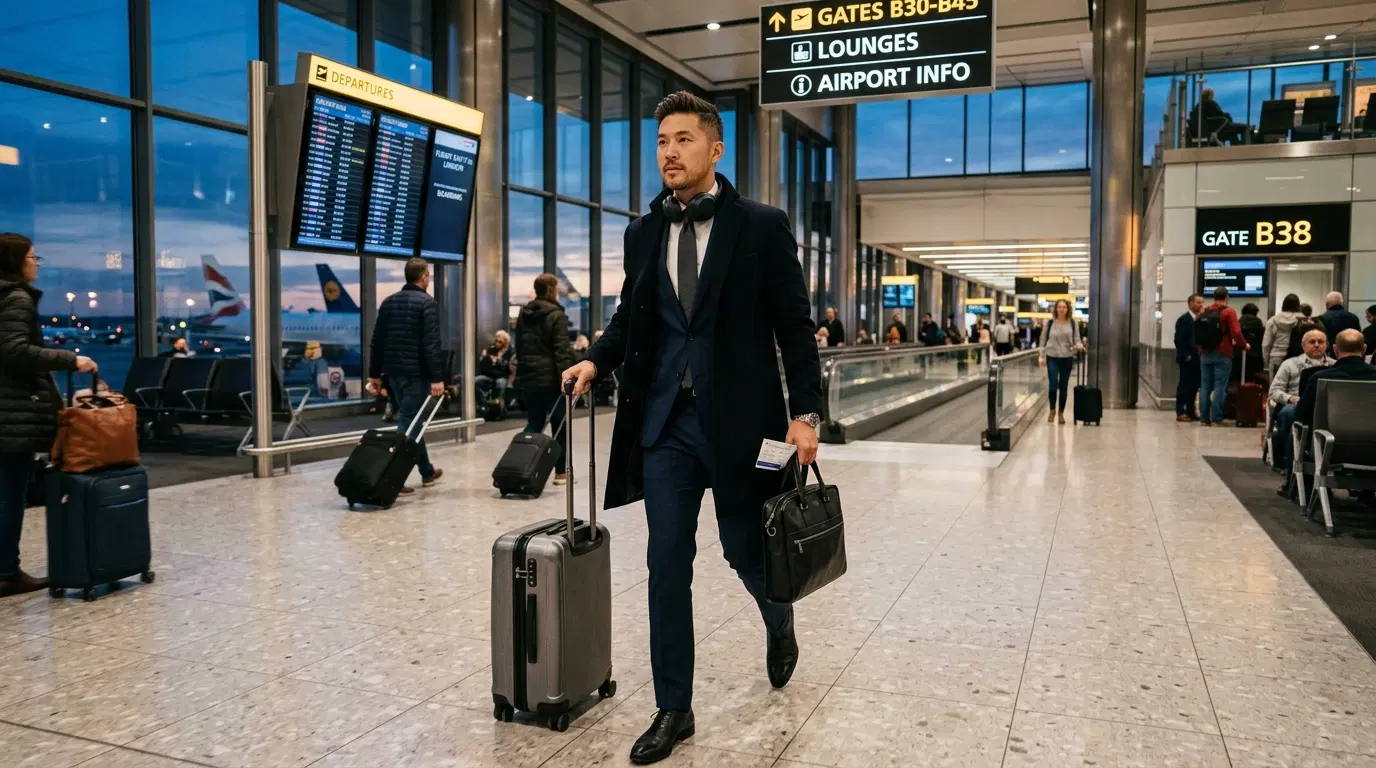
You've got a 7 a.m. flight, a client meeting an hour after you land, and a laptop full of work that won't finish itself. For frequent flyers, the airport is either usable time or the place a trip quietly falls apart, a missed security window, a dead phone, a scramble for a cab on the other end. The best business travel tips aren't grand strategy; they're small, repeatable airport habits that protect your time and your focus. Here are the ones that separate arriving frazzled from arriving ready to work.
Start With a Repeatable Pre-Flight Routine
The most productive business travelers don't reinvent each trip, they run a routine. A toiletry kit that never leaves your bag, a digital boarding pass saved to your phone, and your ID in the same pocket every time remove a dozen small decisions before you reach the airport. The less you decide on the day, the less you forget.
Build the routine around a few fixed steps. Keep a stocked go-bag so packing is topping up, not starting over. Check in online 24 hours ahead, then download or screenshot your boarding pass and confirmations in case the terminal WiFi fails. Timing is its own habit: arrive with a buffer that matches the airport and the hour, since showing up too early wastes the time you're trying to save while cutting it close risks the flight. How much cushion you actually need depends on the airport, the time of day, and your security setup, and this breakdown of [How Early Should You Arrive at the Airport] helps you set a realistic target instead of guessing.
Speed Through Security With a Trusted Traveler Program
If you fly more than a couple of times a year, a trusted traveler program is the single highest-return airport habit. TSA PreCheck, which costs roughly $78 to $85 for five years, lets you keep your shoes, belt, and light jacket on and leave your laptop and liquids in your bag in a dedicated lane. The TSA reports that about 99% of PreCheck members wait less than 10 minutes at the checkpoint, which is the kind of predictability a tight schedule depends on.
For international itineraries, Global Entry is usually the smarter buy. Run by U.S. Customs and Border Protection at $120 for five years, it includes TSA PreCheck and adds expedited customs when you fly back into the country, so it pays off if you cross a border even once in that window. Many corporate cards and employers reimburse the enrollment fee, which makes it effectively free for a lot of business travelers. Fees and processing times change, so confirm the current details on the official TSA or CBP site before you apply.
Turn Airport Time Into Productive Business Travel
Airports offer more usable work time than most travelers claim, if you set up deliberately. The goal is to reach a seat where you can actually concentrate: a quiet gate away from the main concourse, or an airport lounge accessed through elite status, a membership, a day pass, or a premium card that includes entry. Once you're settled near power and connected to WiFi, the terminal becomes a functional office for an hour.
Match the task to the setting. Batch focused work like email triage or polishing a deck for the gate, and save phone calls for the walk between terminals or a quieter corner. The habit worth adding, though, is knowing when to stop. Not every minute needs to be billable. A short reset before a demanding trip, a real meal, a walk, ten minutes off the screen, protects the sharpness you'll need when you land, and it beats arriving depleted from grinding through a layover.
Pack a Carry-On That Keeps You Meeting-Ready
Your bag is a productivity tool on a business trip, so pack it to keep you moving. Traveling carry-on only whenever the trip length allows means you skip baggage claim entirely and never risk a lost bag the morning of a meeting. That alone can save half an hour on each end and remove the worst-case scenario from a short trip.
A few business travel essentials keep you presentable and connected without overpacking:
-
A power bank and the charging cables for every device
-
Offline copies of your presentation and key documents
-
A wrinkle-resistant change of clothes packed within reach
-
Noise-canceling headphones for calls and focused work
-
Any medications and a small kit in the carry-on, not checked
Keep the one outfit you'd need first, whether that's a fresh shirt for a meeting or gym clothes, at the top of the bag so a delay doesn't leave you digging at the worst moment.
Protect Your Energy From Gate to Landing
Arriving sharp is a set of choices, not luck. Cabin air is dry, so drink water steadily and go easy on heavy meals that leave you sluggish. On longer flights, get up to stretch and move, and decide before takeoff whether you're sleeping or working based on the time zone you're landing in rather than the one you left.
Adjusting to destination time as early as possible is what keeps a red-eye from wrecking your first day. On long-haul routes especially, small decisions in the air decide how you feel at baggage claim, and this guide to [How to Survive Long Flights and Arrive Refreshed] covers the sleep, hydration, and movement habits that matter most. Treat the flight as part of the workday's setup, not a write-off, and you protect the hours that actually count once you're on the ground.
Plan the Ground Transportation Before You Land
The last mile is where tight business trips lose the time they saved everywhere else. Standing in a taxi line or opening a rideshare app after a delayed flight eats straight into the buffer you protected all day, and it's the least predictable part of the trip. Sorting the ride before you fly removes that variable entirely.
Pre-book your airport transfer so a driver is waiting and takes you directly to the meeting or hotel, and choose a service that tracks your flight so a delay shifts the pickup instead of costing it. Transpovia coordinates private airport transfers and corporate ground transportation with flight tracking and confirmed pricing across its markets in North America, the Caribbean, and Latin America, which suits a schedule where a missed pickup means a missed meeting. Booking the return leg at the same time handles the trip home before it becomes a last-minute problem on a busy final morning.
FAQs
Is TSA PreCheck worth it for business travelers?
For anyone flying even two or three times a year, yes. PreCheck's roughly $78 to $85 over five years buys consistent, fast security, with most members through in under 10 minutes. If you travel internationally at all, Global Entry at $120 is the better choice, since it includes PreCheck and speeds customs on your return. Many employers or cards cover the fee.
How can you actually be productive at the airport?
Set up before you work. Find a quiet gate or a lounge, take a seat near power, and connect to WiFi, then batch focused tasks like email and calls into the wait. Keep documents offline in case the connection drops. Just as important, protect some downtime before demanding trips so you arrive sharp rather than drained.
Should business travelers check bags or carry on?
Carry on whenever the trip length allows. Skipping baggage claim saves time on both ends and removes the risk of a lost bag before a meeting. Pack wrinkle-resistant clothing and keep your first-needed outfit accessible. Check a bag only for longer trips or when you genuinely can't fit essentials within carry-on limits.
What's the best way to avoid wasting time after landing?
Handle the ground transportation in advance. A pre-booked transfer with a driver waiting beats a taxi line or a surge-priced app after a long flight, and flight tracking covers delays. Combined with carry-on-only packing and a trusted traveler program for customs, it removes the three biggest time sinks between the runway and your destination.
Setting Up Your Next Trip
Pick one habit to lock in before your next flight, then add another the trip after. Enroll in a trusted traveler program, build a go-bag you never fully unpack, and pre-book the ride from the airport so landing doesn't start with a scramble. Small systems, repeated every trip, are what keep business travel efficient instead of exhausting.


