
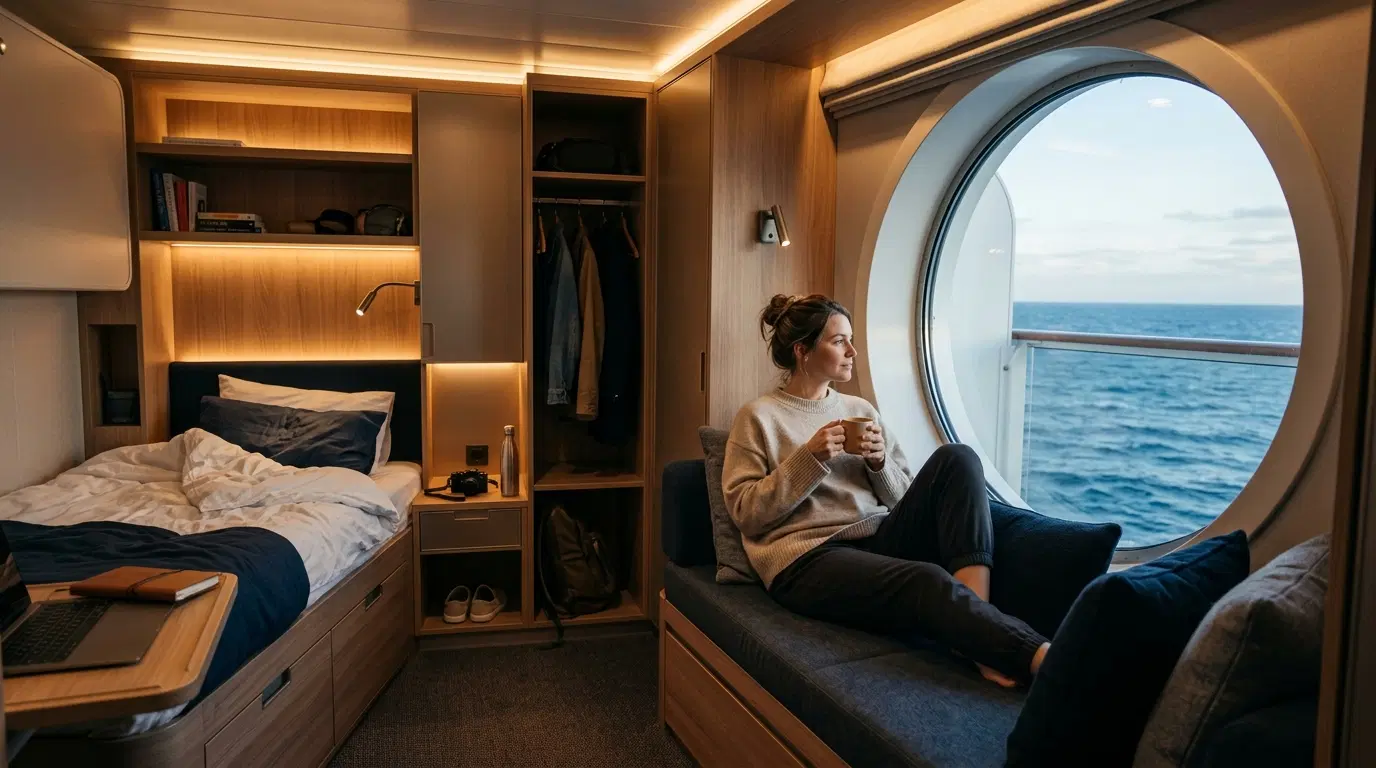
Cruising alone used to come with a penalty. Most ships were built around cabins for two, so a single guest often paid close to double the per-person fare just to have the room to themselves. That has changed. Several major lines now build cabins specifically for one person, run social spaces for people traveling alone, and quietly discount the extra charge on standard rooms. Finding the best cruise line for solo travelers depends less on a single "winner" and more on how you like to travel: whether you want to meet people every night or mostly be left alone, whether a window matters to you, and how much you are willing to pay for space. This guide walks through the cabin types, the lines that handle solo guests well, and the practical details people tend to overlook, including how you get from the airport to the ship.
Why Solo Cruise Travel Has Traditionally Cost More
Cruise fares are quoted per person based on double occupancy. The cruise line expects two guests in each cabin, and those two guests may spend money onboard on additional services, excursions, specialty dining, and spa visits. When one person books a standard cabin, the line makes up for the missing guest with a single supplement.
That supplement varies widely. On some sailings it can push the fare to around 200 percent of the per-person price, which means you pay the same as a couple would. On others, especially during promotions, it drops considerably or disappears. Luxury, expedition, and river lines are often the most flexible here, while mainstream lines have mostly solved the problem by building smaller cabins meant for one.
Understanding this pricing logic matters because the cheapest option is not always the dedicated solo cabin. Sometimes a regular interior room with a discounted supplement costs less than a studio, and sometimes the reverse is true. Comparing both on the same sailing is the only reliable way to know.
Solo Cruise Cabins: What Your Options Look Like
Solo cruise cabins fall into a few broad categories, and the differences affect both comfort and cost.
Studio Cabins With a Shared Lounge
Norwegian Cruise Line introduced studio cabins on Norwegian Epic in 2010, and the concept is still the best-known solo setup at sea. Studios are compact, usually interior, and grouped together in a keycard-access area with a private Studio Lounge. That lounge is the real draw. It gives solo guests a place to grab coffee, meet others traveling alone, and organize group dinners or informal meetups in a comfortable setting.
Single Staterooms With a View
Some lines skip the shared-complex idea and simply build smaller versions of their regular cabins. Celebrity Cruises' Edge-class ships include single veranda staterooms with an Infinite Veranda design. Holland America offers single oceanview cabins on several ships, and Cunard has Britannia Single staterooms. Oceania's newer ships go upmarket with concierge-level solo veranda staterooms. These rooms tend to suit travelers who value privacy, natural light, and a quieter ship over a built-in social scene.
Standard Cabins With a Reduced Supplement
If a line has no solo cabins on your preferred sailing, or the solo rooms are sold out, a standard cabin with a reduced single supplement is the fallback. Solo cabins are limited in number and popular, so they often sell out early. Watching for supplement promotions on regular cabins gives you more flexibility on dates and itineraries.
Cruise Lines That Stand Out for Solo Travelers
No single line is ideal for everyone, but a handful consistently come up when people search for the best cruises for solo travelers.
Norwegian Cruise Line
Norwegian remains the most obvious starting point. Beyond its studio complexes, the line expanded solo pricing across its fleet to include interior, oceanview, and balcony categories on many ships. Solo guests can typically use the Studio Lounge where one exists. The ships are large, casual, and packed with entertainment, which suits travelers who want plenty to do without planning every hour.
Virgin Voyages
Virgin Voyages is adults-only, which changes the onboard atmosphere considerably. Its ships include Solo Insider (windowless) and Solo Sea View cabins. The line's approach to dining, with no traditional assigned seating and many small restaurants, makes eating alone feel normal rather than conspicuous. It tends to attract a social, younger-leaning crowd, though guests of all adult ages sail with it.
Celebrity Cruises
Celebrity sits a step above mainstream lines in style and service. Its single staterooms on Edge-class ships are among the more comfortable solo options at sea, with private balcony space. The atmosphere is relaxed and polished, a good fit for solo travelers who want good food and a calmer pace.
Holland America and Cunard
Both lines appeal to travelers who prefer longer itineraries, enrichment programs, and a traditional cruise feel. Holland America's single oceanview rooms are relatively spacious for solo cabins. Cunard's ocean liner style, with formal evenings and transatlantic crossings, attracts many experienced solo cruisers who enjoy educational presentations and hosted social gatherings.
Luxury, Expedition, and River Lines
Smaller ships rarely build dedicated solo cabins, but lines such as Seabourn and Silversea have been known to lower or waive single supplements on select sailings. River cruise lines follow a similar pattern. Because these fares often include selected onboard services, excursions, and gratuities, the total cost can work out better than it first appears, and the small passenger count makes it easier to get to know people naturally.
How to Choose the Best Cruise Line for Solo Travelers
Once you know which lines offer solo-friendly pricing, the decision comes down to fit.
Decide what "social" means to you. A solo cruise and a singles cruise are not the same thing. Cruises for singles are usually organized group sailings aimed at meeting potential partners, often booked through a tour operator. Most solo travelers simply want to travel independently with the option of company. If you want structured socializing, look for lines with solo meetups, hosted tables, or a solo lounge. If you want quiet, a single oceanview room on a smaller, calmer ship may serve you better.
Think about ship size. Large ships offer more activities, more dining options, and more people your age, but they can feel anonymous. Smaller ships make it easier to recognize faces after a day or two, which many solo guests appreciate.
Match the line's crowd to your preferences. Family-heavy lines during school holidays can feel isolating for adults traveling alone. Adults-only lines, longer itineraries, and sailings outside peak family periods tend to have more independent travelers onboard.
Compare total cost, not just the fare. A cheaper base fare with a high supplement and pay-as-you-go drinks and gratuities may cost more than an inclusive smaller-ship fare with a waived supplement. Add up what you will realistically spend.
Check where the solo cabin is located. Some solo rooms sit near noisy venues or on lower decks. Look at the deck plan before booking, especially on large ships.
Choosing an Itinerary That Works When You Travel Alone
The best cruise for singles is not only about the ship. The route affects how easy the trip is, how much you spend ashore, and how comfortable you feel exploring on your own.
Port-intensive itineraries are great for solo travelers who like structure, since shore excursions give you built-in company for the day. Itineraries with more sea days lean on the ship's social life, which works well on lines with a strong solo program.
South American Sailings
Southern Hemisphere cruising appeals to travelers who want warm weather during the northern winter. If you are considering cruise travel in Brazil, keep in mind that the main season runs during the southern summer, and major embarkation ports such as Santos, which serves São Paulo, sit a long drive from the nearest large airport. Traffic between the city and the coast can be heavy, so it pays to plan that leg carefully rather than assuming a quick ride.
Central American Sailings
Costa Rica shows up on many Panama Canal and Central American routes, as well as on small-ship nature cruises. For cruise travel in Costa Rica, Pacific ports like Puntarenas are roughly a couple of hours by road from San José's international airport, while Liberia's airport is a better option for some Guanacaste departures. Choosing the right airport for your port can save hours of travel.
Getting to the Port: Plan the Land Journey Too
Solo travelers often put enormous effort into choosing a cabin and then leave the airport-to-port transfer until the last minute. That is where a lot of solo cruise stress actually happens.
When you travel alone, there is no one to watch your bags while you hunt for a taxi line, no one to split a fare with, and no backup if a ride falls through. Cruise ports also have hard departure times. Arriving late to the pier means missing the ship, and catching up at the next port is expensive and complicated.
Booking a private airport transfer ahead of time removes most of that uncertainty. You know who is picking you up, where to meet them, and roughly what the trip will cost before you land. A private car also takes you directly from the arrivals hall to the terminal or your pre-cruise hotel without the multiple stops of a shared shuttle. That matters most in cities where the port is far from the airport, where you do not speak the language, or when you land late at night.
Transpovia lets you book a private transfer from the airport to the cruise port or your hotel before you travel, so the ride is arranged before you step off the plane. Many solo cruisers also book the return leg in advance. Disembarkation mornings are crowded, and having a driver waiting means you can head straight to your flight instead of joining a long queue at the curb.
Practical Tips Before You Book a Solo Cruise
Book solo cabins early. Ships have only a small number of solo rooms, and the best ones go fast. If your dates are flexible, set alerts for supplement promotions on regular cabins too.
Arrive the day before embarkation. A flight delay on sailing day is a real risk. Flying in a day early and staying near the port gives you a buffer, and a pre-booked private transfer makes the hotel-to-port leg simple the next morning.
Join an online roll call. Many cruise forums host roll calls for specific sailings, where passengers introduce themselves before the trip. Solo travelers often use these to arrange meetups or share excursions.
Ask about solo events at check-in. Many lines run solo traveler gatherings early in the voyage. Going to the first one makes the rest of the trip easier.
Buy travel insurance. Without a companion to help if you get sick or miss a connection, good coverage for medical care, trip interruption, and missed departures is especially worthwhile.
Keep copies of key documents. Store digital copies of your passport, cruise documents, and transfer booking in a place you can reach from your phone.
Frequently Asked Questions
Which cruise line is best for solo travelers on a budget?
Norwegian Cruise Line is often the most budget-friendly choice because of its studio cabins and solo pricing across several cabin categories. That said, compare the studio fare with a standard interior cabin on the same sailing, since a promotion on the regular room sometimes comes out cheaper.
Do all cruise lines charge a single supplement?
Most charge a supplement on standard cabins, but the amount varies widely and drops during promotions. Dedicated solo cabins are priced for one person, so they avoid the full supplement. Some luxury, expedition, and river lines reduce or waive the supplement on select sailings.
Is it safe to cruise alone?
Cruise ships are generally a comfortable environment for solo travel, with security staff, controlled boarding, and plenty of people around. The usual travel sense still applies: watch your drinks, keep valuables in your cabin safe, and know when you need to be back onboard. On land, pre-arranged excursions and private transfers reduce the risks that come with navigating unfamiliar ports alone.
Conclusion
The best cruise line for solo travelers is the one that matches how you want to spend your time. Norwegian and Virgin Voyages suit people who want an easy social scene and dedicated solo cabins. Celebrity, Holland America, and Cunard work well for travelers who prefer a calmer ship and a room with a view. Luxury, expedition, and river lines can be surprisingly good value when they waive the supplement.
Whatever you choose, look past the cabin price to the full trip: the itinerary, the crowd, what is included, and how you will get between the airport and the pier. Sorting out that last piece in advance with a private transfer is a small step that makes traveling alone feel a lot less like going it alone.
"The cabin was perfect, but what I appreciated most was walking out of arrivals and seeing a driver holding a sign with my name on it. On my own, in a country where I didn't speak the language, that was the moment the vacation actually started."


