
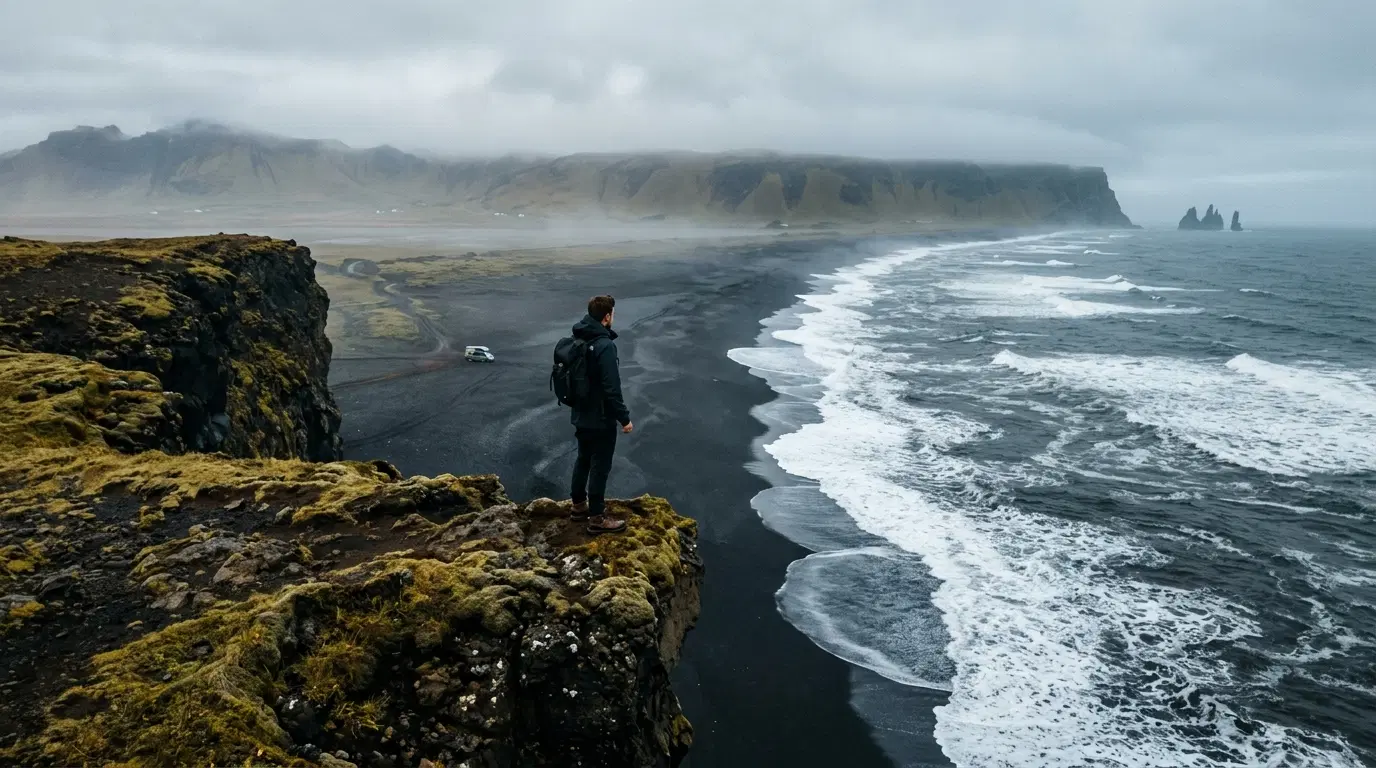
Traveling alone changes how a trip works. You pick the pace, the restaurants, and the day you finally skip the museum and sit by the water for three hours. You also carry every decision yourself, from reading a transit map at midnight to figuring out which taxi line is legitimate. That's why the best countries for solo travel aren't just beautiful places. They're destinations where getting around feels manageable, locals are used to visitors, and eating alone at a busy restaurant feels completely normal.
This guide covers eight countries that work especially well for people traveling on their own, what each one does best, and the practical details that make a first solo trip go smoothly, starting with the moment you land.
What Makes a Country Good for Traveling Alone
Safety is the obvious starting point, but it isn't the only thing that matters. A country can have low crime and still be exhausting to navigate alone if transportation is patchy or you can't communicate at all.
When you compare solo travel destinations, look at a handful of factors together:
-
Personal safety: low violent crime, a stable political climate, and a reputation for treating visitors well.
-
Ease of arrival: how far the main airport is from where you'll stay, and how simple it is to cover that distance after a long flight.
-
Getting around: reliable trains, buses, or private transportation between the places you want to see.
-
Social atmosphere: hostels, walking tours, cooking classes, and communal tables that make meeting people easy if you want company.
-
Language and culture: whether English is widely spoken, or whether the culture is patient with travelers who rely on gestures and a translation app.
The countries below score well on most of these, though each has its own strengths and trade-offs.
The Best Countries for Solo Travel Right Now
Portugal
Portugal is close to an ideal first stop for anyone traveling alone. It ranked seventh in the 2025 Global Peace Index, prices are reasonable by Western European standards, and English is common in Lisbon, Porto, and the Algarve.
Lisbon's airport sits unusually close to the city center, so arrival is rarely an ordeal. From there, you can explore Lisbon's historic neighborhoods, Porto's riverside district, and the beaches and cliffs around Lagos. Day trips to Sintra and the Douro Valley are easy to arrange, and Portugal's walking tour and hostel scene makes it simple to find company for a dinner or a sunset viewpoint.
Iceland
If safety is your top priority, Iceland is hard to beat. It took first place again in the 2025 Global Peace Index and has held that spot every year since the index began in 2008.
The catch is cost and distance. Iceland is expensive, and Keflavík International Airport is roughly 45 minutes from Reykjavík. Much of the country's appeal lies along the Ring Road and the Golden Circle, where waterfalls, black sand beaches, and glacier lagoons are spread far apart. In winter, short daylight hours and fast-changing road conditions make driving alone a real consideration, so many solo visitors base themselves in Reykjavík and rely on guided tours and pre-arranged transfers instead of renting a car.
Ireland
Ireland ranked second in the 2025 Global Peace Index, and it's one of the easiest places in the world for Americans to travel alone. There's no language barrier, and its historic towns, museums, scenic landscapes and welcoming communities make it comfortable to explore independently.
Dublin makes a comfortable base, but the real highlights are along the west coast: Galway, the Cliffs of Moher, and the Wild Atlantic Way. One thing to plan for is that Ireland drives on the left, and rural roads are narrow and winding. If you'd rather not handle a stick shift on the wrong side of the road after an overnight flight, a private car from the airport to your first hotel is a smart way to start the trip.
Japan
Japan consistently appears on lists of the safest countries for solo travel, and for good reason. Crime against visitors is rare, public spaces are orderly, and lost wallets have a habit of finding their way back to their owners.
Japan is also built for people doing things alone. Ramen shops with ticket machines, sushi restaurants with counter seating, and single-occupancy capsule hotels mean no one will look twice at you eating solo. Some train lines in Tokyo and Osaka also run women-only cars during rush hour, which many solo female travelers appreciate.
The main challenge is the first leg. Narita Airport is a long way from central Tokyo, and dragging a large suitcase through crowded stations during rush hour is exhausting. Many travelers either book a door-to-door ride for arrival day or use Japan's luggage-forwarding services so they can travel light.
Spain
Spain suits solo travelers who enjoy food, architecture and cultural attractions. Its regional cuisine, historic neighborhoods and well-connected cities make it easy to explore independently.
Madrid, Barcelona, Seville, and Valencia are all connected by high-speed rail, so you can see several regions without renting a car. Petty theft is the main concern, particularly pickpocketing in busy parts of Barcelona and on crowded public transit, so a cross-body bag and a little awareness go a long way. Smaller cities like Granada and San Sebastián offer a slower pace and some of the best food in the country.
Italy
Italy rewards solo travelers who love art, history, and food, and its train network makes moving between Rome, Florence, Venice, and Milan straightforward.
Where Italy gets trickier is off the rail lines. The Amalfi Coast, Tuscany's hill towns, and parts of Puglia are beautiful but awkward to reach with luggage on public transportation. Getting from Naples to Positano, for example, involves winding coastal roads and crowded buses in summer, which is why many visitors book a private driver for that stretch. In the big cities, stick to official white taxis and keep an eye on your bag around major landmarks.
Mexico
Mexico is one of the best places for solo travelers who want culture, food, and value within easy reach of the US. Mexico City's museums and neighborhoods could fill a week on their own, Oaxaca is a favorite for food lovers, and Mérida in the Yucatán has a strong reputation for safety and a relaxed pace.
Safety in Mexico varies a lot by region, and the US State Department issues its travel advisories state by state, so it's worth checking the specific areas you plan to visit. If you're flying into Cancún, expect a busy arrivals hall where vendors offer rides and timeshare deals. Arranging your transportation before you land lets you walk straight past them. For more ideas on where to go and how to plan your route, our Mexico travel guide covers the country's main regions and airports.
Costa Rica
Costa Rica is a natural fit for solo travelers drawn to nature and adventure. The country abolished its army in the late 1940s, has a long-standing reputation for stability, and has built much of its economy around welcoming visitors. Ziplining, hiking near Arenal Volcano, wildlife spotting in Manuel Antonio, and surf lessons in Guanacaste all come with built-in opportunities to meet other travelers.
Most visitors fly into either San José's Juan Santamaría International Airport or Liberia's Daniel Oduber Quirós International Airport in Guanacaste. Your choice should depend on where you're heading, since drive times between regions can be long and many roads are winding, unpaved, or affected by heavy rain during the green season, which typically runs from May through November. Our Costa Rica travel page breaks down which airport makes sense for each region.
Best Countries for First-Time Solo Travelers
If this is your first time traveling alone, choose a place that removes as much friction as possible. Ireland is the gentlest introduction for English speakers, with no language barrier and a culture that makes it easy to talk to strangers. Portugal is a close second, thanks to its compact size, short airport transfer, and welcoming atmosphere.
Japan is a great choice if you're comfortable with a bit of culture shock in exchange for safety and efficiency. Iceland works well if you prefer natural landscapes, outdoor activities and scenic journeys, although it can be expensive.
A useful rule for a first solo trip is to limit yourself to two or three bases instead of moving every night. Fewer transitions mean fewer chances for missed connections, lost bookings, and late-night arrivals in unfamiliar places.
Why Your Arrival Plan Matters More When You Travel Alone
The first hour after landing is often the most stressful part of any trip, and it's harder alone. You're tired, possibly jet-lagged, carrying everything you own for the next two weeks, and you have no one to watch your bags while you find an ATM or figure out the local SIM card.
This is when travelers are most likely to accept an inflated fare, get into an unlicensed taxi, or spend an hour navigating transit with heavy luggage. It's also when a delayed flight can turn a planned evening arrival into a midnight one.
A pre-booked private airport transfer solves most of these problems at once. Your driver tracks your flight, waits in arrivals with your name, and takes you straight to your hotel at a price you agreed on before leaving home. There's no haggling, no guessing which taxi is legitimate, and no need to have local currency ready the moment you land. Platforms like Transpovia let you book this in advance at airports in many popular destinations, which is especially valuable when your hotel is far from the airport, as with Tulum from Cancún, Positano from Naples, or the Pacific beaches from Liberia.
Private transportation helps after arrival, too. For longer transfers between regions, such as moving from Arenal to the Pacific coast in Costa Rica or from Reykjavík to the south coast in winter, a private car gives you door-to-door service, room for your luggage, and a local driver who knows the roads.
Practical Safety Habits for Solo Travelers
A few habits make a noticeable difference wherever you go:
-
Book your first night before you leave. Arriving with nowhere to stay is a stress you don't need.
-
Share your itinerary with someone at home, including flight numbers and hotel addresses.
-
Enroll in the Smart Traveler Enrollment Program (STEP) if you're a US citizen, so the nearest embassy can contact you in an emergency.
-
Buy travel insurance that covers medical care and trip interruption.
-
Keep digital and paper copies of your passport and important bookings, stored separately from the originals.
-
Plan to arrive in daylight when you can, especially in a new country.
-
Trust your instincts. If a situation feels off, leave. You don't owe anyone an explanation.
Frequently Asked Questions
What is the safest country to travel alone?
Iceland ranked as the most peaceful country in the world in the 2025 Global Peace Index, followed by Ireland and New Zealand, with Portugal also in the top 10. Japan is also widely regarded as one of the safest countries for solo travel because of its very low crime rate. Keep in mind that safety also depends on the neighborhoods you choose, the hours you keep, and the precautions you take.
Which countries are best for solo female travelers?
Iceland, Ireland, Portugal, and Japan are popular choices for women traveling alone because of their low crime rates, reliable transportation, and welcoming attitudes toward visitors. Regardless of where you go, it helps to choose well-reviewed accommodation in central areas, avoid arriving late at night without transportation arranged, and stay aware in crowded tourist spots.
How do I get from the airport to my hotel safely when traveling alone?
The safest option is to arrange transportation before you land, either a pre-booked private transfer or a hotel pickup, so a vetted driver is waiting for you on arrival. If you need a taxi, use the official taxi rank inside the airport rather than accepting offers from people approaching you in the terminal. Have your hotel address saved offline on your phone in case you lose signal.
Conclusion
The best countries for solo travel give you freedom without making every step a challenge. Portugal and Ireland are welcoming starting points. Iceland and Japan offer impressive natural and cultural attractions. Spain and Italy reward travelers who love food, history and architecture, while Mexico and Costa Rica offer adventure and diverse landscapes within easy reach of the US.
Wherever you go, the trip goes better when the logistics are handled before you leave. Choose a destination that matches your comfort level, keep the number of moves manageable, and arrange your airport arrival ahead of time. With a Transpovia transfer waiting when you land, you can skip the taxi line and start the trip you came for.
"I landed alone after midnight with no idea what to expect, and seeing a driver holding a sign with my name on it was the moment the whole trip finally felt real." — A first-time solo traveler, reflecting on arriving in a new country


