
Honduras rarely tops anyone's first-trip list, and that's part of its appeal. If you're weighing the best cities for solo travel Honduras can offer, you'll find a country where a single trip can take you from Maya temples in the western hills to coral reefs off the Caribbean coast, often without the crowds of its better-known neighbors. Traveling alone here does take more planning than it would in Costa Rica or Mexico, though.
The places that work best for solo visitors share a few things: a walkable core, an established visitor scene, and a clear way to arrive and leave without relying on guesswork. This guide covers the towns that check those boxes, what each one is genuinely like on your own, and how to move between them without the stress that trips up many first-timers.
What Makes a Honduran City Work for Solo Travelers
Start with the honest picture. The U.S. State Department currently rates Honduras at Level 3, "Reconsider Travel," because of crime, and it lists the remote eastern department of Gracias a Dios as Level 4, "Do Not Travel." The country has also been under a government-declared "state of exception" aimed at extortion and gang activity since late 2022. None of that means Honduras is off-limits. It means where you go, and how you get there, matters more than usual.
The safest cities for solo travel in Honduras tend to be the ones built around tourism rather than industry. Island resort areas and small heritage towns see steady visitor traffic, have more tourist police presence, and run on an economy that depends on travelers having a good experience. The large urban centers, by contrast, are where most of the country's crime statistics come from.
When comparing cities for solo travelers, a few practical factors make the biggest difference:
-
A compact center you can walk in daylight. Small towns where restaurants, hotels, and sights sit within a few blocks are far easier to manage alone.
-
A visible traveler community. Dive shops, language schools, guesthouses, and tour operators make it simple to meet people and get reliable local advice.
-
Easy airport access. The fewer unplanned connections between the arrivals hall and your hotel, the better.
-
Reliable day-trip options. Good solo travel destinations let you join organized excursions instead of navigating rural roads on your own.
The towns below were chosen with those factors in mind, and each one connects easily to the main airports serving travelers across the cities in Honduras.
The Best Cities for Solo Travel Honduras Offers Right Now
Roatán: West End and West Bay
If you only visit one place, make it Roatán. The largest of the Bay Islands sits on the Mesoamerican Barrier Reef, and its western tip is the most relaxed corner of the country for anyone traveling alone. The State Department itself notes that the Bay Islands resort areas receive more security resources and are better policed than the mainland.
West End is the main visitor hub. It's a single sandy road lined with dive shops, guesthouses, and cafés, and it's easy to plan a routine around a morning dive, an afternoon in a hammock, and a meal with other travelers. Signing up for a dive or snorkel course is one of the easiest ways to meet people when you arrive solo. West Bay, a short ride south, is quieter and more resort-oriented, with one of the island's best swimming beaches.
Practical notes: U.S. dollars are widely accepted alongside the Honduran lempira, English is commonly spoken thanks to the islands' Afro-Caribbean heritage, and the island has its own international airport, Juan Manuel Gálvez (RTB), with direct flights from several U.S. cities. The island's roads are winding and poorly lit after dark, so plan rides between areas ahead of time rather than flagging cars at night.
Copán Ruinas: The Easiest Town to Love on Your Own
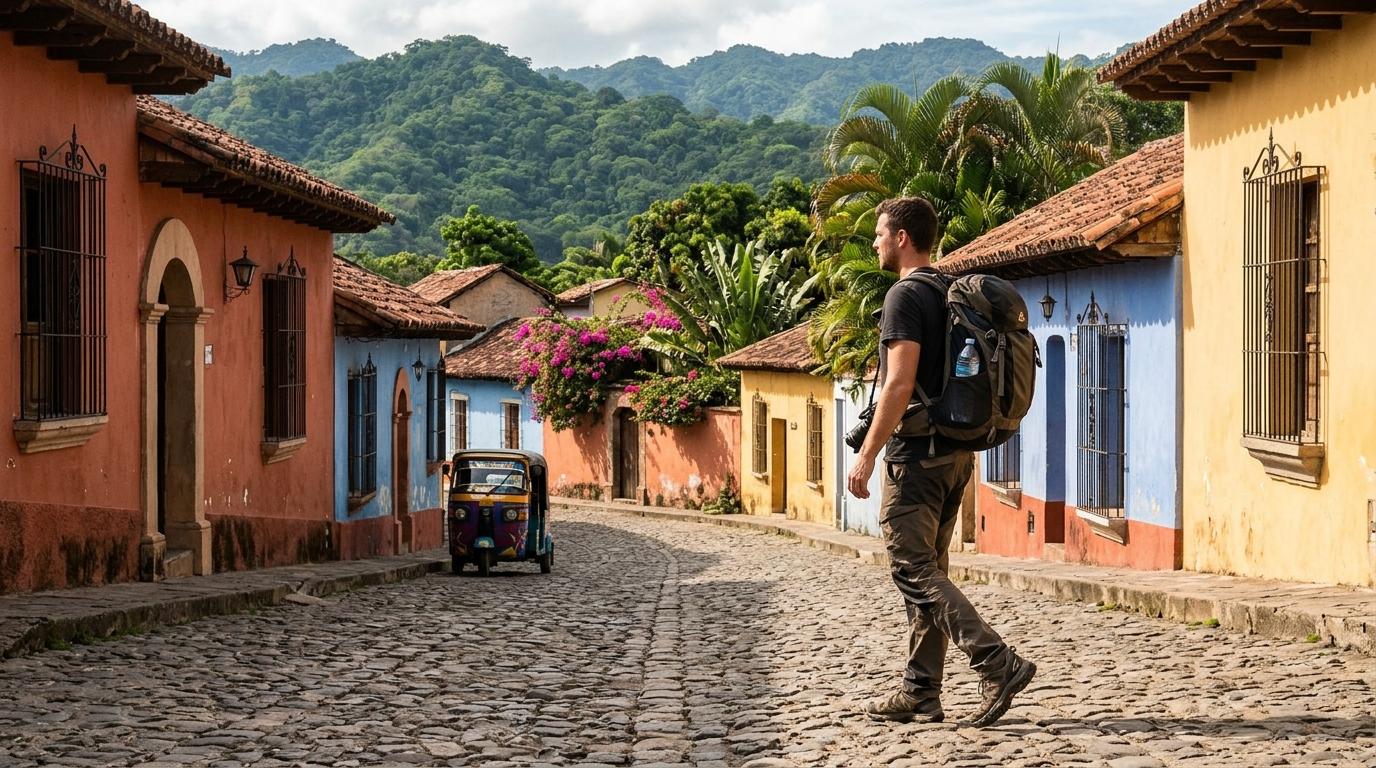
Copán Ruinas is a small, cobblestoned town in the western highlands, just a short walk from the Copán archaeological site, a UNESCO World Heritage Site famous for its carved stelae and hieroglyphic stairway. Many travelers call it the best city to travel alone in Honduras, and it's easy to see why. The town is calm, compact, and almost entirely oriented around visitors.
You can walk from your hotel to the central plaza, the ruins, and dozens of cafés without thinking twice. Beyond the main site, Macaw Mountain Bird Park rescues and rehabilitates scarlet macaws just outside town, and the Luna Jaguar hot springs sit roughly 25 kilometers away in the hills. Spanish schools and coffee farm tours add a slower, more educational rhythm if you want to stay longer than a weekend.
The catch is the journey. Copán is about 180 kilometers from San Pedro Sula, typically around three hours by car, while public buses can take four to five hours with stops. For a solo traveler arriving on an international flight, that's the leg where planning pays off most.
Comayagua: Colonial Charm Near the New Airport
Comayagua was the capital of Honduras until 1880, and its restored colonial center still feels like it. The whitewashed cathedral faces a tidy central plaza and houses a clock that is said to be among the oldest in the Americas. The city is best known for Semana Santa, when residents spend the night before Good Friday laying out elaborate carpets of colored sawdust across the streets.
For solo travelers, Comayagua's biggest advantage is location. Palmerola International Airport (XPL), the country's newest international gateway, sits right outside the city. That makes Comayagua a low-key first or last night in Honduras: quieter than the capital, with enough plazas, museums, and restaurants for a relaxed day of exploring.
Tegucigalpa: A Short, Planned Stay
The capital deserves a mention, but with clear limits. Tegucigalpa has interesting sights, including the Basílica de Suyapa, the hilltop Cristo del Picacho, and the colonial mountain villages of Valle de Ángeles and Santa Lucía just outside the city. It also has a high crime rate, and U.S. government security assessments rate it as a critical-threat location for crime.
If you go, treat it as a structured visit rather than a wander. Stay in a well-reviewed hotel in a business district, use pre-arranged rides instead of street taxis, and focus on daytime sightseeing. Many solo travelers find the hill towns of Valle de Ángeles and Santa Lucía are the highlight of the area.
San Pedro Sula: Gateway, Not Destination
San Pedro Sula is the country's commercial engine and the busiest entry point for international flights at Ramón Villeda Morales International Airport (SAP). It's also the city where travelers should be most cautious. For most solo visitors, the smart approach is simple: land, connect directly to Copán Ruinas or onward to Lake Yojoa and the Pulhapanzak waterfall, and skip lingering in the city itself. If a late arrival forces an overnight, book a hotel near the airport and arrange your pickup before you fly.
Best Cities for First-Time Solo Travelers in Honduras
If this is your first solo trip to Honduras, or your first solo trip anywhere, keep the route simple. The combination that works best for most people is Copán Ruinas plus Roatán. Together they cover the country's two biggest draws, Maya history and Caribbean reef life, while keeping you in the most visitor-friendly towns.
A practical one-week outline looks like this:
-
Days 1–3: Copán Ruinas. Fly into San Pedro Sula and head straight to Copán. Spend a full day at the ruins, then use the next for the bird park, a coffee farm, or the hot springs.
-
Day 4: Back toward the coast. Return to San Pedro Sula for a flight to Roatán, or overnight near the airport if schedules don't line up.
-
Days 5–7: Roatán. Base yourself in West End, dive or snorkel the reef, and spend at least one afternoon at West Bay.
If you're flying into Palmerola instead, flip the start: a night in Comayagua, an optional guided day in the Tegucigalpa area, then a domestic flight or a long transfer north. Either way, the goal is fewer moving parts, clear plans for each transfer, and no improvised late-night arrivals.
Getting Between Cities When You're Traveling Alone
Transportation is where solo travel in Honduras gets real. The cities themselves are manageable; the gaps between them are where travelers end up tired, lost, or negotiating with drivers in the dark.
You have three main options:
-
Public buses. The cheapest choice. Long-distance companies run between major cities, but rural routes often involve changes, and schedules don't always match flight times.
-
Tourist shuttles. Shared vans connect popular stops such as San Pedro Sula and Copán, but they typically run on fixed schedules, sometimes only once a day.
-
Private transfers. A pre-booked car and driver waiting for you at arrivals, taking you directly to your hotel at an agreed price.
For a solo traveler, a private transfer is usually worth the extra cost, especially on arrival day. You aren't haggling over fares with jet lag, you don't need to carry luggage through a bus terminal, and someone knows exactly where you're going and when you're expected. The fixed price also removes one of the most common points of friction for visitors.
The capital's gateway is a good example. Palmerola sits roughly 75 kilometers from Tegucigalpa by highway, which is too far for a casual taxi decision at night. Booking your airport transportation before you fly means the drive to Comayagua or the capital is settled before you even land.
Platforms like Transpovia let you reserve a private transfer in advance at a fixed price, with the driver meeting you on arrival, which is especially reassuring when you're the only one in your party keeping track of the details. The same approach works for the long Copán run from San Pedro Sula and for getting from Roatán's airport or cruise piers to West End.
Everyday Safety Habits for Traveling Alone in Honduras
Good habits matter more than any single destination choice. These are the ones experienced solo travelers rely on:
-
Plan arrivals for daylight. Pick flights that land early enough to reach your hotel before dark, particularly on the mainland.
-
Avoid hailing cars on the street. Use rides arranged through your hotel or booked in advance, and confirm the driver's name before getting in.
-
Keep valuables low-key. Leave flashy jewelry at home, carry a single card and a modest amount of cash, and keep your phone out of sight on busy streets.
-
Share your plans. Send your itinerary and hotel names to someone at home, and check in when you change towns.
-
Use guided tours for remote areas. Waterfalls, national parks, and rural sites are best visited with a reputable operator rather than alone.
-
Learn a little Spanish. Outside the Bay Islands, basic phrases go a long way with drivers, shopkeepers, and hotel staff.
-
Check advisories before you go. Conditions can change, so review the latest government travel guidance and stay updated on local news during your trip.
Frequently Asked Questions
Is Honduras safe for solo travelers?
It can be, with planning. The U.S. State Department advises travelers to reconsider travel to Honduras because of crime, and it warns against any travel to Gracias a Dios. Most solo visitors who have smooth trips stick to tourism-focused places like Roatán and Copán Ruinas, arrange their transportation ahead of time, and avoid moving around after dark.
What is the safest place in Honduras to travel alone?
Roatán's West End and West Bay areas are generally considered the most comfortable for solo travelers, thanks to a large visitor community and more security presence than the mainland. On the mainland, Copán Ruinas is a small, calm town that many people visit alone without issues.
How should I get from the airport to my hotel in Honduras?
A pre-booked private transfer is the most straightforward option for solo travelers. Your driver meets you at arrivals, the price is agreed in advance, and you skip negotiating with unofficial taxis. This matters most at Palmerola and San Pedro Sula, where hotels and destinations are a long drive from the terminal.
Conclusion
Honduras rewards solo travelers who choose their bases carefully. Roatán gives you reef days and a welcoming visitor environment, Copán Ruinas offers history in a town you can walk end to end, and Comayagua makes a calm landing near the capital's airport. Tegucigalpa and San Pedro Sula are better treated as gateways than places to linger.
The common thread is planning the in-between. Arrive in daylight, keep your route focused, and settle your transfers before you land. A pre-arranged ride through a service like Transpovia takes one of the biggest variables off the table, leaving you free to enjoy the parts of Honduras that make the trip worthwhile.
"I was nervous about landing alone in San Pedro Sula, but having a driver waiting with my name on a sign changed the whole trip. By the afternoon I was walking around Copán like I'd been there for weeks."


