
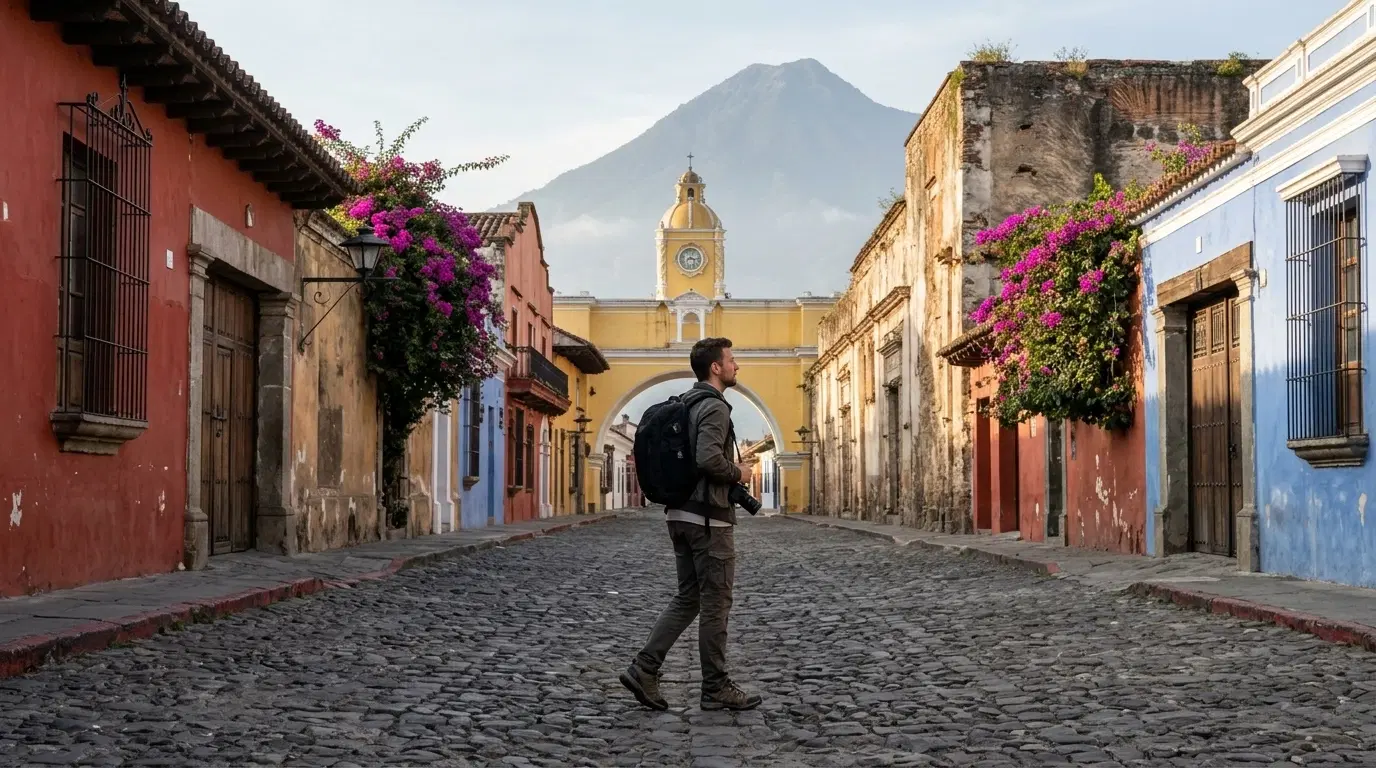
Guatemala rewards people who travel alone. Guesthouses fill with travelers swapping route tips, Spanish schools pair you with a teacher on your first morning, and the main stops sit close enough together that your next bed is rarely a full day away. Choosing the best cities for solo travel Guatemala has to offer comes down to three questions: how easy is it to arrive, how comfortable does it feel to explore on your own, and how simple is it to move on afterward?
This guide covers six places that answer those questions well, from colonial Antigua to the Caribbean town of Livingston. It also covers the practical side of linking them together: which legs are worth a private driver, which areas to skip entirely, and how to shape a first trip without overplanning it. If you want a quick sense of how the main gateways connect before you start, this overview of cities in Guatemala is a handy reference map.
What Makes These the Best Cities for Solo Travel Guatemala Has to Offer
A great solo destination isn't just pretty. It has walkable streets, a steady flow of other travelers, places where it's easy to strike up a conversation, and reliable ways to get in and out. Every stop below has an established visitor scene, accommodation ranging from social hostels to quiet boutique hotels, and road or air links that don't require you to piece together a dozen connections on your own.
|
Destination |
Best for |
Typical way in |
|
Antigua |
First-timers, Spanish classes, volcano hikes |
Road from La Aurora airport |
|
Lake Atitlán |
Slow travel, local culture, scenery |
Road from Antigua or the capital, then boats |
|
Flores |
Maya ruins, lakeside views |
Domestic flight or long-distance road trip |
|
Guatemala City |
Museums, food, arrival and departure nights |
You land here |
|
Río Dulce and Livingston |
River life, Garífuna culture |
Long drive east, then boat |
|
Monterrico |
A low-key Pacific beach break |
Road south from the capital |
Antigua: The Easiest Start for First-Time Solo Travelers
If you're wondering which of the cities for solo travelers suits a first trip, Antigua is the obvious answer. The former colonial capital is a UNESCO World Heritage Site laid out on a simple grid, so getting lost is hard even without a phone signal. Volcán de Agua looms over the south end of town, and on clear mornings you can see Fuego and Acatenango from the rooftops.
The town makes solo days easy to fill. You can wander the ruins of colonial churches and convents, walk up to the Cerro de la Cruz viewpoint for the classic photo over the rooftops, or sign up for a week of one-on-one Spanish lessons with a homestay. The overnight Acatenango hike is the big draw for many visitors: you camp near the summit and, if the weather cooperates, watch Fuego throw lava into the dark. Go with a licensed guide and pack seriously warm layers, because the summit gets cold at night.
Antigua's compact center also makes it one of the most comfortable places in the country for evenings alone. Cafés, local restaurants, and organized daytime group activities at hostels make it easy to meet people without trying very hard. After your sightseeing, stick to the well-lit central blocks and use a tuk-tuk or taxi arranged by your hotel for anything farther out.
The town sits roughly 40 kilometers from La Aurora International Airport, but traffic on that stretch is unpredictable. The drive can take under an hour at a quiet time and considerably longer at rush hour, which is worth factoring into any arrival or departure day.
Lake Atitlán: Panajachel and the Lakeside Villages
Lake Atitlán is a deep crater lake ringed by three volcanoes and a string of Maya villages, each with its own personality. For solo travelers, that variety is the appeal. You can base yourself somewhere social for a few nights, then shift to a quieter village for reading, swimming, and long breakfasts. Public boats called lanchas link the towns, so moving between them is part of the fun.
Choosing Your Village
Panajachel is the main gateway, with the most services, ATMs, and road connections. It's practical rather than charming, and many travelers treat it as a launch point. San Pedro La Laguna has the busiest backpacker scene, with cheap guesthouses, Spanish schools, and plenty of opportunities to meet other travelers. San Marcos La Laguna offers peaceful lakeside scenery, nature walks, and quiet places to relax. San Juan La Laguna is known for its weaving cooperatives, natural-dye workshops, and colorful street murals, making it a rewarding day trip if you're interested in local craft.
Plan boat rides for the morning when you can. An afternoon wind known locally as the Xocomil often whips up the water, and crossings can get rough. Sunrise hikes such as the Indian Nose (Rostro Maya) are popular, and going with a local guide is the standard, sensible way to do them rather than heading up alone.
The drive from Guatemala City to Panajachel takes around three hours, and from Antigua it is a little shorter. Many solo travelers arrange a private ride straight to the Panajachel dock so their bags stay with them the whole way, then hop a lancha to their village.
Flores: Gateway to Tikal and the Maya Lowlands
Flores is a small island town on Lake Petén Itzá, connected to the mainland town of Santa Elena by a short causeway. Its pastel buildings, lakeside walkway, and scenic waterfront viewpoints make it one of the most relaxed solo travel destinations in the country. You can walk the whole island in an evening, and it's easy to join organized sightseeing tours from here.
The main reason people come is Tikal, one of the largest and most impressive Maya sites anywhere, about an hour's drive away. Sunrise tours let you climb above the jungle canopy as howler monkeys start calling, which is genuinely unforgettable. Yaxhá, a quieter site set between two lagoons, makes an excellent second outing if you want ruins with fewer people around.
Getting to Flores from the capital means choosing between a short domestic flight and a long overland journey, often done overnight by bus. The flight lands at Mundo Maya International Airport, just a couple of kilometers from the island, so a pre-booked ride gets you to your hotel in minutes. A private driver for Tikal also lets you set your own schedule and arrive before the main tour groups.
Guatemala City: Worth More Than a Layover
Most visitors treat the capital as a place to land and leave, but a night or two here can be surprisingly rewarding when you know which neighborhoods to focus on. The city is divided into numbered zones, and the ones that matter to visitors are clustered close to the airport.
Zona 1, the historic center, holds the Plaza de la Constitución, the Metropolitan Cathedral, the National Palace, and the pedestrian Paseo de la Sexta. It's best explored by day. Zona 4 has the Cuatro Grados Norte area, with cafes, galleries, and a younger, creative feel. Zona 10 contains several restaurants and hotels, plus two of the best museums in the country, the Museo Popol Vuh for Maya archaeology and the Museo Ixchel for traditional textiles.
For solo visitors, the capital is mostly about smart logistics. Use app-based rides or transport arranged through your hotel instead of hailing taxis on the street, keep your phone out of sight on busy sidewalks, and stay out of Zone 18, which travel advisories specifically warn against. A night in Zona 10 or near the airport is also the easiest way to handle a late arrival or an early flight home.
Río Dulce and Livingston: Guatemala's Caribbean Side
The east of Guatemala feels like a different country. Río Dulce is a riverside town where the Río Dulce leaves Lake Izabal, and many travelers stay at jungle lodges reachable only by boat. Shared daytime excursions and guided nature tours provide opportunities to meet other visitors while exploring the surrounding landscape. The restored Spanish fort, Castillo de San Felipe, sits nearby at the mouth of the lake.
From Río Dulce, a boat trip down the river passes through a steep, forested gorge before reaching Livingston on the Caribbean coast. Livingston has no road connection to the rest of Guatemala, which gives it a slow, island-like pace. It's the heart of the country's Garífuna culture, and trying tapado, a rich seafood and coconut soup, is the classic thing to do there.
This region takes more effort to reach from the capital, so it suits travelers with extra days. The nearby Santo Tomás de Castilla area also provides access to regional ferry and coastal transport connections, making it possible to explore the Caribbean region as part of a longer itinerary.
Monterrico: A Quiet Pacific Beach Break
If you need a few days of doing very little, Monterrico on the Pacific coast is the easiest beach escape from the capital and Antigua. The sand is black and volcanic, the sunsets are huge, and the village is small enough to feel low-pressure for someone traveling alone.
Dawn boat tours through the mangrove canals are a highlight, with plenty of birdlife. During sea turtle nesting season, which falls mostly in the second half of the year, the local hatchery offers daytime educational visits where travelers can learn about sea turtle conservation and hatchling protection. One caution: the surf here is powerful and the currents are strong, so this is not a beach for swimming far out, especially without anyone watching from shore.
Weekdays are quiet, while weekends bring crowds from Guatemala City. Because it sits off the main traveler circuit, a direct private ride from Antigua or the capital usually beats juggling multiple connections.
A Simple First Solo Itinerary
For a first trip of 10 to 14 days, a loop through the three most popular stops works well and keeps travel days manageable.
Spend three or four nights in Antigua to adjust, take a Spanish class or two, and tackle Acatenango if you're up for it. Move on to Lake Atitlán for three or four nights, splitting your time between a social village and a quiet one. Head back toward the capital and take the short flight to Flores for two or three nights, centered on a sunrise trip to Tikal. Fly back to Guatemala City for your departure.
With extra time, add Río Dulce and Livingston for a Caribbean finish, or slot in Monterrico for a few beach days between the highlands and your flight home.
Getting Around Guatemala on Your Own
Transport is where solo trips in Guatemala either flow smoothly or turn stressful. Distances look short on a map, but mountain roads, traffic, and limited evening schedules can stretch them out.
Arriving at La Aurora International Airport
La Aurora sits inside Guatemala City itself, in Zone 13, so you're already in town the moment you land. Most solo travelers head straight to Antigua, and that first ride sets the tone for the whole trip. Arriving after dark, tired, with all your luggage, is exactly when you don't want to negotiate prices in the arrivals hall or figure out the last shuttle of the day.
Booking your airport transportation before you fly removes that pressure. With Transpovia, for example, you can reserve a private driver at a fixed price who meets you at arrivals and takes you directly to your hotel in Antigua, the capital, or even Lake Atitlán, no matter what time your flight lands.
Shuttles, Chicken Buses, and Private Transfers
Shared tourist shuttles link the main traveler hubs and are a budget-friendly way to meet other people. They do run on fixed schedules, though, and may involve hotel pickups that add time. Chicken buses, the brightly painted former school buses, are cheap and colorful but crowded, and petty theft is a known risk, so they're a poor choice when you're carrying all your belongings alone.
Private transfers fill the gaps where solo travelers feel most exposed: late-night airport arrivals, long highland legs like the capital to Panajachel, early starts for Tikal, and routes off the main circuit such as Monterrico. You choose the departure time, your bags stay in the vehicle the whole way, and you know the price before you go. On a solo trip, that predictability is often worth more than the savings of a shared seat.
Staying Safe as a Solo Traveler in Guatemala
It's worth being clear-eyed about safety. The US State Department currently rates Guatemala at Level 3, meaning travelers should reconsider travel, and it lists the San Marcos and Huehuetenango departments, Zone 18 of Guatemala City, and the city of Villa Nueva as places not to visit at all. None of the destinations in this guide fall within those areas. One point that confuses many travelers: San Marcos La Laguna on Lake Atitlán is in the Sololá department, not the San Marcos department named in the warning.
Advisory levels change, so check the latest guidance shortly before you travel. On the ground, a few habits go a long way:
-
Withdraw cash from ATMs inside banks, malls, or hotels rather than on the street.
-
Avoid walking isolated trails or quiet roads between villages alone, and use guides for hikes.
-
Keep your phone and valuables out of sight in crowded areas and on public buses.
-
Share your itinerary with someone at home and arrive in new places during daylight when possible.
-
Get a local SIM or eSIM so you can use maps and ride apps from the moment you land.
Frequently Asked Questions
What is the safest city for solo travel in Guatemala?
Antigua is generally considered one of the safest cities for solo travel in Guatemala, thanks to its compact, well-patrolled center, large visitor community, and easy access from the airport. Flores and the main Lake Atitlán villages are also popular and comfortable for travelers on their own. Normal precautions still apply everywhere, especially after dark.
How many days do you need for a solo trip to Guatemala?
Ten to fourteen days lets you comfortably see Antigua, Lake Atitlán, and Flores with Tikal. With one week, focus on Antigua and the lake. With three weeks or more, add the Caribbean coast around Río Dulce and Livingston or a few beach days in Monterrico.
Is it better to use shuttles or private transfers between cities?
Shuttles work well for budget-conscious travelers on popular daytime routes. Private transfers make more sense for airport arrivals, especially late at night, for long or less-traveled routes, and when you want to leave on your own schedule with your luggage secure. Many solo travelers mix the two, saving private rides for the legs that matter most.
Conclusion
The best cities to travel alone in Guatemala share a few things: a welcoming traveler scene, enough structure to feel at ease, and plenty of room to set your own pace. Antigua eases you in, Lake Atitlán slows you down, Flores puts Tikal within reach, and the capital, the Caribbean coast, and Monterrico add depth if you have the time.
Plan the routes as carefully as the destinations. Booking key rides ahead, particularly the first one out of the airport, takes the guesswork out of the moments when traveling alone feels hardest, and leaves more energy for the volcanoes, markets, and lakeside scenery that make Guatemala worth the trip.
"I was nervous about landing alone after dark, but having a driver waiting with my name meant my first hour in Guatemala was the easiest part of the whole trip. By the next morning I was exploring Antigua and looking at a volcano."


